

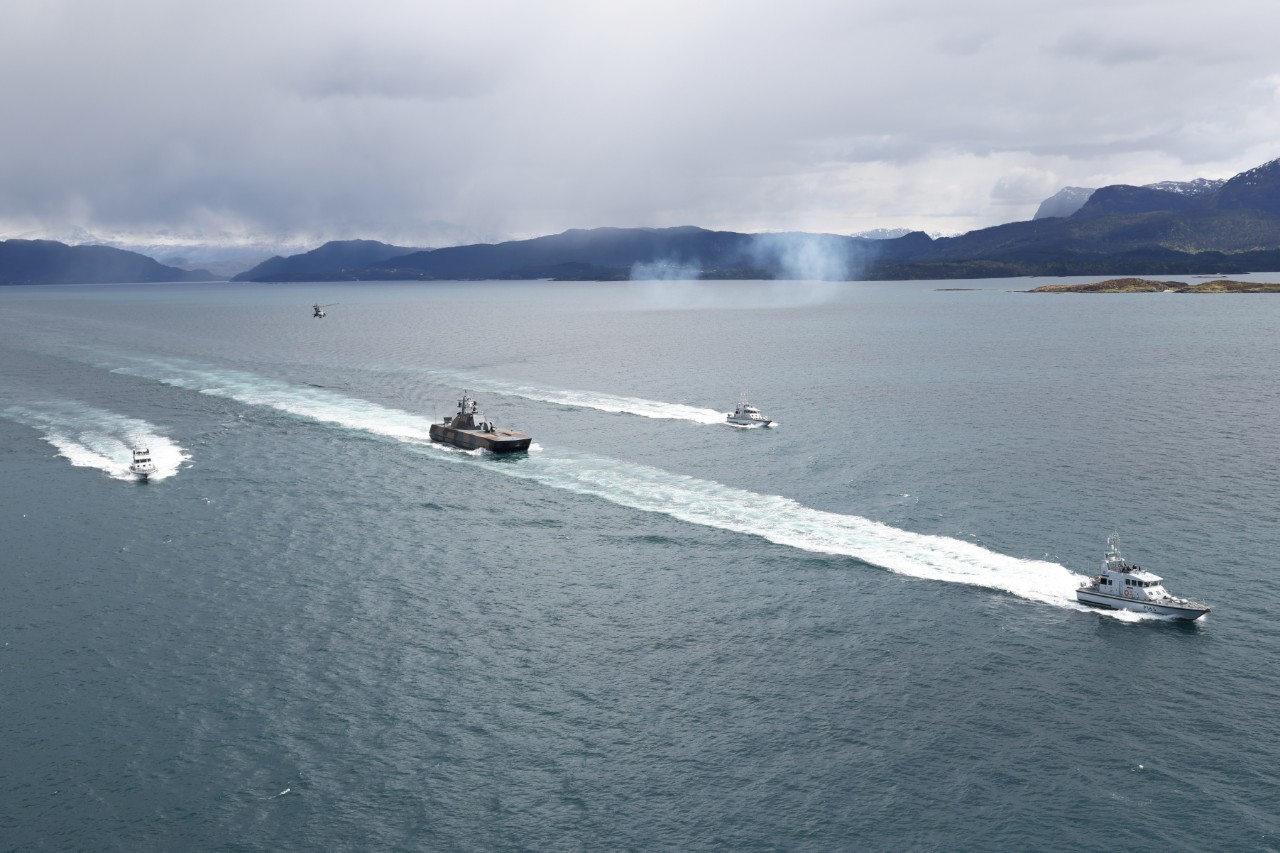
Royal Navy Wildcat helicopters operating alongside drones from 700X Squadron conducted three weeks of intensive exercises in the fjords around Bergen during Exercise Tamber Shield, testing tactics against fast attack boats, simulated missile threats, and aerial targets, according to a Royal Navy news update.
The exercise, run under the banner of the Joint Expeditionary Force, brought together the Royal and Royal Norwegian Navies to develop tactics for dealing with fast, agile threats in narrow waters. The 2026 iteration introduced two new elements: 700X’s Puma drones, which scouted ahead of the Wildcats feeding targeting and threat information directly into cockpits, and RAF electronic warfare specialists from Spadeadam in Cumbria, who simulated infrared and radar-based missile threats to give helicopter crews live practice of evasion tactics using chaff and flares.
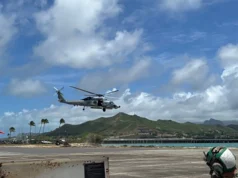
Wildcats from 815 Naval Air Squadron operated from both Haakonsvern, the home of the Norwegian Navy, and from the flight deck of HMS Duncan, which was escorting HMS Prince of Wales in the region. Armed with Martlet missiles, the helicopters practised engagements against fast patrol boats on the water and drones in the air, with the Royal Navy’s P2000 patrol boats HMS Archer, Biter, and Example working alongside Norway’s heavily-armed Skjold-class corvettes to provide opposition forces.
Able Seaman Rob Scott, on his first deployment with HMS Biter, said the exercise had given him a genuine taste of operational life. “Hiding in a fjord when we successfully spotted a Wildcat helicopter and were able to ‘kill’ it by simulating a surface-to-air missile attack was particularly enjoyable. Tamber Shield has been an exciting experience that has allowed me to see more of the world and gain a real insight into life on deployment. It has also been a valuable and interesting experience working alongside other UK forces and Norwegian personnel.”
Pilot Lieutenant Hal Wotton of 815 Naval Air Squadron said in the release that the exercise had delivered meaningful tactical development. “Tamber Shield has been extremely beneficial. It’s allowed us to refine our tactical development, using the challenging environment of the fjords to simulate realistic threat scenarios, including ambushes and counter-fast-patrol-boat engagements.”
Aircrew also conducted torpedo runs in the fjords, dropping Sting Ray torpedoes, with the opportunity taken to give those who had not previously done so the chance to carry out the drills. General training tasks were also completed, including winching crew on to and off the small deck spaces of the P2000 patrol boats. Ashore, both navies participated in Bergen’s commemorations marking 82 years since liberation from Nazi occupation at the end of the Second World War.
Alongside the in-Norway activity, a parallel exercise was run at RNAS Yeovilton testing the mesh network intended to become a central part of future Tamber Shield editions and front-line operations more broadly, seamlessly sharing data between drones, helicopters, and headquarters to speed up decision-making and allow Martlet operators to engage fast-moving swarm threats more quickly.



ridiculous, not a single frigate in that fjord. What’s the navy coming to, bloody kier starmar 😊
I’ve gained $17,240 only within four weeks by comfortably working part-time from home. Immediately when I had lost my last business, I was very troubled and thankfully I’ve located this project now in this way I’m in a position to receive thousand USD directly from home. Each individual certainly can do this easy work & make more greenbacks online by visiting
following website—.,.,.,.,.—>>> JobatHome1.Com
I’ve gained $17,240 only within four weeks by comfortably working part-time from home. Immediately when I had lost my last business, I was very troubled and thankfully I’ve located this project now in this way I’m in a position to receive thousand USD directly from home. Each individual certainly can do this easy work & make more greenbacks online by visiting
following website—.,.,,.,.—>>> PayAtHome1.Com
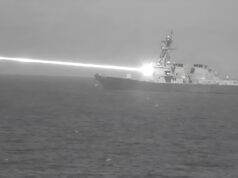
HMS Biter knocked out a Wildcat with a SAM.
Well there you go then, scrap all the T45’s T23’s T31’s and T26’s. We don’t need them now.
Indeed, all are obsolete, including the Carriers if you believe some with an agenda. 🙄
All assets have their part to play, all complement the other, and we lack enough of any of them.
I’m looking forward to all these Drones we keep saying we will be buying, actually being ordered.
Just hope these Kraken USV drones don’t get shot up to pieces in the Gulf by those IIRG runabouts, if there’s any left, before or while doing their MCM stuff.
In a compact environment like a fjord a wildcat would be lethal against a T45 destroyer and a patrol boat with a MPAD would be lethal against a wild cat.
MPAD capabilities are often under rated and over looked as a naval capability but they do have their place.
In a compact environment like a Fjord, the T45’s Phalanx would shred any Wildcat that showed itself
Very limited range.
Not if as would likely occur the Wildcat used the land/seascape to its advantage. Where familiarity is vital. Worth reading about the last major Beaufighter action of the war about how in that environment when attack plans aren’t as expected mayhem can make instant decisions something of a lottery and experience irreplaceable. Wildcats would have a lot more options than those poor Beaufighter pilots found on that day.
We took our Cat to the Vets In our Ford a while back, It turned Into a Wildcat too.
hope that helps.
I don’t know, the Sea Venom data link presumably still requires line of sight to a certain extent.
In addition Sea Venom launch ranges are well outside the Aster 15 or even 30 minimum range so the Wildcat would die long before the Sea Venom made contact. With all of the safety checks that have been put on it losing the manual oversight would possibly stop the weapon tracking too.
CAMM will shift the advantage further towards the T45, but unless the Wildcat pilot was being careless and didn’t have a drone looking ahead for them their weapons would outrange MANPADs hugely.
Well trying to be serious for a moment just a little concerning that the prime anti small boat (and anti drone for that matter) weapon was taken out by …yep you got it a small boat. Especially when you consider we won’t be the ones ordinarily using the small boats. No wonder rightly, we don’t want to get near the Straits while things are hot.
So will 700X Sqns Puma Drones actually be bought in any significant number and used more widely?
Or, as usual, a trial to add to the trials and we have a handful in service?
Will LMM be fitted to the Archers!
The have bought drones and they continue to expand their use via these trials, the have purchased 90 so far, see below
The UK Ministry of Defence (MoD) has a fleet of 90 AeroVironment Puma small unmanned aircraft systems (specifically the Puma AE and LE variants) in operational service.
While the MoD is historically highly guarded about exact inventory figures for its tactical uncrewed aerial systems (UAS), the fleet breakdown reflects how these assets are distributed and their current role within the armed forces:
The Fleet: The 90 Puma drones in service primarily equip the Royal Navy’s 700X Naval Air Squadron (based at RNAS Culdrose) and the British Army’s 32 Regiment Royal Artillery.
Maritime & Amphibious Use: The Royal Navy expanded its fleet back in late 2021 by securing an additional batch of 12 aircraft along with enhanced training. These are actively deployed across the fleet, notably on River-class offshore patrol vessels (like HMS Tamar and HMS Mersey) and by Royal Marines Commandos for short-range intelligence, surveillance, and reconnaissance (ISR).
Transition under Project TIQUILA: The Puma systems are currently operating alongside newer capabilities. Under the MoD’s £129 million Project TIQUILA (managed by Lockheed Martin as the systems integrator), the military is heavily scaling its small drone inventory. This includes taking delivery of 99 Stalker v2 and 159 Indago 4 packable drones, which will gradually modernise and replace older tactical UAS assets in front-line infantry and reconnaissance roles.
Hi Jim.
Yes, you’re including the Army there with those figures. It’s long since old news that Puma replaced Desert Hawk III in the TUAS Regiment of the RA, 32 Reg, as you detail.
And Indigo 4 and Stalker will replace them. I believe one of these has been renamed since, to Eagle.
I was referring more to RN use, but, interesting, I wasn’t aware of the 12 extra bought in 2021, nor that they’ve been used on River Class.
“Across the fleet” I’m a bit more dubious about, though.
Has every Escort, RFA, OPV got a Det of Puma? I doubt.
They are onboarded along with operators when necessary. It’s not a standard ship system or even like a Wildcat. 700X deploy mobile teams.
LMM on the Archers would make a lot of sense but what system of delivery? Shoulder launch or deck mounted. Single or multiple launcher system? Is there space forward to mount a permanent system?
This suggestion has been posted before by others but why not a marinised StarStresk/LMM launcher, maybe with a bit of “ER” treatment? The French have done it with their Mistral why not the UK? Single, Double, Triple vertical, 2×3 stack, 4×3 stack, they could incorporate the EO off the Rapid Sentry. Could be good for OPVs, RFAs, Points, landing craft, backup to CAMM 12.5/30/40mm and Ancilia. Seems a silly obvious possibility that the UK to do with Thales, SEA and or MSI. Sure missed the “Phalanx/SeaRAM” boat with not backing SeaStreak version 1! Still can for a version 2! Maybe marinised Star Hammer and Sky Hammer may also be possible?
Anyone know if when are the Archers due to be replaced and with what?
Yes and Crossbows.
You’re welcome.
Well trying to be serious for a moment just a little concerning that the prime anti small boat (and anti drone for that matter) weapon was taken out by …yep you got it a small boat. Especially when you consider we won’t be the ones ordinarily using the small boats. No wonder rightly, we don’t want to get near the Straits while things are hot. The
The Welsh won’t like that Halfy.
Back when Starstreak was first developed there was actually a CIWS version proposed to the navy. 28 missiles system, self contained, relatively small so shouldn’t take up too much deck space.
It would probably do pretty well on international markets as well as the full cost of one with all the missiles is the same as just 7 SeaRam missiles and so stockpiles could be significantly larger.
Yes, ive seen pictures of SeaStreak. What happened there. Beaut looking system and could be updated forvtoday. Just imagine if that had taken off for the UK industry. Anyway now they could still make a marinised Rapid Sentry and or adapt the SEA Ancilia lsuncher for Starstreak/LMM. Other countries, notably France have done this, so the UK minister(s) for these things need to engage a bit more with “non-drone thingys” as well!
In the end however appealing it would be to arm the archers.. they are not designed as combatants at all.. they are to small, to underpowered and to fragile.
Look at the Norwegian Skjold-class, 270 tons, top speed of 60knots ( flat seas) or the Swedish Visby-class 640 tons, 35 knots… the archers 50 tons and 20knots..
In reality if we want to play littoral or enclosed sea combat the RN needs a different type of combatant than its had before.. and I don’t believe it will do it.. I mean it’s built a full fat 2000 ton combatant with full naval scantlings and shock resistance/survivability, but refuses to put anything more than a 30mm cannon on it because it’s not a frigate… would it lower itself to build a 500 ton North Sea and Baltic combatant.. not a chance.
👍
When we replace the Archers (if we’re not entirely unmanned on that scale by then, though the training is a useful feature) I think there’s a very simple way we could massively improve the capability of the inshore squadron using mostly off the shelf design.
There are boatyards on the south coast churning out aluminium crew transfer vessels for offshore wind. They’re usually about 30m long, 100t displacement catamarans capable of 25kts. Importantly they all have a big working area on the foredeck which is usually capable of taking a pair of TEUs, with the accommodation and bridge set aft.
All the RN need to do to replace the Archers is to ring up one of Britain’s many naval architecture firms (Chartwell, on the Hamble, specialise in CTVs) and ask for a variant of the CTVs with the superstructure forwards rather than aft. That would allow a pair of PODS to be carried aft with crane or A-frame access to the water, or even some bolt-on Sea Venom if necessary. Light armament could be carried on the bridge like the P2000s.
That would leave the RN with much more economical, better supported vessels with a far greater use for underwater warfare and the option to use as FIACs if necessary.
What worries me is that if we as planned be supporting the Norwegians in any conflict with Russia especially if the Russians did coastal incursions, small reasonably well armed combatants might be rather more use than the frigates trying to do a job there. The days since our last Fjord incursions in the war have clearly changed somewhat. We best work with the Norwegians on those small vessel designs we heard about recently.
I don’t think we’d be doing a Battle of Narvik style charge into the fjord with HMS Dragon surrounded by P2000s, IMO the way we’re doing it here by sending helicopters in to hunt the boats down is a good strategy.
So it seems to me the Archers spend a lot of time messing around in enclosed waters playing at being missile boats.. because shock horror small missile boats in enclosed waters are profoundly effective.. and small drones in enclosed waters are profoundly effectively against large surface combatants..
This is part of that profound change that drones are making.. enclosed seas and littorals are now essentially the death of major surface combatants.. nobody in their right Nogging is going to send major combatants into the littoral after the lessons of a nation with no real navy essential gutting a Russian fleet. Even the USN are only sent a token set of major surface combatant’s through the strait of Hormuz.. after essentially spending weeks smashing the enemy to pieces and I would imagine with a massive operation to protect them as they moved through.
For enclosed seas it looks like a mix of smaller surface combatant’s and integrated small drones may be the order of the day..
On the highs seas for blue water operations it’s a different question.. western navies have now remembered something profoundly important about naval conflict that they forgot in their overwhelming power and with a huge bit of technological hubris.. naval conflict is a function of mass..and they now see large blue water drones as a way out of a serious mess they have got into reducing mass.. even the mighty US navy has a massive mass issue, facing as it does a navy with way more major surface combatants and submarines than it now has..
The larger navy has in about 90% of major naval wars won against the smaller navy, even if that smaller navy had more technically advanced ships… the RN did not utterly dominate because it had more advanced ships or started with more skills and better doctrine.. infact for most of its existence the RN has lived with mediocre ships.. for a maritime nation britain has never really exceeded expectations in ship building.. we have generally been conservative pragmatists who only pushed when we really had to, what we did understand more than any other nation was the need to be there and turn up with the right mass of just the right type of ship.not flash, just enough to do the job and we did that in every conceivable place.. we drowned the enemy in the concept of always being there. The Spanish always had small British ships yapping at their doors..the French spent the Napoleonic war completely unable to concentrate because there was always a British ship on the horizon, where as the RN could concentrate or desegregate at will, the German high seas fleet ( with far better ships) was alway faced with more…it’s scattered cruisers and U boats always hunted. In WW2 there was always an escort to face the Uboats. Every German major surface combatant was hunted by packs of surface combatants until they had no place to go .. and British naval doctrine and its skills as a service developed beyond everyone else because it was alway there.. it’s crews and captains aways practicing…they were not born better.. they simply had more captains, more crews with greater opportunities to practice… large navies not only have the mass to be everywhere and everywhen they have the ships and crews to take time to practice and perfect.
HMS massive sitting in the middle of an ocean on its own. Not able to tie down the enemy or prevent it from either consentrating or Disaggregating at will, not able to practice or perfect spend time training with other crews or perfecting doctrine… it will die to the navy with mass even if that mass made up of HMS crappies.. and even if it does not die the HMS Crappies will have been off winning the war while HMS massive sits in one place like the big self licking lollipop it is.
Great post J.
I liked that a lot.
Question for you. Will all these Drone boats be called HMS ?
The smaller autonomous mine clearance boats and their larger Vahana support boats are termed RNMB – Royal Naval Motor Boat, so unsure if they’ll be commissioned HMS or something like RN AV Autonomous Vessel??
Good question.. a HMS is a commissioned warship, that has meaning in international law.. so I suspect they will not be..
I ask as HMS Biter is.
She’s an Ickle likle boat after all.
I like the names Huey, Dewie and Louie, from the film “Silent Running” starring our very own “Dern”. ( where you at bro?)
Sorry, I went a bit off topic !
Rejoice in the sun 👍
Because a commissioned warship is legally defined entity in international law it’s some specific legal characteristics.. one of those is it must always have a commanding officer who is essentially legally responsible for the actions and activities of that commissioned warship.. essentially it’s sort of irrelevant how big or small the ship if it’s got a commissioning document from a government and a commanding officer it’s a commissioned warship with all the legal authorities that come with it.. and in the UK HMS a prefix to a commissioned warship.. so a autonomous drone could be a world destroying 100,000 ton autonomous warship armed with 100 ICBMs.. but if it’s not to a commanding officer on it, it’s can never be a commissioned warship and have the HMS title…