

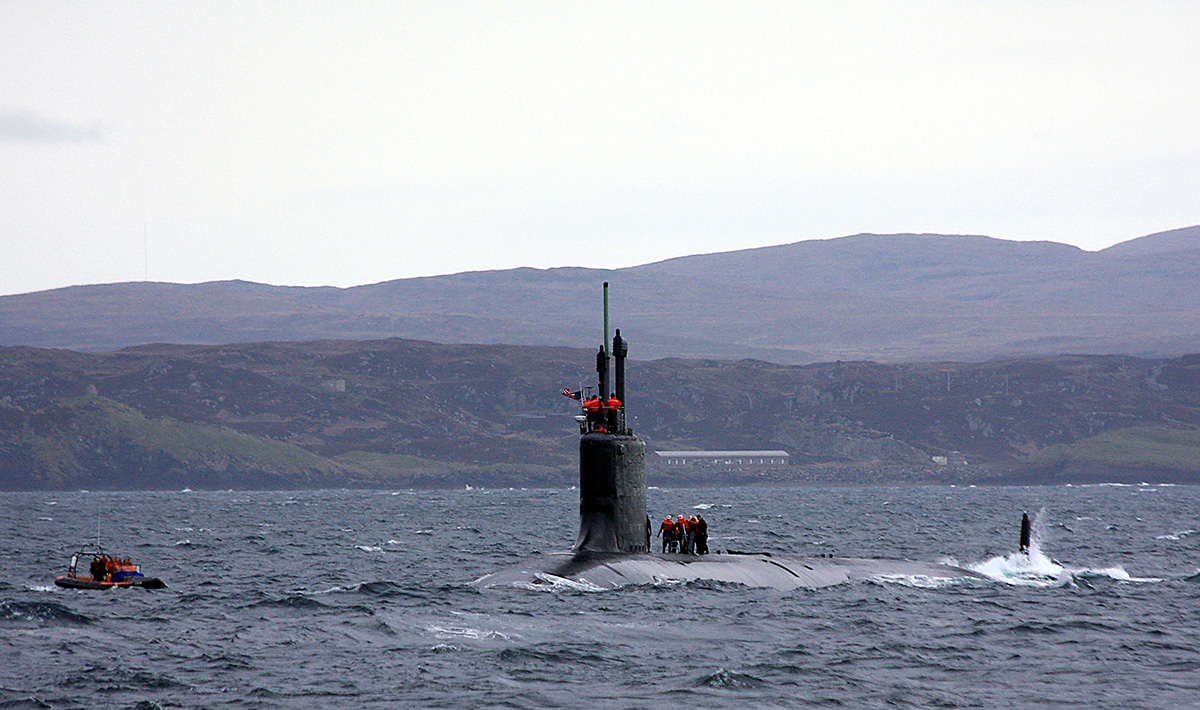
The US Navy has bought forty-one Virginia class attack submarines since 1998 and has funded most of them at a rate of two boats a year, but the two American nuclear shipyards have never delivered at that pace, and output has been running at roughly 1.1 to 1.2 boats a year since 2022, according to the Congressional Research Service.
Virginia class boats were procured at two per year from the 2011 financial year through to 2024, before the Navy dropped to a single boat in FY2025. The service has requested two more in its FY2026 budget submission, one of which is to be paid for with $4.6 billion in procurement funding provided under Section 20002 of the 2025 reconciliation act. When bought at two a year, boats fitted with the Virginia Payload Module carry an estimated procurement cost of about $5.0 billion each under that budget submission.
The shortfall between what has been ordered and what has been built has produced a growing backlog of hulls paid for but not yet completed. Rear Admiral Jonathan Rucker, the programme executive officer for attack submarines, told an audience in November 2024 that the rate had reached about 1.85 boats a year before the pandemic, and that material problems then dragged it down into the 1.1 to 1.2 range, remarks reported at the time by National Defense magazine. The Navy told the Senate Armed Services Committee in April 2025 that performance had fallen to 1.13 by the end of calendar year 2024, citing workforce problems, first-time quality, material and supplier delays, and difficulties on the lead ship of the Payload Module variant.
In that same April 2025 statement, programme executive officers from the carrier, attack submarine and strategic submarine offices told senators:
“Despite these improvements, we have not observed the needed and expected ramp-up in Columbia Class and Virginia Class submarine production rates necessary to keep pace with the 1+2 strategy. The Navy, submarine shipbuilders, and supply chain enterprise underestimated the effort required to transition from the peace-dividend era, low-rate submarine production and sustainment to the increased 1+2 production needed for an era of near-peer competition. While both submarine programs have experienced delays, there are unique challenges in each program that we are aggressively working to correct.”
Congress has been appropriating submarine industrial base money since FY2018 to close that gap. The estimated total appropriated through FY2024, requested for FY2025 and programmed for FY2026 to FY2028 for the submarine construction industrial base is about $9.8 billion, a figure that sits separately from billions more directed at the maintenance and sustainment side of the business, and separately again from the $3 billion Australia is to contribute to the American industrial base under AUKUS.
The money is being spent at General Dynamics Electric Boat and Huntington Ingalls Industries Newport News Shipbuilding, and across a supplier network of roughly 16,000 firms of which about seventy per cent of the critical suppliers are sole-source. The Navy identifies six main areas of investment covering shipbuilder infrastructure, strategic outsourcing, supplier development, workforce development, technology and government oversight. Because the work is funded directly rather than financed by the yards, the borrowing costs that would otherwise be recovered through the price of each boat do not appear in the stated procurement figures, a treatment that the report notes would add potentially hundreds of millions of dollars per hull if it were folded in.
Brett Seidle, then the senior Navy civilian acting as acquisition executive, told lawmakers in June 2025 that the investments had produced clear improvement in hiring, supply chain resilience, yard modernisation and outsourcing, but that submarines take a long time to build and the effect had not yet appeared in delivery rates, remarks reported by Breaking Defense. Representative Rob Wittman described the continuing 1.1 boat cadence as disappointing.
The Government Accountability Office reached a similar reading in its June 2025 weapons assessment, recording a 2024 construction rate of 1.15 boats against a Navy goal of 1.5, and warning that shipyard inefficiency, slow growth in supplier capacity and the prioritisation of Columbia class work could push the rate down further. Block V construction is also costing more than planned, and Congress appropriated an additional $5.7 billion in December 2024 after the Navy requested a budget anomaly, roughly $0.5 billion of which covered wage increases intended to help the yards hire and hold skilled workers.
Meeting both American requirements and the AUKUS commitment would require lifting Virginia class construction to 2.33 boats a year, a target the Navy has set for the early 2030s and which rests on first reaching two boats a year by 2028. Work is being pushed out to firms beyond the two nuclear yards under a strategic outsourcing programme that has taken structural modules and large sections to companies including Austal USA in Mobile, Alabama, and Deloitte Consulting holds a potential five-year contract worth up to $2.4 billion to act as enterprise integration partner for the wider industrial base effort.


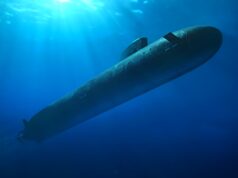


The US should probably seriously consider purchase of SSN A. With the kind of cash they have swirling around it’s likely they could pay for the kind of substantial industrial uplift the UK would need to meet their demand and the boats are already being built with US combat systems. This woukd also allow them to interject competition with their own yards which seems to continually take more money while delivering less and less all the time.
A second SSN A production line at Cammel Laird could be entirely feasible and the US could get a fleet of ten or more over a two decade period.
They are committed to aukus and looking at building surface combatants in SK and Japan. Be surprised if it happens but it’s never been more realistic
I would be surprised if it did too Brom, I can imagine the current administration doing it and ordering a bunch then the next administration cancelling it again before repeating the cycle again in five years.
The US has ready made surface combatant production in Japan and South Korea and potentially submarine production in the UK all using existing US systems but their military industrial complex and its political lackeys will prevent foreign competition at any cost.
Just look at the ongoing cluster f**k that is the KC46, the US could have had a massive fleet of A330 MRTT, all built in America and modified by LM for a fraction of the price and instead they illegally re run the competition after Boeing bribed a civil servant and now they have a nearly bankrupt civilian aviation sector and they are flying tankers from the 1960’s to the point they are becoming dangerously unstable.
A rate of two boats per year sinc1998 awesome