

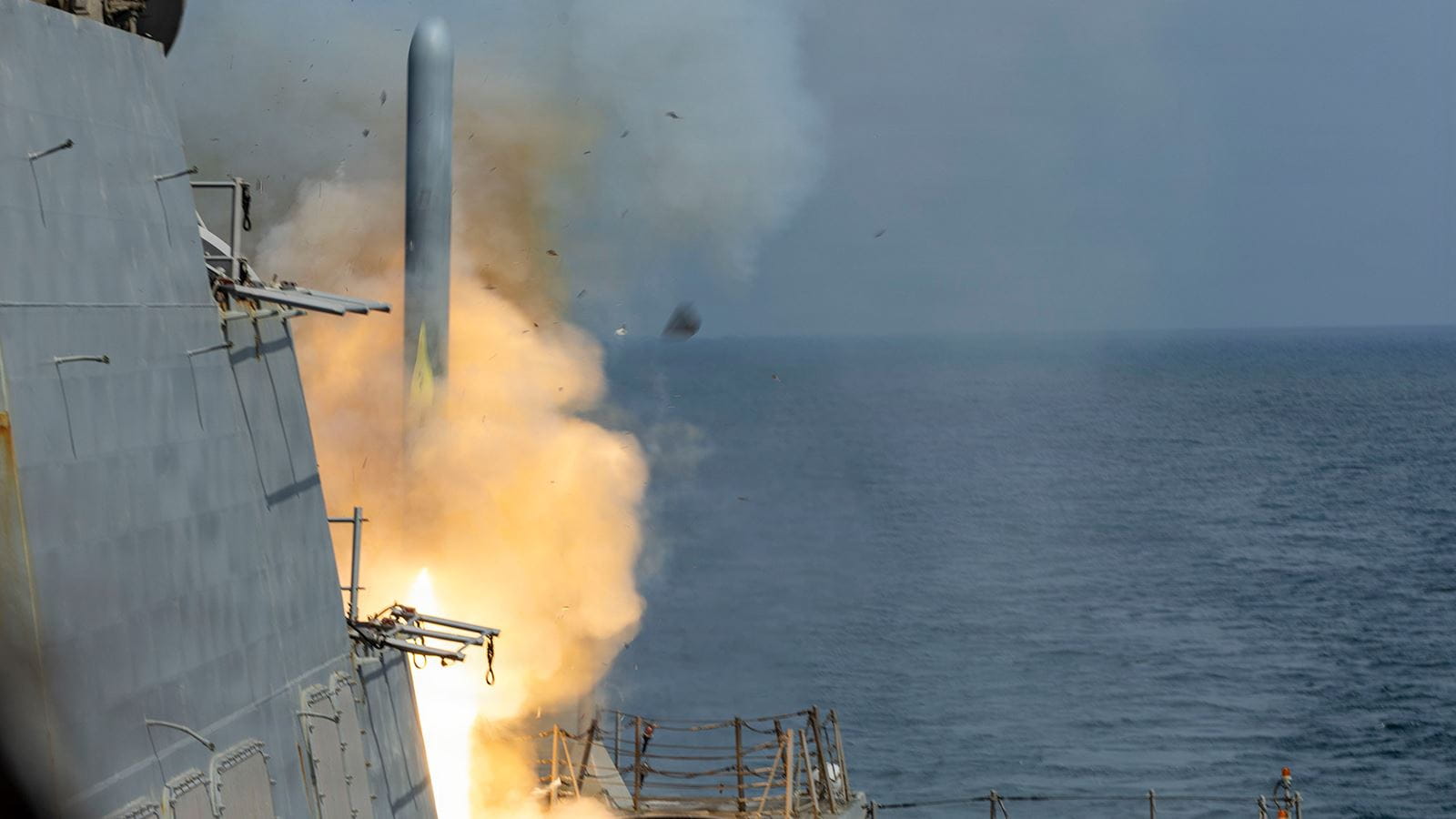
Raytheon has received a seven-year contract worth $22.9 billion to sharply increase Tomahawk cruise missile production, with annual output planned to rise above 1,000 weapons for the US Navy and allied customers.
The United States is moving to raise annual production of Tomahawk long-range cruise missiles to more than 1,000 weapons under a seven-year contract awarded to Raytheon, according to the company.
The RTX news update values the agreement at $22.9 billion, approximately £16.8 billion, and says it will support a major expansion of manufacturing capacity for the US Navy and allied customers. Raytheon described the award as part of the Department of War’s wider “Arsenal of Freedom” effort to increase production of high-demand weapons.
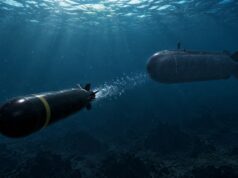
Tomahawk is a long-range, subsonic precision-strike cruise missile used primarily to attack targets on land from substantial stand-off distances. In US naval service it can be launched from surface warships and submarines, giving commanders the ability to strike fixed and other designated targets hundreds of miles from the launch platform without placing crewed aircraft directly over the target area. Newer versions of the weapon have also expanded the missile’s targeting and maritime strike capabilities.
Raytheon President Phil Jasper said, as quoted in a news update: “Tomahawk is the Navy’s most important strike weapon, able to target hostile forces hundreds of miles away without ever risking the lives of our sailors.”
He added: “We are making significant investments in our workforce, technology, supply chain and facilities to dramatically boost production capacity and meet surging demand.”
The scale of the planned production increase is substantial. RTX said the new contract supports an annual manufacturing rate exceeding 1,000 Tomahawks, together with associated support. The company did not state that production is already running at that level, instead describing the figure as the target of the multi-year production ramp.
RTX has already been increasing deliveries. According to the company, Raytheon delivered three times as many Tomahawk missiles during the first half of 2026 as it did during the equivalent six months of 2025. The seven-year arrangement is intended to provide greater certainty to the manufacturer and its supply chain as production expands further.
Hundreds of small and medium-sized suppliers across the United States are expected to contribute to the programme. Long-term contracting can allow manufacturers further down the weapons supply chain to invest in machinery, staff and production capacity with greater confidence than under smaller annual orders, particularly where specialist components can otherwise become bottlenecks as final assembly rates increase.
Tomahawk has been in US service for decades and has been repeatedly used in combat for long-range conventional strikes. The weapon has undergone successive upgrades rather than being replaced outright, with later variants introducing changes to communications, targeting and mission flexibility while retaining the basic role of delivering precision effects at extended range.







Reasonably impressive 43 year deployment record for a non-stealthy CM. Continuing updates (Block V, Va, Vb) have delayed obsolescence.
Its the same reason we’ve flown the B-52 for 60+ years; it can still do what is asked of it.
In the end if it can terrain follow at 5 meters above ground its naturally stealthy. Terrain blocking and radar horizons are why sub sonic cruise missiles not left behind… people forget you can hide behind terrain and AEW aircraft are not ubiquitous.
Being pragmatic the Uk should buy a load for the T26 and T31.
At the end of the 24 of these in Glasgows MK41s by the end of 2027 would be one of the biggest within 2 years strategic firepower steps the RN could take.
Anyone got any open source info ona Tomahawk shelf life?