

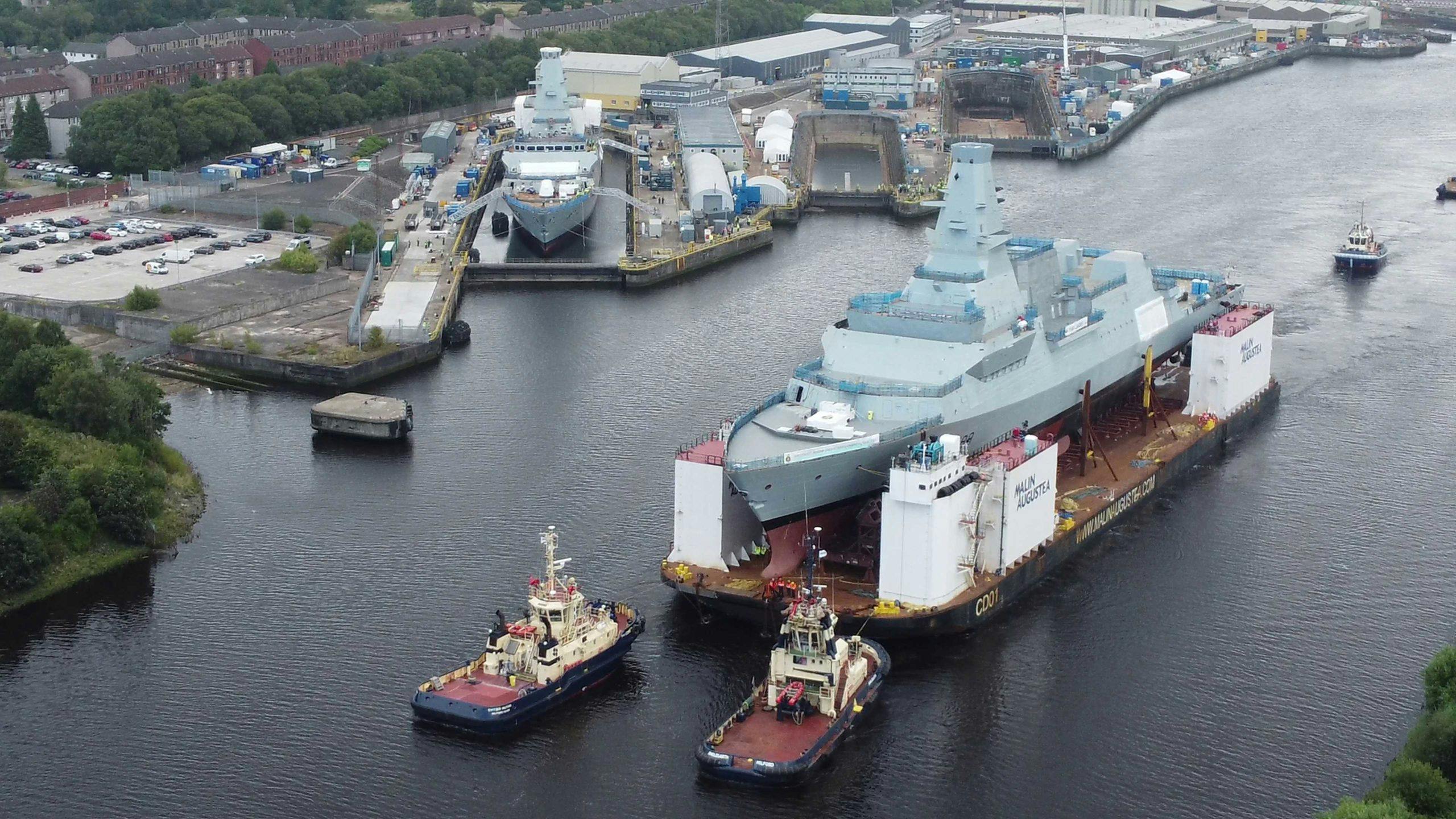
Ministry of Defence spending with Scottish industry rose by 13 per cent in real terms to £2.53 billion in 2025/26, which the department describes as the highest level of industry investment in Scotland since records began, the Ministry of Defence stated.
The figure equates to £460 for every person living in Scotland, up from £390 the previous year, and the department says it forms part of its work to rebuild the national defence industrial base, boost readiness and support the reindustrialisation of Britain.
Wes Streeting, the Defence Secretary, said: “We cannot strengthen our deterrence without a strong, sovereign defence industry here at home, and Scotland is at the heart of that.
“That’s why we are unashamedly backing British, using the biggest sustained increase in defence spending since the Cold War to back jobs and skills in Scotland to build the capability and technology we need to keep us safe in a more dangerous world.”
Douglas Alexander, the Scottish Secretary, said: “The UK Government is delivering a defence dividend for Scotland. Scotland’s defence sector is a powerhouse of innovation and expertise and a key driver for economic growth. With Ministry of Defence annual investment in Scottish industry increasing to £2.53 billion we are backing businesses to grow, supporting the creation of good jobs, driving reindustrialisation and building a stronger economy that creates opportunity.
“From naval shipbuilding on the Clyde and at Rosyth, to our nuclear deterrent and submarine support at Faslane, to our world-leading strengths in cyber, space, advanced radar and electronic warfare, Ministry of Defence investment is directly supporting 12,200 jobs in Scotland and opening exciting career pathways for young Scots.”
According to the department, the figures show rising investment generating jobs and opportunities in towns and cities across the United Kingdom, lifting living standards and increasing household incomes, with the defence industrial base placed at the centre of what it calls national renewal.
The department maintains a substantial footprint in Scotland, supporting 12,200 jobs, with major employers including BAE Systems, Babcock International and Rolls-Royce alongside the military hubs at HM Naval Base Clyde and RAF Lossiemouth.
Much of the Scottish work sits in shipbuilding and submarines, with BAE Systems building the Type 26 frigates at Govan and Scotstoun on the Clyde and Babcock assembling the Type 31 at Rosyth, where four of the five ships are now taking shape. The Norwegian order for Type 26 frigates announced last year is expected to sustain work on the Clyde into the late 2030s.
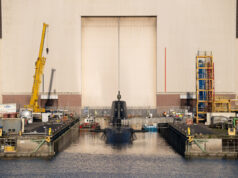
HM Naval Base Clyde directly employs around 6,000 people across Faslane and Coulport and is home to the Submarine Service, with Project Royal Oak committing £15.1 billion to regenerating the base over the next decade as part of a wider £26 billion programme covering naval base infrastructure.








Just imagine all the jobs and money taken from Scotland and Spent South of The Boarder..!
Just a thought..!
Here’s hoping that the giant shoe of confidence in Scottish defence Ares can lead to the much needed increase in production rates
Surely in real terms WW2 created a vast quantity of work in Scotland. Not 2.5BN but the equivalent WW2 money.
I have to say that if the Scots got a shift on then we would be building a lot more in Scotland. Right now I see see the boost is likely to go to Manchester.
Eleven years for the first ship, eighteen year programmne for eight ships, we hope. Japan can build in five. 🤔
The truth is once you have the industrial capacity and capabilities if you really have a burr up your arse you can build an “Average” warship very quickly.
The UK let its industry die on the vine, was smoking on the happy weed ( other wise know as the end of history myth) and insists on anything other than “average “.
If we were serious (?) about expanding shipbuilding there are two potential yards in Devon and Cornwall, both with deep water. Devonport and Falmouth with Babcock able to be involved in both. There are hundreds of likely workers who would love to work there.
I suspect when the T9X really kicks in we will see a lot of potential wider work..
Fingres crossed. 🤞
Government has the wrong mindset at the moment. When that changes which it must and will – changes will happen.
They certainly have the wrong mindset but I don’t share your optimism. I wish I could.
As little as five years ago defence was a subject rarely discussed. Now it is becoming an issue for a variety of reasons.
There will be pressure for political parties to establish a position. The Tories are moving away from the old people and old values but will likely be the obvious choice to put space between themselves and any opponents on a whole range of issues. Probably keeping their powder dry at the moment but that might change soon.
Tories Probably the most Negative of an Extremely Negative political Establishment on Defence over the last 35 yrs..!
To the point of Total Reliance on the America military…!
They’ve ALL somehow left us with Zero Hard power..! Zero Soft Power..! And Zero international influence..!
You mean the end of the cold war. The end of the USSR and the deterioration of all armed forces in the northern hemisphere even the US which took a serious hit. Everyone downsized with funding moving into the economy.
Sure the UK is not a colonial power anymore and hasn’t been since WW2.
The UK do play an important part in NATO in which until recently the US were the backbone and wanted to be the backbone. The UK, France and the US were the backbone in Germany following WW2.
The UK will be part of a western Europe which rebuilds militarily and can up to any country which threatens world peace. Historically we have always done well at that.
I agree. Now there is an advantage in being pro defence and the Tories are likely to grasp that message. Despite what some would like us to believe here more damage was done by Blair/Brown to the Royal Navy in particular. Were the Tories slow? Yes, they were, but almost every warship currently under consrtuction was palnned or ordered under the last government.
All that money should be spent in England – if the Scots want independence they can have it.
But they won’t be building anything for the English Armed Forces.
All those companies that currently reside in Scotland and that supply the British military should be given notice either relocate to England or lose all business with the English Ministry of Defence when Scotland goes independent (hopefully sooner rather then later)
Money is likely to be distributed across the UK with skills in Scotland doing well.
There seems to be little interest in nationalism in Scotland at this time. I’m not saying it has completely gone but it certainly isn’t the force it once was and that was insufficient to change things. The UK is too busy in any event to spend time on such issues. It just isn’t a priority.
Therefore I anticipate ample work in defence for Scotland, England, Wales and Northern Island. I would expect defence spending to hit 5% of GDP by 2030 at the latest.
5% by 2030?? I’ll have some of what you’ve been drinking!
😂😂😂
Yes to be fair the UK could do better but initially I would expect the UK to boost to a percentage above the US.
3.5% would be a decent start point.
I would then see an agreement between UK, France and Germany as major European financial powers to hit 4% by 2028, 4.5% by 2029 and finally 5% by 2030. They will be looking at Poland, the Nordics, Baltics etc. to settle on a similar figure.
In theory the Government could do their usual and drag their feet however I feel there are ways the treasury could pay for this without causing too much of an issue.
There does seem to be increasing pressure to deal with the defence issue. It is becoming more widely discussed and it seems likely that all parties will need to state their position openly this time around. As public knowledge grows it will rise up the priority list.
I’m not up for this “spend it in England if the Scots want Independence” malarkey. The skills and frigate factory are in Glasgow. Tell them to build away; we will always need the ships, and if they get it right, they can reduce costs and attract exports. Other locations can get on with other work; we need the Royal Navy fit-out in some of the other yards to speed up production. The issue is the treachery in the Treasury and the government, which is an expert at procrastination. Can other classes of ships be built in Belfast, Birkenhead, Tyne, Cornwall, and Devon? The issue isn’t the Indy Wet dream of the Scots, Welsh, and Northern Irish; it’s Westminster. It needs to make the people of this country proud to be British, and that means a government that invests in this country, not one that gives away the £13 bn Burnham is planning to give to other countries!
Now wouldn’t it be nice if the Scottish government/SNP also started to back the Scottish defence industry as well…
The SNP seem like they are in decline. Personally I think these things go in cycles and the whole nationalist issue might rise again in 15-20 years however I don’t think Scottish voters see it as a priority.
the way the MOD pays for ships makes them cost more and take longer to build the shipyards can really only buy resources per the ship even the ones with longer lead time the buyers would love to order them all at once but they only get so much money to buy to work with usually a ship at time so everything takes longer and costs more
This is the peacetime method of defence procurement.
Taxes flow in evenly on an annual basis and flow out fairly evenly on other key areas of national spend. A shift in annual defence spend would alter that. You would see a boost in orders for longer lead time purchases and an initial boost in lower cost shorter lead time projects with much of the spend going on that.
The South West, the home of NAD and DE&S, takes perennial top spot in per capita spend at £1,130, with the South East a long way behind. In third spot comes the North West with Barrow, Warton, etc. The top three are the same as every year for the last decade or more. Scotland, in 4th place, is below the UK average spend per head for the third year in a row (as of course is every following region). The top two spots are reversed when it comes to absolute rather than per capita spend, as the South East has far more people than the South West.
North East remains at the bottom of the per capita spend at a measly £70 per person. Yorkshire, last year appearing third from bottom, has been spectacularly leapfrogged by Northern Ireland, whose £150 per head spend last year has jumped to £240 this year. Thumbs up for Northern Ireland. That’s not enough to take it past London though, with its £320 a head. Other regions play in the middle of the table.
The South (East, West and London) takes 60% of the spend with 35% of the population.
Oops: 51% of the spend.
The multi-billion-pound figures recorded for the South West are heavily distorted because the Ministry of Defence registers the value of national contracts at the desk where the cheque is signed, not where the metal is bent.
When you strip away the paperwork being cleared through the Defence Equipment and Support (DE&S) headquarters at MOD Abbey Wood in Bristol, the region’s actual physical industrial footprint looks very different …
The official figures show where the money actually hits the ground for heavy manufacturing, shipbuilding, and advanced engineering, completely isolated from Whitehall’s administrative distortions, like DE&S in the southwest.
The Real UK Defence Manufacturing & Heavy Industry Blueprint looks like this –
Region Share of Total UK Spend (%) Annual Value (£ Billions)
South East (England) 24.7% £8.45 Bn
South West (England) 19.5% £6.66 Bn
North West (England) 15.9% £5.42 Bn
Scotland 7.4% £2.53 Bn
Northern Ireland 1.3% £0.46 Bn
East Midlands (England) ~5.5% £1.90 Bn
West Midlands (England) ~4.0% £1.36 Bn
Wales ~2.5% £0.85 Bn
The North West, Scotland, and the East Midlands account for over £9.8 billion in pure, heavy-duty industrial fabrication. While the South East and South West hold the high-value systems, aerospace, and electronics contracts, the North remains the undisputed muscle of the country’s sovereign defence infrastructure.
In terms of dedicated, prime defence infrastructure, the North East simply doesn’t have the massive institutional footprint that other regions possess.
(will my table hold form when posted? … can’t edit to fix. 🤞)
…close, but no pineapple.