

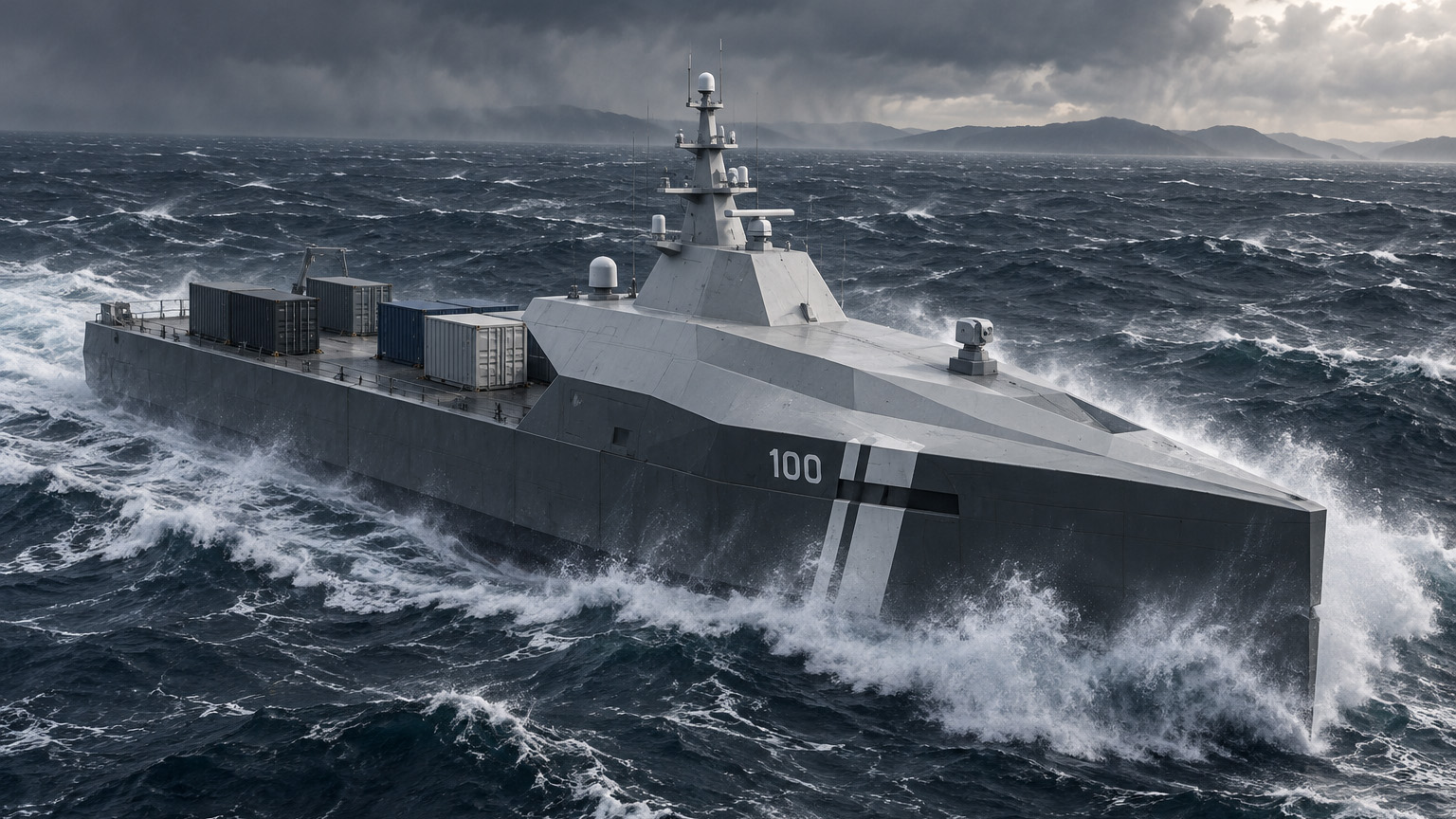
The US Navy has certified Rolls-Royce mtu Series 4000 and Series 2000 marine engines for use aboard autonomous naval vessels following reliability testing designed to demonstrate that they can operate for extended periods without human maintenance, Rolls-Royce has announced.
The certification allows Series 4000 engines to be used in autonomous applications providing up to 4,300kW of propulsion power and 3,000kWe of electrical generation. The engine is available in V8, V12, V16 and V20 configurations.
Rolls-Royce said the Series 4000 passed two 720-hour durability tests before receiving approval. The Series 2000 was certified following component testing and thousands of hours of operational experience, with the platform capable of providing up to 1,939kW for propulsion in V10, V12 and V16 configurations.
The testing is intended to demonstrate that propulsion systems can support an unmanned vessel during a 30-day deployment without preventive or corrective maintenance to its main propulsion, fuel or oil systems.
Scott Hanson, Vice President of Governmental Sales at Rolls-Royce Power Systems in North America, said: “The certification of our engines for unmanned operations further demonstrates the reliability and advanced technology of our mtu Series 4000 and 2000 marine propulsion systems. For decades, mtu engines have been trusted to provide reliable, mission-ready power for our crews at sea.”
He added: “As autonomous missions become increasingly important to naval strategy, we are proving that we can deliver the power systems, long-endurance capability and technology required for the new operational demands of unmanned vessels.”
The certification comes as the US Navy expands its use of unmanned surface vessels as part of efforts to increase fleet capacity and operate platforms for longer periods without putting sailors aboard them.
One of the Navy’s best-known autonomous vessels, Sea Hunter, is already powered by two mtu 12V 2000 engines. Rolls-Royce said the vessel has accumulated tens of thousands of operational hours since its christening in 2016.
Sea Hunter and the related Seahawk were operationally deployed earlier this year as part of the US Navy’s first division of unmanned surface vessels, according to the company.
Certification of propulsion systems is one element of the wider process required before autonomous vessels can be routinely deployed. Rolls-Royce said US Navy requirements also place emphasis on control systems, cybersecurity and safety-critical functions as unmanned systems become more prominent across maritime operations.


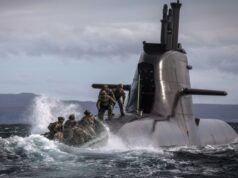


The whole argument for autonomous warships is based on the ability for one ship to transmit instructions to another ship. Most such communications to date can be ‘interfered with’ by our enemies, do we know FOR CERTAIN that communications with our autonomous ships are secure???
Of course not. On the other side of your question, if you find a way of ‘jamming’ then you say nothing until the day of reckoning arrives. Only then do you ‘show your hand’. A bit like when Mossad triggered the batteries in the Hezbollah pagers.
You are soo right Rob but your opinion/assessment is the basis for £billions and so is not enough.
Well that’s undeniably a fly in the ointment. They must have some confidence that they won’t be not only jammed, but as there have been various hints over the years, in particular where Iran took control of a US drone landed it and built a large drone industry upon it, that they can’t be turned against our precious few warships…. or other targets for that matter. Could make Ajax look like a mild inconvenience by comparison.
On another note at least this work will short cut UK work on ensuring MTU engines are up to the job and how to make them so on its autonomous platforms.
Link 16 is widely used in the Royal Navy. I’m sure it will be used on the Type 9X ships as well. So, you’ll have secure communications.
I just wonder how these ships will handle battle damage, much less routine mechanical/electrical breakdowns, with no one on board fix anything or fight a fire.
They are small expendable ships. Even a 2000 tonne USV or crewed is mission killed if hit by an ASM.
Same if it was hit by a torpedo. No amount of damage control is going to see it return to service , even if towed to safety.
The larger ones are missile trucks, probably not going to be battling small boats armed with guns , that job is probably for smaller speed boat sized USV.
Presumably the manned vessels will have small teams that can be dropped on board for maintenance?
“They are small expendable ships.”
I sure hope that’s not thinking here. Between the ship itself (engines, electronics, comms, etc.) and the 24 or so CAMMs/Asters a Type 91 would deploy, that has to be a 40 to 50 million pound investment. And, something you can’t replace right away.
That’s still a lot of “throwaway” money, tech and equipment that could all go onto upgrading an actual lean crewed ship in the first place. Why not just purchase a few more reasonably well specced and armed T31s and a few less drones? Ships for port to port visits, humanitarian relief, flying the lag, supporting helo/uavs, policing, all very useful stuff. Then add drone ships if you want.
@Colin
There is a bizarre psychological disconnect where people display an interest in highly technical subjects (thirty-day autonomous certification or the wider subject of autonomous military engineering), yet fiercely refuse to take the single extra step required to actually understand it. Why? Because they spend time reading military blogs, they convince themselves they have the tactical expertise of an admiral. They genuinely believe the US Navy and the master engineers at Leidos spent twenty million pounds per ship without ever stopping to think – “Wait, wtf! … what if someone tries to jam the radio link?”
It takes a massive amount of unearned arrogance to assume a multi-billion-dollar military apparatus missed a basic vulnerability that a random internet commenter spotted in five seconds.
… this is known as the the Dunning-Kruger Effect, look it up.
The persistent anxiety that these vessels will be easily hijacked, boarded, or left to rust into uselessness stems from a fundamental misunderstanding of the deep engineering underpinning modern naval autonomy.
People imagine these platforms as fragile, remote controlled toys that lose all functionality the moment a wireless signal is jammed, whereas they are actually designed from the keel up as hardened, self sufficient, and highly intelligent nodes within a wider military network. Take the common scenario of an adversary attempting a physical boarding to steal the ship. A rogue actor cannot simply climb aboard, break a window, and take the wheel; the outer hull of the Sea Hunter class is a completely smooth, windowless carbon-fibre TRIMARAN structure (they do not look like the images headlining this article) with no external handles, doors, or hatches. The internal computer bays and the certified MTU Series 4000 engines are sealed beneath heavy, internal military-grade armour plating. Furthermore, these craft are explicitly not “expendable” assets; they operate as forward ‘hunting dogs’ thrown out several dozen km’s ahead of a manned Carrier Strike Group. They remain constantly under the protective missile umbrella of a manned destroyer, using live 360-degree electro-optical and infrared sensors to stream real-time threat telemetry back to the fleet.
In the absolute worst-case scenario where a USV ship is cornered, an automated “scuttle” command executes a cryptographic purge, instantly wiping all classified software, operational algorithms, and encryption keys from the solid-state drives within milliseconds, leaving an adversary with nothing but a useless, hollow shell of metal. The threat of a silent cyber hijacking or GPS spoofing attack is met with an equally rigorous, zero-trust digital architecture. The critical navigation computers controlling the steering and propulsion rudders are completely air-gapped from the external satellite and communication links via hardware-enforced, one-way data diodes. If an enemy tries to inject malicious code or blanket the area with false GPS coordinates, the onboard SABER network; Situational Awareness, Boundary Enforcement, and Response, detects the digital friction immediately by comparing the anomalous data against a rigid, pre-established baseline of secure traffic. Rather than blindly following the corrupted input, the software executes a hard “dead man’s switch” lockdown. The autonomy core immediately isolates the communication array, cuts power to the drive shafts, drops a physical anchor, and sits completely dead in the water, broadcasting a secure distress telemetry beacon until a friendly physical recovery team arrives with hardware encryption keys to reboot the system.
The worry regarding mechanical breakdown from a lack of daily human maintenance is answered by the sheer density of internal telemetry and altered operational lifecycles. The engine rooms are packed with thousands of micro-sensors; torsional vibration monitors that detect a cylinder misfiring by a fraction of a millisecond and fluid particulate spectrometers that use lasers to count metal flakes in the oil to predict bearing wear. If a fuel line drops pressure or a filter clogs, the vessel’s architecture mechanically actuates internal motorized valves to isolate the breach and automatically reroutes fluids through pre-installed, parallel backup loops.
The ultimate proof of this resilience is that these ships have already completed massive, multi-thousand-kilometre autonomous voyages across the Pacific entirely on their own computer brains. They are built for intense, discrete 70 to 90-day micro sprints rather than indefinite deployments, returning regularly to manned bases where human engineers can perform preventative maintenance.
Ultimately, the Navy doesn’t expect these ships to be invincible, but in the brutal arithmetic of modern warfare, it is infinitely better to risk a £20 million crewless drone ship than a £2 billion destroyer and hundreds of sailors.
It’s not about building an un-hackable, infallible super robots; it’s about using specialised, modular machines to create mass, scale, and a defensive network that protects human lives while presenting the enemy with an impossible tactical puzzle.
My point is, instead of clutching your pearls and panicking like Chicken Little, try a little bit of internet sleuthing to understand and answer your very own questions, because the real-world engineering blueprints have already solved these vulnerabilities to the point that they are considered nominal.
TL:DNR
Since when a 2000t drone ship will cost 20M? If besides the main mission it has self defence then start at 150-200M
Talking about structural vulnerabilities is perfectly fine to be warning about.
Besides go look at the Falklands to see how several perfectly obvious things were not taken in consideration.
Recently… explain how T45 was to be retired in 30’s to be suddenly have extended service?
Iran says it captured US submarine drone in Strait of Hormuz
https://www.defensenews.com/news/your-military/2026/09/09/iran-says-it-captured-us-submarine-drone-in-strait-of-hormuz/
Any comment brains?
I dont hang with Joe 90.
I tremble at the thought of disagreeing with anyone who has doctorates in both psychology and autonomous military engineering but Magenta leaves me no choice ^.^
I tremble at the thought of disagreeing with someone who has doctorates in both psychology and autonomous military engineering
I posted a question as to the reliability of a communication link, I posted the question BECAUSE I do not have the qualifications I mentioned above, Magenta seems to have all the answers but just to take issue with one comment he makes:
This is a link to the SEA HUNTER CLASS ship he talks about
https://www.wikiwand.com/en/Sea_Hunter#/media/File:USV_Sea_Hunter_-_RIMPAC_2022_Fleet_Sails_in_Formation.jpg
perhaps he is short sighted but I see the following:
a hatch in the side of the small superstructure.
A mini ‘bridge’ structure with windows.
an obvious route to boarding the vessel via the side hulls with railings to assist/grapple.
I ignore the insults for now.
@Colin,
Congrats! You used the internet to find an image of hatches and ‘bridge’ structure with windows … but you left it at that, you didn’t bother to look/search a little deeper and understand why they exist on the prototypes but wont fully exist on the finished products.
Take the next step Colin … dive in to a search engine, dial in your own level of complexity, it’s very informative, I promise you.
… you are right to ignore the insults, I’m not proud of them.
A most comprehensive explanation Magenta, excellent post that answers a lot of the doubts and concerns that observers naturally have with new, unproven equipment. The article relates to US Navy unmanned vessel development though, we have to hope that British uv development, on no doubt a significantly smaller budget, is as technically capable and thorough.
How come you know so much about the subject,l? I wouldn’t know where to begin on the Internet to find out all this stuff!