

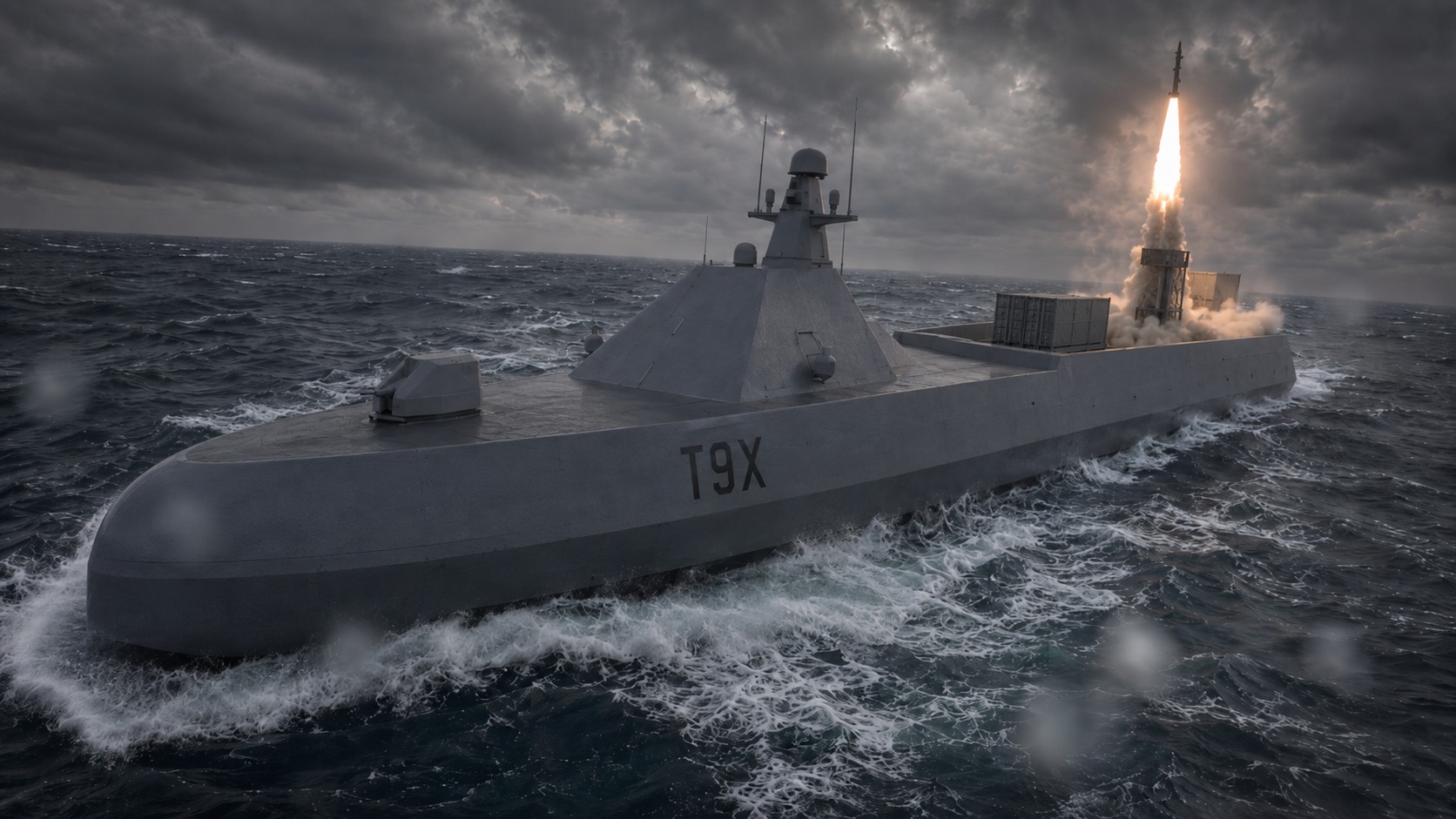
Defence will invest at least £1.5 billion over the next four years to begin delivering the hybrid navy, with the breakdown between different types of vessel to be developed in consultation with industry, according to a written answer published on Thursday.
Luke Pollard, Minister of State for Defence Readiness and Industry, was responding to James Cartlidge, the Conservative MP for South Suffolk, who had asked how much is intended for the programme in each of the remaining financial years of this Parliament.
Mr Pollard said: “Defence will invest at least £1.5 billion over the next four years to begin delivering the Hybrid Navy, including the integration of autonomous underwater, surface and airborne systems to deliver mass and persistence.”
On what that buys and by when, he said: “By 2030, we aim to have brought the first large autonomous vessels into service, including a prototype uncrewed missile platform and extra-large uncrewed underwater vessels (XLUUVs), with payloads developed through AUKUS.”
He added: “The optimal breakdown of this £1.5 billion investment between different types of vessel will now be developed in consultation with industry.”
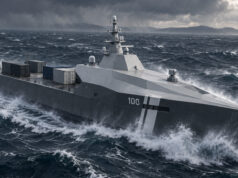
The architecture comprises uncrewed missile platforms designated Type 91, uncrewed underwater sensing platforms as Type 92, extra-large uncrewed underwater vessels as Type 93, uncrewed radar platforms as Type 94, and a future class of Common Combat Vessel acting as the crewed command hub coordinating them.
A prototype Type 91 is intended to be in service by 2030, though no service entry date has been set for the class. The Common Combat Vessel remains in initial design with hull form options still being explored, and the department told Parliament this week that detailed programme costs remain subject to ongoing concept development, approvals and affordability assessments, declining to give a unit cost or a number of hulls. Rather than dividing the money between vessel types and then asking industry to build to that split, the department intends to settle the allocation with suppliers first.
That approach matches what the First Sea Lord described last month in relation to Atlantic Net, the autonomous sensor network forming the surveillance element of Atlantic Bastion, where the Navy set out the effect it needed rather than writing detailed requirements. General Sir Gwyn Jenkins said the research behind the competing bids was privately financed, adding: “We haven’t put a penny into that.”
He also said the Navy has run service-wide war games to test the hybrid fleet, and that the results consistently show crewed warships are still needed within it, positioned further back and taking on the command and coordination of the uncrewed systems around them.


If the batch1 Rivers don’t get a direct replacement, how much of their duties could be carried out by Type 9- vessels in lean crew mode?