Russia lost three tactical and strategic aircraft in the space of a week, a Tu-95MS bomber that crashed after multiple engine failures on a training flight and two fighters destroyed by a Ukrainian one-way attack drone at an airbase five hundred kilometres from Ukraine, according to the latest UK Defence Intelligence update on the situation in Ukraine.
The update said: “Over the course of one week, Russia suffered three tactical and strategic aircraft losses. These airframes have been involved in strike campaigns against Ukraine.
“On 29 September 2026 Russia’s Long Range Aviation fleet lost one of its workhorse Tu-95MS BEAR H on a training flight shortly after take-off in eastern Russia. The BEAR H suffered multiple engine failures before crashing. These aircraft have been used extensively to strike Ukraine over the course of the conflict, almost certainly creating a significant maintenance burden on the fleet.
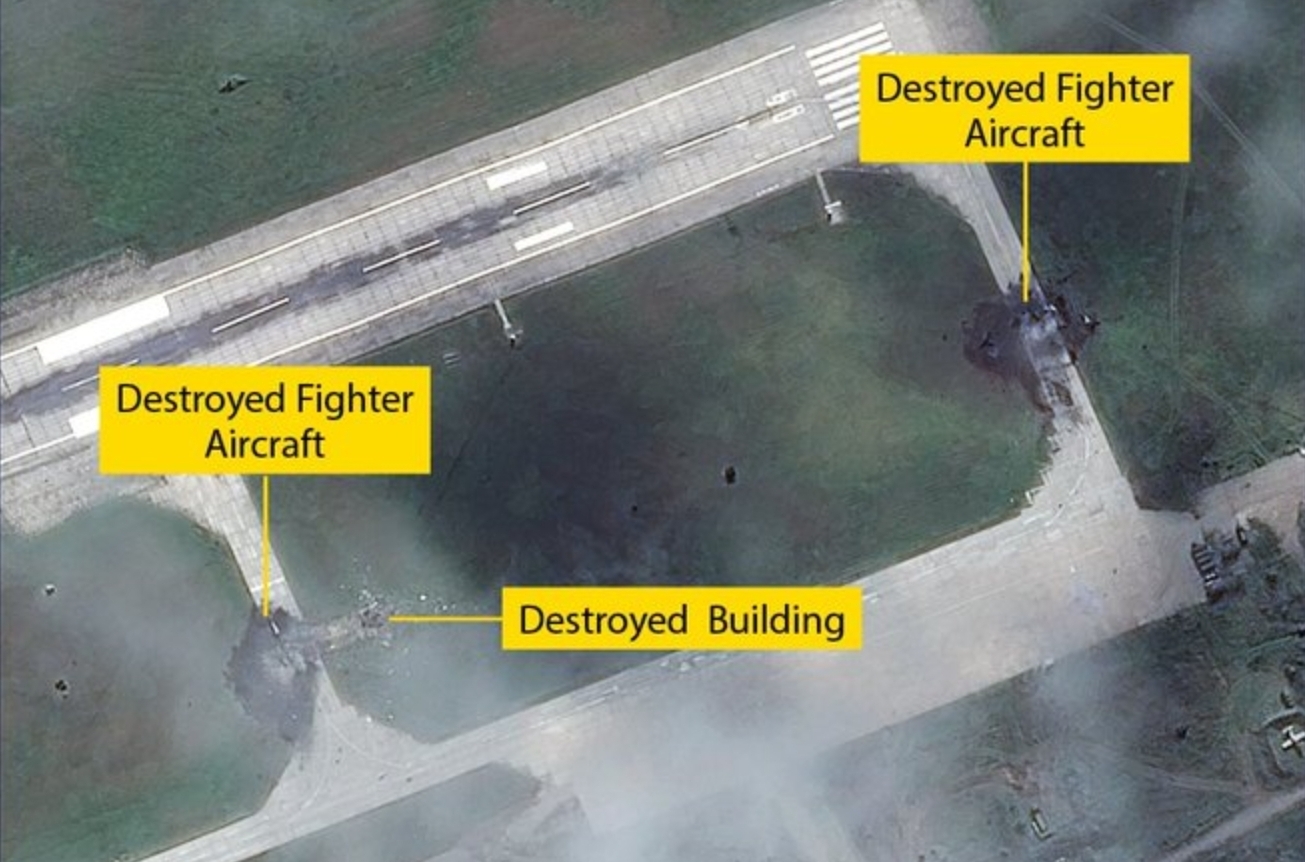
“On 04 October 2026, a Ukrainian one-way attack uncrewed aerial vehicle strike destroyed a Su-35S FLANKER M multi-role fighter and Su-34 FULLBACK fighter-bomber and a munitions depot at Khanskaya airbase, Russia, 500km from Ukraine.
“FULLBACK aircraft are used on daily operations to launch glide munitions into Ukraine. Analysis of commercial satellite imagery dated 04 October 2026 identified the attack had destroyed two fighter aircraft, cratered the parking apron and the taxiway, destroyed one building and destroyed and damaged two munitions’ depots.
“Russia has lost more than 100 fighter aircraft in the Ukraine conflict since February 2022.”
Russia will find the Bear the harder of the two losses to absorb, because production of the Tu-95MS ended in the early nineteen nineties. They fly the Kh-101 cruise missile strikes that have hit Ukrainian cities through the war, launching from well inside Russian airspace and turning for home without entering contested air.
Khanskaya sits in the Republic of Adygea in southern Russia, well outside the range at which Russian commanders had been willing to disperse aircraft earlier in the war. Ukraine’s long-range one-way attack drones have steadily pushed that calculation back, and airfields that were treated as rear areas have had to adopt the revetments, decoys and dispersal that frontline bases adopted years ago.