

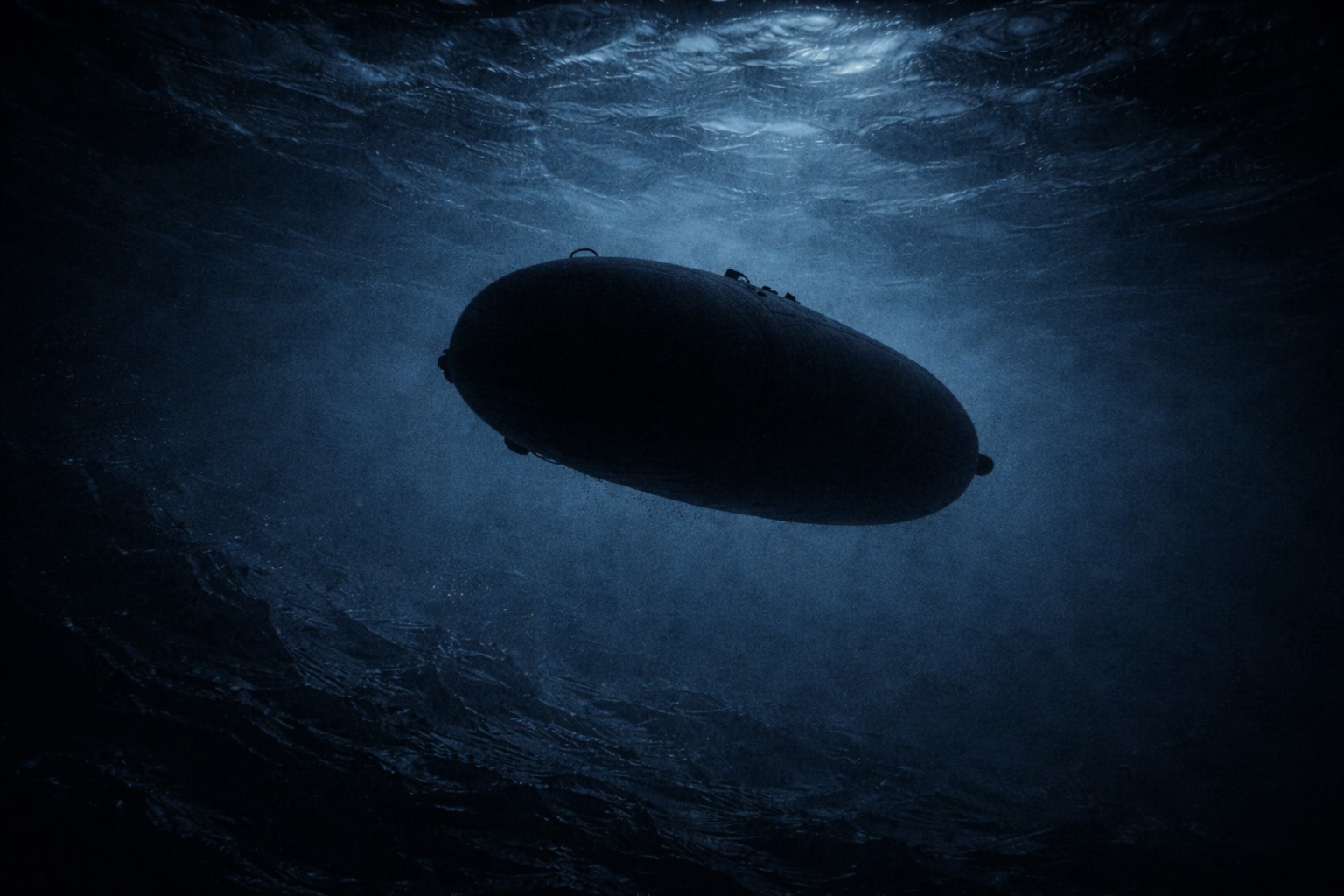
Ocean Infinity Solutions has been picked for Atlantic Net, a £90 million network of drones, sensors and AI to help the Royal Navy find Russian submarines and protect undersea cables in the North Atlantic, according to the Ministry of Defence.
The agreement with the Hampshire-based company was announced at the International Sea Power Conference in Oslo, where Luke Pollard, Minister for Defence Readiness and Industry, is speaking.
The ministry says the network will combine advanced sensors with uncrewed systems patrolling the depths, creating a single surveillance service that gives submarine-hunting warships and Astute-class submarines earlier warning of threats and a clearer picture of activity beneath the surface. It says the work will support almost 200 new skilled jobs and its immediate supply chain.
Atlantic Net is the first phase of the Royal Navy’s plan to put uncrewed systems at the centre of anti-submarine warfare in the North Atlantic, under a model in which commercial providers own and operate the platforms under naval oversight and pass data to commanders ashore.
The Ministry of Defence set out its intent to tender last October, and Pollard said in January that 26 compliant industry proposals had been assessed after engagement with around 327 companies.
The second phase, Atlantic Bastion, would bring the capability under direct Royal Navy control, with government-owned Type 92 uncrewed surface vessels and Type 93 uncrewed underwater vehicles. The ministry says Atlantic Bastion responds to a key recommendation of the Strategic Defence Review to build a hybrid force of crewed and uncrewed vessels.





£90 million is not much for such a capability considering just one 2087 sonar costs around £80 million. Good to see we are selecting uk companies for this and small players rather than defence primes that don’t get out of bed for less than £1 billion.
True though I was thinking as I was reading, how much of the actual technology this company will exploit will actually be British? Don’t know anything about them and haven’t as yet researched them so can’t answer that question but it’s too easy to assume when a British company like this that it’s a high level of British technology and expertise that’s being exploited to do the job.
This is a wider issue really mind, I keep reading adverts from British Companies offering high level direct internet services while simply in essence being a middlemen for Starlink. This is the World we live in now where a headline can disguise a whole ramp of reliance on essentially foreign input, to the point now where without deeper insight into any contract, a foreign business might be exploiting more British content than a superficially British entity might be. The wider issue was never better illustrated than when recently Trump threatened to ban Bombardier from US business jet orders only for it be pointed out that the company provides more US content and jobs than the rival US Gulfstream.
Even so, can’t see £90m funding more than at most a baseline operating system covering a section of the Atlantic, rather than the entire proposed area for Atlantic Bastion.
Agreed, ‘Seedcorn’ money. Perhaps that is what is attractive. It gives the appearance of doing something, whilst not costing a lot.
Either that, or new capabilities will be very cheap and the existing ‘Primes’ can give up and go home. In general you get what you pay for.
Interesting thread on Defence news – seems Ocean Infinity are partnered with a new start-up called Optics 11, that is using piezoelectricity and optic cables to allow for far more enhanced underwater detection. Says they have 35 trials for different European customers coming up this year, unknown if the US or China have also developed this or not.
Must go and learn more about this, it sounds on the surface (bad word choice there perhaps🫣) like this might hopefully be a case of innovative British IP offering something new and effective in this increasingly vital sector.
I note Optics11 appear to be Dutch. Maybe English speaking, does that count from an IPR point of view?