


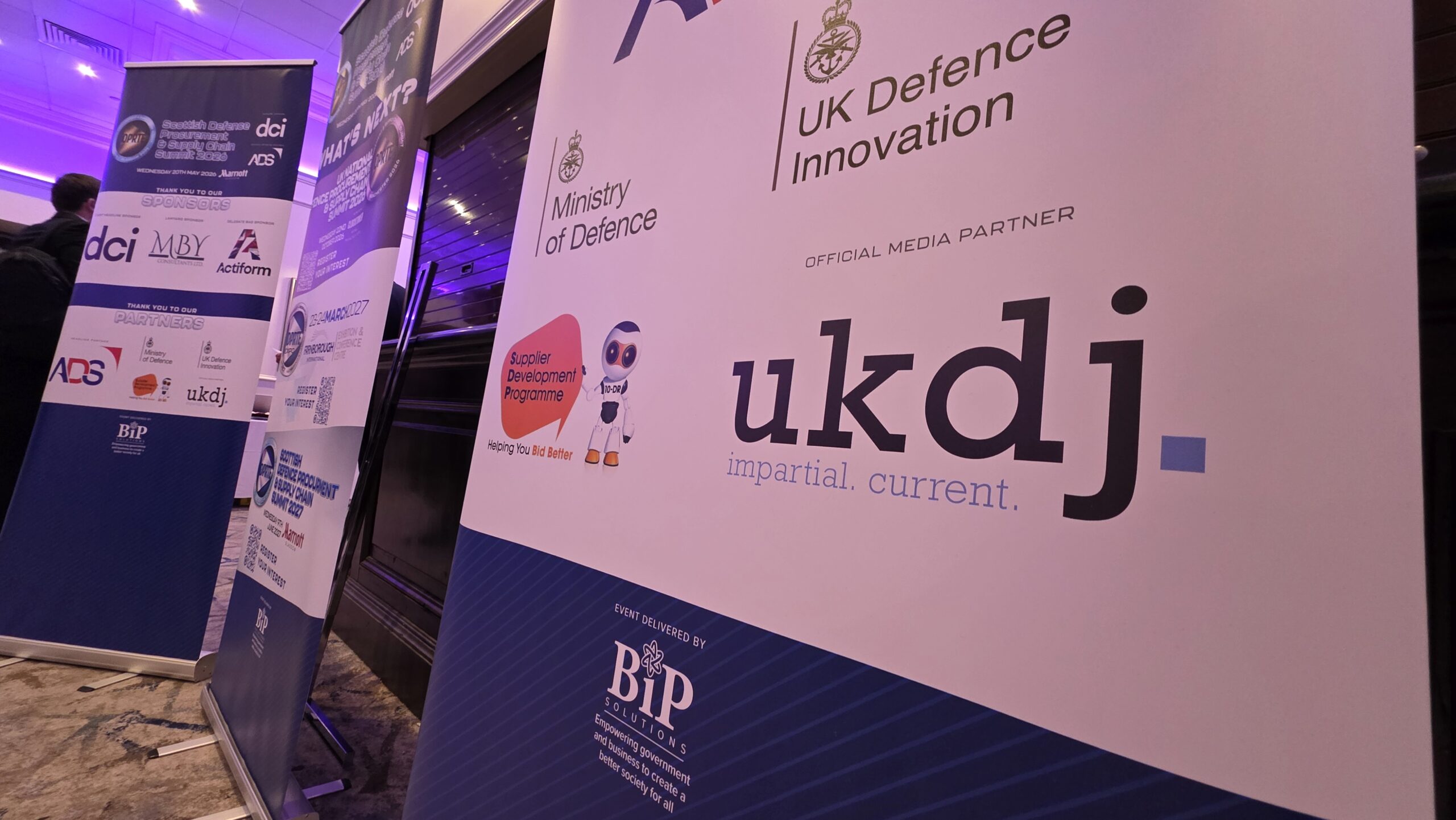
For the first time in the DPRTE series, a fixture of the UK defence procurement calendar for years, Scotland had a summit to call its own. The inaugural DPRTE Scottish Defence Procurement & Supply Chain Summit brought together defence buyers, prime contractors, SMEs, innovators, and policy leaders for a day of strategic insight, practical guidance, and direct engagement.
Those who made the journey had plenty to talk about, and the conversations that followed, both on the floor and in the days since, have been striking in their consistency. This was an event that landed.
The tone was set from the opening moments. Chairing the day was Grahame Steed, Director of Public Policy, Research and Communications at BiP Solutions, who joined the organisation in 2003 and has held a range of senior roles across the business, building a deep and well-regarded expertise in defence procurement intelligence and public sector strategy. It is a background that showed.
Steed opened with a confidence that comes from knowing the sector inside out, telling the room: “What a moment to be gathering in Glasgow. The Strategic Defence Review of 2025, followed by the Defence Industrial Strategy, has reset the framework within which we all operate, and Scotland sits squarely at the heart of that reset.”
He set out six interlocking themes for the day: capability, resilience, competitiveness, sovereignty, SME growth, and skills, framing them not as isolated priorities but as the architecture of a credible, sustainable defence industrial base. He was candid about what delegates could expect: “Candour from our keynote speakers. Practical detail from our prime contractors. Honest assessment from our panelists on how policy translates ultimately into contracts.”
It was a strong opening that set a purposeful register for everything that followed, and he maintained that standard throughout, keeping sessions focused and the floor engaged across a long and packed programme.
The right event at the right moment
The Summit brought the DPRTE experience to Scotland for the first time, connecting the Scottish defence community with the procurement and supply chain expertise that has made DPRTE the sector’s go-to gathering. Steed noted from the stage that the turnout alone said something: “The turnout for this event suggests that it is something the market has indeed been waiting for.” The event came as the UK Government committed £50 million through the Scotland Defence Growth Deal alongside an additional £2.2 billion uplift to MoD spending from April 2026, driving a period of expansion across the sector with growing demand for new suppliers and capabilities.
The spending plans were given real substance from the stage. MoD Deputy Head of Place and Industry Skills Calum Taylor set out precisely how Scotland’s Defence Growth Deal will be spent, with investment targeting innovation across the supply chain. For Scottish businesses in the room, that was exactly the kind of clarity they came for, turning a headline funding figure into something actionable.
Secretary of State for Scotland Douglas Alexander MP addressed the Summit by video link, describing Scotland’s contribution to UK defence as spanning naval shipbuilding on the Clyde, submarine support at Faslane, advanced radar and electronic warfare capabilities, and growing strengths in cyber, digital, and space technologies. He told delegates that Scotland’s companies and skilled workforce have never been more important, pointing to the government’s commitment to raise defence spending to 2.5% of GDP by 2027 and an ambition to reach 3% in the next parliament.
The military picture was sharpened further by Brigadier Andrew Muddiman, the Royal Navy’s Naval Regional Commander for Scotland and Northern Ireland. Speaking on the opening panel, he described vastly increased levels of Russian activity in the North Atlantic and UK territorial waters, telling the room: “We have seen on a number of occasions in the past year the presence of Russian forces in areas and in numbers that would five years ago have been unthinkable. We are in a completely different paradigm.” For any business still weighing whether defence was a sector worth pursuing seriously, those words settled the question.
Two of the day’s most significant sessions centred on the prime contractors, and the tone of both was noticed by delegates. Leonardo, Thales, and the MoD told Scottish SMEs directly how they plan to open up their defence supply chains, addressing the practical question that smaller firms bring to every event of this kind: how do you actually get in?
Industry got to put questions to the primes, some uncomfortable, but all answered.
The more striking moment came when prime contractors acknowledged that the supply chain system must change from their end as well. That admission, that the burden has too often fallen on smaller suppliers to navigate a complex and opaque process, was received on the floor as a meaningful shift in posture rather than a conference talking point.
A session on dual-use technology and emerging domains covered space, cyber, and AI, addressing the path from commercial product to defence deployment, including compliance, security standards, and routes to market, while identifying where Scottish innovation has the strongest potential to contribute. Sessions also explored how SMEs can align their capabilities with future defence needs, with the programme looking ahead to emerging opportunities across AI, cyber, space, and dual-use technologies. For Scotland’s commercial technology sector, the message was clear: the relevance of what you already do is greater than you may realise.
Why this one felt different
DPRTE events are well established across the wider UK defence calendar, but on the evidence of this inaugural Scottish edition there was something distinctive about bringing it north. Industry voices leaving the Glasgow Marriott were notably positive, not in the cautious, polite way that follows a functional conference, but with the energy of people who felt the event had genuinely reflected the moment.
The combination of serious investment commitments, senior government engagement, prime contractor transparency, and a focused one-day format gave proceedings a clarity of purpose that resonated. The case for a permanent annual fixture in Scotland’s defence calendar appears to have been made, comprehensively, on day one.










I’ve gained $17,240 only within four weeks by comfortably working part-time from home. Immediately when I had lost my last business, I was very troubled and thankfully I’ve located this project now in this way I’m in a position to receive thousand USD directly from home. Each individual certainly can do this easy work & make more greenbacks online by visiting
following website—.,.,.,.,.—>>> JobatHome1.Com
Good some meets have produced some paper work, some ideas and thoughts, ready for further meets.