

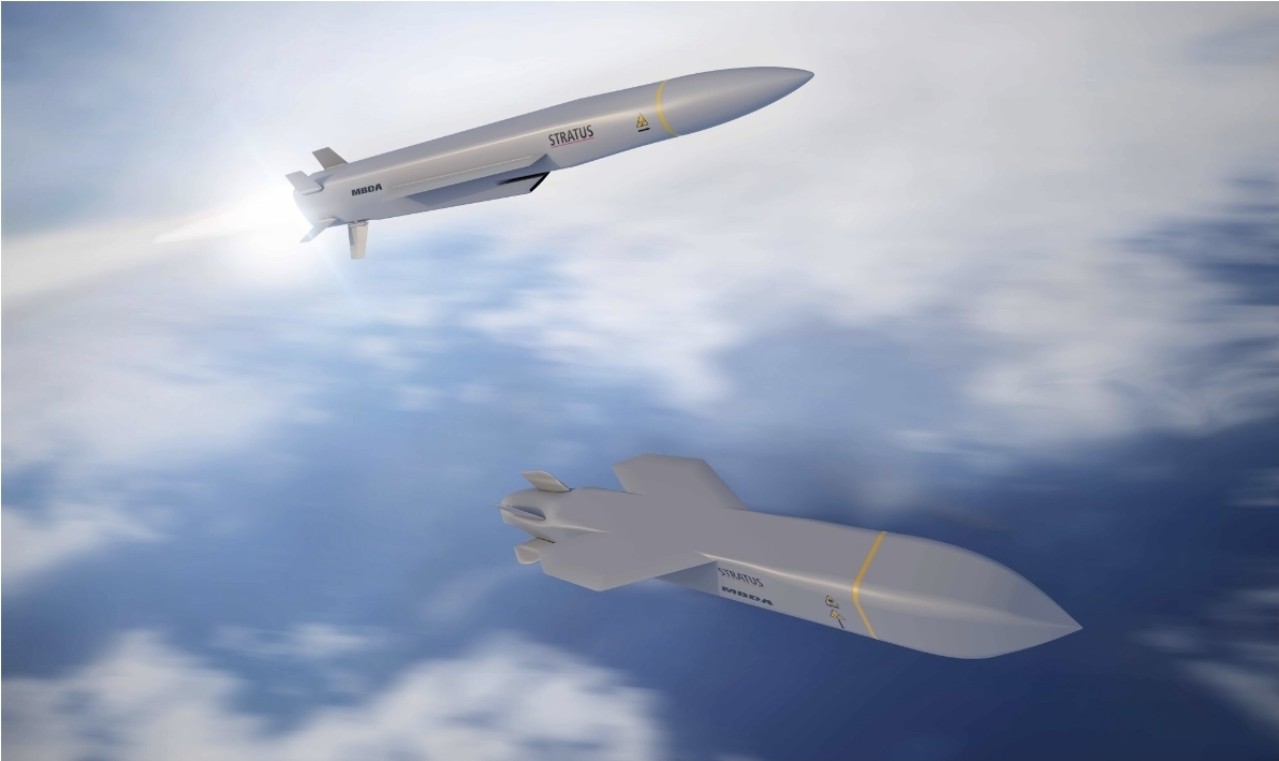
A decision on the full business case for the UK’s Future Cruise Anti-Ship Weapon (FC/ASW) programme is expected during 2026, according to a written parliamentary answer from the Ministry of Defence.
Responding to a question from Conservative MP Ben Obese-Jecty, Defence Minister Luke Pollard said the programme is progressing through the government approval process while work with industry continues.
“The Future Cruise Anti-Ship Weapon programme continues to move towards its Full Business Case approval in 2026,” Pollard said.
The programme is a joint UK-France effort intended to replace existing anti-ship and land-attack missiles used by both countries. It is expected to eventually succeed systems such as the Royal Navy’s Harpoon anti-ship missile and the Storm Shadow cruise missile used by the Royal Air Force.
Pollard said the approval process is structured in a way that allows ongoing industrial activity to continue without interruption while the final business case is considered.
“The schedule for completing the approval process is structured to allow continued delivery of industry work… throughout 2026 without the approval process introducing any delay,” he said.
The FC/ASW programme is being developed through cooperation between the UK and France, primarily involving MBDA, and is intended to deliver next-generation long-range strike capabilities capable of defeating modern air defence systems and high-value naval targets.








The project has taken 9 years to develop a business case…..
Excellent! Right on schedule
Makes you proud to be British 🥲
Two points. Firstly, should already be sorted. More government delays that risk our security. Second… Not sure about France as a partner… they don’t seem to be good team players…
That’s why we went for two versions of Stratus. We wanted subsonic and stealthy, they wanted high supersonic or hypersonic. France said their modelling showed very fast was better than very stealthy. We said, we don’t hold with that fancy modelling nonsense. We know what we need!
The Royal Navy wanted speed, it was the RAF that wanted stealthy.
Ok so an answer soon, that means nothing, the DIP will be released soon, like evey thing it will drag on and no one will decide any thing. The MOD useless at just about every thing year after year. The Government great at press statements that say noting. offer nothing and decide nothing. So state normal then, hurry up and wait.
Well good news eh? The DIP will be published by 2028, after the Reeves bailing out of domestic fuel bills caused by Trump there should be a few billion spare. Another question is of course how many to buy? A few should do as we lack any bloody ships to put them on.
I’m beginning to wonder whether the issue with the DIP is that a DIP is the wrong thing to be doing. There’s a general move away from old school procurement to more rapid spiral development, in part as things are moving so fast in the drone world. The DIP is an attempt at old school thinking – to produce one overarching plan with lots of subcomponents that is all set in stone at one point in time and then stuck to.
So the DIP is old school thinking, when even the MOD itself is moving on and adopting more rapid and flexible approaches. Maybe there shouldn’t be a DIP then, just a steady series of decisions and purchases, each run on its own timeline. That will feel messy to some (especially the treasury) but maybe it will be better suited to the pace of change in procurement at the moment. In some respects that is also what we are getting – constant smaller announcements of new projects.