

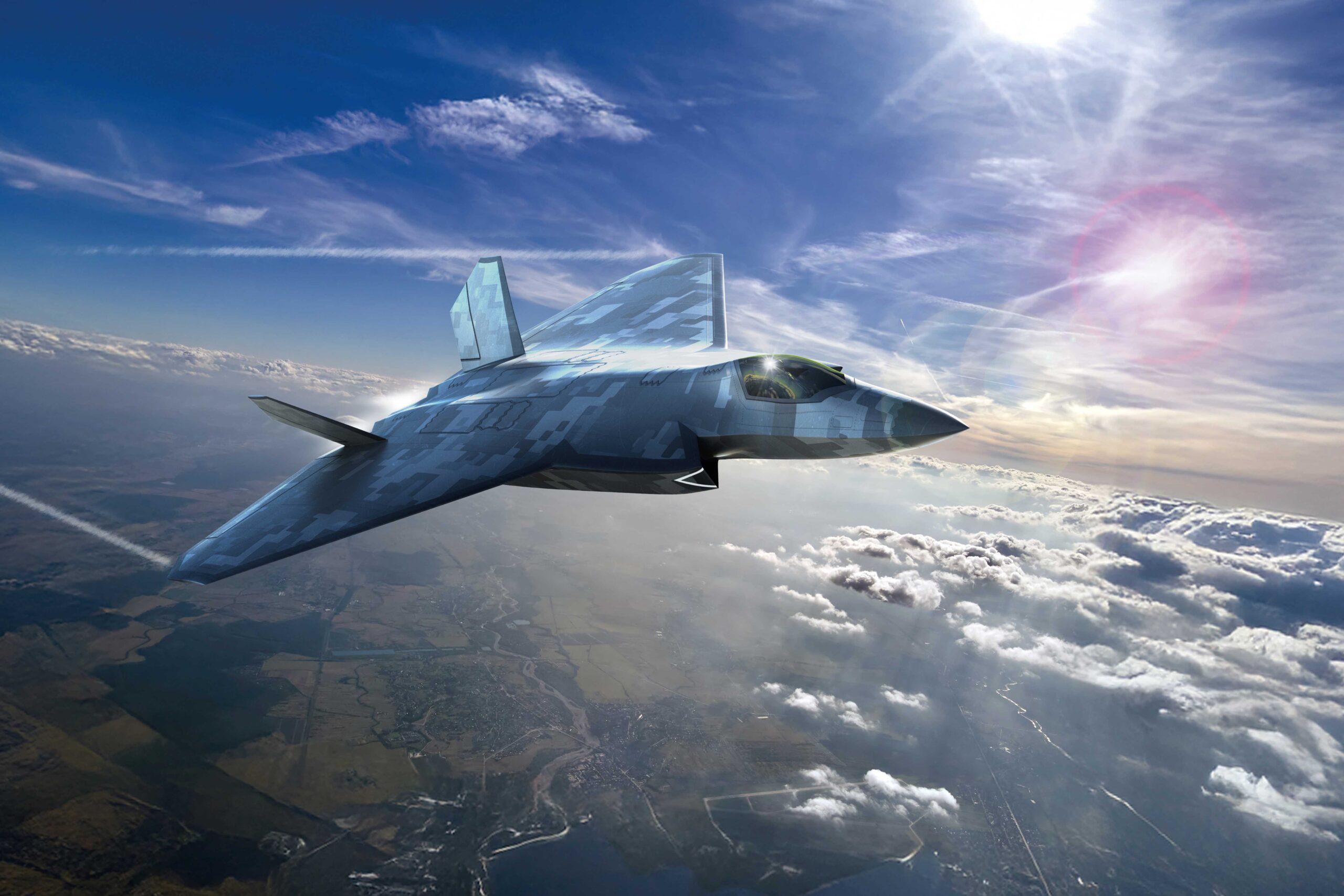
The Ministry of Defence has reiterated that the Global Combat Air Programme remains open in principle to additional partner nations, in a written answer to a parliamentary question prompted by the cancellation of the rival Franco-German-Spanish Future Combat Air System.
Lord Lee of Trafford, a Liberal Democrat peer, had asked the government what assessment had been made of the implications and opportunities for GCAP arising from the discontinuation of the Franco-German plans to jointly develop a next-generation fighter.
Minister of State at the Ministry of Defence Lord Coaker replied: “The Global Combat Air Programme (GCAP) has been designed with Allies and partners at its heart and interoperability at the centre of its development. We and our GCAP partners Italy and Japan agree that the programme is in principle open to additional partners to secure burden-sharing, industrial benefits and growth opportunities, as long as programme delivery is assured. Decisions on any additional partners will be made jointly with Italy and Japan.”
The answer maintains the position the three GCAP capitals have held since the trilateral programme was formalised under the GIGO international government organisation, with London, Rome and Tokyo retaining joint authority over admission decisions. The wording avoids any direct reference to Germany, France or Spain, but the timing of the question and the framing of the reply leave little doubt about the context.
FCAS was formally cancelled on 8 June, ending nine years of trilateral work between France, Germany and Spain on a sixth-generation fighter, accompanying remote carrier drones and a supporting combat cloud. Chancellor Friedrich Merz and President Emmanuel Macron agreed to scrap the Next Generation Fighter element of the programme after industrial mediation between Dassault Aviation and Airbus Defence and Space failed to resolve longstanding disputes over leadership, workshare and intellectual property.
Spain, as junior partner, aligned largely with German positions through the dispute but expressed disappointment at the outcome. Some elements of the wider FCAS ecosystem, including drone initiatives and combat cloud technologies, may continue as smaller standalone projects, but the manned fighter at the heart of the effort is gone.
For GCAP, the collapse of FCAS reshapes the European combat air landscape and opens a set of strategic and industrial questions that the three GCAP partner nations have until now been content to leave largely unspoken. The programme is structured around the delivery of an in-service date of 2035 for a crewed sixth-generation fighter, alongside the development of uncrewed adjuncts and the wider combat cloud and systems architecture needed to support them. BAE Systems leads the UK industrial effort alongside Leonardo in Italy and Japan Aircraft Industrial Enhancement Co in Japan, while Rolls-Royce, Avio Aero and IHI Corporation are working on the propulsion system, and MBDA, ELT and Mitsubishi Electric are among the other principal suppliers.
Coaker’s reference to “burden-sharing, industrial benefits and growth opportunities, as long as programme delivery is assured” sets out the criteria against which any candidate is being assessed.










This will be a real headache for the French. Especially with a new carrier air wing to equip in the late 2030s/early 40s.
I only hope Robert that we don’t spend years arguing with them about how large their share should be..
Its difficult. Because we will need the money. Even after 25 years of production, a new Typhoon still costs north of 85M a pop. So God knows what a large stealthy 6th gen is going to cost.
Indeed we do. I can’t remember a time that we have been in such a bad state, and I have been around a long time! Now we are going to get even more delays while Burnham (?) settles in and despite what he has said this week is he really going to able to deliver with a serioiusly left Labour party wanting more and more spent on all but defence.
I don’t know Geoff. I really don’t know. Defence spending is on a upward trend, so we have to stay positive. A lot more is going on than we realise. And at least projects like Tempest do seem safe. Burnham might surprise us. Probably not. But you never know. A more inventive way to increase Defence spending beyond more tax or borrowing needs to be found.
Neither do I. The biggest problem, as you know, at the moment is that we can’t afford to do what is required now. If the figures quoted this week are true defence is going to get £13.5 billion over X years against the £28 billion it needs. As for future programmes I don’t know where the new Chancellor (?) is going to find the money. Benefits and borrowing are out of control despite Reeves supposedly pulling in £150 billion plus from her toxic tax regime which has hit everyone. So, more borrowing? more taxation? How?
I really wish we had a government that was willing to have the hard conversations with the public as to why we need more defence spending. People like me and you know why. But still to many people, danger and conflict is still something that only happens on the 6 o clock news in far away lands. They haven’t experienced any hardship in this country. People kicked off about wearing a simple mask during covid. For defence spending and welfare and the NHS something is going to have to give. Welfare can’t continue as it is. The NHS needs to become much more sustainable to survive, and that might mean not being able to offer the full range of services is does today to still exist in 20 years time. So unless we have radical economic and productive growth, the government of the day is going to have to have some hard, likely unpopular conversations with the public.
Wouldn’t that make a change? Real conversations about real problems as opposed to sisty second sound bites and a sensationalist press. The next election is going to be vital, probably the most important in decades. Unfortunately, the party system is a shambles. There was a poll a week or so ago that said that something like sixty per cent of the public trusted the Tories on the economy, yet where is their vote?
Public expenditure is frightening. Figures show (?), roughly that we spend well over £100 billion on debt interest alone; £60 billion on universal credits (out of nearly £300 billion on benefits and pensions); well over £200 billion on the NHS; £100 billion on education and wait for it, in the region of £25 billion on energy and net zero. Ironically the item on most peoples lips, immigration, costs around £4 biilion so tiny in comparison. What is being done? Nothing.
Similarly, the electorate we are told want more money spent on defence. The problem is that they want someone else to pay for it. Burham says he is going to borrow another £40 billion and raise expenditure for the public sector ( current borrowing costs £130 billion) How? We are going bankrupt as a nation.
On defence, finally, we need £30 billion to stand still, never mind expand. You know all the current problems, at least as well as I do, so I won’t get in to it all apart from saying that we will be lucky to cover existing build, never mind new programmes.
We do need a re-think urgently but where is it going to come from? What is needed is something akin to an upheavel in every department and I really don’t think ther is anyone in government able to do so.
We do need are-think, right across the board, but where is it going to come friend my friend?
RB,
Agree, the remaining,viable, 6th gen fighter development programs (F-47 and GCAP) will predictably be more expensive than current gen a/c (including all F-35 variants). How expensive? Doubt whether any
credible cost estimates exist, but some reported fiscal SWAGs are quite concerning. In a more perfect world, it would be beneficial for inter-program cooperation on R&D, but given the current political environment, it is a forlorn prospect.
They are talking $300 million for F47
It might be cheaper as a big component of bae work over the years has been to simplify manufacturing, such as 3D printing components. More robots in construction, using mass produced components
The French as usual want to do it their way Dassault etc etc
The Germans and Spanish should join GCAP and not try to change things too much The Japanese are important partners here!
Typhoon and Tornado have been successful European projects without the French and Americans
Don’t forget it was France and Germany that could not agree not just France. If Germany is let into the program it needs to be done carefully to avoid a mess with another nation wanting control. It’s already strained with Japan and Italy critising the UK.
Agree
The Germans have to tread carefully and we should step up to the mark with our present partners
but on previous air programs we have all wiorked together apart from the French (jaguar being the exception)
The Swedes with the Germans may go their own way with other northern Europeans
Just continue on with the existing plan. If anyone wants to come in then it changes nothing unless they are bring something we want to the party without conditions.
👍
Loyal wingman could be a game changer and something the Germans could bring to the party? Also
the Aussies are making good progress on that front also who might lalso ike GCAP The more the merrier to get economies of scale and a cheaper end product
Until there is a serious threat, politicians will play politics. Job creation is far better story than defence, as the average voter doesn’t realise that the nation is over paying / getting less capability due to it.
Steve
Are you sure about ” Job Creation ”
We are paying a lot of welfare to a lot of people who prefer sitting on their bums
I am not a Reform voter
Serious threat!
The Russians and their mates are attacking us in cyberspace, lurking near cables / pipelines / killing people and poisoning enemies on British soil and have been behind some proxy arsons
The government have to just say it and be honest why they can not defend us
Oh cheap GBAD would help
Tiny percentage of the welfare bill is actually paid to people that don’t work. It’s an uncomfortable truth that the media doesn’t talk about as doesn’t meet their narrative that the rich should be tax free and it’s not them it’s the unemployed that are taking your money.
It’s too hot to engage on this😒 😊
Will reply in a few days Steve when cooler!
To save you from the heat it’s 3% of the welfare bill, so around 1% of government expenditure
My PIP keeps me alive while I await further surgery, I won’t be in a position to go back to work for another 2 years.
By providing PIP to me the state is investing in keeping a skilled engineer in the workforce.
The whole “benefits scroungers” thing is the red tops picking and edge case and presenting it as common.
I can’t wait to go back to work, I’ve been sitting unable to do anything since 2022 and have been unable to work since 2018.
I spend my pip on food, fuel and courses to change the course of my career when I start back again.
Also trying to start a hobby business.
I’m an example of what a UBI (Universal Basic Income) could achieve, because I have a guaranteed safety net I can try starting my own business without the fear of it destroying my life if it fails.
And everybody should always remember, these benefits are money that gets spent in Britain’s economy, tide lifting all boats and all that bollox
Also don’t let the French near our shiny new jet.
In fact, go down the tiered contributors (hey they could start a patreon! 😂)
route, the amount you increase dictates where in the hierarchy you are, tier 1, UK, Japan and Italy
Tier 2 other nations, they get to build sun assemblies in their nation but no say in the design
Tier 3 you invest and are with the priority customers for the first jets but don’t build anything or have a say in the design.
It must not death spiral
lol It was Germany that shut the door. Airbus DS in Mancing wanted Dassault’s IP, to which Dassault said take a walk. Furtyermore it was agreed that Dassault was the prime on fighter from day one, but Airbus DS couldn’t stand that and wanted
Dassault cooperated on Neuron stealth drone with Italy, Sweden, Spain, Swiss and Greece, without any issues.
Lastly France probably participates more in cooperations than any other european nation -> Fremm, Horizon, EPC Corvette, A330 MRTT, A400, NH90, Euro Tiger, Eurodrone, Scalp/Storm Shadow, Stratus, SAMP/T Aster, etc… even in projects that others abandoned like Tiger Mk3, and MAWS that Germany walked away from
but yeah keep blaming France, if that makes you sleep better at night 😛
Yes Germany have backed out The French think they have the upper hand
Look I have a french cousin worked for CFAO and have spent at least 30 visits/holidays to France I love them and hate the enarques
Lord Templar your forebears in that illustrious order the Templars were wiped out by a French king and the Pope based in Avignon for £££££ their land temples and money
King Henry V111 did the same without the killing using marriage difficulties to clean out the wealth of the monastries
It always come down to £
I certainly agree that Japan, who are vital, and Italy, who have been good partners before, should be front and centre in all that we do on Tempest. We had problems with Germany on Typhoon but hopefully not again. If Germany and Spain do join they shouln’t be allowed to change anything, other than having a share.
I must admit even knowing just how impossible it usually is to work with Dassault on such programmes, it’s beyond belief that the French and Dassault whether it was around calling bluffs or simple intransigence and French arrogance allowed this to collapse, the implications are just so monstrous for the French. Why the Germans ever thought it would be different is also baffling, based to a degree on anger against Britain around Brexit no doubt only exploited by French charmed promises it would be different this time around, yeah right. But for Germany and Spain they have options be it GCAP, the Swedes or even others as junior partners or pure imports, but the French where do they go now other than alone again. Is that truly feasible? Who else would work with Dassault when even Spain found them as the main culprits for this collapse. Answers on a postcard and sent to Father Christmas please, as an effective Gallic programme alone seems as fanciful as George’s Christmas Santa escort missions. How did it come to this, Dassault seems to be willing to bet its influence over the Govt far out-ways its actions (non actions) threatening its very existence. To big and proud to fail I guess in the French psyche, I wouldn’t feel so confident had Bae even as a bigger and broader affair, had taken a similar line that’s for sure.
Totally agree.
Spot on Sir.
I think the French will delay their Gen6 programme and fall back on a Rafael F6 refresh, with as much magic source as they can pour in, new radar, updated engines, F35 ‘ish’ avionics etc.
A clean sheet design is beyond their ability to pay for as a country.
I suspect alongside that, they will begin a post 2040 Gen6 programme, trying to bring Gulf States and India into the fold. Alas Hal and Dassault will likely immediately lock horns regarding workshare!
funny same thing was said back in 80s with Rafale. FYI France just voted to two packages for supplementary funds for military budget LPM 2026-2030, a €36 billion + a €14 billion
spoken like a true brexiter with an inferiority complex
Why will it be headache for the French? As Dassault keeps saying, France is by far the best positioned European country for developing a next generation fighter. After a slow start – and unlike the Eurofighter – Rafale has become a huge and very lucrative commercial success. The F5 standard will come online c.2030, and there is a roadmap to F7 in the late 2030’s, the reuse of systems common with last standard Rafale’s will effectively subsidise development of the NGF. Come the early 2040’s there will then be a transition to a new all French NGF optimised to France’s military needs, e.g. carrier capable. Also, India seems very keen to become a junior partner, pumping in a few $ billion in return for some metal bashing subcontracting and the right to licence build. The French MdesA will probably end spending less on NGF than the UK will on GCAP Tempest!
That’s a day dream pal. Rafale of any standard is still a 4th gen design. And stealth is the conflict entry standard if you want to take part on the first night or operate in a integrated air defence system. Just ask Israel. France develop a 6th gen on its own? No chance. Frances economy is smaller than the UKs and riddled with debt and bonkers politics.
It’s the standard until it’s not.
An accurate assesment Robert!
” ….. GCAP door open to new partners after FCAS collapse …”. This will just delay things, then there’s the arguing over workshare. I’d rather just crack on and have new partners as, to take a leaf out of F-35, 2nd tier partners.
Almost certainly that will be the only real option. There is no will to re introduce the very structures that so compromised the Typhoon programme costs, capabilities and timeline (it didn’t even get the tail it was supposed to have) and yes the Japanese are very firm about that not happening here thankfully because Labour might otherwise still be tempted ignoring those lessons of supposed project ‘savings’ becoming added expenses in the end.
They will only be given minor systems to work on or get put in charge of future upgrades, as GCAP is being designed to be easily upgradeable during it active service life.
The Japanese are up against a hard deadline due to structural concerns on their main fighter, F5 I think. They will not be keen on any rejigging of the top table. There are however hundreds of projects associated with each countries a lot share that could be allocated to new partners although the headache will get exponentially bigger .
Seems the UK is dancing to japans fiddle on this one. Big question is it worth it for the UK. The UK could very much do with a five year delay on GCAP and more partners to absorb the R&D cost.
GCAP development should be viewed as necessary for sovereign control not a job creation program because at £16billion + it’s an expensive way to create jobs.
At this stage though I just don’t see how Japan gets GCAP in service by 2035.
6 year delay just ups up the eventual cost by umpy billions. Just like the Treasury loves to do with all defence projects. Sucks for the tax payer tho.
“GCAP development should be viewed as necessary for sovereign control not a job creation program because at £16billion + it’s an expensive way to create jobs.”
I agree…..so….just WHY does the Defence budget and the military have to pay for it? If it about jobs, and thus profits for UK PLC why is it not part of some HMG key programme in the national interest, and thus the MoD save a fortune.
In France a civilian agency is in charge of fighter development and paying the cost which is very much a job creation program, the money doesn’t come from the military budget direct but it’s counted towards military spending under NATO rules.
The money is certainly not coming from the welfare or infrastructure budgets in France, €50 billion is a hell of a chunk of change for any department.
Fair point. The only vague comparison I think I’ve heard of was I believe the Treasury threatening to take control of a program – I’m not sure if it’s this or Ajax. However I dont know the idea suggests that who pays first it changes
I agree though
I’m sick and tired of the military budget being a subsidy for the MIC in things like this.
No wonder there is so little of everything.
Equipping the military is merely a bye product.
But if they don’t invest in British military manufacturing then we will lose the ability to design and build something like a 6th gen fighter or aircraft carriers or nuclear submarines or Destroyers and Frigates and the thousands of other items of kit we make. I get what you mean, but if we build or buy from abroad to save a few quid, people moan like hell. Then when it goes to a British contract, people moan again. We can’t have our cake and eat it. We either have a high end British military manufacturing capability or we don’t. If it creates well paid skilled jobs. Good. Its more tax going into the system that can then be spent on defence spending and everything else we need.
Yes, mate, but not from the militaries budget! Are the train companies paying to build HS2?
GCAP is a national endeavour and should be treated as such.
The military should quite rightly pay for the ones that they buy, not the 12 billion to develop it. That should be a separate kitty funded by HMG as a whole.
But the equipment budget is separate from day to day spending. And one way or the other the money comes from the same Treasury pot. Be it defence projects or a new hospital. No matter how it’s funded, do we want to build it ourselves or rely on others.
Most of GCAP initial systems will be off the shelf components. The only new thing is likely to be to be airframe with tailless avionics and the engines.
I think the obvious one is the loyal wingman aspect and related weaponry/sensors to the programme, which indeed was the general agreement on FCAS. The main disagreement was that the Germans for allowing Dassault to lead (indeed dominate) the aircraft itself that they wanted a level of IP transfer, one presumes so that they (and Spain to a degree) didn’t lose their own independent overall aircraft development capabilities for future projects. Now Bae is reportedly being somewhat defensive of its own IP going to its partners but there is no comparison to the Dassault/French position no doubt, so I would see room for negotiation there that may end up acceptable to the Germans, Spain may be a far less useful partner but equally would have few cards to play so may jump on board with whatever they can get, perhaps helping Germany on its contributions. The advantage of formulating an agreement with Germany would beyond financial and skills concentration on the wider programme, be that it would likely sow up most of Europe as eventual customers/external contributors which would be a massive win down the line and indeed for future projects too. It would pretty much create that focused European aerospace market place, often mooted as essential but could never have been seen as probable certainly under a UK umbrella when Tempest was launched post Brexit in the smoke of the French and German programme that seemed effectively to cut Britain out of that future altogether and generated doubts we would even retain any scope there altogether. From small acorns eh. Certainly shows Britain still has cards to play when it dies so with vigour, focus and confidence though in this case desperation focused much of the urgency. Too often only that desperation and emergency brings the best out of the Country rather than planning and constructively influencing bigger pictures.
Or just go with the Australian Boeing CCA that’s already flying. They’ll be buying GCAP.
Agree and disagree.
CCAs will provide the mass needed for any first world airforce in the 21st century and will be a step change in how air combat is fought in future peer state conflict – akin to the change from guns to air-to-air missiles beginning around the time of the Korean War and in frontline service in Vietnam. Any fighter program (even 6th Gen) is incomplete without an integrated CCA solution flying alongside it. This includes the Tempest and US F47. Given the advanced state of the Ghost Bat program (the just announced Block 3 can carry internally either two AMRAAM or 4 Stormbreaker SDBs and potentially the same number of Spear 3 if integrated) and if the AUKUS partnership is to mean anything beyond submarines then the Ghost Bat is a no-brainer for GCAP.
While no numbers have been released the for Ghost Back Block 3 production the RAAF Chief of Airforce has publicly stated that they are aiming for a ratio of 3 to 1 CCAs to fast jets. Given the RAAF has 108 combined F35 and Super Hornet fleet that would equate to around 300 CCA Ghost Bats. This will give the RAAF critical combat mass and is the current focus of future development and funding for the RAAF
This means the RAAF is in no rush to sign up for more fighter aircraft, although the Super Hornets will ultimately need to be replaced by the 2040s and GCAP (if it all comes together and can deliver on its potential) is a real candidate but Australia will not be coming on board as a potential buyer/partner for the fighter component of the project anytime soon. If GCAP wants a CCA partner that’s a different story.
The RAAF has other options for replacing the Super Hornets including the F47 (if the US chooses to export them) and the B21 Raider (some talks have taken pace but a again subject to US willingness to export under FMS) or build on the Ghost Bat expertise and develop a large bomber size deep penetrating stealth drone.
So to say that the RAAF ‘will’ be buying GCAP is a stretch. I wouldn’t be betting my house on it. Would you?
I thought that one of the issues with FCAS, beyond work-share and authourity, was that the French wanted a larger aircraft while the Germans wanted something smaller. Can’t see GCAP fitting with German plans, they’re more likely to team with Sweden on a replacement for Gripen.
It’s the other way round. It’s the French that want something smaller so it can operate from its carrier.
Exactly, it was always going to be an issue that the German politicians overlooked for what they saw as political benefits post Brexit when unity seemed to be the essential ingredient. More vital factors in capability, practicality and engineering took a poor secondary role. That error has only become ever more distinct as stand off capabilities have been shown in Ukraine and with improving Chinese capabilities a rather vital ingredient, especially if you don’t have carriers to consider and the compromises therein.
I thought it was the other way around, Germany wanting a big air superiority fighter and the French a smaller carrier capable aircraft.
The RAF wanted Typhoon to be bigger than it ended up, wasn’t it Germany that skewed the Design to block that.?.
Germany would be out voted by Britain an Japan both of whom want a fighter with a huge range, they are discussing it having the range to cross the Atlantic. The Japanese will want a aircraft capable of hitting target’s deep inside China.
Eh, this military attitude in the west that everyone has massively unique and special requirements needs to change.
Realistically, European forces should be prepared to fight the same conflicts and defend the same interests, and that probably means having mostly the same kit. The benefits of large orders as well as having, say, Spanish pilots able to hop into Polish fighters if shit really hits the fan, seems to seriously outweigh the marginal benefits of a plane slightly more suited to a specific need for a specific country.
The Germans do not need to patrol or intercept for hours over sea in crap weather.
I won’t say it’s entirely the French government’s fault; it was Eric Trappier’s attitude as well.
Too many mouths wanting a slice of the pie
Just a thought… entice German, Spain, and Saab into the programme by developing two aircraft.
Tempest continues as-is, the top-tier 6th generation, ultimate wonder-weapon strike-fighter.
With Saab leading development of a cheaper, single-engine, ‘5-and-a-half’ generation fighter.
Both to have as much commonality of technology as possible: same engines, avionics, systems/networking integration, etc, etc.
Doable? Or a recipe for disaster?
Eh, sounds like a mess in the making to me. I think cracking on and making Tempest as quickly as is possible, and then offering sales is the way to go. Realistically, much of Europe will have no other choice for a high-end fighter in a reasonable timeframe. To sweeten deals, we should try to offer workshare on aspects other than the core aircraft – get germany to do the entirety of a loyal wingman system or something.
Trying to change workshares on the supplementary platforms isn’t going to be any less politically-charged than workshares on Tempest. It was done as a package, so anyone losing out on workshare on drones would want to be compensated by a share on Tempest. Arguments over workshare will slow things down more than technological challenges.
But if BAE continue on with Tempest, with Saab picking-up and utilising what’s developed for use in their low-end fighter, then that won’t delay Tempest. It might even speed things up, as Saab will be another set of eyes reviewing BAEs work.
That indeed will be the foundation of the offer, it fits perfectly with what the Germans had fundamentally accepted with the French, it’s the fact that Dassault refused to allow any IP transfer from the core fighter development that killed it as it would have fundamentally cut off at the knee any German/Spanish capability to create or even work on as core partners any future aircraft projects. It would have seriously undermined the whole future of Airbus Defence (fundamentally DASA at its core) especially ability to expand its operations. So if they can agree some IP exchange perhaps focused on German specific versions with specialist capabilities (perhaps with Saab sensors) with export potential that might be tempting to them and be enough to ensure they can offer a future to specialist aircraft designers/engineers that they have a future there.
An agreement where they and Sweden could exploit/share much of the tech (while contributing themselves to both projects perhaps) to produce a single engine fighter might be another possibility but I am not sure that would suit Germany better than a fully fledged more capable Tempest as much as it would no doubt better suit Sweden. Time will tell I guess but I do think there are options that will not damage progress and timelines for GCAP and Germany don’t have many cards to play while loyal wingmen that they are already advancing independently anyway, with some access to perhaps flexibility on their own home produced version of the core fighter and/or specialist versions to broaden export appeal might suit all parties and help rather than hinder overall project focus, it is after all a system of systems and technologies, even platforms and deeply expandable no doubt as time passes too.
Tornado with Germany and Italy worked out ok, no? UK – Japan have a proven cultural fit. If Italy and Japan are happy why not add Deutsche Aerospace? Happy days.
“no?” ? Well if you insist.
Always thought Tornado looked right….so it was right😉
But, you said “no”.
I said no?. It’s an interrogative sentence. It invites an answer or a debate. They say that educational standards are rising. I’m not seeing it myself.😉
My turn, no.
🙂🖖
Did BAE give Germany any IP on Typhoon and Tornado? No, just some workshare on producing parts like fuselage, etc… . in fact Italy has been pretty vocal that UK is not sharing IP on Tempest! Pot calling the kettle black.
It’s completely normal that companies protects their IP, (source code, fly by wire, etc…) especially from competitors. IP and workshare arectwo completely different matters. All 3 countries invested 33% and would get 33% workshare and lucrative after market contracts. Germany changed its mind and also wanted Dassault’s IP.
The fact is that Airvus DS in Mancing is way over its head, they cant even make a simple Eurodrone’s maiden flight in a decade. Delays more delays and now a Eurodrone is expected to cost more than a Rafale. And now Airbus DS in Mancing announce a license agreement with US Kratos for drones, the part of SCAF that Airbus DS was the prime – it’s a complete joke!
Even for Airbus civilian airliners, all the avionics are designed / made in Toulouse France, while Airbus Germany gets the A320 assembly line in compensation for their investment. By the way, the A320 family is Airbus’s cash cow
Anyway bash France and Dassault all you want, I am happy that France gets to do its own program without interference or export bans, and will do it quicker and cheaper – just look at Eurofighter cluster×××k program, expensive and no one can agree on roadmap (vertor thrust, Centurion upgrade, radars)
Did BAE give Germany any IP on Typhoon and Tornado? No, just some workshare on producing parts like fuselage, etc… . in fact Italy has been pretty vocal that UK is not sharing IP on Tempest! Pot calling the kettle black.
It’s completely normal that companies protects their IP, (source code, fly by wire, etc…) especially from competitors. IP and workshare arectwo completely different matters. All 3 countries invested 33% and would get 33% workshare and lucrative after market contracts. Germany changed its mind and also wanted Dassault’s IP.
The fact is that Airvus DS in Mancing is way over its head, they cant even make a simple Eurodrone’s maiden flight in a decade. Delays more delays and now a Eurodrone is expected to cost more than a Rafale. And now Airbus DS in Mancing announce a license agreement with US Kratos for drones, the part of SCAF that Airbus DS was the prime – it’s a complete joke!
Even for Airbus civilian airliners, all the avionics are designed / made in Toulouse France, while Airbus Germany gets the A320 assembly line in compensation for their investment. By the way, the A320 family is Airbus’s cash cow
Anyway bash France and Dassault all you want, I am happy that France gets to do its own program without interference or export bans, and will do it quicker and cheaper – just look at Eurofighter cluster×××k program, expensive and no one can agree on roadmap (vertor thrust, Centurion upgrade, radars)
New countries will be brought in as Observer status which means they will contribute towards research and development as well as place orders at a preferential rate, when the gcap planes ready. They won’t actually build any of the planes this will be done by the three core members. Is massively delayed then these countries will be buying the Lockheed Martin 35 5th generation Plus which will incorporate 6th generation technologies that Lockheed Martin has been working on prior to losing its bid
I wonder what form Tempest will take now?
Maybe crewed fighter jets are a thing of the past?
Will they will be crewed from afar?
Do they need a crew at all?
Here we go again, another British lead programme, that will undoubtedly become an EU dominated and claimed success, all because the current imbecilic govt cannot help themselves roll over for anything EU. They’re desperate top get into bed with the EU commies, that they’ll sell the country, sell the house and sell themselves, whilst we watch all the work swan over the channel!
I mean would making this be navilised be so bad. unless it makes it serisously compromised it would mean future ops of the carriers allowing for a long term replacement of f35 as well
Tempest Buccaneer….sounds pretty good 😂
I would be on the phone to dassault telling them you can have control of your carrier fighter just put a Rolls Royce/Tempest engine in it with tempest cockpit and radar – call it Whirlwind and we’ll buy some for our Royal Navy, France Spain Italy and Japan can all
have a carrier fighter with some commonality with Europes air superiority fighter
No. The government won’t fund CAT and Traps. And we will be the only navy buying the aircraft, which will drive up the cost for the naval variant. India won’t buy.
when you can sell to the treasury that you will only need one type of fighter which means one training pathway one set of munitions logigitics chain it would be quite a steal plus with Japan looking at puting f35s and a rising china they may be interested in the future. One of the main reasons the french pulled out of the eurofighter was for the naval aspect
I totally agree with you. But then tell them they will have to pay to modify the carriers. The government doesn’t care about the long term in cases like this; they want to know what it costs now and screw the consequences because it will be another government. You can’t reason with the government. The same munitions that will operate from the F-35 will also be used on the Tempest, but in a wider capacity. The F35B will also be cheaper than what comes from Tempest. The tempest is going to be a lot bigger, which reduces the aircraft’s capacity on the aircraft. One of the reasons why France has commissioned a larger aircraft is that it was/is banking on FCAS. Not to mention that the hybrid fleet is basically to cover up the cost cuts and incompetence of the carriers with the lack of CATS and Traps. Even Project ARK ROYAL is no longer active, which shows they’re not serious or don’t have the funding anymore for installing catapults just for drones.
Tend to agree. We are where we are with F-35B. As my grandmother used to say, you made your bed now lie in it.. Another flat top would be nice though. A couple of Navantia San Carlos for MRSS anyone?
Very much so. There’s also the BAE Systems LHD, or Canberra-class, with Navantia in Ferrol, Spain, and BAE Systems Australia. Sadly, it won’t happen; MRSS will be half-decked.
I think India might buy – they already have a relationship with Dassault – this will be a dassault carrier 6th gen fighter with rolls Royce engine and tempest avionics- seems like a pretty good deal – tempest will allow rapid adoption of new missiles unlike f35 – so assuming whirlwind is the same India will have more choice and may integrate their own missiles saving money and allowing their own defence industry to grow. F35 cannot be trusted to integrate weapons not made in the us
If France is carrying on with FCAS, India will more likely go with France.
I agree we save fcas by offering to provide tech we have already developed for tempest to make a 6th gen carrier fighter. Dassault gets the lead they want, France gets a small carrier capable fighter, any carrier nations p.offed by f35 tie ins or trumps kill switch get an adaptable fighter from reliable allies. Britain gets a carrier fighter that share avionics missiles and engines with tempest at a knock down price and by giving tech we are developing already.
Carrier aircraft are always a compromised design. Having to prioritise low speed handling.
I think we have to be careful with Germany if they decide to join. Isn’t one of the reasons typhoon is so expensive per unit because the Germans don’t like exporting weapons and so Rafael stole chunks of the market. The more you build the cheaper it gets per unit.
Personally I think we should just press ahead with Italy and Japan we have a lot to learn from Japan about on time delivery schedule’s. It will be the only 6th gen European (ISH) fighter available for quite a while. Previously we would be competing with USA products but as Europe is getting nervous about Americans commitment to Europe having an in service date that is relatively soon could give us significant export potential. The UK is not good at maximising our ingenuity and too often top tier products end up being made in the USA to our ultimate detriment. Now if only a British government could support British manufacturing…….
“Now if only a British government could support British manufacturing…….”
Oh you are so right the ministers and civil servants will argue they know best but are only around for a year or two and give hospital passes to the next ministers Commercial common sense has gone and these professional Westminster types only know one thing politics (apart from Starmer) DIP delay is hurting a thriving industry with exports being affected
I think the problems with FCAS went beyond workshare and the French and Germans were unable to agree on the basic specification: the Germans wanting a deep strike bomb truck (GCAP, basically); the French something light enough to use on a carrier.
I’d say offer the Germans a comparable role to a tier 2 partner on the F35 and a final assembly line for their own buy. If that’s not good enough for them, walk away.
Main problem I see is that the partners there are the more difficult it would be to keep a tight control on the specs… everyone will want something different. We risk a Jack of all trades plane that is over complex, has to be able to do too many different jobs and the cost will go up. We also need to be careful about exports. The more contributors the higher the risk of one of them vetoing exports to a country they don’t like.
My hope is tempest will be f35 BUT easier to keep in the air, easy software, more payload more range. Uk and project partners need to have ownership and maintain a capable aviation industry.
I think there is an argument for a high-low mix in the next generation of European combat aircraft so I hope that, rather than joining GCAP, Germany partners with Sweden and Spain to make a smaller and cheaper aircraft – analogous to Gripen – and collaborative combat aircraft. The crewed aircraft could use the same engine as GCAP (1 instead of 2) and .Germany could buy some GCAP for the deep strike mission whilst we buy their crewed aircraft for UK QRA and shorter ranged missions forward deployed, and lots of the CCAs.