

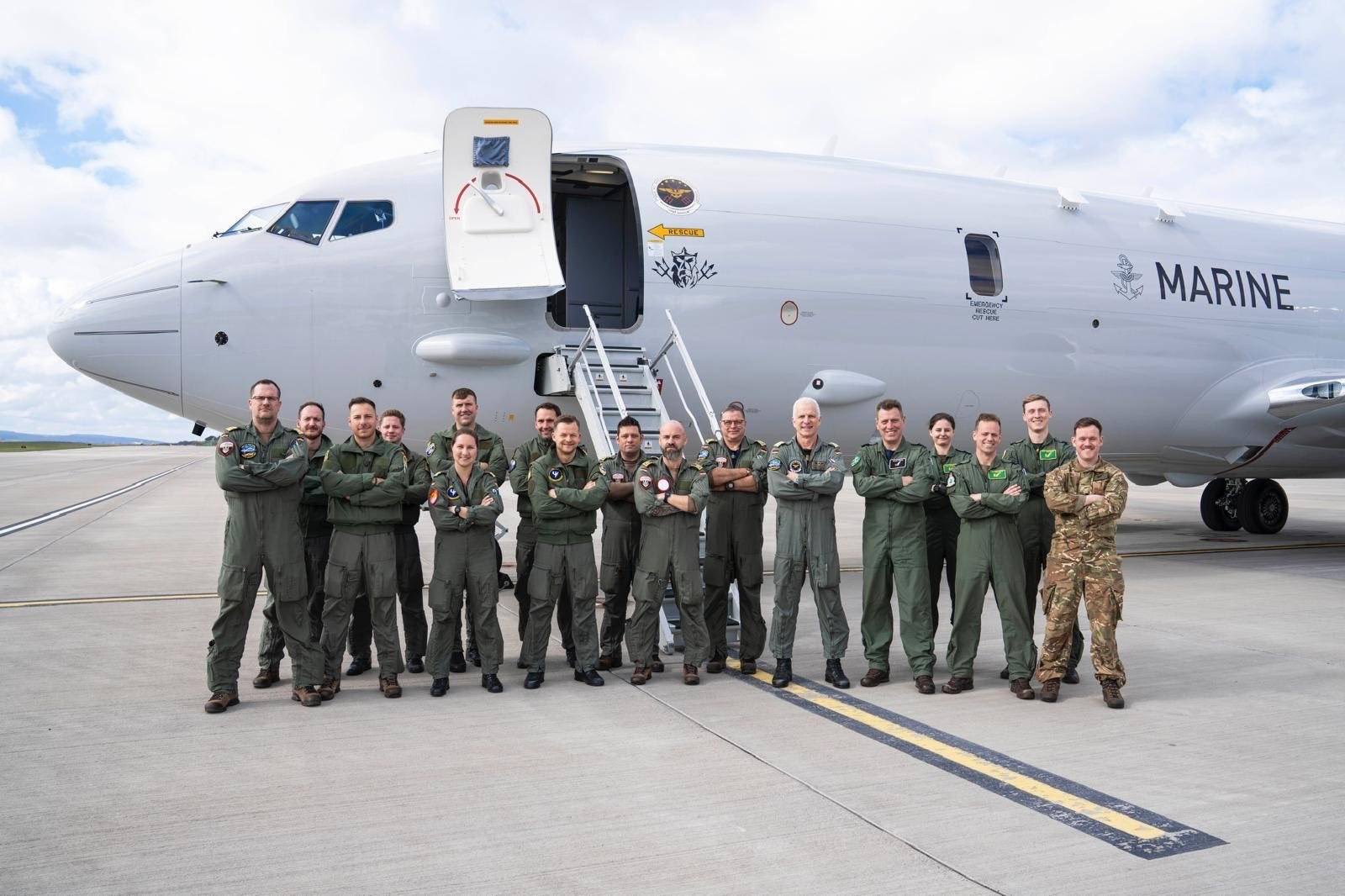
A German Navy P-8A Poseidon maritime patrol aircraft has been deployed to RAF Lossiemouth for the first time under the Trinity House Agreement, German Ambassador to the United Kingdom Susanne Baumann confirmed on social media, describing it as a strong example of UK-German defence cooperation and a key contribution to security on NATO’s northern flank.
The deployment follows the Trinity House Agreement, signed in London on 23 October 2024, which established the framework for episodic German P-8A deployments to Lossiemouth alongside the RAF’s own Poseidon fleet.
UK Defence Secretary John Healey and German Defence Minister Boris Pistorius had announced the deployment plan during a visit to RAF Lossiemouth in October 2025, marking the first anniversary of the bilateral agreement, with German crews already having participated in two operational missions flown by RAF Poseidons out of Lossiemouth under NATO’s Operation Baltic Sentry ahead of today’s first dedicated German deployment.
The wide-ranging Trinity House Agreement also covers new drones, missile defences and deep-strike weapons, as well as significant industrial cooperation on artillery and armoured vehicles, with the P-8 basing arrangement one element of a broader effort to deepen UK-German defence integration across multiple capability areas.
The strategic rationale centres on the Russian submarine threat and the protection of critical underwater infrastructure, with German P-8s intended to operate over strategic NATO sea lanes and zones of critical infrastructure including the GIUK gap and the North and Baltic Seas, and Lossiemouth chosen as the natural basing location given the RAF’s established Poseidon infrastructure, maintenance support and interoperability advantages already in place there.
Germany procured eight P-8As in total to replace its ageing P-3C Orion fleet, with the Bundestag approving funding for an initial five aircraft in June 2021 and three additional aircraft in November 2023, bringing the total order to eight, with the first aircraft completing its transatlantic delivery flight to Berlin Brandenburg Airport on 7 November 2025 following handover to Naval Air Wing 3. German crews have spent months embedded with US Navy and Royal Air Force P-8 squadrons to build experience in North Atlantic conditions and NATO tactics ahead of operational deployments.
The Boeing P-8A Poseidon is a military maritime patrol and reconnaissance aircraft derived from the 737-800ERX commercial airframe, operated by a crew of nine and capable of carrying a range of sensors and weapons including torpedoes, depth charges, anti-ship missiles and sonobuoys across a mission radius of over 1,200 nautical miles without refuelling.
The aircraft is powered by two CFM56-7B turbofan engines giving a maximum speed of around 490 knots and a service ceiling of 41,000 feet, and carries an advanced suite of acoustic and non-acoustic sensors, making it one of the most capable fixed-wing anti-submarine warfare platforms currently in service with any NATO member.










Drop any further F-35 procurement, and put the money into a couple more P-8 airframes for the UK. 12 minimum.
It’s more the case that the wedgetails need bringing into service and increasing to 5 before we consider more P-8. We literally have no AEW, and besides, there are plenty of P-8s around in Nato with USN operating from Keflavik and Prestwick and now the Luftwaffe owning several.
Except the USN aircraft can’t be trusted to operate while the orange goon is in the White House
So you are claiming that USN personnel are unreliable and will be unprofessional because of a politician sitting in a white building? Hilarious.
The fact is that the US military has obligations that go beyond what any president can over-rule, and for the most part are very professional in their duties. The time will come when there is a different person in that building , and USN personnel will still be committed to NATO taskings.
If you want to denigrate politicians, then by all means do so, but calling into question the professionalism of service personnel is a below the belt blow, and quite frankly a very childish comment.
Hope they have enough Midge Repellent.
A Swarm of Scottish Midges are way more deadly than a Swarm of Drones.
I’ve gained $17,240 only within four weeks by comfortably working part-time from home. Immediately when I had lost my last business, I was very troubled and thankfully I’ve located this project now in this way I’m in a position to receive thousand USD directly from home. Each individual certainly can do this easy work & make more greenbacks online by visiting
following website—.,.,.,.,.—>>> JobatHome1.Com