

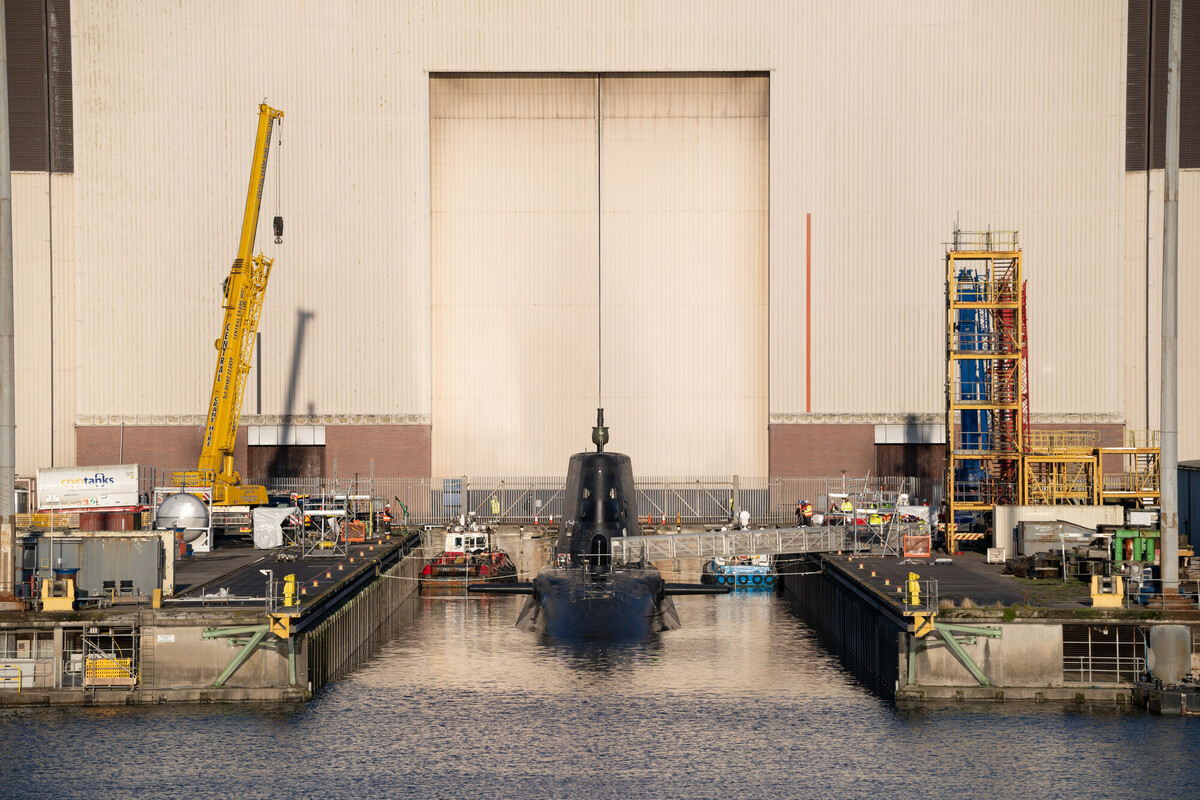
The sixth Astute-class attack submarine, HMS Agamemnon, is still completing the final stages of its in-water commissioning before being handed over to the Royal Navy for sea trials, the Ministry of Defence has said.
The update was provided by Defence Minister Luke Pollard in response to a written parliamentary question from Conservative MP Ben Obese-Jecty, who asked whether delays identified in the National Infrastructure and Service Transformation Authority’s Major Projects Annual Report had affected the in-water phase for Boat 6.
Pollard did not state directly whether the delays had changed the planned duration of the in-water phase, but confirmed the submarine’s current position in the programme.
He said: “In September 2025, the sixth Astute Class submarine, HMS AGAMEMNON was commissioned into the Royal Navy and is undertaking the final stages of her in-water commissioning, before a handover to the Royal Navy to undertake sea trials.”
Agamemnon was commissioned into the Royal Navy in September last year but has remained with the build and commissioning programme while work continues ahead of sea trials. In-water commissioning covers the period in which systems are progressively tested and prepared after the submarine has left the construction hall and entered the water.
Pollard also provided an update on Achilles, the seventh and final Astute-class submarine, which remains under construction at BAE Systems’ Barrow-in-Furness site. He said: “Achilles, the seventh and last boat of the class, remains at an advanced stage of build in Barrow-in-Furness and work to recover from the impact of the fire in the Devonshire Dock Hall is progressing well.”
The fire in the Devonshire Dock Hall affected the site where the final Astute-class submarine is being completed, requiring recovery work while construction continues.
Achilles will complete the seven-boat Astute programme, following HMS Astute, Ambush, Artful, Audacious, Anson and Agamemnon. The nuclear-powered attack submarines are designed for anti-submarine warfare, anti-surface warfare, intelligence gathering and land-attack missions. Asked in effect whether the programme’s schedule had shifted, the MOD again declined to disclose the planned in-service dates of the submarines.
Pollard said: “The planned in-service dates for Royal Navy submarines are withheld as disclosure would, or would be likely to, prejudice the capability, effectiveness, or security of the Armed Forces.”


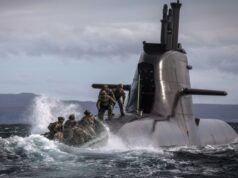


At least they have good names.
The Russian submarine threat to the UK is centred on about 10 active SSN. Of these, maybe half could be considered ‘modern’. The remainder are relics of the Cold War, and a less of a problem (but not neutered by age).
Now, to combat that, the UK needs rough numerical parity. A fleet of 10 SSN would be capable of fending off the Northern Fleet. The government has pledged for 12 boats, which would probably be overkill for the Atlantic mission.
Assuming 50% availability (once the upgrade programmes to infrastructure are complete), the RN could task three submarines to the North Atlantic, one submarine to the carrier strike group, and one submarine to Australia and the Indo-Pacific. If 12 are procured, you can now task a second submarine to Australia.
That’d be rough parity to a wartime Northern Fleet SSN capability (the carrier-tasked submarine would likely be diverted to the North Atlantic alongside the carrier herself), produced by the RN alone. In reality, there’d be a number of Canadian, Norwegian, German and Dutch SSKs operating alongside British SSNs.
10 boats is about the minimum needed to sustain a production drumbeat. SSN-AUKUS must fill a gap between 2027 and 2055 (Dreadnought’s replacement will take about 8 years to construct), and therefore, assuming a decade for the first SSN-A, delivery begins in 2038, with one boat delivered every two years. Any longer, and you run the risk of losing the drumbeat. Go faster, and you need to order more submarines.
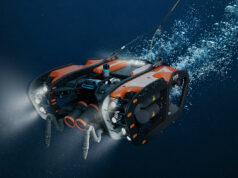
Meanwhile, coastal anti-submarine warfare, and infrastructure security work, could be conducted by a uncrewed submarines. These are cheaper, lighter, wouldn’t infringe upon the manned submarine production industry, but are well-suited to local patrol and delousing.
SSN are expensive, but unless you cut all your nuclear submarine capability (not viable for the UK), mixed fleets will continue to present weird challenges. I don’t think any established or upcoming nuclear submarine power of comparable size to the UK currently operates a mixed fleet. France produces SSKs, but does not operate them themselves. Australia intendeds to switch to an entirely nuclear fleet. Brazil will likely phase out its SSKs once it has an SSN production line.
South Korea may retain their SSKs, but things may have changed by 2035.
Only Russia and China operate mixed fleets (India has no domestic nuclear attack submarines). Those three nations are on a different scale to the UK.
A mixed fleet isn’t too much of problem if many parts and prcoedures are common. In fact when using turbo-electric propulsion on SSNs. The only difference between an SSN and SSK is the main & auxiliary power plant setup, maybe de-salination plant. Almost everything else from mess hall fixtures, through plumbing and torpedo tubes to sensors and combat systems can be the same or almost the same. We have a high-low mix of frigates, why not subs too.
They’re expensive for what they offer, they take up valuable construction area, they’d require design funding, they’re less flexible, and cutting the amount of SSNs damages the maintenance and sustainment of the fleet long after construction has ceased. They need a separate maintenance and training pipeline, and they’re slow.
The UK can build a limited amount of submarines. Nuclear submarine design and construction is a specialised skill. Rather than building two small, expensive runs of different submarine classes, or worse, building a small SSN run and buying in foreign SSKs, the UK should build a middling number of a single design (10-12) and focus all maintenance and sustainment on that class.
If the RN really needs a constabulary, coastal-ASW platform, procure a small fleet of uncrewed submarines.
If we eventually get 10 or 12 SSN-A, it will mean 4 operational, 4 alongside and 2, 3 or 4 in maintenance.
4 operational is not a lot. 2 for the North Atlantic, one in Western Audtralia, one elsewhere until needed for the CSG. That is not a big footprint and supports the case for the acquisition of some SSKs.
With air-assisted propulsion, lithium ion batteries etc, they are now very capable units. We could do with a few to provide some depth in the North Atlantic, provide some patrol capability around the UK and provide the Perisher trains for sub crews. A capable SSK is somewhere between 60 and 70% of the cost of an Astute, so a two-tier submarine fleet would be a sensible move, same as our two-tier frigate force currently under construction.
No need to build them at Barrow, which is going to be rammed with Dreadnought and SSN-A, and anyway hasn’t designed and built an SSK for a few decades better just to buy from a foreign yard, it would likely be cheaper and a lot quicker than building in the UK.
It won’t happen of course, there is no budget for that. But as things roll on and the threat increases, a squadron of SSKs would not be the worst option to take.
Not necessarily. 50% availability is a reasonable goal. The French manage something similar. Current availability, even when it’s on the up (e.g in mid 2025) is still constrained by the lack of UK maintenance infrastructure.
Assuming your numbers are correct though, four SSNs remains quite a lot. The carrier spends most of its time in the North Atlantic anyway, as will its escorting SSN. The Russians can field an active force of about 10 boats – their availability will be similar, if not slightly worse, than that of the RN, so four-five boats.
I’ve outlined the reasons against a split fleet in my above comment. Capability is secondary; the industrial damage caused is reason enough to discard a split fleet.
As for coastal anti-submarine work, I’d ask: is there really a significant threat that requires high-end coastal submarine capability? During conflict, Russian boats will be holed up beyond the GIUK gap, flinging cruise missiles at the UK. They’re not going to be loitering off the Scottish coast, or attempting a suicide run through the teeth of the northern navies. In peacetime, you need something that can transit to infrastructure rapidly. That’s not an SSK, that’s a frigate or an SSN.
As for Perisher, I was under the impression that the SSN and SSK courses were separate. The Dutch took over running Perisher for conventional submarines after the UK sold the Upholders.
Constabulary, low-tier anti-submarine work is a area of concern, but that’s an area that can be addressed by uncrewed vehicles.
Barrow would be rammed with Dreadnought and SSN-A, if the UK sticks with a nuclear fleet. Splitting the fleet removes that order book.
Do the Russian’s even have 10 SSN available?
– 3 Yasen SSGN are with the Northern Fleet, they’re new and capable
– 3 Akula SSN are active, but 1 of the 3 is barely operational and due for retirement imminently, 2 additional Akula’s are in refit/sea trials but are to replace the 2 that are fully operational. Of these remaining 2 operational Akula the refits have not all been extensive. All boats are approaching 40 years old.
– 1 Victor III is (incredibly) still in service (Tambov) had a limited ‘refit’ in 22, but is 34 years old (last VIII built), its believed to be a training boat, with limited combat role.
– 2 Oscar SSGN – 1 modernised, 1 reportedly is not long left in service and tied up.
– All of the Sierra I and II’s are now retired/in reserve…Russian commentators say they’re finished and will be scrapped.
So it looks like by 2030 they’ll have 5 x Yasen and (perhaps, if they’re lucky) 3 x Akula in service with Northern Fleet. As those 3 Akula drop out of service in the early 2030’s they might get 1-2 more Yasen-M to compensate.
The remainder of the Akula will have gone, the Victor III for training will have gone, and there is no chance of any more deliveries before 2030. Its worth noting that the Akula’s will also all be/close to 40 years old by then…and there is no sign of the ‘Husky’ SSN on the horizon. The Khabarovsk Class (Poseidon carrier) assigned to the Northern Fleet (the Orenberg) won’t have arrived by 2030 either (2032 at the earliest). Both Oscar’s will definitely be gone by then as well.
To add to this the Northern Fleet, and Russian Navy in general, ASW assets are collapsing…there are no new large MPA on the horizon and the remaining TU-142 and IL-18M are limited in number, very old and seriously outdated (and the TU-142 repair facility has been attacked regularly at Rostov, with 2 x TU-142 destroyed there recently). Russian commentators are quite honest in stating that their lightweight torpedoes and sonobuoys are also hopelessly outdated and cannot be regarded as effective. ASW helos are also an issue, with the Russian Navy having c40 KA-27M available for all fleets, these are upgrades of existing old helos so can’t last forever…the replacement KA-65 Minoga is running well behind schedule, like all Russian aviation projects, and is unlikely to see even lmited service until the mid-2030’s…
As for ASW capable vessels, in effect they have the 3 Admiral Gorshkov’s at present, and 3 old Udaloy’s which are 40 years old….(the 4th Udaloy the Admiral Chabanenko has been in refit for years, and is now no longer expected to return to service). Reportedly, they will be building 4 new Gorshkov-M for the Northern Fleet, these can be expected to replace the Udaloy and (likely) the remaining Slava Class, the Marhsall Ustinov, which is 40 years old. I don’t think anyone thinks the 6 remaining Grisha III Corvettes are anything more than targets…there are c3 modern minesweepers at present to cover the entire Northern Fleet base area that is massive as well….and their Diesel Electric Subs are an issue as well…the Lada Class is a failure (althouth they’re attempting to get the programme working again in less ambitious form) and they’re having to build some extra Kilo’s to replace the small number of Kilo’s left that are aging out…
So its very likely that Russian SSN/SSGN’s main role in the near future won’t be offensive, but like the Soviets (albeit on a far smaller scale) they’re going to be focused on trying to protect their SSBN bastion…because their other ASW forces are going to be limited and stretched very thin…
Add in a VERY difficult budgetary situation post-Ukraine War and it could get even worse for the Northern Fleet….
I agree with this; the Northern Fleet is sitting on a time bomb. However, I was operating under the assumption that some boats attached to the Pacific Fleet would be pulled into the Northern Fleet in the event of a war. That’s why I went for 10 (plus I wasn’t aware of them dropping the Sierras finally).
Are they that expensive, the Gotland was just 100m if converted to GBP. For the same amount we spent on all 7 Astutes we’d have had over 100 Gotlands. Now, obviously crewing would be impossible and range an issue, but my point is that SSKs aren’t necessarily very expensive
The Gotland is quite an old SSK at this point! Their replacements look to be £1b per unit. The Germans are exporting modern SSKs for similar prices.
My point is that they’re expensive compared to the capability they offer, and compared to the cost/capability dynamic of a modern SSN.
A good cost comparison Jacob is between Agamemnon, the final Astute SSN, and Thyssen Krupp’s Type 212 CD SSK, 24 of which are on order for Canada, Norway and Germany.
Agamemnon – Latest estimate £1.64 bn
TKMS 212 -.£830m to £1.250 bn (Canada).
On these figures, a very capable modern SSK is 51% to 76% of the cost of an Astute SSN.
Essentially once you add all the ongoing costs of a second set of training, spars and support pipelines your probably not getting any more numbers wise if you did a split SSN/SSK programme..
I agree, no western nation with access to SSN’s operates SSK’s because SSK’s are massively expensive as well but offer very limited utility compared to nuclear boats. The majority of missions assigned to SSk’s will be done by drones but unless anyone is mad enough to stick a nuclear rector on a drone almost all SSN missions can’t be done by a drone.
“Isn’t to much of a problem”, I don’t know if I should laugh or cry. The RN made the decision to go all Nuclear decades ago and there is no cost effective way back, the final “Full stop” on that statement is the AUKUS Treaty, the finances and success of which is dependent on UK throwing the Kitchen Sink at building SSNs and we have zero money or resources for anything else.
’ll just tell you all the one overriding reason we will never build an SSK or fund a mixed fleet.
IT WOULD BE POLITICAL SUICIDE for anyone to even to seriously suggest it.
We all scream about the waste of money spent on Projects that deliver either nothing or very little. Now multiply all of those and try to explain how busy spending over £20 Billion on the DNE (including Australian money), invested in every damned thing necessary to design, build, maintain and decommission a large fleet of 10/12 SSNs for the RN and the most important parts for an additional 5/7 RAN boats.
And we then decide to halve the numbers the RN will buy, which reduces the overall production numbers that jacks up the price of the RAN boats (or we have to subsidise them) and still have to keep the entire industry intact so we can then build the Dreadnought replacements.
We waste all that just so we can buy some German / French / Japanese or Swedish boats that can only stay submerged for a 6th of the time an SSN can. Now add all that lot up and figure out how much the UK would have spent to get half a fleet of boats that are inferior to ones we have already paid for.
I don’t think anyone is suggesting that we scrap SSN-A and replace it with an SSK class.
However, there are a couple of issues here that need to be factored in.
1) The cost of SSN-A is going to be enormous and crippling. Even at Astute prices, 12 AUKUS boats will cost £20 bn+. That is the equivalent of 6 carriers, or 340 F-35A or 100 T31 frigates or entirely re-equipping 3 Division with a few thousand AFVs.
Yes, the deal has been signed and we are stuck with it. But it stands out as the RN once again grabbing the big part of the defence budget to keep up with the Jones’s, aka USN and France. We are lumbered with a commitment that we cannot conceivably afford and could only do so by stripping everything else on the service’s shopping list to the bone.
2) The casual dismissal of SSKs does not refect the greatly increased efficacy of the modern diesel boat, which has moved on a good way from the Upholder era. The TKMS 212 CD has an endurance of 41 days, which is perfectly suitable for North Atlantic patrol work. An SSBN can only realistically do 90 days before the food runs out and that is a long patrol for the crew.
The TKMS sub can do 7 days submerged before it needs to surface.
It is a stealth design, with the diamond hull shape reducing greatly its signature on an active sonar.
It is ultra quiet, due to its combo of hydrogen fuel cell based AIP propulsion and lithium batteries.
It can do 20 kts and will likely have a cruise speed of 14-16.
It can be armed with up to 14 torpedos, missiles and UAVs and can launch anti – air missiles.
And do all this with a crew of 30, one-third of the Astute number, and costs half to two-thirds of an Astute.
All this to say that a modern SSK is a very capable piece of kit. Which is why other blue water navies like Canada and Japan are buying it.
3) There is a perfectly sound case for buying, say, 8 AUKUS SSN and 6 SSK, which would cost the same as 12 AUKUS but get an extra boat operational. Trouble is that the RN has got us locked into yet another of its gold-plated, unaffordable.top Trump’s game.
Thanks for the TKMS sales brochure, but the argument here is one of industrial proficiency and support.
It’s pretty straightforward. The UK cannot maintain continuous nuclear submarine production with 8 SSN. It just doesn’t work. You’d be delivering one boat every four years. That pace cannot sustain a production line without significant future impacts.
The UK government knows this. It has done for some time, which is why the A-boats were never intended to be the only SSN class in production. It was only amid the rampant cuts of the early 2010s that the parallel programme, FASM, was quietly dropped.
Though you dress it up as efficiency and pragmatism, you’re essentially advocating for the same salami-slicing of defence programmes that has so often failed in the UK. Look at the T45. The irony was that in cutting the class in half, the economies of scale were so hampered that the UK ended up paying for six destroyers what was initially projected to cost 10. Now, you advocate for remaking those mistakes all over again.
You even mention this issue at the end of your post – 8 SSN-A and 6 T212CD would cost the same as 12 SSN-A. Do you not see the issue there? You’ve cut the capability of your fleet, you’ve complicated maintenance, you’ve crippled industry, indirectly crippled availability, all for…what, exactly? No savings?
The irony of mentioning Japan and Canada is that at various points, both nations have expressed that they would rather pursue nuclear-powered submarines, but were hindered by political problems. Their SSK fleets are their second choice. An emerging nuclear-submarine power like Australia is actively dismissing their SSK capability, rather than retaining a joint fleet. Only the superpowers, with the money to fund large numbers of both types, go in for both types. Of those superpowers, the USA of course still rejects SSK.
12 SSN is difficult to afford. 10, aiming for 5 available, is the reasonable number. But building a small SSN fleet, and importing an even smaller SSK fleet, is fiscally myopic, and industrially suicidal.
The issue here regarding SSNs is not simply ‘industrial proficiency and support’, it is about what the UK can realistically contribute to NATO and out-of-area naval power, which is dictated by what we can realistically afford.
The idea of lashing out £20+ bn on 12 SSNs does not exist in isolation, it can only come at the cost of sacrificing a lot of other vital and pressing naval, air and army equipment requirements. The RN has form for this with its insistence on having carriers. Great if you can afford them but the £6+ bn cost came at the expense of the frigate programme, which is why we haven”t commissioned a new frigate for 13 years in a row and consequently have the smallest escort fleet for two centuries, with the gallant T23s dropping like flies.
.
This SSN programme is going to cost.three times as much as the unaffordable carriers, so the knock-on effect on the rest of the fleet and on air and land budgets will undoubtedly be considerable. To play the RN’s endless top trumps game without underminng the rest of defence procurement would require a defence budget well north of 5% of GDP, of which there is not a remote possibility in the UK’s current straitened economic position.
Ergo, we have to look at this bumper £20 bn aspiration logically. If the submarine task can be achieved more economically with a mix of SSNs and SSKs, that would be a sensible way forward. Whether Barrow gets to build.8, 10 or 12 should not affect the efficiency or cost of the build process. The concern about BAES needing a regular drumbeat of orders for Barrow cannot be the principal driver of.defence decisions. Like any yard anywhere, they need to win export orders; we cannot support a British Leyland style of endless government subsidy to keep Barrow on an even keel. If they cannot win orders, then they will have to live with the normal run of things, which is a nuclear-powered submarine build every 3 years or so.
The ‘sales brochure’ for the TKMS – it could be for any one of a trio of modern SSKKs – is there to counter the uninfomed ‘damning with faint praise’ going on here about SSKs.
Incidentally, your assertion that 10 SSN-A would result in having 5 operational, is for the birds. One- third will be operational, one-third alongside for training and leave, one-third in maintenance. That is how the RN, USN etc have long operated. 10 SSN would only enable 3 or 4 to be operational at any one time.
‘The issue here regarding SSNs is not simply ‘industrial proficiency and support’, it is about what the UK can realistically contribute to NATO and out-of-area naval power, which is dictated by what we can realistically afford.’
Industrial proficiency and support is directly connected to what the UK can offer to NATO, and what it can afford. This has been proven over, and over, and over again across various nations, including the UK. A knee-capped industry serves no benefit to either affordability, or capability.
‘The idea of lashing out £20+ bn on 12 SSNs does not exist in isolation, it can only come at the cost of sacrificing a lot of other vital and pressing naval, air and army equipment requirements. The RN has form for this with its insistence on having carriers. Great if you can afford them but the £6+ bn cost came at the expense of the frigate programme, which is why we haven”t commissioned a new frigate for 13 years in a row and consequently have the smallest escort fleet for two centuries, with the gallant T23s dropping like flies.’
Of course not. This is about deciding what ought to be sacrificed, whilst simultaneously understanding how the programme is managed to ensure best value for money.
The carriers did not cause the escort issues. Cuts to state spending following the approval of both programmes did that.
The irony of mentioning the escorts is that the T26 has been so glacial, because the government attempted to slash orders, to save costs. You know, the same thing you’re proposing they do now.
Our nuclear submarines are the single most useful conventional conflict asset the UK can field. The rest of the armed forces need to move to accommodate them.
‘Ergo, we have to look at this bumper £20 bn aspiration logically. If the submarine task can be achieved more economically with a mix of SSNs and SSKs, that would be a sensible way forward. Whether Barrow gets to build.8, 10 or 12 should not affect the efficiency or cost of the build process. The concern about BAES needing a regular drumbeat of orders for Barrow cannot be the principal driver of.defence decisions. Like any yard anywhere, they need to win export orders; we cannot support a British Leyland style of endless government subsidy to keep Barrow on an even keel. If they cannot win orders, then they will have to live with the normal run of things, which is a nuclear-powered submarine build every 3 years or so.’
It can’t be achieved more economically with a mix. The costs would be similar for a variety of reasons.
The number BAE and Barrow build does directly affect the efficiency of the procurement. You can dislike that fact, but that’s how things function.
Sustainment and longevity in the supply chain absolutely should be a driver of defence decisions. It should especially take precedence over short-term savings.
Who the fuck is BAE going to export a nuclear attack submarine to?
A nuclear submarine every 3-4 years cripples both industry and will severely affect fleet maintenance and sustainment, whilst also remaining absurdly expensive.
‘The ‘sales brochure’ for the TKMS – it could be for any one of a trio of modern SSKKs – is there to counter the uninfomed ‘damning with faint praise’ going on here about SSKs.’
I didn’t claim modern SSK had no capability. I said they were inferior to modern SSN, which is true. Listing off a bunch of random statistics offers little to your argument.
‘Incidentally, your assertion that 10 SSN-A would result in having 5 operational, is for the birds. One- third will be operational, one-third alongside for training and leave, one-third in maintenance. That is how the RN, USN etc have long operated. 10 SSN would only enable 3 or 4 to be operational at any one time.’
This just isn’t true. France gets significantly better availability out of its boats. The USN currently trends around 30/50 (approx) of their SSN fleet as being deployable.
The ‘3=1’ is so incredibly overused.
@GlynH
How do you know that?
UUVs will only have limited usefulness in any role that requires interaction with another vessel. Boeing ORCA only does 8 knots maximum and has an efficient speed of 3 knots, which is somehow worse even than ACUA Pioneer. MSubs Moray isn’t projected to be any better despite being 50% larger; the underwater target base hull clearly isn’t doing it any favours. So there’s no question of a UUV trailing an SSK or Yantar type vessel without serious propulsion improvements- I wonder if the regulatory environment could be relaxed to give RR’s AMR or space microreactor a look in?
But for stuff like blocking up chokepoints, minelaying or seabed inspection something in the 200t range with a pair of multipurpose 633mm tubes, small ROV bay and S2087nano seems like a good idea. If the comms issue can be solved then a near-silent UUV loitering outside a Russian port with a pair of Spearfish could bottle up much of the Northern fleet for very little continuous cost. China have built a larger 500t design which is capable of 20kts according to Naval news and a cruise range of 10,000nmi, as much as a conventional SSK.
I think you can get around that to a limited extent by building more XLUUV, and forward deploying them to particular hubs. Rather than tailing the offending vessel, it is just passed down a chain of coastal drone submarines that monitor its activities. You’d need upwards of 50 vessels, though.
With 10-12 SSN, during peacetime I think you could afford to run one of them as an ‘interceptor’, not unlike the Soviet Alfa. Have it maintain its patrol alongside its two other submarines, and then break off to track a particularly large activity spike if required.
I don’t think slapping a nuclear reactor on an unmanned system will go down too well with the regulatory folks.
It’s a lot safer to put a nuclear reactor underwater than to launch one on a rocket 🙂
But there’s very little advantage to using XLUUVs over USVs in home defence roles. Compare ACUA Pioneer to CETUS. Same sensor capacity, same speed, similar range but much better comms, easier navigation and vastly cheaper.
Aye, though the UUV does have the advantage of being difficult to actually detect. There’s a deterrent factor in not knowing if a British UUV is covering a particular piece of infrastructure. A surface vessel like Pioneer is much easier to mark and notify, especially by a commercial vessel.
I think UUVs are set to grow significantly, as well. CETUS is small, as is Herne, but future systems will be able to offer performance closer to an SSK whilst retaining a reduced size.
SOSUS..?
Youll need 16 vessels to keep the Regular Drum beat at Barrow..12 SSNs and 4 SSBNs Once your below that figure Problems occure..! As we’ve seen over the last 30 yrs… That’s why the 12 aukus subs..you cant slow the beat without Personnel and supply allocation problems…!
We couldn’t get twelve boats until the late 2050s. Even after all the investment in Barrow, past and planned, lessening the bottleneck at the Devonshire Dock Hall, we won’t be able to build SSN-As fast enough to maintain seven attack submarines during the 2040s. As the Astutes retire, starting in the late 2030s the numbers start to drop again, until the Dreadnoughts are complete and build frequency can rise to every 18 months, when we play catch-up. Astutes can’t be practically refuelled, so extending them in service is not on the cards.
Under current plans we restore seven attack submarines around 2048 and only after that can we build up the numbers (if a 2040s government deems the budget available). When you hear that the SSN-A build is being brought forward, it’s not a recognition in the corridors of power of a serious geopolitical situation. Someone has crunched the numbers and realised the OOS dates for the first few Astutes are creeping up on us.
Remind me, how many attack submarines are on patrol at the moment?
0 attack submarines. Anson, Astute and Audacious are in Devonport. Ambush and Artful are at Faslane. Agamemnon remains in Barrow.
2 ballistic missile submarines. It seems the same two have been rotating patrols as of late. One is returning from patrol, the other working up to go out.
That’s a terrible situation. How on earth has this been allowed? This must mean the 7 Astutes are going to be in as new condition for many years yet or am I wrong in assuming they deteriorate whether active or alongside. Why not dry them out except for the cooling systems? Whatever its a huge fail & there must be a massive design fault or more likely faults. Nothing like this ever happened in the past has it?
It is a terrible situation, but it’s likely not a design ‘fault’ per se. Ironically, this has happened before as well.
The causes of the maintenance backlog comes from several factors. I can sketch a rough timeline below.
1) In the 1990s, construction on submarines stops with the end of the V-boats. Skilled talent leaves the sector.
2) In the early 2000s, construction begins on the A-boats, with plans for seven A-boats and roughly five of another SSN design. Construction is expensive and slow.
3) The second SSN design is then cancelled; now, the order book is just seven A-boats. Funding is throttled, build times spike as BAE attempts to preserve its workforce. Each individual A-boats now becomes dissimilar from the others. This will complicate maintenance in the future (Factor 1).
4) At some point between the 2000s and now, spare parts production for the A-boats is cut to reduce costs. (Factor 2).
5) In the 2010s, the Dreadnought programme is delayed. This means that Barrow must both drag out the final A-boats builds, whilst the V-boats must be LIFEXed. LIFEX is expensive and slow, taking up valuable maintenance areas.
6) As the V-boats age, maintenance becomes more intensive, and space is limited for the A-boats. The V-boats are always the priority, but without enough drydocks, A-boats cannot be serviced in quantity. (Factor 3)
The solution? Build more drydocks, firstly. That’s being done. Then, standardise your future attack submarines on a single class, and build them at a regular drumbeat to avoid artisan-style construction. That’s also being done.
This total unavailability of an attack submarine class has happened before. In the 2000s, problems with their reactors caused all of the T-boats to be out of service at the same time.
EUSTON..! Americans have a Floating Dry Dock entering service in 2027 18000t Capacity mainly for Surface ships ..cost £100m..
Afdm 15..worth a look..!
I am of the opinion that the RN should also acquire 4 SSK for UK home waters and North Atlantic patrols. Based on known acquisition and estimated life cycle operational costs the Japanese Taigei class would be the best for the UK so long as the modifications for RN operations are limited to weapons (torpedoes and tube launched missiles) and the combat management systems. A fully customized Taigei boat for RN specifications would negate this cost advantage and there make more sense therefore to operate the Germany 212CD boat that Canada and Norway are also ordering thus allowing the RN to operate a boat that would share common systems with their European and Canadian allies operating in the high North.
For manning these SSKs’ I suggest that naval reserves, 2 or 3 crews each (that is approximately 210 persons max per boat – Taigei requires 70 persons to crew it) from the countries that make up the UK (Wales, Scotland, Northern Island and England), with one boat each based at port in each of the countries (makes crew rotation easier), with full-time officers in charge at Captain, deputy, the weapons officer and the marine engineering officer levels. All the other position could be reservist who are rotated through for duty for no more than 2 weeks at a time, twice a year. This should enable at least one of these SSKs to be available on patrol around the UK at all times.
The crew requirement for the TKMS 212 is only 30, so it would only need 120 submariners to man 4 operational boats. Which is not a lot compared to an SSN. It makes the acquisition of some SSKs quite an attractive proposition.
What would you cut in order to fund the procurement of these submarines? Would you pull SSN from the production line?
There is no money for that. Everything that will be done is in the DIP. If it is not in the DIP, it wont happen.
12 AUKUS SSNs is a pipedream and wont happen until at least the 2040s in any case. Lots of budgets between now and then.
HMS Agamemnon has never been to sea a year after being commissioned… very unfortunately that illustrates the state of UK defence.
UUVs and USVs to detect underwater targets. Merlins positioned around the UK coastline to then engage?
Any news on Number 7.??
Expected 2028/29. She was recently confirmed to have received five damage in 2024.
France offered a conventionally powered version of their nuclear Barracuda submarine to Australia which they cancelled in favour of Aukus. But this did show the feasibility of using a design initially intended for nuclear propulsion in conventional form.