

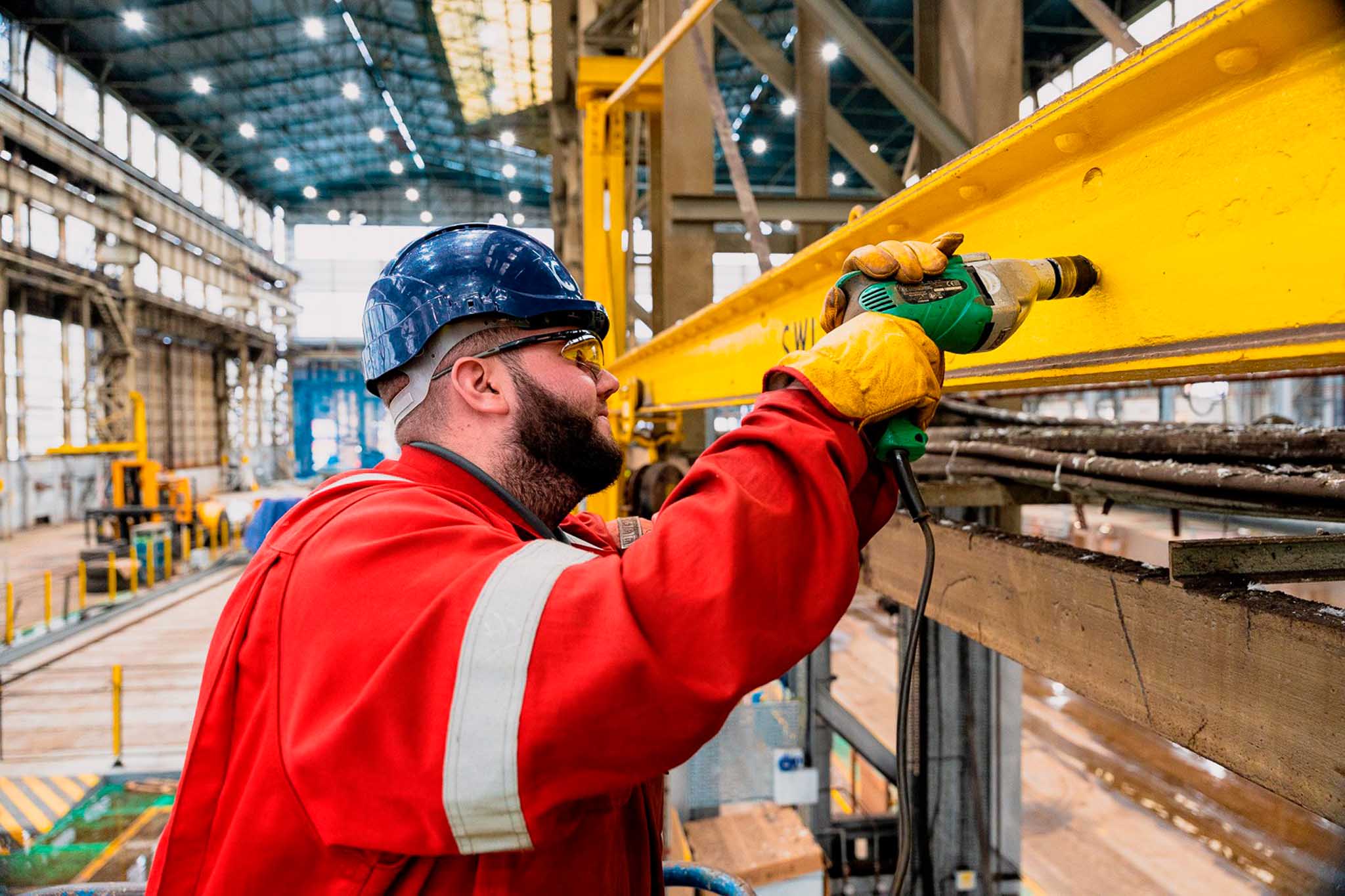
Navantia UK is recruiting welders, platers and pipefitters at Harland & Wolff in Belfast as it expands the workforce building three 39,000-tonne Fleet Solid Support ships for the Royal Fleet Auxiliary.
Navantia UK has launched a recruitment drive for 28 skilled shipbuilding roles at its Harland & Wolff yard in Belfast as preparations continue for construction of three Fleet Solid Support ships for the Royal Fleet Auxiliary, according to the company.
The recruitment covers 21 welders, five platers and two pipefitters and forms part of a wider expansion of the Belfast workforce, which Navantia UK intends to grow to 1,500 people over the coming years. According to a Navantia UK news update, the company is simultaneously investing more than £98.5 million in the yard as it prepares Belfast to act as the principal delivery site for the Fleet Solid Support programme.
The investment includes a new mechanised panel line, robotic cutting equipment and an expanded fabrication hall, with the company seeking to increase the yard’s ability to undertake advanced naval construction. The three Fleet Solid Support ships are each expected to displace around 39,000 tonnes and will be the largest vessels delivered from the Belfast shipyard in a generation. They are intended to provide ammunition, stores and other supplies to Royal Navy task groups at sea, including support for carrier operations.
Navantia UK is also expanding its apprenticeship programme alongside recruitment of experienced tradespeople. A further 66 apprentices are due to join the Belfast yard in September, taking the number undergoing training there to more than 120. The company says the effort is intended to rebuild a sustainable skills base capable of supporting the current Fleet Solid Support programme and potential future British and allied shipbuilding work beyond 2027.
Carlos Lopez Carregado, General Manager at Harland & Wolff, said, as quoted in the news update: “The Fleet Solid Support programme is bringing major shipbuilding back to Belfast and creating an opportunity for local tradespeople to help deliver vessels of genuine national importance.”
He added: “The ships will be the largest delivered from this yard in a generation, supported by £98.5 million of investment in modern facilities, equipment and technology.”
Carregado said the company’s plans extended beyond completion of the current ships, with workforce growth and infrastructure investment intended to position Belfast for further work. He said: “But our ambitions extend well beyond the current programme. We’re investing in our facilities, growing our workforce and developing the skills needed to secure future work, with plans to expand the Belfast team to 1,500 people over the coming years.”
Belfast is the main delivery yard within Navantia UK’s Fleet Solid Support industrial plan, with work distributed across its British facilities. The programme is intended to deliver three new support ships for the Royal Fleet Auxiliary, restoring capacity to replenish Royal Navy vessels with ammunition, food and other stores during sustained deployments.
The recruitment campaign comes as Navantia UK continues to recapitalise the former Harland & Wolff facilities acquired in January 2025. The company has been investing across its UK yards to increase fabrication and construction capacity, with Belfast taking the lead role on Fleet Solid Support while other sites contribute blocks and associated work.
Katherine Thorn, Head of Talent and Culture at Navantia UK, said, as quoted in the same news update: “This is an exciting time to join Navantia UK. We are creating skilled, long-term careers for experienced tradespeople while investing in the next generation of Belfast’s shipbuilding workforce.”
She added: “The 66 apprentices joining us in September will take our apprentice population in Belfast to more than 120, demonstrating the scale of our commitment to developing local talent.”
Navantia UK says the combination of new equipment, additional skilled trades and apprentice recruitment is intended to give the Belfast yard the industrial capacity required for the three Fleet Solid Support ships while establishing a workforce capable of competing for further naval construction programmes after the current order.







Good luck and get building.
2x Pipefitter will certainly make a difference, How much pipework in a 39000 ton ship?
Apologies for the lack of enthusiasm.
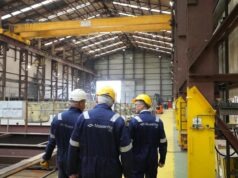
That headline shot is embarrisnly staged.
Look at what is in it.
Bloke with a Hitachi corded – very odd choice when everyone uses cordless hydraulic impact now. Battery because no trailing leads and low voltages when working in a metal environment.
The drill/impact is not square to the beam.
The yellow beam that he is ‘working’ on is riveted – look at the domes.
In terms of background there are zip tied bundles of rusty materials with what looks suspiciously like guano on them.
That is generated by a PR team who have zero clue about anything and certainly not modern ship building.
But look how prettily the lights reflect from his helmet!
Which is looking brand new and unused, like the boiler suit also! Not how I remember my shipbuilding days.
It was originally claimed that 60% of the ships would be UK built, 40% in Spain. I wouldn’t be surprised if the numbers have now reversed. Given the RN & RFA’s desperate need for two FSS’s, the time, cost and effort involved with regenerating the H&W shipyard seems to be becoming disproportionate to the benefits, particularly if the four ATS’s are not built in Belfast. It’s already 3.5 years since the FSS contract was signed and work has barely started on Resurgent (and that is in Cadiz!) – she is still at least 5 years away from entering service. For the Tide tankers the first of class was complete and on builder sea trials after 3.5 years, entering service a year later.