

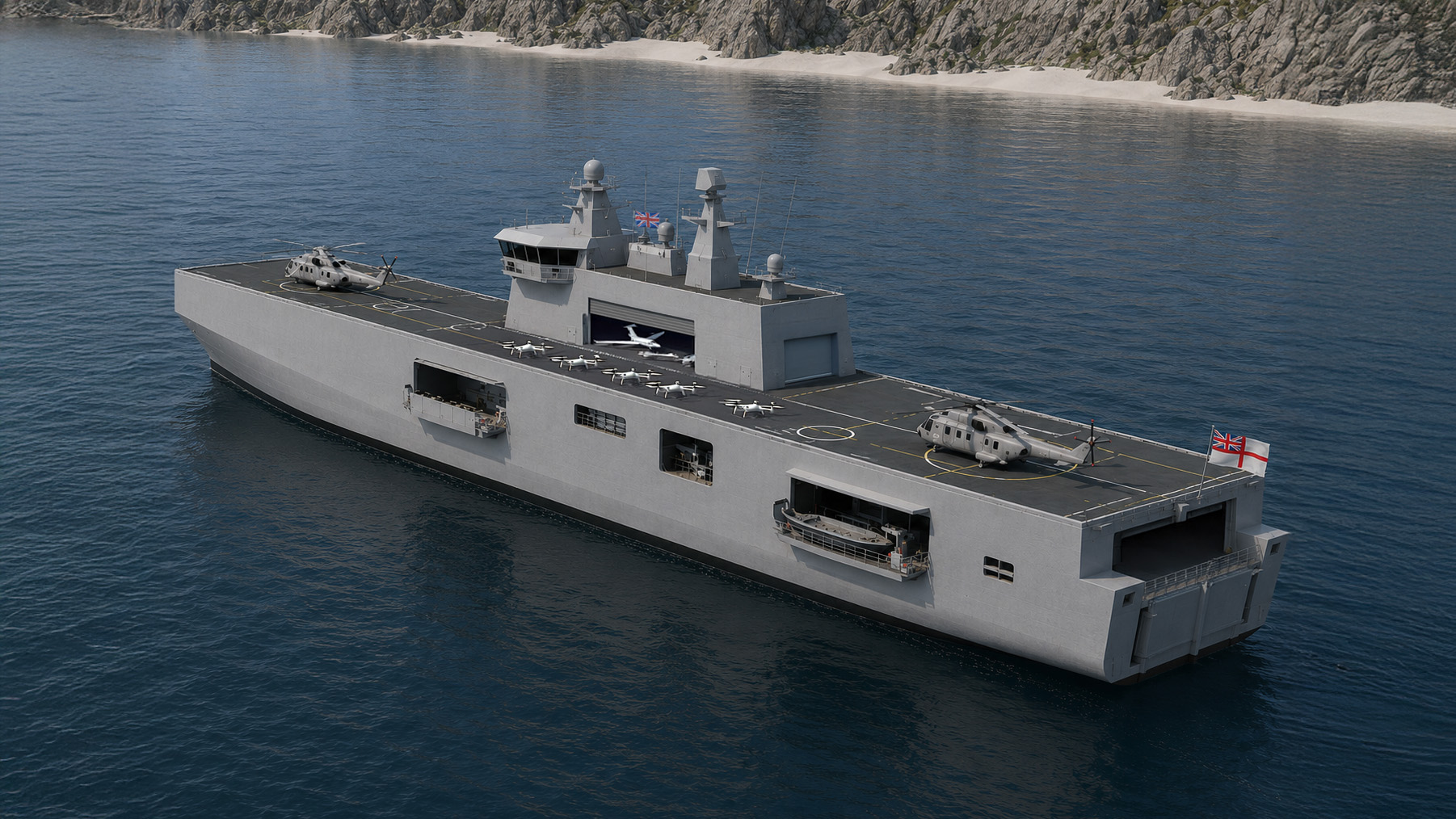
The first ship of the planned joint Anglo-Dutch amphibious fleet is intended to enter service in the 2030s, Minister for Defence Readiness and Industry Luke Pollard has told the House of Commons.
The timeline came in answer to a topical question from Alex Ballinger, the Labour MP for Halesowen and a former Royal Marine who spent two years working alongside the Dutch marines, who welcomed the cooperation with the Netherlands in the Defence Investment Plan and asked when amphibious ships would be operational given that HMS Albion and HMS Bulwark are out of service.
“After the last Government tied up HMS Albion and HMS Bulwark, never planning to send them to sea again, this Labour Government are bringing back amphibious ships,” Pollard said. “We are working with the Netherlands to develop a joint capability, and our ambition is for the first ship to enter service in the 2030s.”
The exchange puts a first, if broad, date on the amphibious commitment in the Defence Investment Plan, which dropped the Royal Navy’s planned Multi-Role Strike Ship in favour of UK participation in the Netherlands-led Amphibious Transport Ship programme. The plan stated that the MRSS “was too complex and did not reflect the UK Commando Force we are now pursuing,” with the department pivoting to explore opportunities with the Dutch programme and casting the move as investment in new amphibious shipping to create a combined fleet with the Netherlands, backed by £250 million for amphibious shipping in the plan.
What do we know about the new Amphibious Transport Ships?
- 8 ships in total
- 4 for the Royal Navy
- 4 for the Royal Netherlands Navy
- £2.4 billion programme
- 160 metres long
- 15,000 tonnes displacement
- Designed to carry troops, vehicles, equipment and drones
- Flight decks able to operate current and future long-range drones
- Ships to be built in UK shipyards
- Expected to support hundreds of skilled UK jobs
The MRSS had been intended as a class of up to six large vessels of between 25,000 and 40,000 tonnes, replacing the Albion-class landing platform docks, the three Bay-class landing ships and RFA Argus, with the first hull expected in the early 2030s. Its cancellation leaves the Dutch Amphibious Transport Ship as the route back to a dedicated amphibious fleet, a considerably smaller class that the Netherlands has been developing since 2024 to replace its two Rotterdam-class landing platform docks and Holland-class patrol vessels, with Dutch deliveries planned from 2032.
A joint design was first pursued under Project Catherina, the memorandum signed in 2023 on the fiftieth anniversary of the UK-Netherlands Amphibious Force, before being set aside in 2024 when the two nations judged their requirements and budgets too divergent for a single hull, a position the Defence Investment Plan has now reversed in favour of the Dutch design philosophy.
The Royal Navy has had no dedicated amphibious assault ship since Albion and Bulwark were retired in late 2024, having been held at reduced readiness for years amid crewing shortages, with both ships subsequently sold to Brazil. The gap has left the forward-deployed Commando Force dependent on allied shipping or airlift to move at scale, a shortfall noted in analysis of this year’s Arctic deployments, and Pollard’s 2030s ambition implies the gap will persist for several more years at least.




“Steel is cheap and air is free” – it wen’t something like that, right?
Treasury: “smaller and fewer are cheaper, especially after a long gap with none”
Politicians are cheap and their promises are free?
Very good 👍👍👍
Pollard lying again I see.
“Never to put them to sea again.”
I believe one of the LPDs was in Refit in No 8 Dock at Devonoort when Labour came to power, for the purpose of returning to sea. This government could have continued the regeneration. They didn’t.
Spin as usual.
The “never to go to sea again” was also used previously as a justification of cutting both LPD.
Your nose is getting longer, Mr Pollard.
And you seem to have changed your dates for amphibious capability replacement, judging by the vague 2030s for 1st ship comment.
I would agree with Pollard here, the language from the previous government in public was they’d be regenerated if required, my understanding from speaking to folk at the MOD and RN, at the highest possible level I would add, was that they had been quietly axed, they weren’t to go back to sea mate. I’m fully confident of this.
Thanks, George. Fair enough, the lies and half truths span one administration to the next!
However, I still see the comment with spin inserted. This government could have regenerated the ship if they wanted, they did not have to follow the Tory policy. That one ship has now gone to Brazil and is in use speaks volumes.
And for me there is more….
““After the last Government tied up HMS Albion and HMS Bulwark, never planning to send them to sea again, this Labour Government are bringing back amphibious ships,”
Another interpretation. This government made sure they could not bring them back. never mind “planned” to, as once they are sold off, they’re gone.
And I also have an issue with the last part of that statement “bringing back amphibious ships.”
In another announcement on the Bays operating in Norway, we had the line “no loss in amphibious capability” when it is obvious that there has been. “Bringing back amphibious ships”, next to “no loss.”
They need to make their minds up.
Unfortunately for Mr Pollard just like previous Ministers the truth is the first casualty when they open their mouth.
Trying to be positive for the RM and 4 mini LHDs
(The Dutch preference is for a thru deck) would be good news.
I’m happy with the 4, with the right specs, as I can accept that one area of warfare that was once key can now be downgraded somewhat and money invested in other areas.
As long as we tailor our capability for how the RM now operate. I’d prefer 3 Cdo to still be as is, but there you go, cuts and “rescoping.”
I’ll try to find it, one of Pollard’s ( or another MoD spokesperson ) comments was along the lines of that there was no point in keeping the LPDs as they would be “unable to go to sea again.”
That one is now sold to Brazil makes that clearly false.
4 ships to replace 5 of course. Usual tricks.
4 ships to replace 5 of course. Usual tricks.
6 if you include Argus.
7 if you include the 4th Bay thrown away.
8 if you include Ocean.
I’m unusually ok with it, I actually expected fewer.
HI Daniele, agreed on the number, 4 seems reasonable. They seem to a bit light on tonnage at 15,000 ton displacement. (that might be the empty wight not fully loaded tonnage). I think Albion Bulwark were 20.000 -ish tons ?
Don’t recall without checking.
They’re a step backwards from the Bays and the LPDs, but, that’s the direction that the RM were forced to take and the shipping follows.
There are still heavier elements that need landing, potentially, so they’ll need a certain capacity.
cheers DM!
Are these 4 ATSs replacing the Bays as well, maybe not?
I’ll put in a plug for NZ, one of these to replace the Canterbury?..LOL
Spot on Bud-and RFA Argus, 6 becomes 4. That would make a fine replacement for HMNZS Canterbury!
Politicians only really get caught out if a real war starts … As in 1914 and 1939 … Then our Assets for what it’s worth will be seen for what it is… very limited..!
It was down to manning. Simple as that. Not everything is government spin. The Navy could either man both carriers, or one carrier and one LPD. They chose the carriers.
You bet they did! And who can blame them. As otherwise, who is to say that the lack of crew would not be used as a pretext to say bye bye one Carrier?
Also, the original plan envisaged one of each in use, and reserve/refit, so I wonder when that decision was changed?
Another bright idea. Why not run both and do the incredible idea of recruiting more sailors and expanding assets? Because people cost money.
Whatever way it is squared, it comes back to HMG not being prepared to put the money in to retain the capability, so we must be pleased with what we have and what we might get in the 2030s, rather than what we had before.
Can’t keep looking back though mate. It’s done. 30 years of cuts aren’t going to be reversed. Even if the DIP got 35Bn it wouldn’t radically improve many areas of defence. I see is it as a starting point. Money is going up, capability in many areas is going up, even if physical numbers aren’t so much. Some very large sums of money are going to be spent. 11bn on munitions for a start.
Yep, no denying there are plenty of positives.
One also needs to look closely for the negatives sneaking out the back door! 🧐
But…..a very long and quite expensive refit was started……that has been acknowledged by MoD.
So the sale scrapping decision was made after the refit was started.
I still find it a bewildering decision. I get that they were very big tubs and used a very large number of engineers.
Given how far she was refitted she should have been held in reserve.
They didn’t have the manning to put them back in service. That was the main constraint.
Whilst you cant just move sailors around without training in pure numbers terms we have considerably less than the stated 19 escorts and even fewer traditional MCM vessels. Where have these sailors gone? We can’t even say to the submarine service.
Whilst some might be utilised with the new MCM systems or 809 Sqdn (but that is a joint effort) or the carriers are much heavier on crewing than was stated originally, however, when we have more active escorts we won’t actually be able to crew them is my prediction without an increase in the size of the RN.
A very fair point.
But we do have two fully manned large decks as well as generating T26/31 crews and starting to generate Successor crews.
£300m per 15,000 tonne ship? Seems ambitious. Unless that’s only the UK’s share?
Yes, £2.4bn is for 4 UK ships. Oddly, the Netherlands have less allocated for their 4 (€1.1bn-2.5bn) so at least we’re being more realistic for once
Probably not, nearly every recent Dutch Warship has been built in Romania where labour costs are far lower than Netherlands or UK. It’s a bit like we did with the Tides, built in S Korea finished outfitting in U.K, shaved £100’s millions off the cost and very fast delivery, Norway and NZ did exactly the same.
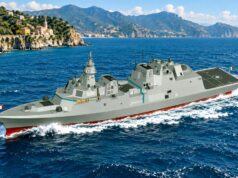
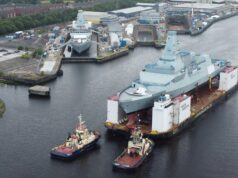
Where is the design in the image from?
That’s the Dutch MPSS design, Portugal have one of the 7000 ton class being built at the moment but it’s half the size of what we want.
A bit bigger than I thought they would be… four is an ok number.. possible to have 2 most times and 3 in a crisis.
The main issue for me is this is another large high value target needing escorts..
Big target wise the RN will have
2 carriers
4 assault ships
3 solid store ships
6 replenishment tankers
That’s 15 ships needing protection with a plan for only 6 AAW escorts, 8 ASW escorts and 5 GP escorts…
You then have NATO assets, of course, assuming NATO operations and not OOA.
6 Tankers? 4 Tides, the two Waves were cut. Are you including them even though they’re now privately run?
Yes I sort of see those 2 as essentially a bit of a strategic reserve to be honest..but I did miss out the point class.. we forgot that they would need escorts in a hot war….
MRSS was supposed to be armed sufficiently not to need an escort in most scenarios, and to be able to conduct strikes. I doubt the Dutch will follow the same strategy as heavier armament is one of the reasons we split with them initially. Hopefully a good number of 40mms and pretty please CAMM?
Is the UK building the Dutch ships as well?
It does sound a lot like it. This order could keep Belfast busy for at least a decade, turning into a well established yard.
I seriously doubt that the reason is Damen build the Dutch and Portuguese hulls in Romania and outfit them in Netherlands it save a fortune due to labour costs.
I heard that the Dutch government are very unhappy with Damen due to a financial scandal. UK yards have invested heavily in automation, which massively reduces labour costs. So it may be that RNLN will give the order to a UK yard just to stick it to Damen.
Hell no!!
I thought 4 was a bit of a strange number. Not enough to have deplorable at all times for the LRG N and LRG S. I think you would need a minimum of 5 for that, 6 if you work by the rule of three?
1 in reference, 1 building up, 1 out to play
I think like you said with four you will probably be able to deploy 2 at once most of the time and three in a crisis situation. Seems like another small cut from the DIP disguised as a good thing.
Looking at the positives they will be very versatile ships and should keep up with the pace of modern drones so can be used for far more than just amphibious assaults! Hopefully they get the armament they need!
CK,
However, if this flotilla is managed as a joint force w/ the Dutch, perhaps as many as five vessels available for a NATO op? Obviously would not be applicable in a sovereign UK out-of-theater op, but presumably a low probability event.
Similar concept as the joint ASW force w/ the Norwegians, employing T-26 class. Envision very few instances where either the Dutch or Norwegians would not reach a consensus w/ the Brits re a recognized common threat to NATO.
If we did deploy 5 as a nato led task group that would have some serious capacity! More than enough to reinforce Natos northern flank!
The other positive with a Nato led group would be the amount of Nato escorts that can assist with area defence for the vessels. A group of that size would like have QEC and an astute. A very formidable fleet.
I would imagine their day to day lived outside of war they will have a lot of utility working independently on some of the lower threat work and drone based operations.
Is it wise any longer to even think of sending large ships full of lots of people into contested waters?
Why does no one say anything about RN Destroyers accompanying the French carrier etc, but is up in arms when we discuss other NATO navies assisting the RN?
Because people just like a good moan.
Disappointing that in less than a decade the UK has gone from an amphibious capability second only to the USA, to almost nothing, and cancelling MRSS marks the end of any ambition to have a globally capable LRG.
Nevertheless, the ATS seems a nice versatile design, basically a scaled up version of the Portuguese NRP D. João II. Damen estimate the unit cost as up to Euro 800m, so £600m (Euro 700m) each for four RN ships (it seems likely they will commissioned) appears reasonable. Only a tad more than a fully equipped T31 frigate is set to cost. I just hope Navantia UK has the capacity to build them in a timely manner.
But is it confirmed that a scaled up Portuguese multi-role thru deck is what we are getting? The RN wanted an ‘LPD’ which suggests one of Damen’s Enforcers.
Realistically if we get 4 mini LHD’s I would be very pleased for the RM and RN as the ability to use drones is only going to grow and these could be very flexible assets. It would also allow some of obvious carrier names to make a welcome return.
Eagle, Centaur, Ark Royal…..sold 😊
Hermes for the 4th
I agree these are flexible. They should be able to carry a couple of Merlins and a bunch of drones to form a light self-supporting group with a fraction of the footprint of a full CSG. But if you needed the full fat version, you’d be sending a QE for aviation, and these would be working as amphibs/troop ships only.
It’s what the Dutch have repeatedly shown as their priority.
Yeh, which I presume is the reason the joint concept UK-NL exercise ended. Can’t help thinking this multi-role Damascene conversion on the part of the RN is just acceptance that its the best we can afford. Sort of the MRSS equivalent of the T83 morphing into ‘common combat vessel’. Would feel more comfortable if they were a but bigger.
We can always build a few more if (as is almost inevitable) a larger defence budget makes more funding available later.
4 seems to be the magic number. We had 4 Bays, the Netherlands have 4 Holland OPVs. The UK has disposed of our LPDs; NL plans to do the same. The Bay’s MCM mothership capability will be picked up by bespoke Vanguard design from Norway. Hey presto! The transformation of the RN is well underway – and with it the transformation of the UK; perhaps.
New SSBNs, 8-12 AUKUS SSN, QE class, 8 T26, 5 T31, 6 T45 / CCV + drones, 5-8 OPVs, 4 Multirole, 3 MCM motherships, Tides, FSS, Points, RFA, P8s.
This is a credible RN which ensures that the UK retains significant global hard and soft power. Modest enhancement of the B2 Rivers and a build of B3 Rivers to replace the B1s would be nice.
The Navy will see LHD as a threat to their QEC carriers.. Especially if you can operate f35bs from them…
Adios carriers to South America…?
You definitely cannot operate F-35Bs from them.
Assuming the design is based on the Damen 15,000-tonnes Enforcer 15628, it will have a small dock sized for a single LCU Mk 10 or similar. But the dock will probably be mostly be used by USV’s, RM raiding craft, and SBS fast interceptors.
At pinch, the ATS is arguably a baby LHD, but much of the forward “flight deck” is actually space tailored to accommodate and power six 40ft long ISO containers – including modularised weapon systems. The island structure of the baseline design includes a modest hanger for a couple of NH90 medium size helicopters (presumably Merlin Mk4 for the UK variant) and/or UAV’s, but Damen emphasise that aviation facilities can be scaled up or down according to customer requirements.
These ship are clearly intended to be affordable and realistically crewed (to avoid excessive expensive automation) “Jack of Trades”, a naval Swiss Army knife suited to almost anything but high-end ASW and CSG duties. I.e. The exact opposite of the unmanned, ultra advanced and highly specialised Type 91, 92 and 94 sloops – which on a per tonne basis are set to be the most expensive surface warships in the world to buy and operate.
I’m guessing that what the MOD want is essentially a Land Ceptor TEL built into a hi-cube container. This can be deployed on the foredeck of the ATS, or onto a USV/drone boat, or even used on land using EPLS. Thus ATS can be equipped with Ceptor on an as-needed basis, and the same module can be dropped onto the type 91 drone ship (which is really just an LCU with containerized modules).
A two A/C hanger is an upgrade from the Bays & Albions which have none. If more airlift is needed, then you can use a QE to support/maintain the helis, and lilly-pad off the ATS to deploy troops. Native aviation support would be greatly increased by inclusion of aircraft lifts, but the flight deck level hanger seems to me like it’s there to avoid needing to include (and maintain) lifts.
I hope that if this is to be yet another class of high value assets with minimal self defence capability, that proper consideration is given as to where all the necessary escorts are going to come from?
Cost effective flag wavers..Rather than capable military assets…? Seems only the 8 t26s have avoided that pitfall of late…!
How does the language barrier work when you have 2 different nationalities manning the same ships? Does every sign have to be written in both languages?
Eh???
I don’t see it like that at all. We are buying 4 ships each, I don’t think we are crewing them jointly!
Even if we were, most Dutch speak better English than a lot of Brits!
Very true, a second language I understand.
Well at least the language is historically the closest to English and the Dutch are pretty good at speaking English generally. What do the Belgiums do with their signs out of interest.
There’s no mention of permanently joint crews, but I can definitely see mixed crews on certain deployments, with the owning navy providing the core ship’s company.
Either way, let’s not start hiring interpreters just yet, the working language of NATO is English. And that works fine ‘most’ of the time.
JJ,
The Royal Navy and the RNLN have been cross-decking for years. You will often find UK liaison officers permanently stationed on Dutch command ships and vice versa. By the time a ship is fully integrated, there is already a core of personnel who have been working together for years. The Dutch military culture is remarkably similar to the British in its professionalism, sense of humour, and approach to command.
The relationship between the Royal Navy and the Royal Netherlands Navy is arguably the most integrated bilateral naval partnership in NATO. This shared ‘professional DNA’ significantly lowers the friction of integration compared to working with navies that have vastly different command structures.
In addition to their ‘bosom buddy’ relationship, NATO operates under a system of Standardization Agreements (STANAGs). This is the glue that allows a British sailor to walk onto a Dutch ship and know what they are looking at.
Labeling and signage of safety, electrical, and firefighting systems follow international maritime standards and NATO protocols. A fire hydrant or an emergency stop button are marked with universal symbols (ISO/IMO standard) and English text.
The language of naval warfare … how you plot a course, how you report a contact, how you handle a weapon system is standardized. A UK officer doesn’t need to learn Dutch naval procedure; they need to know NATO procedure, which is what they already practise in the Royal Navy.
Also, in the maritime world, English is the international language of the sea. All NATO naval personnel, regardless of nationality, are trained to a professional level of English specifically for maritime operations.
Every Dutch captain and bridge officer is highly proficient in English. When a UK officer steps onto a Dutch vessel, the operational language remains … English. I think that all their technical manuals, bridge procedures, and standing orders are either produced in English or have official English-language equivalents.
What weapons will these ships have .
Damen shows similar designs with at minimum 40mm, and SeaRAM.
Still no concepts or anything on a more compact self defence missile system in the UK, which will be necessary for ATS and maybe even FSSS given the increased threat.
Oh if I were in charge of MBDA’s future concepts division…
Good question ..The threat of Drones Should make albion or Bay type armament unrealistic…but Cost is far more important to HMG/ HMT than capabilities or Survivability…!
I would hope at a minimum 2 x 40mm and some se ceptor but I would hope there is scope in the budget for some more CIWS.
A ship launched Martlet could be a very useful addition.
Anybody remember the Falklands? Sad thing is that in the absence of AAW destroyers, they’ll just be sitting ducks.
There are land-based SAM systems on the islands, and a fighter wing. Hardly ‘sitting ducks’.
Pollard’s job title is so bizarre as beyond parody. Don’t forget that 2039 is in the 2030s so plenty of time to prevaricate yet.
I wasn’t referring to the Falklands as a possible future target, but to the painful lessons learned resulting in the loss of 4 warships plus the Atlantic conveyor. Sea Dart played a role, and no Navy in its right mind would go without AAW destroyers except of course the lunatics running the asylum here in the UK.
As I understand it, while the ships will not be crewed jointly in the sense of a single integrated crew per vessel, they are being procured to function as a highly integrated amphibious task group. The goal is to move beyond mere cooperation toward seamless operational interoperability.
The new eight-ship deal is Commando-led. The Ministry of Defence’s own justification for the pivot explicitly stated that the MRSS “did not reflect the United Kingdom Commando Force we are now pursuing.”
The Commando Force of 2026 is not about moving massive tank regiments … the “Old School” 1944 model; it is about moving highly mobile, agile, and sensor-rich units that operate in small, dispersed littoral groups. The 15,000-tonne Enforcer-based design is tailored precisely to this, it’s a ‘lily pad’ for the Royal Marines rather than a container ship for heavy armour.
Because the British Royal Marines and the Dutch Korps Mariniers have been integrated for 50 years, the biggest friction point in joint operations has historically been the logistics of the platform. If you have a British commander trying to coordinate Dutch landing craft or a Dutch drone team trying to integrate with a British ship’s command-and-control, you lose tempo.
By forcing both navies into the same 160-metre ‘Enforcer’ hull, they are removing those technical barriers. The ship isn’t just a vessel; it’s a shared office space for a binational team. If a British Marine officer walks onto a Dutch hull, they know exactly where the drone control room is, how the deck operations work, and how the communications mesh.
The strategic intent behind this common platform approach is that the two navies intend to train, deploy, and exercise as a single combined force whenever necessary. By operating identical vessel designs, both nations can share logistical chains, simplify maintenance, and ensure that combat systems and communication suites are natively compatible. This deal is an extension of a 50-year-old partnership (UK-Netherlands Amphibious Force) The new ships will serve as the modern backbone for this force, allowing British Royal Marines and the Royal Netherlands Marine Corps to move and fight as a single, cohesive unit.
Again, because the ships share a design, widely expected to be based on the Damen Enforcer-family, the two navies can standardise their spare parts, repair procedures, and even training programs for their respective crews. This significantly reduces the overhead of maintaining two separate fleets of amphibious vessels. In a NATO context, this means that a task force could be composed of any combination of these eight ships, regardless of whether a specific ship is British or Dutch. They can swap roles, support each other’s helicopters and autonomous systems, and act as a single squadron rather than two distinct fleets operating side-by-side. Each nation retains sovereign control over its four ships. They are not a “jointly owned” fleet, but rather a coordinated fleet built to common specifications to facilitate maximum interoperability.
Beyond the hulls themselves, the partnership includes a commitment to jointly develop and deploy maritime autonomous and uncrewed technologies. This suggests that the squadron concept extends into the digital and drone-warfare space, where the two nations will operate as a single test-bed and operational force for new tech. In essence, while they are not a single jointly crewed fleet, they are being designed to act as a unified amphibious capability that allows London and The Hague to pool their resources, simplify their logistics, and deploy a larger, more coherent force than either nation could easily manage alone.
They are betting that in future contested environments, having eight smaller, identical, and highly integrated ships will be more effective than having a few large, unique ones that require different maintenance chains and possibly don’t talk to each other’s software. They are betting that the human integration of the UK/NL AF is the UK’s greatest strategic asset, and they are finally buying the hardware that matches that human reality.
Doctrine has changed … shifted toward insertion from beyond the horizon, using smaller, stealthier, and modular platforms that don’t present such an easy, high-value target, as the environment has become more lethal … (A2/AD). The methods of aggression have become more subtle, and the cost of heavy power projection has become unsustainable.
We have moved from an era where we “storm the beaches” to an era where we “occupy the seas” to contain a crisis before it escalates …
The area of intense focus for the AT Ships will be Finnmark and the Baltic Sea, islands like Gotland and Gotska Sandön.