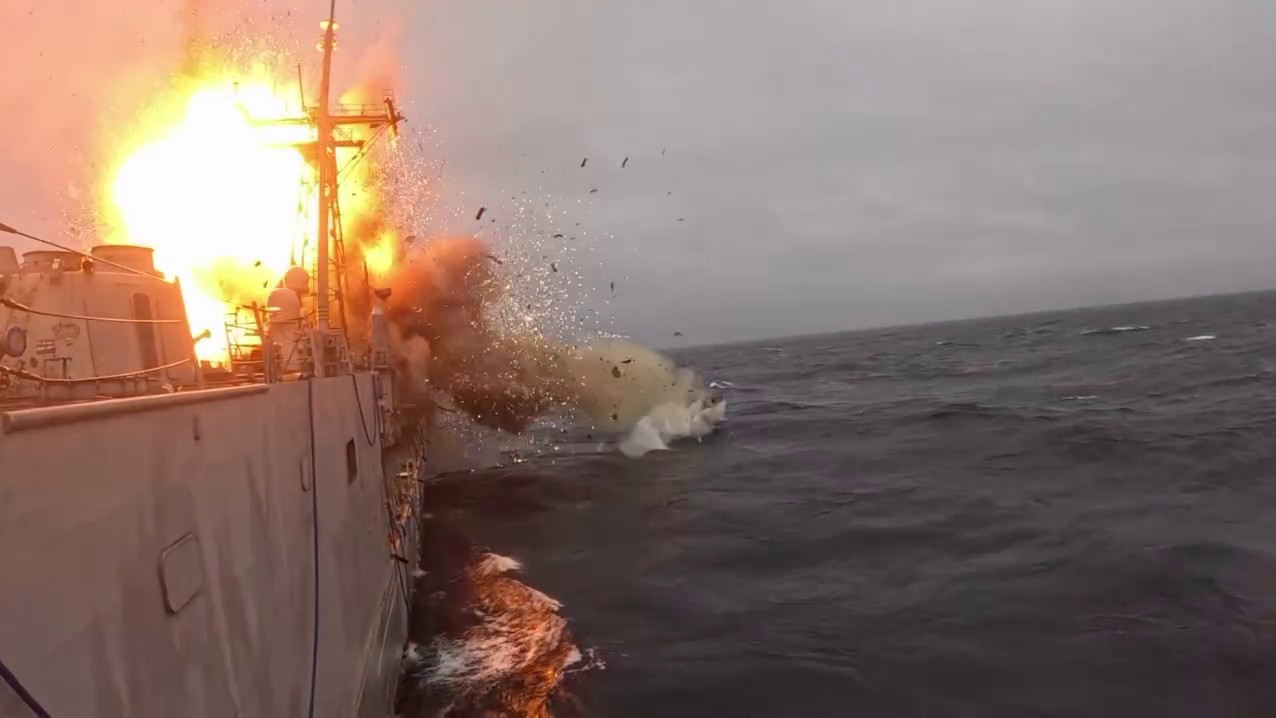
No uncrewed systems took part at any stage of the exercise that ended with the sinking of the decommissioned American frigate USS Klakring off the Hebrides, the officer who commanded it has confirmed, in an event the Ministry of Defence had originally scoped around uncrewed underwater work.
Captain Kelechi Ndukwe, commander of Task Force 65 at Naval Station Rota, was asked at a media roundtable whether unmanned systems were used at all during Atlantic Thunder 2026. “No, they were not,” he said.
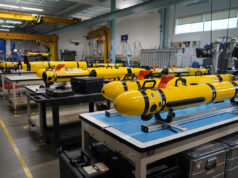
The Request for Information the department issued in August 2025, inviting industry to take part, had placed considerable weight on exactly that. It sought high-resolution scanning at depths down to 6,000 feet, autonomous and AI-driven mission tools, long-endurance and low-signature platforms, new approaches to launch and recovery, and communication systems able to work where bandwidth is constrained. Its stated outcomes covered accelerating national and bilateral maritime uncrewed systems development, driving interoperability and interchangeability, and promoting the operational exploitation of those capabilities to fill maritime capability gaps.
That document described Atlantic Thunder 26 as “a US-UK multi-domain exercise designed to validate SUW kill chains, build resilient kill webs and deliver strategic messaging through kinetic demonstration that will take place off the coast of the Hebrides in Scotland from 11th-22nd May 2026.” It was also explicit that the event was not a shop window. “Whilst AT26 presents opportunities to showcase technology, and for Industry contributions to be highlighted during the exercise to an appropriate audience, it must be understood that this is a development exercise,” the department stated. “The focus will be on accelerating capability delivery by addressing the capability blockers listed.”
Battle damage assessment in the event came from sensors fitted to the hull before it was towed out. Naval Surface Warfare Center Carderock and Naval Information Warfare Center Pacific installed the equipment, and Sixth Fleet said the data gathered will be used in post-exercise assessments to identify system failures rapidly, determine repair needs and strengthen the navy’s response in a real engagement. Ndukwe told the UK Defence Journal that the results would be processed over the following months and shared between the two navies.
The hull now lies in what the captain described as a deep valley off the Hebrides, at a depth the earlier planning documents put at around 6,000 feet, as we reported. Whether uncrewed vehicles will be used to survey it has not been set out.
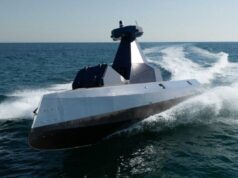
Both navies have been moving work towards uncrewed platforms elsewhere, and the Royal Navy has been running mine countermeasures through remotely operated and autonomous systems as the Hunt and Sandown classes leave service, has trialled autonomous boats on the Clyde, and has £1.3 billion committed for autonomous ships and underwater vessels under the Defence Investment Plan, a figure Wes Streeting restated from the Labour Party conference platform this week. Atlantic Bastion and the associated seabed and anti-submarine programmes rest on the same technologies.
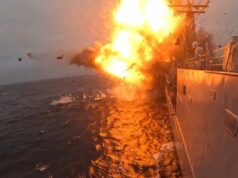
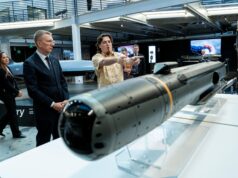
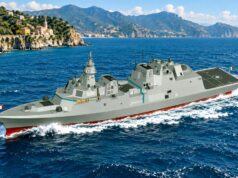
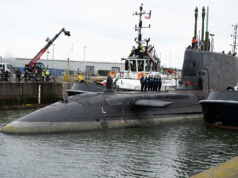
What the exercise did test was long-range strike from crewed platforms across several domains. USS Paul Ignatius fired an anti-surface variant of the Standard Missile 6 at the greatest range available, the submarine USS Massachusetts finished the frigate with a Mark 48 Advanced Capability Torpedo, HMS Portland fired the Naval Strike Missile and a Wildcat launched Sea Venom, with P-8 maritime patrol aircraft from both countries and United States Air Force F-15E Strike Eagles also taking part.
Ndukwe said reach was the difference between this exercise and the last one held off the same range in 2022. “In past iterations of Atlantic Thunder, we weren’t able to test at the longest range, and I think that’s the biggest change from previous exercises,” he said, citing the involvement of the air forces and the technologies developed over the four years the event spent in planning.
Planning has begun on a further iteration, which the two navies aim to run in 2028.