

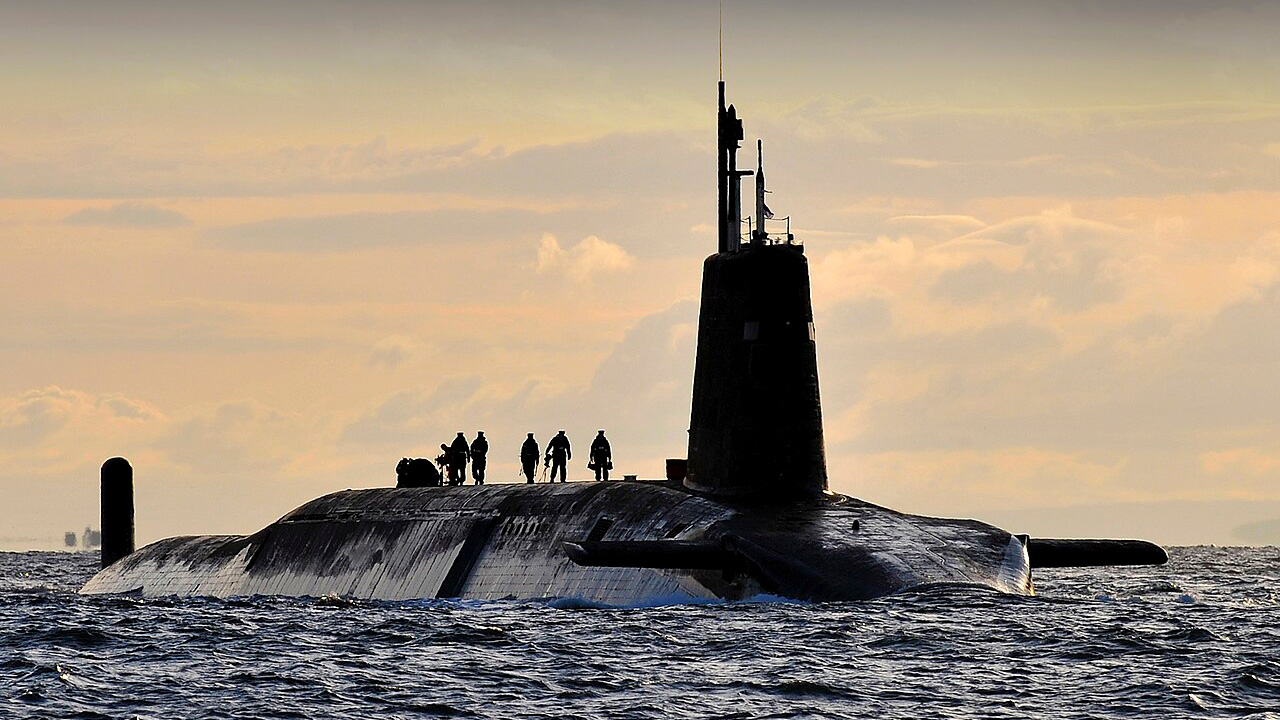
Britain should explore what it calls a Deterrence Union with the European Union, formally extending its nuclear and conventional deterrent over the bloc in exchange for bespoke access to European defence funds, according to a report published by the Council on Geostrategy.
The paper, titled Towards a Hercules Hold: Maintaining a transatlantic defence industrial base, is written by Paul Mason and William Freer and carries a foreword by Tan Dhesi, the Labour MP for Slough and chair of the House of Commons Defence Committee.
Its central argument is that the transatlantic defence industrial base has begun to split, with Washington reprioritising resources towards hemispheric defence and countering China while the European Union deploys instruments such as the €150 billion SAFE facility in pursuit of strategic autonomy, and that those European mechanisms increasingly mandate the exclusion of third countries. Britain, sitting outside the European Union while maintaining deep security ties with Washington, is described as squeezed between two diverging defence giants and facing what the authors call a dangerous Hobson’s choice in capability standardisation.
The bridge has stopped working
The authors argue that the role Britain has traditionally assigned itself, acting as a transatlantic bridge, no longer serves the purpose it was designed for.
They write: “The historic approach of acting as a more passive transatlantic ‘bridge’ will prove insufficient to securing British interests. Instead, Britain should see itself as central to establishing a ‘Hercules hold’ to grip and sustain two diverging pillars. By focusing defence investment on select capabilities and championing interchangeability, HM Government can wield the influence necessary to maintain access to US technology while accelerating European rearmament.”
According to the report, further bifurcation risks cutting European allies off from cutting-edge American research and development along with North American surge capacity, leaving European nations with widening gaps in the high-end capabilities where the United States leads, among them ballistic missile defence, hypersonic strike and space systems, while integrated transatlantic defence firms face severe supply chain disruption.
What is being proposed
The Deterrence Union is the recommendation likely to attract most attention, since it would involve Britain formally offering nuclear protections to the European Union in return for deeper access to its defence market.
Alongside it the authors recommend championing hardware and munitions interchangeability across NATO, so that equipment can be physically swapped between allied platforms, and investing in a select portfolio of high-value technological chokepoints where British engineering becomes indispensable to both Washington and Brussels. They also call on the government formally to back the Canadian-led Defence, Security and Resilience Bank as a source of non-exclusionary funding for transatlantic projects.
Interchangeability is the same concept the First Sea Lord set out in an interview published last month, describing it as going beyond interoperability so that it becomes agnostic which nation is conducting a given task, with allied navies acting for each other’s collective requirements and able to exchange capabilities.
Why the timing matters
The report lands as the American review of force posture in Europe gets under way. Elbridge Colby, the Under Secretary of War for Policy, told a meeting in Brussels last week that the review would examine the strategic posture of American forces on the continent even as Washington prioritises the Western Hemisphere and the First Island Chain, and confirmed that allies had been sent a written questionnaire seeking their views.
British access to European defence funding instruments has been under negotiation since 2024, and the SAFE facility in particular has been the subject of argument over the terms on which non-member states can participate.
Dhesi, who wrote the foreword, pressed the Prime Minister at Prime Minister’s Questions on Wednesday to commit to a pathway to three per cent of gross domestic product on defence by 2030, telling the Commons that Britain faces a significantly increased threat level and a United States leadership for which European security is no longer a priority.
The Council on Geostrategy is a London-based think tank founded in 2021 which focuses on British foreign and defence policy, the Indo-Pacific, and the maritime and technological dimensions of national strategy. Paul Mason is a journalist and author who co-presents the organisation’s Defence Talks podcast.



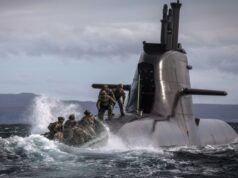


Genuinely worrying about just how submarine crews the UK actually has. There are at least three crews (two SSBNs, one SSN), and I’m guessing probably two more on top of that, but beyond those five crews, IDK.
Clearly if there is not enough we will need to train crews.
Need to get serious about bring on board new people. Don’t care if we have to introduce conscription. We are getting to a stage where we need to just make it happen.
You might not care about conscription, but plenty of people who would have their lives disrupted do!
Used to have Port and Starboard crews for SSBN I believe, is that no longer the case?
Hi mate, that’s correct with the refitting BN down to approx 1/2 a crew as it doesn’t need anymore at this point. It won’t crew upto 100% until its final 8-10 months in refit. It will get its second crew when it leaves D’port from the BN that comes into refit.
Each SSN has a crew, with A6 at full crew and has had for a while. A7 is probably at about 20 -25% as its still some years away from being ready.
If Europe wants access to the Crown jewels of defence, then the price the article cites is nowhere near enough.
The UK’s negotiating position should be;
1/ UK and France to build 6 SSBNs each – 49% of the cost of the total should be paid by all the European NATO countries.
2/ 12 SSBNs means we would have more firepower and better coverage for maintenance periods, leave, training periods, working up periods etc
3/ Other countries to help with crewing under UK / French command
4/ UK to have access to EU Defence Fund
5/ UK to have single market access
But in order to get this, the UK would then have to take command of a high AF North region encompassing UK, Iceland, Greenland & Scandinavia (less Denmark) and commit to rearmament accordingly.
AF Central region passes to France and Germany. (No UK involvement).
Getting crew member from other countries should be an option but as long as of countries are contributing towards the cost which will obviously rise as we are having trouble recruiting at the moment I don’t think there will be a problem.
Why do we want single market access?
Clearly we want to be able to buy and sell tariff free in the EU and have access for all our citizens but getting the EU to re-wire the single market and all it’s rules seems pointless and will cause trouble.
A Hercules Hold is a terrible analogy. As anyone who’s watched WSM would know it’s an incredibly tiring effort doomed to failure after an interval depending largely on the strongman’s capacity to tolerate excruciating pain.
As the two pillars inevitably split the broken warrior is left in the middle..
We don’t want to be left in the middle.. in the end we need to pick a power block.
Also we need Mark Felix in the FCDO RIGHT NOW.
think this report slightly ham fisted as yes we have to adapt to a more isolationist unpredictable america, but nuke sub capability is planned decades ahead
The EU would have to pay a very high price for any sort of nuclear deterrence. The EU were willing to do a ‘No Deal’ Brexit on fishing rights, so given how many magnitudes bigger this is then I would expect benefits in kind to be worth many tens of billions.
10/10
The EU has no entitlement to discuss nuclear deterrence, that article is misleading to say the least.
The EU already has nuclear deterrence
Absolutely Not – No Nuclear Defence Treaty With The Vile EU Under Any Circumstances.
The British Nuclear Deterrent Is Not For Sale Period And Especially With The EU.
Let France Sell Its Deterrent To The EU.
10/10
Really funny reading people getting their knickers in a twist over the EU… when UK nuclear deterrent already is committed to NATO, re aligning to the EU is probably the exact same position just cutting the US out of the loop.
Also I don’t think trying to strong arm Europe is a good idea. That’s what Trump is doing and see how many friends it gets him, even with America’s strength.
Then there is absolutely no need to sell the “British Nuclear Deterrent” to the parasites in the EU.
Our commitment via Nato will suffice for now – but even that commitment should be reviewed in the coming years.
Our Nato membership should also be reviewed in the coming years – in fact both issues should be put to the British electorate via a referendum.
Given the result that the wallies inflicted on the majority last time – I think its best we stay away from referenda.
Pretty sure it’s a Putin Bot, withdrawal from mutual defence treaties with Europe and Canada benefits only one party.
That vote had nothing to do with the EU.
It was the only time that voters could show how disenfranchised they are.
As it happens, with regard to the EU, blinking fantastic.
I’m a little confused here- What wallies , and , more importantly, what majority? ?
Thanks for demonstrating the stupid I was talking about. Maybe take a moment to digest what was actually written there comrade?
What a plonker you really are Rodney..
NATO would win hands down only morons with no geopolitical smarts would believe the UK would be stronger or better off outside OF NATO. Your rabid hatred of the EU is a silly holdover from Brexit.. Move on. Fanatical adherence too something done and dusted is hardly cogent to effective leadership or policy generation
Agree
It is EU and UK that are strong arm US. Trump is just the reaction.
Uh huh, how are things in your fantasy world?
Remind me when the UK started threatening tarrifs and occupation of the US?
NATO would win hands down only morons with no geopolitical smarts would believe the UK would be stronger or better off outside OF NATO. Your rabid hatred of the EU is a silly holdover from Brexit.. Move on. Fanatical adherence too something done and dusted is hardly cogent to effective leadership or policy generation
What’s really funny is anyone getting their knickers in a twist about any of the reports I’ve read by “The Council on Geostrategy” they are a fairly recently founded Think Tank with not a lot of funding and no real access to data, if you want to look into them one of their biggest donators is Taipei and another is Lockheed Martin.
If this was written by RUSI I’d take it seriously but so far I’m not impressed.
Just my own opinion for what it’s worth.
Agreed it’s all hot air for people to get upset over for no reason.
To be fair it is a reasonable question. I’m not sure if it has been seriously considered especially as there are obvious questions as to how it would work but it might be a way for Europe to claim it’s own nuclear umbrella without separate countries developing their own nuclear weapons. Cost would also be much lower.
Well for a new player they have identified a reasonable question which would have been asked sooner or later. Not sure how it would work in practice but not an impossible scenario.
@ABCRodney
Think tanks like the Council on Geostrategy (CoG) are not meant to be massive, cash rich commercial empires. They are elite intellectual and networking hubs, their true currency isn’t a massive corporate bank balance, it’s access, authority and alignment … it’s about creating epistemic communities; highly specialised networks of professionals with recognised expertise and competence in a particular domain.
They create mechanisms and set the intellectual agenda by which the organisation aim is to change government policy. Their mission is to shape the strategic narrative of the nation, and that requires social and political capital, not a massive corporate war chest.
The true value proposition of a group like CoG is the ability to whisper directly into the ears of policymakers. They frequently provide formal oral evidence to Parliamentary Defence and Foreign Affairs committees. They write strategic white papers that civil servants read. Their advisory board and network of fellows feature a cross-party roster of MPs, members of the House of Lords, former diplomats, and senior military officials. When they host an inaugural event, the keynote speakers aren’t entry level researchers, they are people like the First Sea Lord of the Royal Navy or the UK’s National Security Adviser.
Regarding RUSI, the geopolitical experts, academics, and former military officers frequently switch jobs between the two organisations or hold joint titles. They may serve as a Senior Associate Fellow at RUSI while publishing policy articles with the CoG. They will often speak on the same expert panels at large international defence conferences. They marked their fifth anniversary in 2026 directly inside the Foreign, Commonwealth and Development Office (FCDO). This level of placement allows them to seamlessly blend state power with private sector interests.
Because of these deep connections, they possess incredible “convening power.” A defence contractor like BAE or Lockheed Martin has plenty of money, but cannot easily invite the head of the Royal Navy, a shadow defence minister, and an American diplomat to a private dinner to talk about naval procurement without it looking like direct corporate lobbying.
Thus … the Council acts as a neutral, intellectual middleman. Corporate sponsors fund the think tank, the think tank hosts the elite panel or forum, and everyone gets to network under the banner of “independent research”. While the MoD/ Royal Navy and the The Foreign, Commonwealth and Development Office are core financial partners, They do not label government money as a “corporate sponsorship.” Instead, it is classified as project based funding or public service contracts. Hence, the MOD will hire the think tank to write a specialised paper on a topic like missile defence architecture or maritime security. The cash flows from Whitehall’s budget into the Council’s accounts, cementing them as an official, state-sanctioned voice rather than just an outside corporate lobby group.
As such, they have exactly as much wealth as they need to sustain a highly polished operation in Caxton Street in Westminster, SW1H; one of the most expensive office districts in London, they pay specialised staff and fund high end publications. They don’t need a massive cash reserve because their real asset is their contacts.
In the world of British politics and global defence procurement, power is relational, not institutional. Their contacts are not just a long list of names; they are the mechanism by which the organisation changes government policy and justifies its … ‘corporate funding’.
The EU is not NATO , so no, it’s not the same at all. As for strong arming the EU ,again it’s not the same .The EU as a blok have shown great intransigence with the UK regards many things including defence funds/procurement access etc. so to tritely suggest- as this paper does – that the UK should lose sovereign control of its Nuclear deterrent an pass it over to the EU is quite simply ridiculous. There is no EU Army nor common EU Foreign policy/Foreign secretary and evennif there were we are not part of that, so I fail to see how that could work within the current framework.
The only EU members that aren’t in NATO are Austria, Ireland and Malta. If you can’t grasp that the difference between the current stance of the nuclear umbrella shielding NATO and the Nuclear umbrella shielding the EU is effectively zilch then there is no helping you. Be my guest to be upset over nothing.
The difference is that even in an article 5 situation, the UK has the option not launch, that decision is in London. I personally have no wish to gamble London or Portsmouth to save anywhere to the right of Dover. Nor do I want those tossers in Brussels touting our deterrent as there ticket to that level of decision making.
Europe is NOT the EU it is a European block that incorporates many European countries but bot all. If we already commit our forces to NATO why do we need this extra structure? Also if the EU pays for stuff you can bet they will want a say… why should the EU have a say in our sovereign capabilities. After all we left the EU so we do not have to do what the EU says. Do not get me wrong we should continue our NATO commitments with or without the US. We should also work closely with the EU on defence but we should not be shackled to them both with our conventional or nuclear capability.
It was only a little while ago the UK was hated by the EU for leaving and every effort was made to punish us. Now the EU wants something and it is all sweetness and light. If the EU wants the bomb they con pay France to build teem an EU one.
Little crashout over the EU not being Europe aside, because NATO is built around the US and with the US becoming unreliable we are probably going to have to make other arrangements. Like it or not the UK will be in some way shackled to the EU, it shot itself in the foot with Brexit by removing any power it had within the block, and I pointed out multiple times that in the long term Britain will probably become a client state of either the US or EU, instead of a primus inter pares within Europe after that.
As for punish, it’s always funny when Brexiters see the loss of benefits of being inside the EU as “punishment.” I guess that’s a bit like a toddler wanting it’s cake and eating it too. Oh well. I don’t see the EU asking us for a nuke btw, I saw Germany suggesting help us fund, or protect it, but that’s rather different (given your crash out I’d have thought you’d care about the difference).
Unlike you I do not see the globe as being just the EU and the USA… the UK has always had a Global perspective unlike the insular EU. You misrepresented me on punishment, I do not see the withdrawal of EU privileges as punishment that is what you expect when you leave. Nor do we need influence in the EU we are not a member. In my view the Brexit we got was mot what we voted for. We should have moved to WTO trade with the EU, retained our UK fishing for our fishermen. Left the ECHR and properly controlled our boulders. We should have focussed on trading Globally and with Commonwealth countries. Instead our rubbish establishment politicians love the EU probably because they love all those MEP jobs with loose audit expenses. Yes our MPs have done their best to weaken Brexit. I can only hope that there will be a change of government that delivers true Brexit. Do not get me wrong I am a European and wish the EU my best but I do not wish to be ruled by the EU or the USA.
Cool maybe look at a map.
EU were naughty seeking to overly punish the 2nd net EU funder for leaving the club and borderless workplace for many EU job seekers, with hindsight it could have been handled better, the tiny ref margins 48/52, should not more have been done to retain UK? there is a reality that UK is outside a major economic block these days, those blocks struggling too.
The EU is not the powerhouse it likes to present. Tge Main players Germany and France are in serious trouble and they are the key stones of the EU. Germany is deindustrialising and closing factories like VW amid BASF have mover to China, investment is down and the talent is leaving. They are in recession. France is in a similar plight with massive debts and an inability to make financial reforms. The fact is the EU is failing and soon may become reliant on China. They are also importing Russian LNG from Russia. So with one hand they sanction Russia and with the other they feed its war economy. Why should we rejoin, the EU is a slow motion train crash. If you do not believe me do some research.
Not sure any of this is relevant at this time. The request would have to come from the countries which would wish that the UK / France supplied extra kit to defend or deter aggression. If countries wished to spread their cost via an umbrella organisation such as the EU then that is fine. Certainly for them they may, for example, put money in Germany’s direction to provide tanks etc.
Comments on here about old Brexit arguments are in my view irrelevant. The EU or individual countries might wish to contribute or might not. That makes them potential customers nothing else.
The UK seriously nedds to increase its defence dpending to 3 percent before we can stary talking about this stuff . Its debatable if uk actually has a nuclear deterrance with submarine fleet seemingly all stuck in the dock with serioys infrasyructure issues . Then of course our over reliance on USA rltechnology. Though uk so intertwined with USA with regards to shared mai temce i cannot see uk leaving the usa uk agreement . And best to keep the USA close .
This is a bit redundant as almost every EU nation is in NATO and the UK deterrent is assigned to NATO..
Essentially what this would say is NATO is now a paper tiger due to political weakness and we need a direct treaty with the EU
We had one, it was not in our best interests.
They do not compromise. Not matter how very needy they are.
Unless Germany states rules need to bend.
Then they amend.
Why do you think the eu is needy? After all, that article has been written in uk.
^This is what I was saying, but much more succinct. But hey, the usual crowd just wants to be upset at Europe.
If nuclear technology is exchanged, the USA would have to agree as much of the Trident technology is from the USA…
All of the Trident tech is from the USA.
Not true.
The warheads are UK designed and built in the UK.
Click bait reporting on a nonsense report from nobodies.
Just shoot the guy who wrote the report and nuke the EU, job done -.-
Honestly this is one of the most worthless bits of gesture politics I’ve ever heard of, the simple fact is we already do provide a Nuclear deterrent to 90% of the EU as they are NATO members. The others are either too small to be threatened (Malta), unlikely to be targeted as lots of rich Russians own the place (Cyprus) or have Political Parties that want to dismember the UK (Eire).
Fact is we are the only country that has its entire CASD assigned to NATO tasking, not the US and not France so it’s a completely pointless exercise. Yes we can use it as we see fit in exceptional circumstances (hint Argentina), yes the PM decides to launch but first and foremost it’s NATO tasked.
TBH I’ll say this again EU countries should lean on France to follows our lead on NATO tasking and in return provide extra funding to both countries to provide a 5th SSBN each, get us to coordinate our rotations, maintenance and targeting, and develop a range of Tactical weapons to replace the duel key US B61 suicide bombs.
But that cannot mean they get access to the Tech, any involvement with crewing, industry or the C2C as that breaches the NPT Treaty, it also breaches the terms of the US/UK Nuclear Mutual cooperation Treaty, so it’s a big no no.
ABCR,
Again, the keyboard of reason prevails. 😉 Very small probability of substantial change in NATO status quo in the foreseeable future. Current administration is constrained by statutory minimum of ~76,000 US personnel assigned to NATO and the possible mid-term election results. Fearless prediction, current review will result in gradual, modest adjustments.
Dreadnought class SSBNs will become operational during the 2030s, and the increased stockpile of 260 Astraea (A21) warheads will putatively become available during the same timeframe. Absent substantial additional UK funding (multi £Bn) to underwrite expansion, there will be a modest increase in max number of deployed weaps, until at least the 2040s. Yes, acquisition of F-35A and eventually GCAP/Tempest, will eventually permit the development of multi-faceted deterrence, but this won’t be a rapid or inexpensive venture. B61-12s w/ wingkits (and possibly powered flight in future), carried aboard 5th and 6th gen stealth a/c, should remain a viable option for the foreseeable future. During the 2030s, the design of a British ACM would be feasible. Another potential option might be FMS acquisition of SLCM-N for SSN-A, post 2035 (USN IOC). However, all activity will be constrained by the UK projected budget. The bottom line in this arena is massive investment, extended timelines and significant inertia. Anticipate all the responsiveness of a fully laden supertanker at flank speed attempting a slalom course.
You left out Austria, they’ll definitely drag us into a Nuclear War!
I will say for all the smug “The EU wants something from us and we hold all the cards” if *really* pushed into a corner Germany and Italy for sure have the capability of developing a Nuclear Program and ignoring the NPT. I don’t think they would, but if Britain and France turned their backs on Europe and respectively refused, they have the ability to do it.
I do not think the UK would turn its back on Europe as we live here. However I think the UK needs to retain control of its nuclear weapons. We are committed to the defence of NATO countries with our nuclear weapons. So we are already defending Europe with our nukes.
Yes you are right I should ha be added, “and Austria who’s last contribution to world peace is best forgotten”.🥹
Let’s see. Both US and Russia have over 5,000 nuclear warheads each. China has about 600 but by 2030 that figure is projected to be about 1,000, then 1,500 by 2035. Including both the UK and EU we have about 500…
Europe is at least the equivalent of those three nuclear powers – bigger population and economy than our greatest threat, Russia, for a start.
Logical response? Not saying Europe (including both UK and EU) should have 5,000 nukes – but 500 has to be considered to be a few short of a decent deterrent. I would say we need 1,000 to 1,500, including a mix of both tactical and strategic. Some kind of tie up with the EU isn’t just something that makes sense – we need it. The UK and France can enhance their high end nuclear systems while leaving Germany, Italy, Poland and other to provide thousands of tanks, drones and foot soldiers. The objective is to produce a visble and credible deterrent.
Small but professional army, decent air force (ie, bigger than current) and much enhanced navy, good intelligence system plus a strong nuclear force should be our contribution to a UNIFIED European defence… keep national sovereign armed forces, but allocated to European defence rather than just NATO. We can’t afford to do it all by ourselves – let’s get the navy and nuclear forces sorted, be responsible for taking the lead in the northern approaches and leave the Med to France, etc, and central Europe to the likes of Germany and Poland.
Proposed setup? – sure, wishful thinking but…
UK and France cooperate on an increased nuclear deterrent with possible financial and manpower help from the likes of Germany and Italy. Develop short to mid range nuclear weapons – whether aircraft launched cruise missile or land based ballistic (best place for those probably in the middle of Spain, so highly unlikely). Include a mix of tactical and strategic.
UK builds up navy. By increasing production and development facilities perhaps the UK could further improve our navy but also take a bigger share of the export market. Together with the Scandanavian countries we accept responsibilty for the Atlantic area – Gibraltar and Cyprus would be less important for us but we would still have responsibilities there.
Advantage? less reliance on an increasingly unreliable ally like the US for a start.
Adding to that… militarily China is not a threat to Europe. Sure, we have an obligation to the likes of Australia, but in general let’s leave China to the US and other regional powers in the area. So just as the US swings towards China and away from Europe, we need to swing away from China and concentrate more on Russia.
The UK refuses to adequately fund its contribution to NATO so what makes you think it will adequately fund a contribution to the EU? And if you think that Poland, Greece, the Baltics, to name a few EU members, are going to ditch their reliance on the US in favor of a reliance on the UK or France you’re even more bonkers than most of the people who post on this site.
This has always vexed me because was the US ever going to trade New York for London, I don’t think so. Is the UK going to trade London for Berlin again if it did : end of the human race, not just old blighty.In the end a nuke deterrent can only be one nation, plus any vague signals who controls ” pressing the button” severely undermines its purpose of deterrence.
Sounds like someone is trying to back-door a form of European Army..
Not seeing this as offering any more nuclear deterrence for Europe. The uk sub is under nato control. The paper is asking for European money to support uk defence efforts. Have wondered whether a 5th sub could be sponsored by say Germany even crewed by Germany but there would be many obstacles not least sharing defence Crown Jewels with another country.
Not the slightest chance of being able to do that unless we were prepared to abandon our technology sharing arrangements with the US, and our NPT obligations. That’s before you start considering the practical obstacles and the likely total lack of German interest in the proposal.
The UK nuclear deterrent is not under NATO control. It is ” committed to NATO” , as are US weapons including Trident, so all NATO members are in theory under its protection. But operationally they are wholly under British control.
So committing them to EU countries would bring Austria, ireland and Malta under the theoretical guarantee but otherwise change nothing.
France, the only EU nuclear power is not part of the NATO nuclear planning group and does not commit its nuclear weapons to NATO.
The most credible idea is the Resilience bank idea with all Nato members paying into the kitty as I very much doubt that EU members outside Nato would put there hands in their pockets. The UK should also be pushing the idea of a Commonwealth defence force with Canada, Australia and New Zealand at its core. Nato is taking a big hit at the moment with the Rabid dog in the WH and I do not think it will improve after he has been put down so we (the UK) will have to start to think about how we are going to continue after 2030. It is going to take some radical rethinking about how we defend ourselves and our allies which the current government seem unable/unwilling to take on board.
The UK’s nuclear deterrent is assigned to NATO, and already offers de facto protection to NATO members states, so the only beneficiaries of (somehow) treating the EU as a comparable defence alliance would be Austria, Cyprus, Ireland and Malta. The UK deterrent is in reality scaled to provide minimum deterrence against attacks on British territory (the French have similar limitations). Creating credible, continent-wide deterrence in the implied absence of US commitments would require a larger scale – in particular more redundancy in strategic second strike capability and some tactical delivery systems in order to manage the escalation ladder, all of which need to be paid for. The scope of cooperation on development and deployment of nuclear weapons is also constrained by the terms of the NPT. From the perspective of our own deterrence capability I would feel much more comfortable with a force sufficient to provide at least two boats on CASD (i.e. at least 5-6 boats total), each with a maximum MIRV load as well as a modest number of warheads integrated with ALCM for a tactical response. This would also give us at least a shred of credibility in the broader ‘defend the whole continent’ scenario. This is only the equivalent level of capability that we were committing to before the Soviet Union collapsed so it’s entirely within our means.
This COG paper is interesting. The central concept of trading some element of nuclear deterrence for access to the EU’s SAFE fund is unrealistic.
The SAFE fund is an EU defence fund, with defence loans to members underwritten by the EU. We are not in the EU and therefore do not qualify to participate. All those saying the the EU is being mean and horrid to us seem to wilfully miss the point. We decided we don’t want to be a member of the golf club anymore and ceased to pay our membership dues. Yet too many uninfomed Brits still expect us to be entitled to pitch up to play on the course, drink in the clubhouse and sell our goodies in the club shop. As we have resigned our membership, we see not entitled to play any part in the golf club and participation in SAFE is a non-starter.
We are where we are, a little island somewhere between the USA, which does us no economic favours, and Europe, which is getting on with rearming.and playing a bigger role on the international stage. We will inevitably be something of a backwater between the two large powers, and despite our belief in British exceptionalism, with declining importance and influence.
The nuclear-sharing idea is an interesting one, as wider, infotmed national discussion of our independent nuclear deterrent is long overdue.
We developed the independent deterrent more than 70 years ago, when the British Empire and Commonwealth was still a major international player. That is past history now, today we are just a small middleweight nation with declining influence in world affairs.
We face the harsh reality that our nuclear deterrent and DNE now munch 40% of our defence procurement budget. So it is no surprise that we cannot afford any6hing like the number of conventional aircraft, ships and army equipment that we need and, rather than being a military bulwark of ENATO, are increasingly at the cow’s tail in the forces we can provide.
So if Germany or anyone else wishes to assist us financially with this cripplingly-expensive nuclear millstone, we should take their hand off. For those who think sovereign control is vital, the reality is that we will never use our Trdent missiles, because to do so would imvite nuclear retaliation on this island on a large scale. It would make a lot more sense to have a European nuclear deterrent; Europe, if we include the EU and UK/Norway/Iceland, is the world’s second larget economy, slightly ahead of China for now, and the world’s third largest military. If we want a future where we are not continually being bullied and exploited by the USA or threatened and undermined by Russia and CRINKS, it would be sensible for Europe to stand together and work together.
A European nuclear deterrent would be part of that strength. France would need to play ball in the new arrangement. I would like to see Germany paying for and crewing a Dreadnought SSBN and contributing 20% of the DNE cost. Likewise Italy paying for and crewing a fifth French’-built SSBN and contributing 20% of the overall cost.
Overall, control and decision to fire could be by a two-thirds majority,, with us having 4 votes, France 4 votes and the others one each..Meaning there would be no authorisation without Anglo-French agreement. But each member would be entitled to take nuclear action on its own, without involving the others, if circumstances dictated.
Some future arrangement like that would suit us. ENATO with 10 SSBNs would be a big nut for any opponent to crack. An EU contribution to the cost of our DNE would be most welcome and advantageous. It would free–up a big chunk of money to start to build up our air force, army and navy. And if the worst comes to the worst, we would still have the ability to go it alone, however far-fetched that would be in reality.
Not sure when we would consider using our Deterrence let alone using it to cover the EU…!
@Cripes
“Overall, control and decision to fire could be by a two-thirds majority,, with us having 4 votes, France 4 votes and the others one each..Meaning there would be no authorisation without Anglo-French agreement. But each member would be entitled to take nuclear action on its own, without involving the others, if circumstances dictated.”
Madness. Utter, utter madness. Quite apart from the fact that your maths is a bit out, as in there are 27 current EU member states, so a 2/3 majority would mean France and UK could, even if they were both aligned against use, be forced, by at least one vote (and not sure if you’re counting UK as part of EU for this decision making process or not) into taking nuclear action they maybe didn’t want to. Looked at the other way, would the EU be happy with the UK deciding to take unilateral nuclear action on the EU’s behalf when all other EU nations were against? This is a recipe for a total squabble over whether nuclear weapons get used or not, meaning the deterrence value is basically nil as any adversary would know that the EU+UK would still be talking about things while bombs rained down on them. You just need to look at the EU’s initial response to the Russian adventurism in Ukraine.
If the purpose of this paper is to try and find creative ways to “fund” UK defence spending, 10/10 for blue sky thinking, but a completely unworkable idea in the real world.
Given that the use of nuclear weapons is a political, not a military decision, the only thing the UK needs to do here is to return the cost of funding the deterrent to the general pot, rather than beggaring the (Navy part of) the MOD budget.
This also has the benefit of allowing the costs of upgrades to either the warhead or the delivery system to be hidden in a black budget (see Chevaline), as opposed to tipping adversaries off when the Navy budget suddenly expands massively but no new ships seem to be getting built or people taken on, thus clueing in adversaries that something is going on that they might want to focus their intelligence efforts on.
We assume neither Britain or France would be crazy enough to authorise a first Deterrence Strike…! Presumably this means that Russia will initiate first Strike leaving us with a very very small window to Agree Retaliation..?
The argument can be put with Tactical Nuclear Weapons.. if your in a Conventional War and beginning to lose do you authorise first Strike in Defence and risk MAD…!
You misunderstand my maths. By votes, I was talking about the suggested nations in a hypothetical 4-nation SSBN pact – not the 27 EU members. Viz:
France – 4 SSBNs – 4 votes
UK – 4 SSBNs – 4 votes
Germany – 1 SSBN – 1 vote
Italy – 1 SSBN – 1 vote
As mentioned, a two-thirds majority would be required to press the nuclear button. That would mean that no Trident could be launched without joint Anglo-French approval.
This example just to counter the idea.that the EU would be in overall charge of the deterrent. They wouldn’t be in the command chain at all.
@Cripes – thanks for clarifying. Given the rest of your post was talking about the “EU” and you mentioned a “European nuclear deterrent”, I misunderstood your meaning.
That said, given those 4 nations are part of NATO, and France, Germany and Italy are also part of PESCO (not sure if we still are – I have a nagging feeling we are still tied in there in some way), then I’m not sure how this new proposal would work in terms of keeping the EU (the political entity) out of the equation. Is Brussels really going to allow 3 members to go off on a nuclear frolic of their own?
Having said that, experience to date has shown that the EU is basically run primarily for the benefit of France and Germany, with France in particular basically only following the rules when they feel like it, so maybe it could be made to work.
However, I still think the whole premise is a bad idea, on a “too many cooks spoil the broth” basis, and the risk of EU influence coming in by the back door.
I think the current position is actually optimal in terms of MAD doctrine. i.e.
UK – weapons formally assigned to NATO, but with UK still having “national interest” discretion to fire at will. Anyone looking to attack NATO and/or UK thus has to factor in that the UK is likely to respond – our history shows we’re prepared to fight, “…if necessary, alone…”
Yes, our loadout is no-where near the size of the US, or Russian arsenals, but it doesn’t need to be. In the case of Russia, yes, it’s a large country, so can absorb a lot of damage overall, but in reality, once you’d turned Moscow, St. Petersburg and one or two other sites into glassy puddles, question to what extent “Russia” would continue to exist as a viable political entity. Somehow, I don’t think the nomenklatura really want to be forced to slum it on a collective farm east of the Urals if their favourite haunts in the glossy metropoli are vapourised.
The UK’s real problem is how we respond to a large conventional, or sub-strategic nuclear attack on us alone. It’s maybe less of an issue in a NATO context, but to me, that recent “Wargame” podcast or whatever it was called was all too believable – i.e. our current lack of long range conventional weapons leaves us with basically 2 options in the event of a large conventional, or sub-strategic nuclear attack on the UK – i.e. (1) suck it up, or (2) escalate all the way up to a strategic nuclear response.
France – their nukes are not, as I understand it, assigned to NATO, so France has complete discretion as to how to use it’s nuclear weapons. France’s history has shown they are capricious and tend to do what they want. They’ve even co-operated militarily with Les Rosbifs!! (Suez). So, anyone thinking of large conventional, or nuclear attack on France (strategic or sub-strategic) can’t rule out a nuclear response from France.
Long way of saying, I think the current set-up is actually optimal from a eNATO perspective – you have two nuclear powers, both with strategic nukes, one with sub-strategic as well, and both able to act independently if necessary, but who might also act in concert (and have shown they have in the past). That has to complicate things for anyone planning a (nuclear or large conventional) attack on NATO / “Europe”. The (relatively, in fallout terms) close proximity of Paris and London also complicates things for an attacker. An attack on London is close enough to also affect (and potentially seen as a sly attack on) Paris (and vice versa).
Once you introduce others into the mix, you end up with a debating society and a deterrent with declining credibility.
The real question is what would prompt a nuclear response (strategic or sub-strategic) from the UK or France if the USA decided to sit things out. A nuclear attack (strategic or sub-strategic) by Russia on France, UK, Germany, Italy, Spain? Almost certainly. Poland? Almost probably.
After that, it gets fraught. Would the UK or France really be prepared to risk escalation all the way up to all out nuclear war in the event of a sub-strategic nuclear strike by Russia on say, the Baltic states?
Still, that’s the beauty of MAD. In a world where nuclear weapons exist, provided you keep numpties like Corbyn away from power (who said he’d never authorise a nuclear retaliation by the UK, even in the event of a nuclear attack on the UK), your enemies just don’t know, so they have to decide if the risk to them is worth it, and that means that they can’t guarantee that they’d get away with a first strike (and if they did, the cost to them might be unacceptably high). And to misquote Tony Stark, “That’s worked out pretty well so far”.
It doesn’t work and is tied to the USA who are the real enemy besides Brussels.
I know we are desperate for money and refuse to pay for it fairly.
Like we have given the cheap skating EU parasites enough, not without proper compensation, keep your hand off our technology!
Ideally, 12 SSBN’s for Europe, including 2 each for Germany and Italy.