

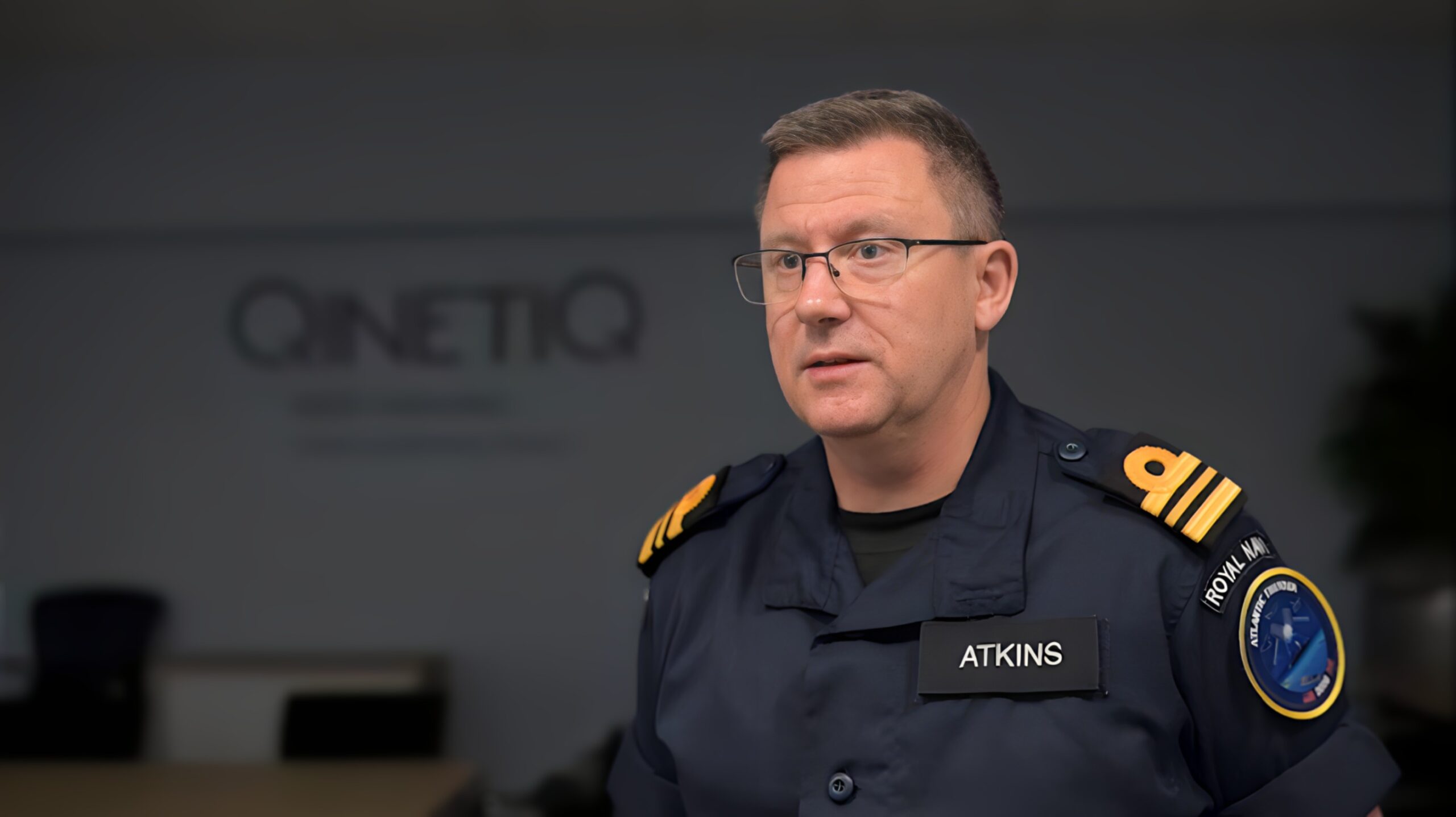
The American frigate destroyed off the Hebrides this month was fitted with instruments by both navies before it was hit, so that every weapon that struck it could be measured, the British officer who ran the exercise has said.
Lieutenant Commander Paul Atkins, UK lead project officer for Atlantic Thunder, said the sinking was a battle damage assessment as much as a demonstration.
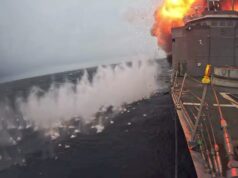
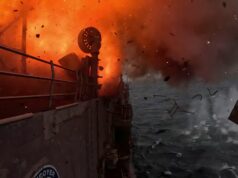
“We have US scientists that have placed loads of sensors all over the ship, including the UK have placed some sensors over there,” he said. “And as each of the weapons hit, we conduct the battle damage assessment and download all the footage and download all the information of the sensors so that it can be looked at after the exercise and worked out exactly what the impact was.”
The two countries then go their own way with the results. Each takes away what it can from the shared sensor picture and assesses its own weapons on its own, the British working through what their munitions did to the hull while the Americans do the same with theirs. What the exercise is for, Atkins said, is “understanding how we can work together in future as a joint force when we need to”.
The range was not picked for its convenience, of course, and Atlantic Thunder has always been held there, roughly 150 nautical miles offshore to clear enough airspace for the weapons being fired. The conditions are part of the attraction.
“Up here, we’ve got very strong winds and weather up here, so we can test to the full ability compared to going down off ranges that are like further south, where you don’t get as much wind,” Atkins said. “We can get rain one day, wind the next, or we could get it all at once.”
That variability, along with the range of water depths available in the Atlantic, is what makes it useful for trialling new munitions. Sinking exercises have become uncommon in British waters, which is the reason the two navies went back to running them.
“Atlantic Thunder sinkexes don’t actually happen very often in the UK, so that’s why we’ve started to do this again, to ensure that when we are working with the US we have got the capabilities to be able to do that should we need to,” Atkins said.
The exercise now runs on a two-year cycle, and the work does not stop between iterations.
“It’s literally as soon as one Atlantic Thunder finishes, the planning already starts for the next one two years later,” he said, describing initial conferences to settle which units take part and what scenarios they will run, followed by environmental assessments for the range. Getting it signed off, he said, is a very long process.
This year’s exercise was a solely British and American affair, drawing on an American destroyer, Royal Air Force Typhoons, United States Air Force F-15 Eagles and Royal Navy frigates. Command and control was run from the Hebrides range control building, with a commodore embarked in the destroyer taking charge of the task force at sea, and each unit brought its own weapons to test.
Atkins declined to say which munitions were used. The point of putting each one against the same hull, he said, was to test and analyse them as each unit came in, and to establish that the weapons do what they are supposed to do.
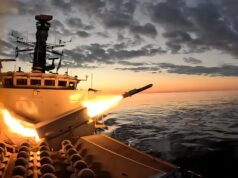
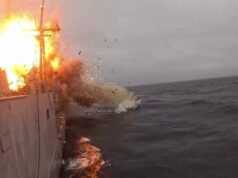
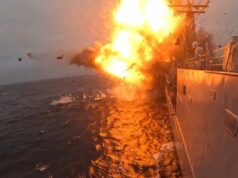

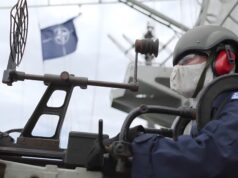


where Typhoons involved as suggested in the Article? What could they be doing, Brimestone perhaps or paveway IV ?
Assume PIV. Not seen confirmation of RAF involvement in the other articles, just Portland NSM and Wildcat Venom.
Hopefully both.. although I’m not sure you would want to throw a typhoon within Paveway lobbing range of a more moderate Russian frigate or air defence ship that’s not been mission killed.. where as Brimstone 2 with its 37 mile range can be fired from under the radar horizon of a surface ship.. after all that’s about the range of the AM39s used by Argentina in 82..in the end at present the only play the RAF has anti ship wise against something with an air defence system is sneaking under the radar horizon fire brimestone 2s for a mission kill to take out the sensors then follow up with a paveway for the kill… I would bet some money they are now thinking about practicing that.
As we’ve both commented on before, the lack of a fast jet ASM, which for me is the primary way to use an ASM vs a ship, is one of the constant capability gaps which I’m amazed has not been filled.
I’d rather risk a jet vs closing to firing range with a warship, which is nuts.
Yes I think it’s one of the great interservice failures.. part of the RAF having sea blindness.. in a case like this you actually need a politician to override inter service rivalry and say fund the missiles… it’s utterly insane that a nation made up of islands does not have anti ship missiles for its airforce.. The RAF should have a mandatory requirement to maintain a maritime strike capability.
Didn’t we recent buy some smaller Stormbreaker glide bombs from the Americans for our F-35Bs? I can’t think they’d have arrived this quickly, so Paveway is the logical conclusion. Maybe in two years they’ll be ready to test the Stormbreakers.