

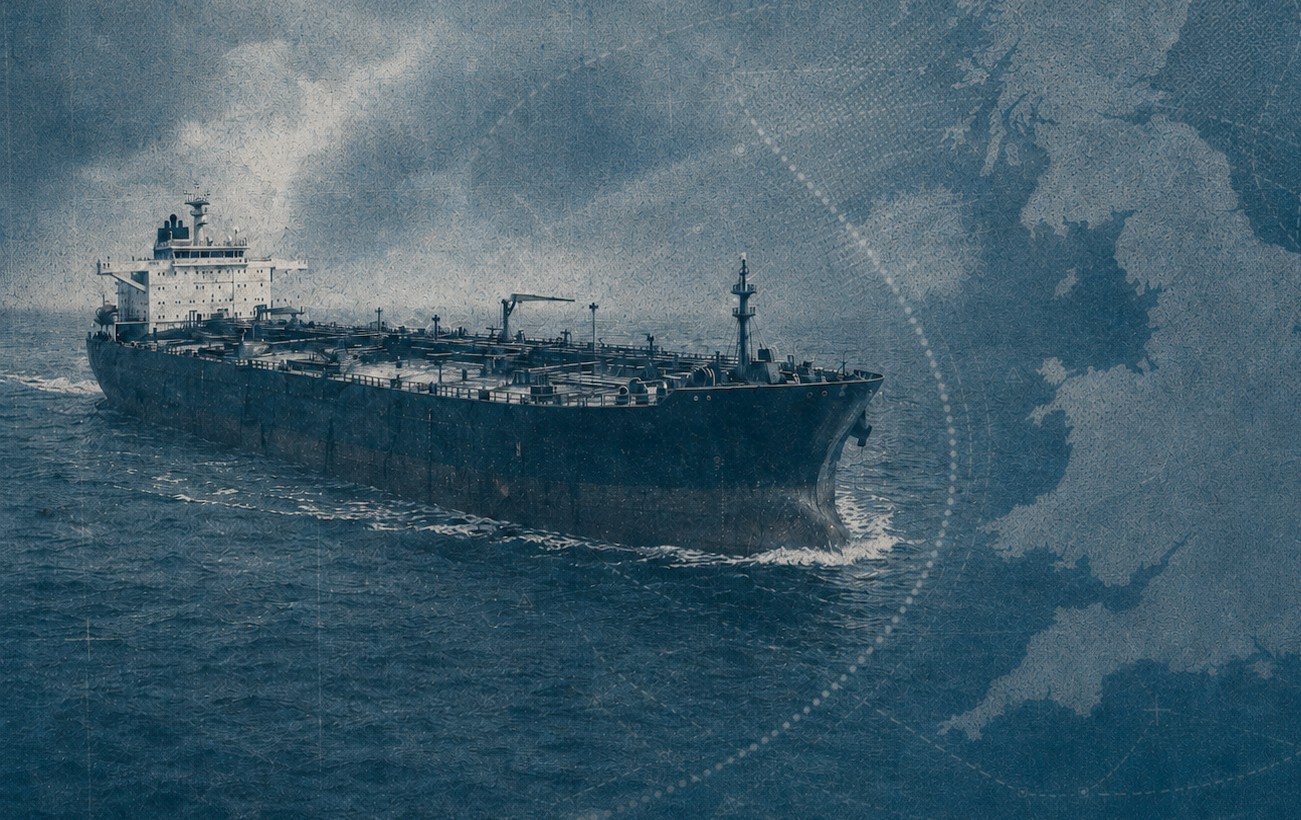
Over 180 sanctioned shadow fleet vessels have transited British waters without a single recorded boarding since the UK government announced in March that its armed forces had the authority to intercept such ships, raising questions about whether unenforced commitments are undermining the broader Western sanctions effort.
Prime Minister Keir Starmer announced on 25 March that British armed forces and law enforcement could board and intercept sanctioned Russian shadow fleet vessels passing through UK waters, including the English Channel. Between 25 March and 11 May, 184 sanctioned vessels made 238 transits through those waters. No public evidence of a boarding has emerged.
When the question was raised at a CEPA press briefing on Tuesday, Mihkel Märtens, author of a new CEPA report on Russia sanctions, was careful not to comment directly on UK policy. But he confirmed the underlying principle without hesitation. “If you say you’re going to do something but then you don’t, that could lead to potentially an embarrassing situation,” he said. “Sanctioned vessels roam around everywhere, from Russian ports in the Baltic through to the Baltic Sea, the North Sea, the Mediterranean. The sanctions themselves can’t physically stop the vessels moving.”
The shadow fleet, experts at the briefing warned, poses threats well beyond sanctions evasion. Benjamin Schmitt, a senior fellow at CEPA and the University of Pennsylvania who recently testified before the US Senate Foreign Relations Committee, described the vessels as what he called “jack of all trade hybrid threats.” He told the briefing that French court proceedings involving the vessel known variously as the Kivalla, Pushpa, Borekai and Phoenix had produced testimony from a captain that unaccountable Russian security personnel from a group called Moran, allegedly including a former Wagner mercenary, were present on board, “collecting intelligence, monitoring the crew, monitoring the vessel, and doing God knows what else, unaccountable to the captain and crew.”
Schmitt, who said he personally observed the Kivalla being held under Estonian Navy interdiction in Muuga Bay in April 2025, and later helped identify the same vessel as a suspect in the shutdown of Copenhagen Airport through drone activity in September 2025, described the vessels as combining “sanctions evasion, possible sabotage, possible air incursions, possible espionage and signals intelligence, all of the above.”
The vessel, he noted, had since been renamed the Phoenix and was last seen sailing in East Asian waters toward Russia. “These vessels don’t disappear,” he said.
Schmitt was direct about the wider enforcement problem, arguing that the West needed a wartime level of staffing to match the scale of the task. “We can’t simply decide when sanctions are good for us,” he said. “It provides not only a permissive environment, but an environment in which the Russian Federation can start to strategise.”
The UK has sanctioned 544 shadow fleet vessels and remains an active participant in Joint Expeditionary Force discussions on coordinated interdiction.
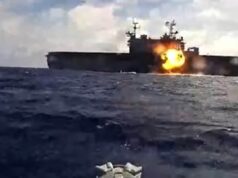

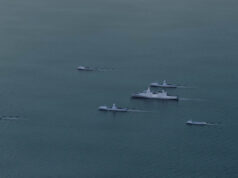
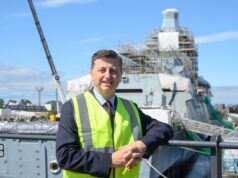
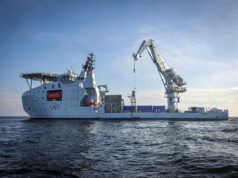



Not really a shock is it?🙄
I’ve gained $17,240 only within four weeks by comfortably working part-time from home. Immediately when I had lost my last business, I was very troubled and thankfully I’ve located this project now in this way I’m in a position to receive thousand USD directly from home. Each individual certainly can do this easy work & make more greenbacks online by visiting
following website—.,.,.,.,.—>>> JobatHome1.Com
Shadow fleet interdiction needs to wait until the Iran war is over.
yeah just like rasing defence spending, etc etc , no real action, its state normal for Governments talk a lot do little.
If only life was simple and everyone in government was as smart as you. 😀
Smart than you, and thats good enough for me, enjoy the rst of the day, Feel free to make some figures up and tell me how defence spending has gone up but there little to show for it.
Whats 70 – 60
😀
Freedom of navigation is like virginity, one prick and its gone. You can’t stop Russian ships in the channel and complain about Iran stopping ships in the straits.
Exactly, what we can stop is non flagged tankers and tankers. Shadow fleet tankers have been very careful to stop using such techniques in the channel and start going the long way around.
No doubt at some point they will make the mistake and we will grab some.
However under no circumstances should the UK be grabbing Russian flagged tankers in the channel conducting innocent passage.
Iran isn’t boarding. It’s attacking ships in the straits. One boarding by the UK would make the point, but we are too feeble.
Iran isn’t a signatory to UNCLOS nor is it home to the IMO.
You might think Sharia Law controlled Iran is an example to follow, but most of us don’t.
“Talk loudly but carry a small twig”
” Still here Kier”
“Rule Britannia, Britannia rules the erm, erm “
The usual. All talk no action.
Expect to hear the usual blurb about going faster and further on defence whilst absolutely jack happens…
“10 x the Legality”
A Lawyers take on defence.
Like most things Defence wise, the grandstanding announcement gets absorbed by the public to make HMG look tough, then one reads the small print in the deal…
I’d read, as Jim says, that ships are going west of Ireland and had altered their transit patterns. I’d also read beforehand that several transited the Channel for weeks and nothing occurred there either.
End result, words, no action.
Is it the King’s Speech today? 🥱
There are illegal ships and there are illegal ships. Not all shadow fleet vessels are equal.
The UK is on very shaky legal ground and on international diplomatic ground for boarding a ship just because it’s subject to UK sanctions.
It’s entirely with in its rights and obligated to board a vessel that is either carrying no flag or false registration. It’s the later category of vessel the US and France have boarded and such vessels go around the long way avoiding Uk coastal waters if they are even in European waters to begin with.
However the mainstream media report them as all the same primarily because they don’t understand the difference and also because the love a bad news story about the UK that shows how shit we are at everything.
While the government believes it has a path to grab UK sanctioned vessels in the channel the last thing it wants to do is conduct such an operation and find out it failed. Also since the UK announcement the world has just gone through its biggest energy shock in fifty years. The reality is at the moment the world needs the shadow fleet tankers and Russian crude for at-least the next few months.
HMG and the RN know all this far better than we do.
Yes, all fair comment.
Not all shadow fleet vessels are equal.. very very true.. its seems if Russia crosses specific lines with the shadow fleet they go boom..
It’s pretty clear that Russia loaded a couple of nuclear submarine reactors to go to North Korea on a shadow fleet vessel but the ship suddenly exploded and and sank in the Mediterranean and it’s now an open secret that a NATO nation probably sank it..
Starmer huffed and he puffed and then a grown up whispered in his ear…..
‘And what do we do if we find the ‘civilian crew’ includes Russian military contractors or naval marines and we get into a serious firefight?
And then the Russians doubled down by sending a missile armed FFG to escort them.
Yes and how many missile armed escorts do you think the Russians can sustain in the channel and for how long.
One tweet from the British government costs the Russians millions if not billions by having to divert ships, pay for armed guards and deploy scarce naval resources and the cost to us is nothing.
Iran is using this exact technique to humiliate the largest navy in the world right now.
If we go off too early or board the wrong ships all this could go very wrong very fast.
And ultimately freedom of navigation is more important to the UK and the human race than any security situation in Eastern Europe.
Freedom of navigation has been Britains number one foreign policy goal for three hundred years and we have been very successful at it until Trump fucked it up.
“Freedom of navigation has been Britains number one foreign policy goal for three hundred years and we have been very successful at it until Trump fucked it up.”
Funny. I quite remember an exclusion zone in South Atlantic…
That never blocked any shipping Lanes.
So your plan involves declaring war on Russia? With thinking like that you should be an advisor to Trump
Cost to the Russians of making HMG look like spineless blowhards?
Priceless.
If tankers are detained where do they go? And for how long? Who pays for bringing the ships in and putting them alongside? The welfare of the crew? What if the ships need maintenance, fuel or worse case is itself an environmental risk? Its not cheap.How long can petroleum cargo be keot onboard, can’t imagine that its indefinite? Can it be “legally” discharged and detained and even on-sold? You’re surely asking for trouble and even copy catting.
And the obvious one, oil tankers being an obvious DG vessel.