

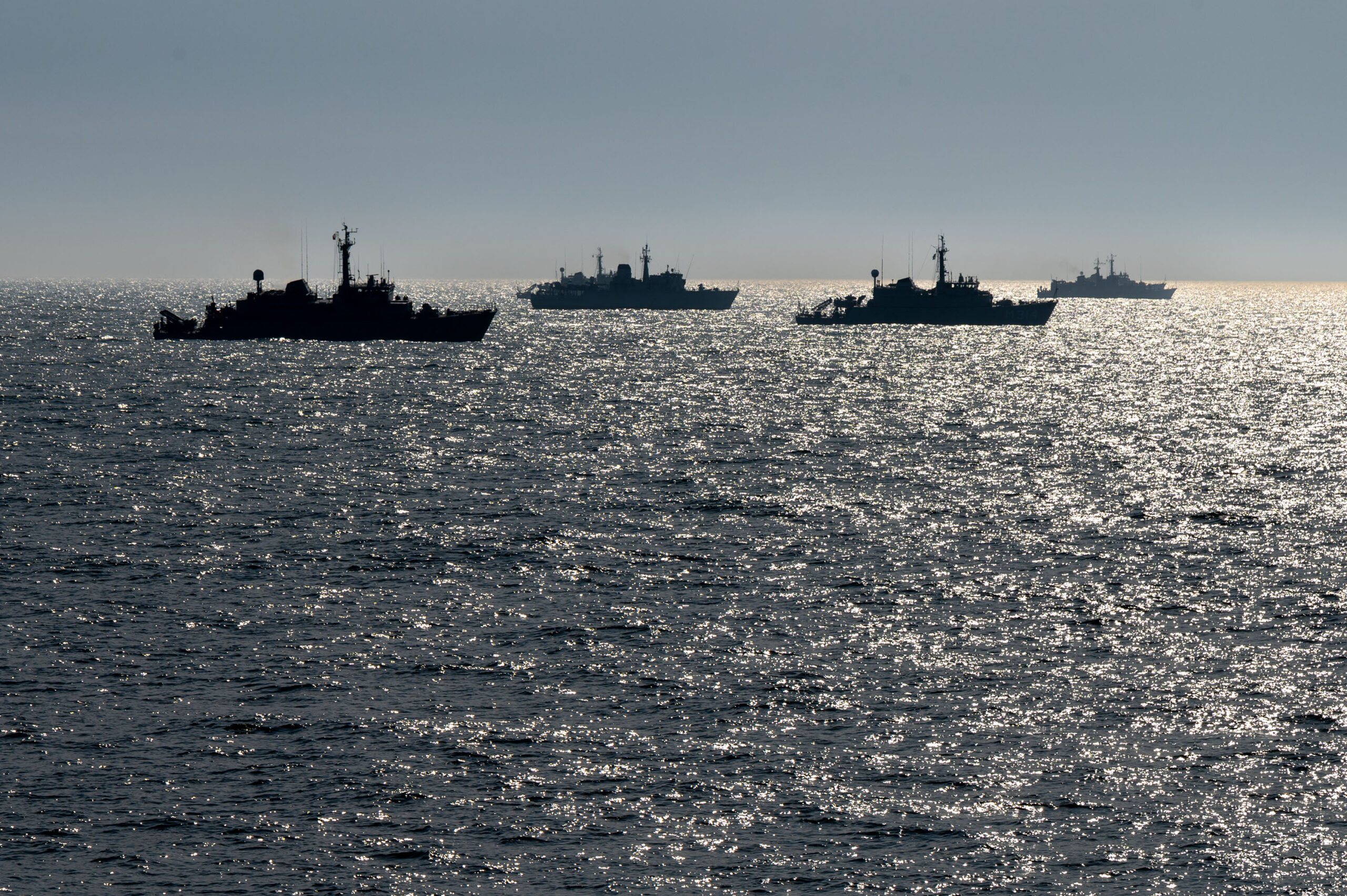
Five Ukrainian minehunters donated by Britain, Belgium and the Netherlands have spent a fortnight off Portland learning to clear sea mines alongside NATO allies.
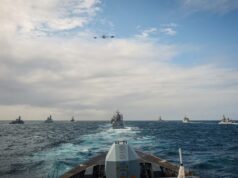
A two-week exercise to sharpen Ukraine’s ability to hunt sea mines has finished off the Dorset coast. Sea Breeze 26-2 ended on Friday after a fortnight of training in the waters off Portland.
It was co-led by the US Sixth Fleet and Ukraine, and hosted by the Royal Navy.
Sixteen countries took part: Bulgaria, Denmark, Estonia, France, Georgia, Greece, Japan, Latvia, Lithuania, Poland, Spain, Sweden, Turkey, Ukraine, the UK and the US.
Five Ukrainian Navy minehunters were involved, every one of them a gift from an ally. Chernihiv and Cherkasy came from the Royal Navy, Mariupol from Belgium, and Melitopol and Henichesk from the Netherlands.
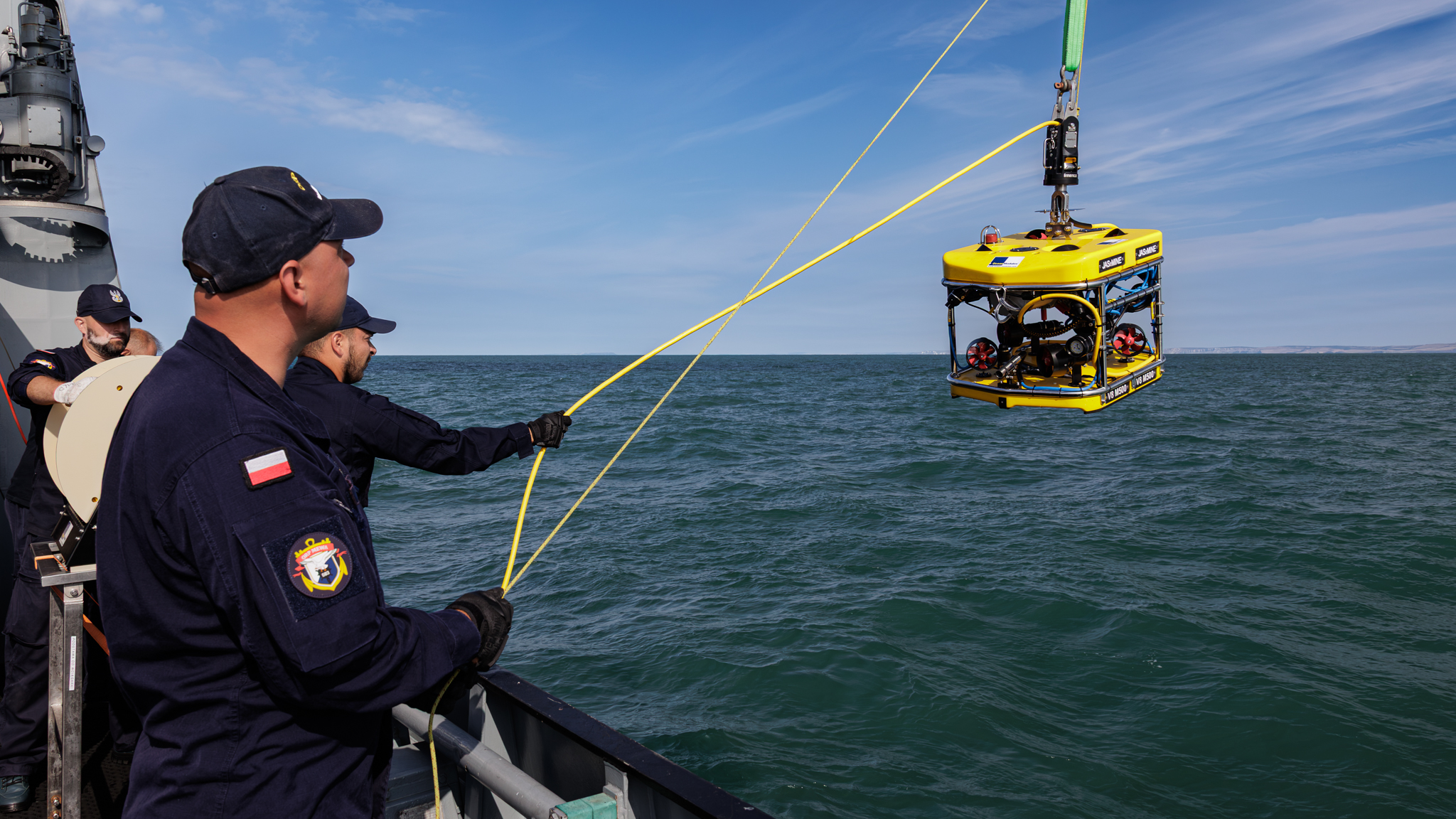
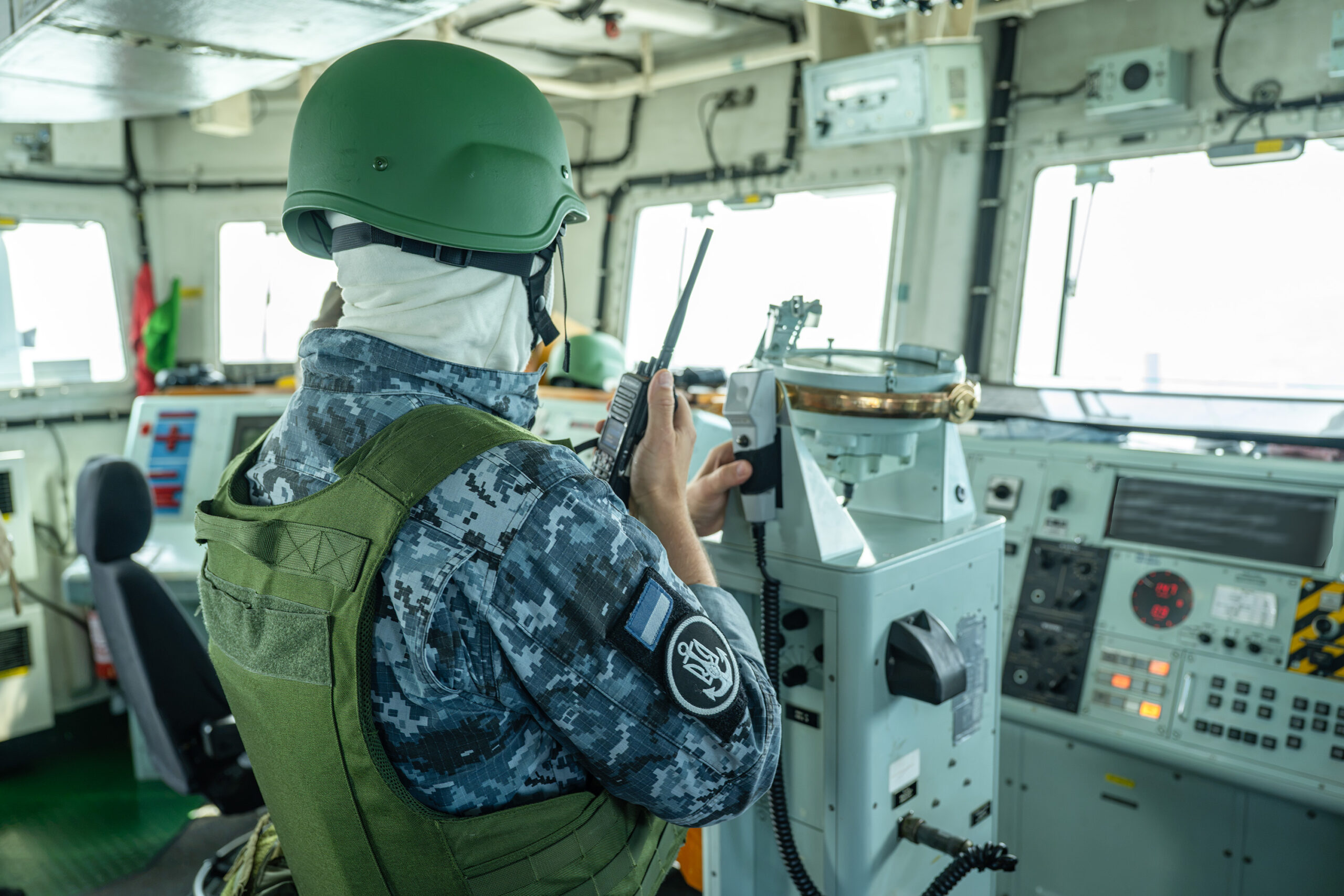
Crews practised minehunting, bomb disposal, diving and salvage, live firing, and the use of uncrewed systems alongside crewed ones.
NATO said the training strengthened the ability of allied and partner navies to work together on maritime security and freedom of navigation.
Two ships from Standing NATO Mine Countermeasures Group 1 joined the exercise, the Lithuanian command ship LNS Jotvingis and the Polish minehunter ORP Mewa.
Their commander, Lithuanian Navy Commander Donatas Gecas, said: “Under Lithuanian command, SNMCMG1 was proud to lead this multinational effort, working alongside the Ukrainian Navy and Allied partners to strengthen our ability to detect, identify and neutralise sea mines.”
He added: “Recent events have shown that mines remain one of the most persistent threats to maritime security, freedom of navigation and global trade. By training together, we enhance interoperability, share operational experience and ensure that our forces are ready to keep sea lines of communication open and safe.”
Sea Breeze has run since 1997 and used to take place in the Black Sea.
It moved after Russia’s full-scale invasion of Ukraine in 2022. Warship movements through the Turkish Straits are restricted in wartime under the Montreux Convention, and drifting mines have been a hazard to merchant shipping in the Black Sea ever since.
Ukraine lost its main naval bases in Crimea and much of its fleet, and has rebuilt around vessels handed over by allies.
Those minehunters are meant to clear the approaches to Ukrainian ports and help keep grain exports moving once conditions allow.



OT, but defence related.
Amused to see the “No 10 North” to be used by the PM is, for the time being, Heron House, GCHQs Manchester office. ( the overt one.)
Even more amusing, apparently he took a big plane up there, rather than bus, taxi, train, or walking, which seemingly every lefty on here and elsewhere including the Labour party, was screaming for when ANY Conservative minister dared to do ( often for quite valid security reasons as befitting for a VVIP such as the PM.
What a bunch of hypocrites!!!!!!
“Animal Farm”
“All Animals are equal…..”
…but some are more equal than others!
Thank You….. !
Another OT (I’m surprised Sunray hasn’t put out an article on this) – the ‘extremely significant’ VBIED intercepted in County Monaghan.
👍
What’s with this Sunray nonsense?
🤣
I think he actually means it as a compliment.
That’s how I meant it, anyway, C-UKDJ-S.
But I see you’ve tracked down it’s origins now.
Sunray usually is Radio communication for the boss, or CO.
“65 Echo, this is 13 Alpha, can you put your sunray on?”
“Hi, this is me, can you let me talk to your CO?”
He’s calling you the UKDJ Commanding Officer.
Its always the same
Liz Truss- Gilt yields 5%- Klaxon!!!!! Economy crashed
Labour- Gilt yields 5%- Nothing said
Ukraine navy operated half of what was the royal navy. I’m all for propping them against the Russians but I think we are not putting ourselves first in the ability to deal with the resurgence of the use of these things.
You have to feel sorry for the Ukrainians having to use such outdated near obsolete ships.
Maybe we can donate the T45’s next ?
Yes, we can donate the two aircraft carriers before the Labour Party sells them, and the 150 fighter jets too. Does that sound good to you?
Well “every little helps” plus we will probably earn lots of Tesco Points.
In all seriousness, I’d read it was suggested that big companies who shelter behind military protection as they rake in their profits could pay MoD to put adverts on their assets.
Armoured Vehicles, ships, planes, with Tesco on the side. 😆
Airfix Drones ? 🫡
Time to start scaling back on material aid and . Look after the needs of the UK we did have the largest MCM fleet but the fools at the MODD HAD GIVEN IT AWAY. Wrong.
As the Russians were/are operating one of their frigates off our coastline. Would they fire on the Ukrainian Navy given half the chance?
More to the point, I wonder if the Ukrainians were made to promise not to fire at the Russians?
It’s a minefield…. !
Chances are the Russian ship would be hit by an Iranian drone targetting RAF Fairford.
Anything could happen …. 🙂
I wish we had those five minesweepers….oh wait we once did!
Why don’t they intercept the Russian oil ships – fuel their coffers…
Taxi!