

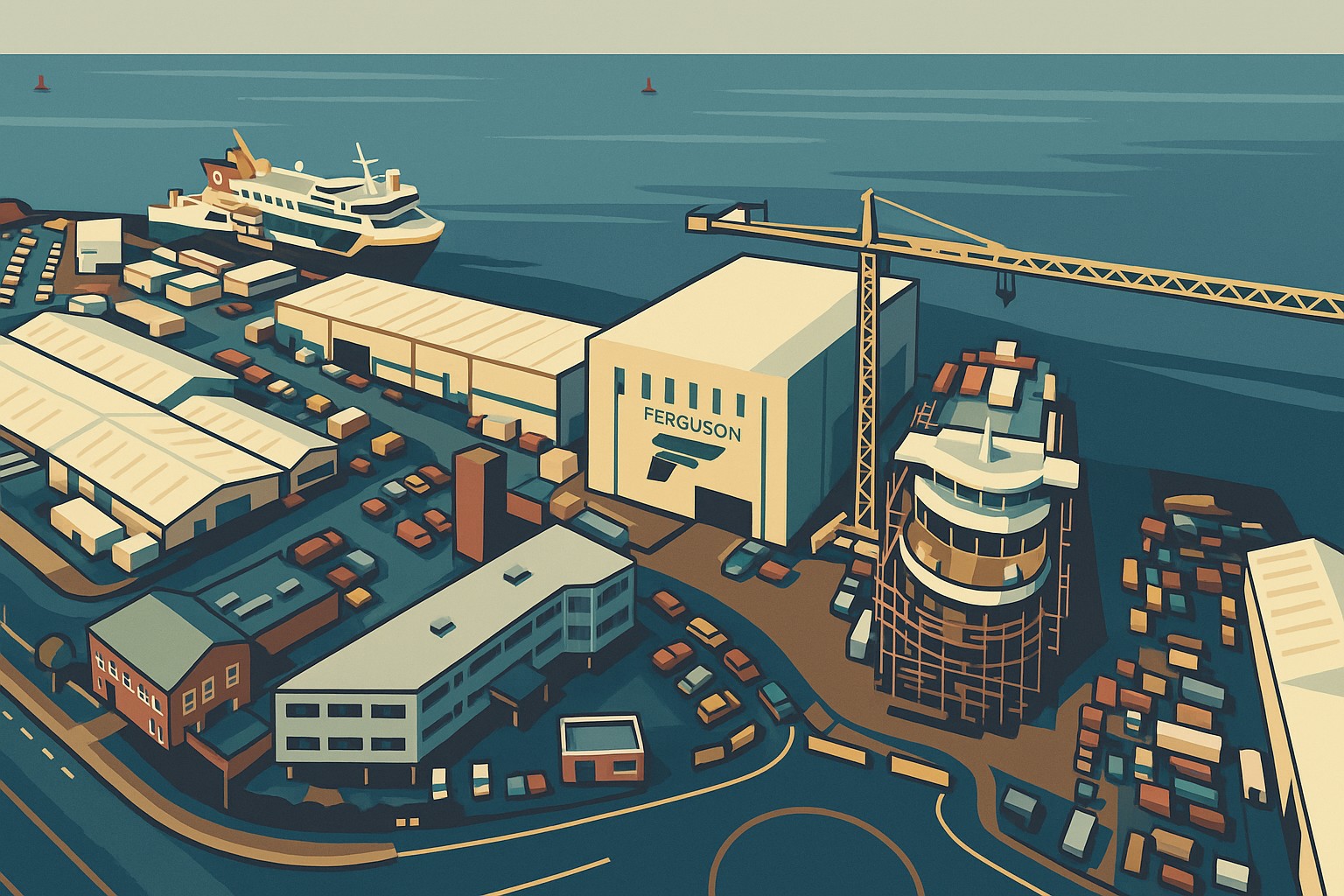
Ferguson Marine has sought to draw a clear distinction between the technical challenges facing MV Glen Rosa and the wider direction of the shipyard, setting out a detailed account of internal reforms and a planned modernisation programme aimed at restoring long-term capability.
In a letter submitted to the Scottish Parliament’s Net Zero, Energy and Transport Committee, chief executive Graeme Thomson said it was important not to conflate the issues encountered on the vessel with the overall performance of the organisation.
“It is essential to clearly separate the distinct technical challenges encountered by Glen Rosa from the overall performance of Ferguson Marine,” Thomson wrote. “While these setbacks have confirmed historic systemic issues within our operations, they do not define our trajectory.”
The letter argues that the difficulties experienced during the build have helped expose deeper structural problems that pre-date the current leadership, rather than representing isolated project failures.
Thomson told MSPs that the past seven months have been focused on stabilisation and reform across the business. “Over the past seven months, we have made substantial progress,” he wrote, pointing to work under way to strengthen stakeholder engagement, refresh the organisational structure and overhaul planning and delivery functions.
He added that the yard has instituted “rigorous risk governance” and improved reporting discipline, alongside targeted recruitment to address capability gaps. Workforce development has also been prioritised, with investment in training to upskill staff across key disciplines.
According to the letter, cultural change has been a central focus of the recovery effort. “Transparency and accountability have been embedded at all levels, supported by regular engagement with stakeholders and union representatives,” Thomson said.
Looking ahead, the chief executive set out what he described as an ambitious modernisation journey, to be undertaken with the backing of the Scottish Government. “With the support of Scottish Government, we will embark on an ambitious modernisation journey that will redefine Ferguson Marine’s future,” he wrote.
That programme is expected to include the adoption of “cutting-edge digital production control systems”, the implementation of lean manufacturing principles and the integration of Enterprise Resource Planning and Product Lifecycle Management platforms to streamline operations across the yard.
Thomson said these changes are intended to address long-standing inefficiencies and rebuild the foundations of the business. “Progressing these enhancements, and others, along with the delivery of MV Glen Rosa, will enable us to close out this difficult chapter in Ferguson Marine’s history,” he wrote, “and get back to delivering world class Clydebuilt vessels that Scotland can be proud of.”
This is a turning point for the publicly owned shipyard as it seeks to move beyond recent setbacks and re-establish itself as a credible, modern shipbuilding operation.





I would not take bets on this company surviving for much longer. Just how many problems can one outfit endure?