

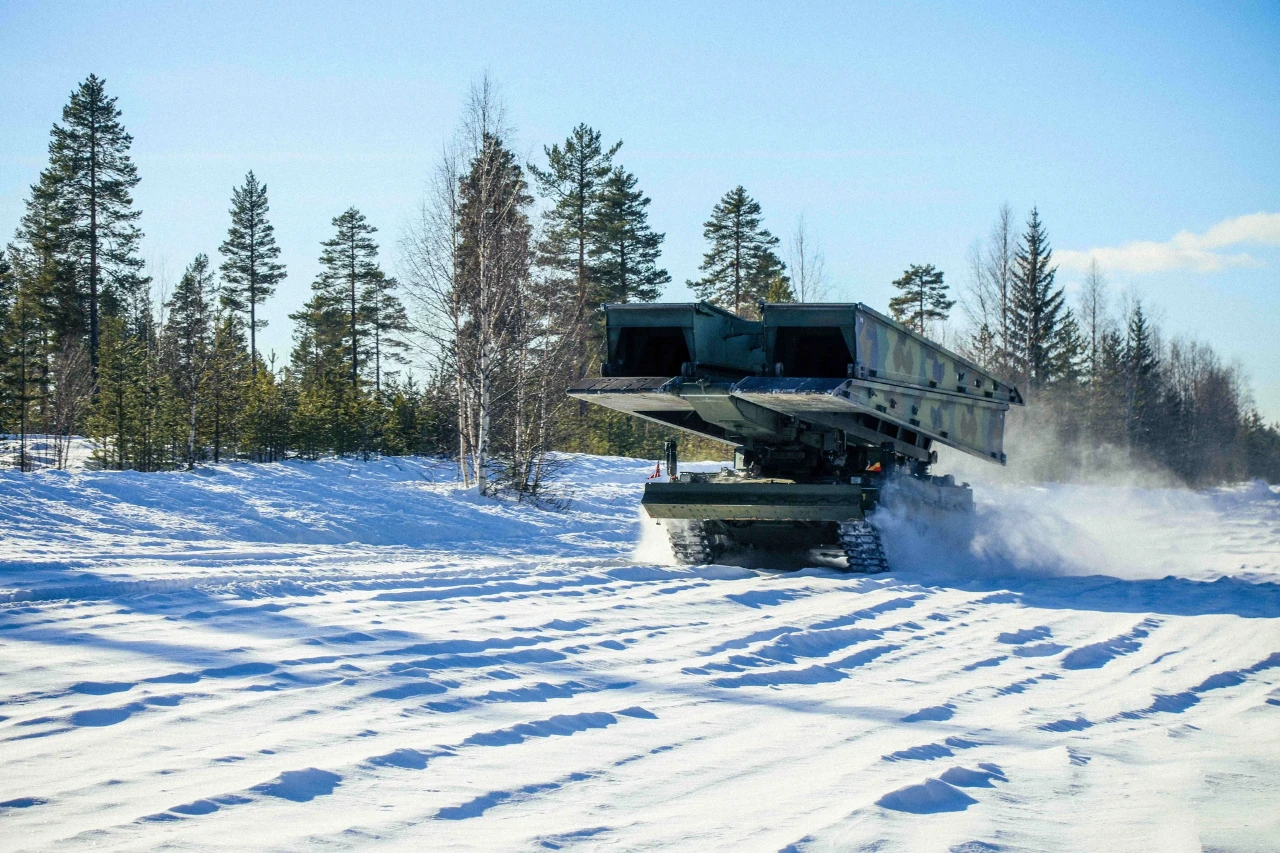
Lithuania has commissioned KNDS Deutschland to deliver twelve LEGUAN bridge layer vehicles based on the Leopard 2 chassis, in a contract worth approximately EUR 210 million.
The agreement, announced by KNDS, will provide the Lithuanian Armed Forces with a heavy armoured bridging capability designed to support manoeuvre operations by enabling tanks and armoured vehicles to cross obstacles such as rivers, anti-tank ditches, and damaged infrastructure at speed.
According to the company, each of the twelve systems will be supplied with two 14-metre LEGUAN bridges and one 26-metre LEGUAN bridge, giving Lithuanian forces flexibility depending on the terrain and tactical requirement.
KNDS stated that the contract also includes an Integrated Logistics Support (ILS) package aimed at sustaining operational readiness, which will include training, specialised tools, and spare parts. The company said this package is intended to ensure the fleet can be supported effectively over its service life.
The LEGUAN Leopard 2 bridge layer is designed to provide the mobility and survivability of a Leopard 2 main battle tank while maintaining high logistical commonality with existing Leopard 2 fleets. KNDS said the bridges meet the requirements for MLC 80 load capacity, allowing them to support the passage of modern heavy armour.
KNDS added that the bridge can be deployed and retrieved automatically from within the protected cabin, enabling crews to operate without leaving the vehicle, both day and night. The system is intended to support rapid tempo operations, allowing armoured formations to maintain momentum rather than being halted by terrain obstacles.
The company also noted that the LEGUAN bridging system is already in service or being procured by 22 armies worldwide, and has been integrated on a variety of tracked and wheeled platforms.
KNDS described the Lithuanian order as part of a broader trend among European armed forces investing in combat engineering capabilities to improve mobility and resilience, particularly in the context of NATO’s renewed focus on deterrence and rapid reinforcement on its eastern flank.










I wonder if we will ever go for horizontally launched AVLB bridges?
It was floated by VSEL they could fit a leguane bridge to Titan when the got the BR 90 bridging contract.
Mmmm Google states under Project TYRO that the leguan bridge is going on Titan that was back in 2021,as both Trojan & Titan are getting MLU it might happen or probably might not😀