

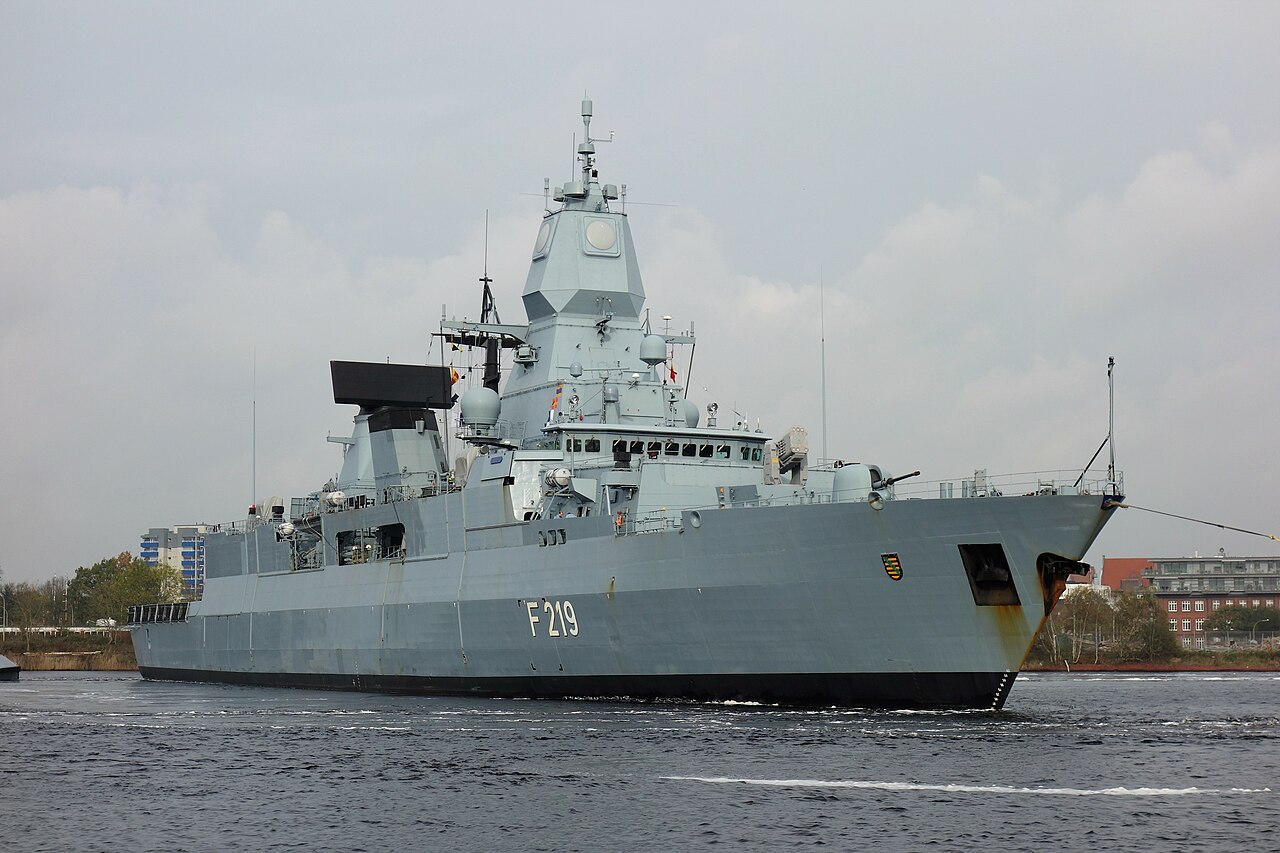
Germany taking over as flagship of a NATO maritime group from the Royal Navy will be described as routine. These handovers happen regularly, with ships rotating as deployments change. What stands out here, very visibly, is the pressure behind it.
HMS Dragon has been sent to the eastern Mediterranean to support operations linked to Cyprus. That required pulling a high-end air defence destroyer out of the North Atlantic at short notice. The German frigate Sachsen is now filling that role, with British command continuing from an allied ship.
NATO can absorb that without difficulty, that’s not really the issue. The strain sits elsewhere. The Royal Navy’s difficulty is how much of it is actually usable at any given time.
The escort fleet has already fallen to well below 13 destroyers and frigates. That is a small force for the range of commitments the UK maintains. The number available for operations is smaller still, with ships regularly tied up in maintenance, upgrade work or alongside awaiting crews. Manpower is a central constraint, although that’s not new. There are persistent gaps in trained personnel, and that has a direct effect on availability. Ships cannot deploy without full crews, regardless of their technical condition.
Maintenance pressures compound the problem. Both destroyers and frigates are spending extended periods in refit, and schedules are often tight. When an urgent requirement emerges, ships are sometimes pulled forward or accelerated through readiness cycles, which can have knock-on effects later.
HMS Dragon reflects some of that wider picture. Its movement east was necessary, but it left a gap that could not be filled by another British ship. That is exactly where the NATO handover becomes more telling.
The UK continues to command the group, but the absence of a British flagship is very visible. In standing NATO formations, the ship itself carries part of the signal of deterrence and which navy provides it still matters.
The Royal Navy has been sustaining a high operational tempo with limited slack for some time. The same small pool of escorts is expected to cover the North Atlantic, Mediterranean, Gulf and home waters. That leaves little room to absorb additional demands without adjustment elsewhere. Germany stepping in ensures the mission continues without disruption, but also underlines how often allies are now required to fill roles the Royal Navy once proudly carried out at short notice.







That is what allies are for, we would never work alone in any conflict so it shows others doing ther part. As for lack of working ships, no comment.
There was an interesting article in the online The i Paper. It was an opinion piece by a former British diplomat. The long and short was that the war on Iran is shorting the time available for the west to rearm. Firstly, the economic disruption caused by the closure of the Strait of Hormuz is reducing the pressure on Russia and at the same time weakening the west by driving up oil prices. For the west there is also the issue of relationships between the Trump and Europe greatly impacting the deterrent effect of NATO.
It could be that Putin won’t have take on a united NATO but hit a weakened unprepared ally that might be seen as not pulling their weight. Scavenging at the periphery might be his best chance of breaking the alliance.
The UK has been in Putin’s sights for a long time given our support for Ukraine. Given the fact that the US is likely going to need all of the munitions it can produce it is likely that US supplies to Ukraine will be very limited, strengthening Putin’s position and weakening Ukraine’s and Europe’s.
So Russia might try something against any of the NATO allies and right now the UK is in a particularly vulnerable position right now given the perilous condition of our defences, in particular the state of the Royal Navy which is becoming all to obvious to allies and enemies alike..!
Long story short there are more than a few intelligence people suggesting that Putin may well try his luck by the end of this decade.
European politicians have to make some tough decisions to make and that definitely our lot.
Cheers CR