

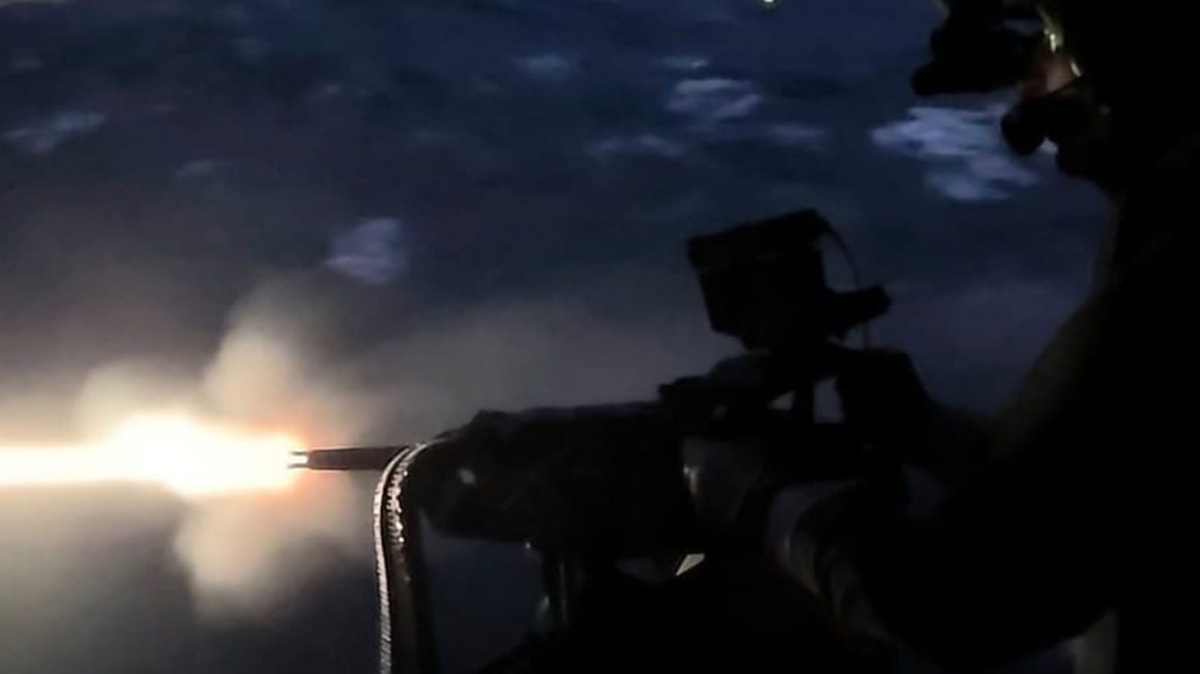
A Royal Navy Merlin helicopter of 814 NAS has carried out night-time gunnery training from HMS St Albans, with crews practising live weapons drills under low-light conditions as part of ongoing operational training.
Footage shared by the ship shows an aircraft from 814 Naval Air Squadron conducting M3M heavy machine gun firing at sea in darkness, reflecting the effort placed on maintaining readiness around the clock. Night operations add complexity, particularly when operating from a moving warship, requiring tight coordination between aircrew and the ship’s company.
Night operations in full flow 🌙🚁
An 814 NAS Merlin helicopter from HMS St ALBANS conducts M3M gunnery training under the cover of darkness. Precision, coordination, and readiness are what keep these crews sharp — day or night.#RoyalNavy #814NAS #MilitaryAviation pic.twitter.com/2JB5Zyq2LE— HMS St Albans (@HMSStAlbans) March 28, 2026
814 Naval Air Squadron, known as the ‘Flying Tigers’, is a frontline unit within the Merlin Helicopter Force and is held at high readiness for deployment. Based at Royal Naval Air Station Culdrose, the squadron typically deploys in small flights alongside Royal Navy frigates, providing an embedded aviation capability at sea.
The Merlin Mk2 helicopter flown by the squadron is primarily configured for anti-submarine warfare. It is equipped with systems including dipping sonar, sonobuoys and torpedoes, allowing crews to detect, track and, if required, engage hostile submarines. In addition to its core role, the aircraft can also undertake maritime patrol, search and rescue, and surveillance tasks.
While gunnery training is not the aircraft’s primary function, it forms part of broader force protection and self-defence measures, particularly when operating in contested environments. The M3M weapon system provides a means of engaging surface threats, including small boats, and supporting wider maritime security operations.
Exercises such as this are routine but important, ensuring that crews remain proficient in all aspects of their role, including those less frequently used. Operating at night is a critical part of that, particularly in the North Atlantic and other areas where UK forces may be required to respond at short notice in degraded or contested conditions.


I get paid over $130 1 to 3 hours working from home with 2 kids at home. I never thought I’d be able to do it but my best friend earns over $27k a month doing this and she convinced me to try. The potential with this is endless.
Heress——- http://www.giftpay7.vip
I have always been a bit bewildered by the RN’s logic in arming its helicopters. Only the Lynx/Wildcat would be armed with any surface to air missiles, hence why its a HMA. Whilst Merlin would predominantly do the anti-submarine warfare role of dropping torpedoes, hence its designation of HM. To my mind it shouldn’t matter which aircraft you have embarked on your ship, be it a Merlin HM2 or a Wildcat HMA2, both should be capable of mounting air to surface missiles (Martlet or Sea venom). Therefore making sure you mega expensive and few in number Merlins, doesn’t come under threat from surface gunfire or a MANPAD.