

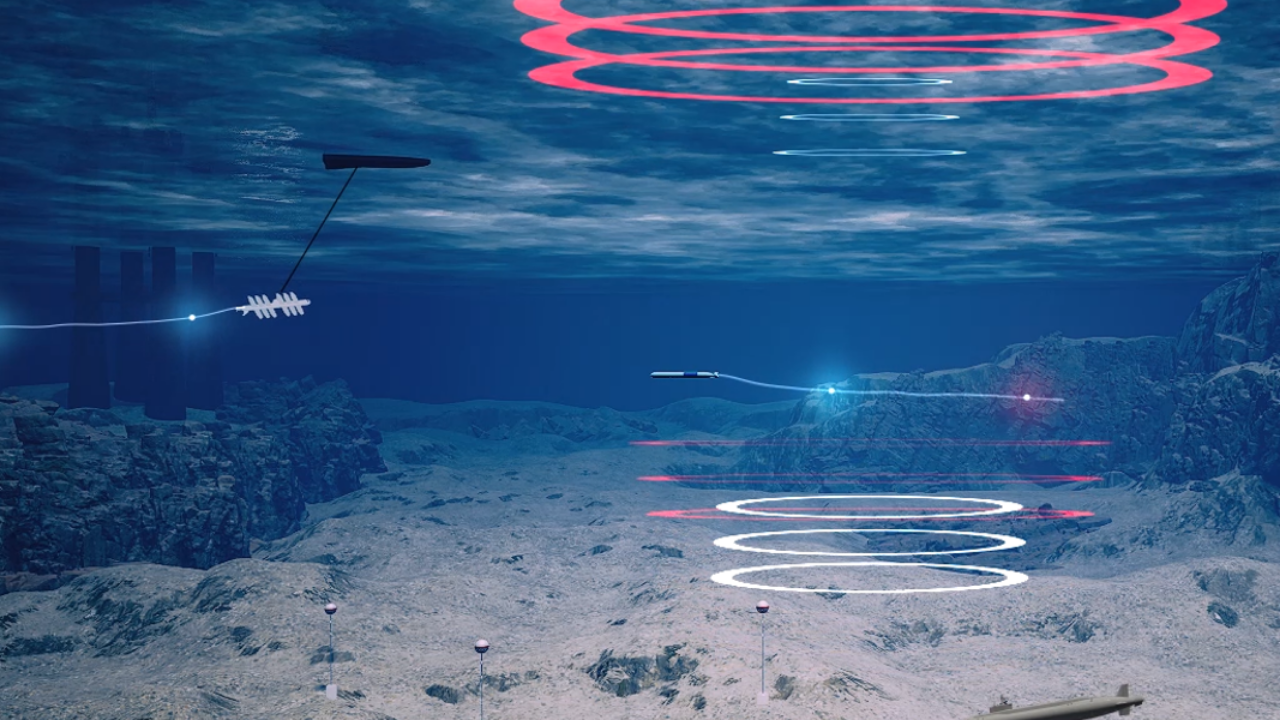
SEA is using UDT 2026 to do more than display its compact KraitSense towed sonar system, with the company also setting out how it wants to shorten the time it takes to develop, adapt and deploy sonar processing software for anti-submarine warfare, according to the company.
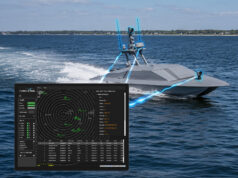
KraitSense, which is on display at stand G30, combines SEA’s thin-line KraitArray with a compact processing system intended for use on crewed, remotely operated and autonomous platforms. The company says the system’s low weight, drag and power requirements make it suitable for smaller vessels that would not normally field a towed array capability, while still supporting ASW, ISR and wider maritime situational awareness tasks.
Dr Charlie Pearson, Simulation Development Lead at SEA, said the wider challenge is no longer just building capable sonar hardware, but ensuring the software behind it can keep pace with changing operational demands. “Wide-area ASW capability is crucial in today’s complex and congested undersea battlespace,” he said in company material released ahead of the show.
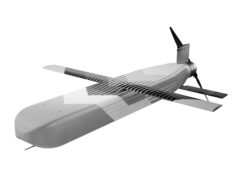
In his UDT presentation, Pearson expanded on that point and argued that anti-submarine warfare is likely to face the same sort of rapid technology cycle already seen elsewhere in modern conflict. “I know this is an underwater conference, but I’m going to start with a picture of a drone,” he told delegates, adding that the pace of change seen in Ukraine offered a warning for underwater warfare too. “A drone that was state of the art at the start is now completely defunct, and the technology has been replaced and turned over on very quick development cycle.”
Pearson said the same logic is beginning to apply below the surface, particularly as autonomous systems become more common, noting that “autonomous platforms… are going to be smaller and cheaper” and that “many different types of platform and sensor” will need to operate together, with capability shaped heavily by software and data processing rather than hardware alone. “The capability that is delivered is going to be shaped heavily by the software and the data analysis, the data processing side of that capability.”
Pearson explained that while SEA understands much of the traditional sonar chain, there is still uncertainty around how future systems will be used. “We don’t know exactly what systems it’s going to be deployed on, what platforms… we don’t know exactly what the downstream consumer of the data is going to be… the big question is about exactly what the concept of operations is going to be.”
From that, he said the company has focused on three broad requirements: “adaptability… upgradability… [and] scalability.” To support this, SEA has adopted a modular architecture where processing stages are separated and linked through configurable pipelines. “We want each of the stages… to be separable… and stand on its own as a distinct process,” he said, adding that “those pipelines are defined just by a JSON file… we can spin up a different data processing pipeline without touching a line of code.”
He also highlighted the use of dynamic parameters, allowing systems to be adjusted during operation rather than through redeployment. “Any parameter… can be updated on the fly while the process is running,” he said, noting the complexity of optimising interconnected processing stages.
“You’ve got a massive parameter space to investigate.” Pearson pointed to trials where this was demonstrated in practice. “We had a software developer sitting at home… changing parameters live on a system that was operating out in the Irish Sea… that really blew our minds.”
SEA has also chosen Python as its development language, despite its reputation in high-performance environments. “Python is perhaps an unconventional choice,” Pearson said, but argued that its ecosystem and accessibility outweigh performance concerns. “There’s this huge ecosystem of packages… there’s a good chance that a large chunk of that is available… without having to develop it ourselves.” He added that it also supports recruitment, making it easier to bring in skilled engineers quickly.
To accelerate deployment, the company is using containerisation and automated testing, enabling software to be packaged, deployed and updated efficiently. “Wrap it up in our Docker image, and then it’s ready to be deployed,” Pearson said, adding that updates can be rolled out incrementally and reversed if required. He also described how the same core system can be adapted between crewed and uncrewed use cases with minimal additional development, noting that “everything else is just reorganising the processes by rewriting a JSON config file.”
Alongside this, SEA is demonstrating its work with Mind Foundry on the NIGHTINGALE application, which applies machine learning to acoustic data from KraitSense to reduce operator workload while maintaining situational awareness. Pearson said the overall aim is to enable faster iteration and deployment of sonar capability in response to evolving threats.
“What I’ve attempted to describe here… is a software architecture… capable of adapting to evolving and uncertain requirements,” he said, adding that “this software architecture does give us that ability to rapidly develop and deploy sonar process solutions wherever they need to be.”


Can anyone translate all of the data processing jargon into plain English. The only thing I got out is that they are coding in Python, which means I can help right?
Yes you can, software seems to be the biggest hold up in any project these days so using something wide spread and civilian means they can go faster but with some increased security risk.
Atlantic bastion seems to be going commercial, easily deployable and willing to accept security breaches using more basic off the shelf solutions which I think is sensible.
Keep the super secret expensive stuff on manned platforms.