

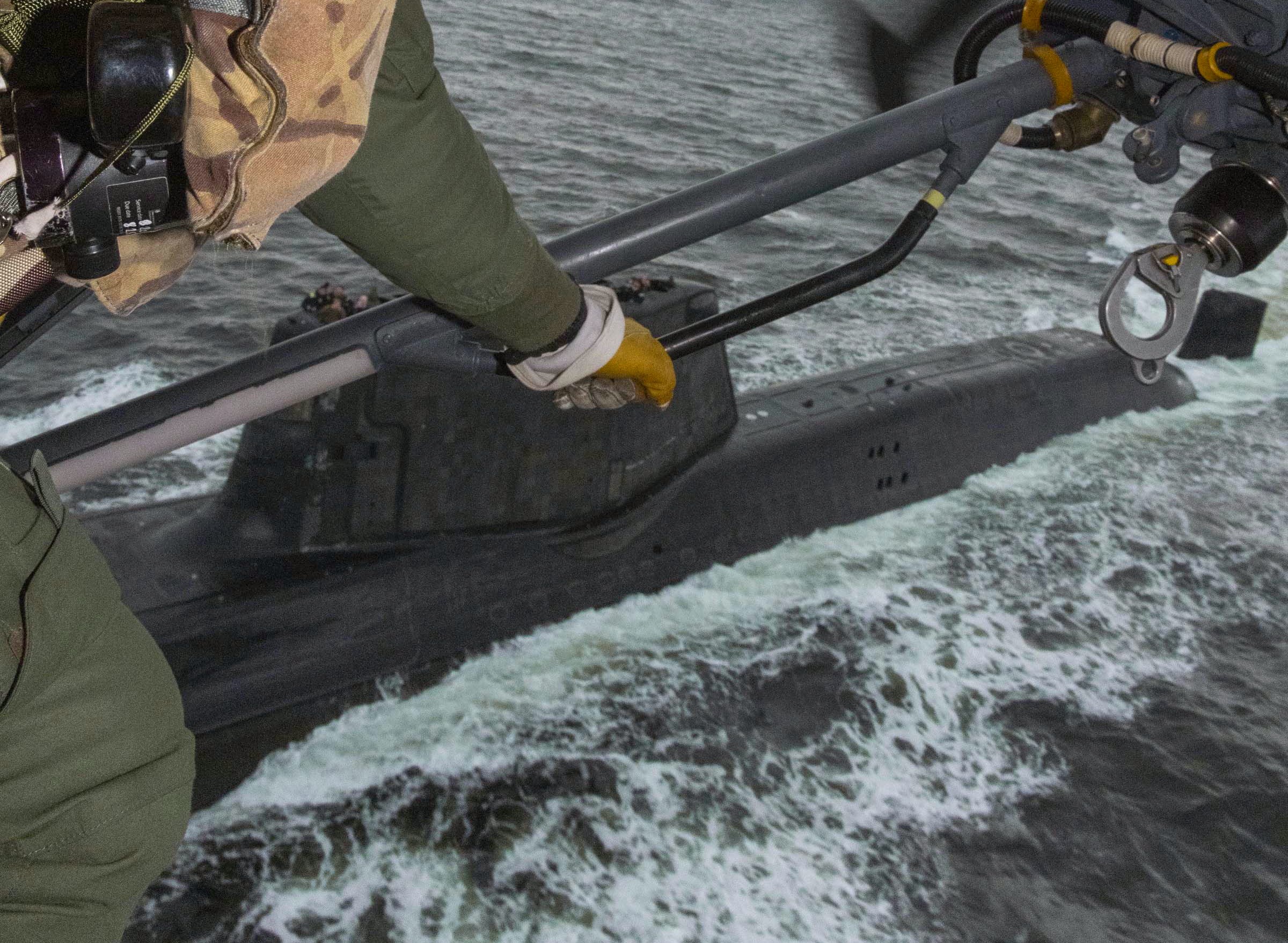
The opening day of UDT 2026 in London centred on how quickly undersea capabilities can be developed, fielded and adapted.
The conference theme, “Advantage through undersea technology”, came through clearly in sessions focused on autonomy, application and agility, with particular attention on how systems can be brought into service faster and updated once deployed.
Speaking at the event, Sir Stephen Lovegrove said the UK’s attack submarine fleet will continue to focus on the Atlantic and Mediterranean, despite the Indo-Pacific dimension of AUKUS. He said the partnership would increase both the number and capability of allied submarines, adding that “AUKUS partners are collectively able to field a higher number of more capable attack submarines… as part of a more flexible network across the globe.”
He also framed expansion in terms of operational effect rather than fleet size, stating that “having more SSNs, swift and undetectable in the water, is an unequivocal good for our society, our security and those of our allies.”
Technical sessions returned frequently to the issue of development timelines. Several speakers referenced the pace of change seen in Ukraine, where systems are iterated and replaced quickly, suggesting similar pressures are now emerging in anti-submarine warfare.
One presentation on sonar processing reflected that shift. Dr Charlie Pearson told delegates that development needs to anticipate change, saying “you need to be thinking about what’s the next thing… how do you design for what’s coming.” He added that the aim is to move capability from concept to deployment as quickly as possible.
He described a modular software architecture designed to handle uncertain requirements, explaining that processing pipelines can be reconfigured without rewriting code. “We can spin up a different data processing pipeline without touching a line of code,” he said. He also pointed to the use of dynamic parameters, which allow systems to be adjusted during operation, noting that in testing a developer was able to update a live system remotely, “sitting at home… changing parameters live on a system operating out in the Irish Sea.”
Across the programme, the range of topics reflected how broad the subsea challenge has become. Sessions covered NATO activity in the undersea domain, AUKUS cooperation and long-term force design, as well as more technical areas such as next-generation sonar for extra-large uncrewed underwater vehicles, quantum navigation and sensing, and approaches to protecting critical seabed infrastructure.
Autonomy featured throughout, with speakers describing future operations as involving a mix of crewed and uncrewed systems working together to expand coverage and persistence.
The first day of the conference made clear that the challenge is developing quickly enough to keep pace with how the operating environment is changing.


Oh.
I thought Discussion dominated everything.
Talk and meetings seem to be the dominant factor In most defence matters.
UDT is being run in conjunction with ITEC (next door), which focuses on training and simulations. The same challenge is being outlined: how do we adapt training quickly enough to keep pace with changes to real warfare?
Sorry but why isn’t there a story on what’s just been announced on sky??? MOD asked to find savings of £3.5B when the world is in a right state, and you’ve got that clown Starner who loves to flip flop around the world telling every other country to up their defence, while he’s trying to cut it back!! Even though not long ago that vile creature was telling other countries to up their defence
Is it time to kill the current parliamentary protection for PM’s and members of the House of Lords and slap a treason notice on inactive performance in defence of the realm matters? We are rapidly returning to a 1939 scenario.
I would say the current situation is worse than in 1939. Starmer and the secretary of state for Defence are traitors and should be brought to justice or at least dismissed.