

Navantia UK has unveiled a design for a large autonomous surface vessel at the Combined Naval Event in Farnborough, as the company seeks to position itself as a supplier for the Royal Navy’s emerging hybrid fleet, the company stated.
The LASV75, designed in the UK, is intended as an uncrewed escort and support platform built from the keel up without crew accommodation, which the company says provides high levels of availability. The vessel’s modular hull allows it to be configured for different roles, covering sensing, operational, or combined mission profiles. According to Navantia UK, the platform can be constructed at pace and at a cost significantly lower than crewed vessels of comparable size.
Derek Jones, Chief Commercial and Business Development Officer at Navantia UK, said autonomous vessels would be fundamental to future sovereign defence capability. “Naval capabilities of the future will comprise a hybrid mixture of crewed warships with uncrewed escorts and ancillary ships. At Navantia UK, we’re investing heavily in our four shipyards to turn them into ideal partners to deliver this vision of the future. With digital design capabilities and cutting-edge automated technology, our sites are being transformed into some of the most advanced shipyards in Europe.”
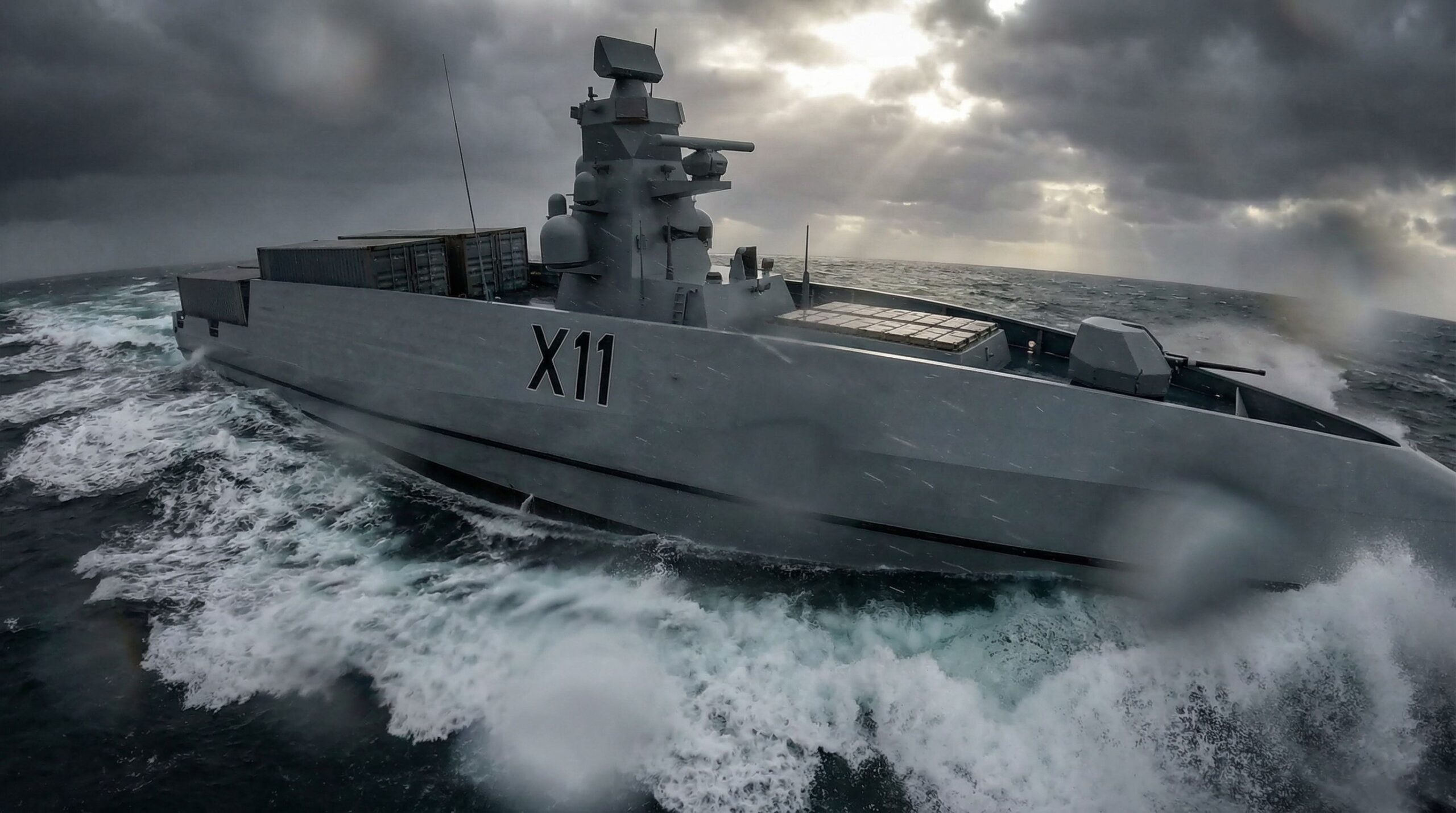
The LASV75 concept is being unveiled alongside a £157 million modernisation programme across Navantia UK’s four yards at Appledore, Arnish, Belfast, and Methil. Improvements include an automated panel line in Belfast for manufacturing large steel panels, and the adoption of digital design tools across all sites. Navantia UK claims these improvements will reduce the time required to design and build a large naval vessel by up to 30%, supporting the MoD’s ambition set out in the 2025 Strategic Defence Review to deliver major modular platforms within two years to contract and five years to delivery.
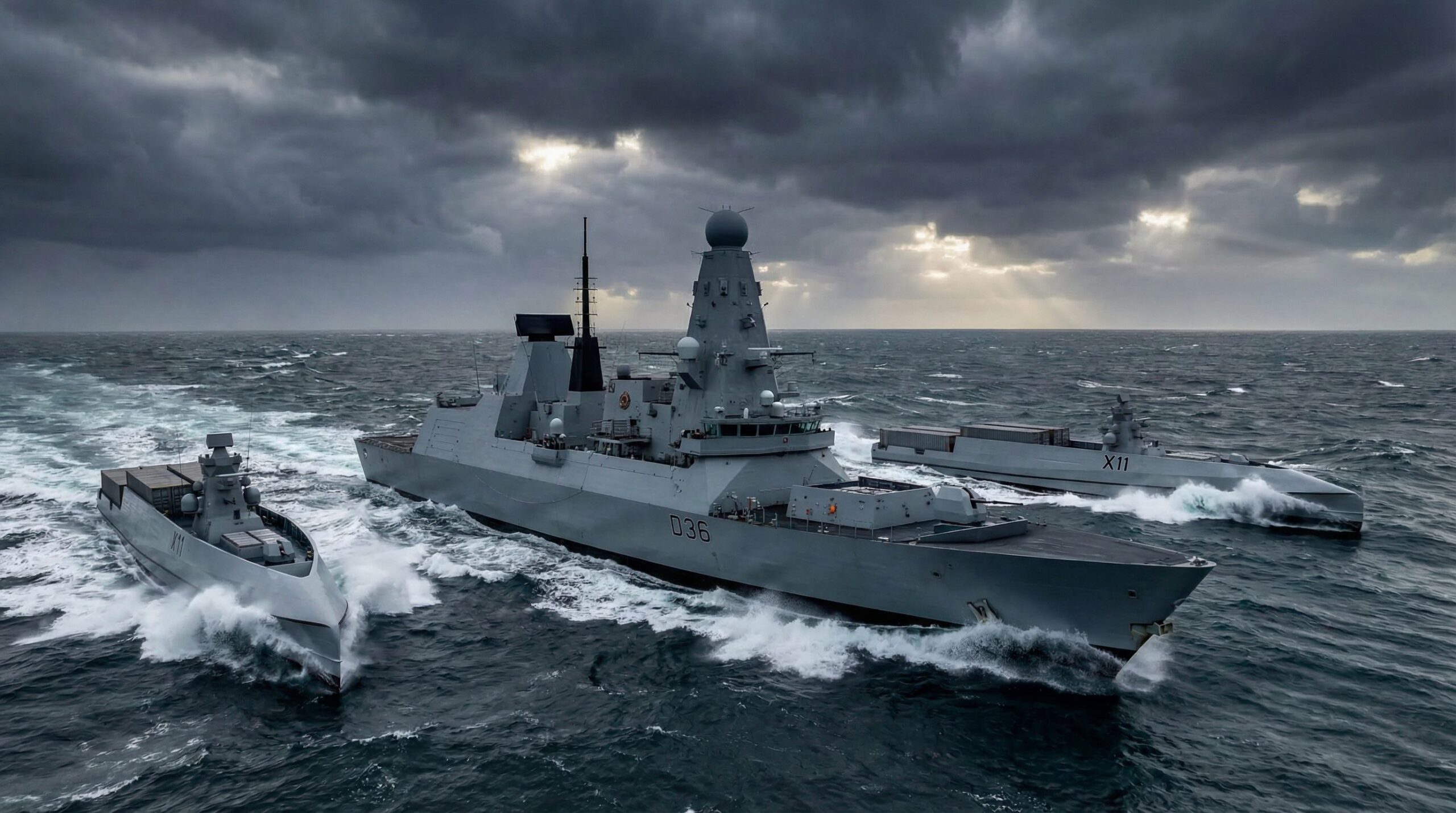
Navantia UK acquired the assets of Harland and Wolff in 2025, giving the Spanish parent company a significant UK industrial footprint and the capacity to bid credibly for major Royal Navy programmes. Work on the £1.6 billion Fleet Solid Support programme is described as progressing on schedule, with steel cut at Appledore in December for the first of three ships. A purpose-built 85 metre barge, the Seahorse, was launched from Methil earlier this month to transport blocks and components between the Appledore and Belfast yards.
Jones added: “Meanwhile, we’re working at pace to deliver the Fleet Solid Support programme which involves building some of the largest ships in the armed forces.”
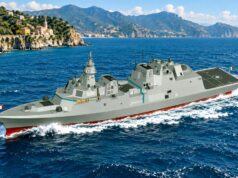



Well if nothing else the CGI visualisations are certainly getting better and better
The latter is definitely an AI image.
AI enhanced, perhaps- the shapes of the ships themselves are consistent.
I’ve gained $17,240 only within four weeks by comfortably working part-time from home. Immediately when I had lost my last business, I was very troubled and thankfully I’ve located this project now in this way I’m in a position to receive thousand USD directly from home. Each individual certainly can do this easy work & make more greenbacks online by visiting
following website—.,.,.,.,.—>>> JobatHome1.Com
Utter fantasy these platforms wouldn’t last five minutes the u. K ship like this would get in the way of producing the real thing. Would they be named? His majesty’s drone warspite? Ridiculous rubbish.
You aren’t related to the guys who said tanks would never replace cavalry are you, or said a jet engine would never produce sufficient actual thrust to get it into the air? At least the latter gave us the jet prop in recompense for his schoolboy error.
Utter fantasy these platforms wouldn’t last five minutes the u. K ship like this would get in the way of producing the real thing. Would they be named? His majesty’s drone warspite? Ridiculous rubbish. Maybe a warship that can submerge. And save on building submarines. Make one big enough to carry trident 🔱 and build less dreadnaughts nonsense we should be designing terminators for the army.
And so those clinging to yesterday’s doctrine start crawling out the woodwork. The dreadnought effect will likely come into full force in the next decade or two in regards to large unmanned vessels and force multipliers equipped with VLS systems. I’m glad we will be on the curve (if not slightly ahead) if all things go to plan, not all new things are bad but I know you in particular like to moan about anything that dares to break the mold slightly Andy.
Thanks for your valuable input. But it’s all shyte to me
Mr Maguire or is it mister Magoo? I was on the last cruiser that the royal navy had H. M. S Blake it was designed between the wars and took nearly 20 years to get to the fleet steam powered and better than the new fangled gas turbine things that become all the rage at the end of the 1970’s 22 years later I left my last Ship. HM S Antrim. a outdated designed destroyer with two alleged state of art missile systems sea cat and sea slug both of which worked better when thrown instead of launched. I’ve served. You obviously served ourself.
Blake was not designed between the wars, you make her sound like a late 20s treaty cruiser. She was a Minotaur the design of which stemmed from 39-41′ era thinking.
You should work for Trump on his golden fleet mate with ideas like that, right up his street.
The grees party will love all this drone nonsense
Perhaps we can build drones to build them. Maybe they’ll build faster than the humanoids on the Clyde
Bit too dark to see properly
Geez you are even ‘truthing’ like Trump now. Hope it’s not catching.
I haven’t seen Andy’s flag lately either.
Reckon he’s gone all PC !
Hey Andy, show us your nuts 🤣
40mm, 16 mk41, Sea Giraffe and four 40ft containers.
Looks pretty good, presumably they’re planning to build at Appledore?
`Not good. I don’t see anything that shows it can be refueled at sea…
Unmanned assets with minimum facilities to shelter and support ccassional visiting tesms has been a working reality in offshore industry for decades….albeit there needs to be either a helideck and/on a landing dock to faciltate transfer of visitors, fuel and maintenance kit etc.
Maybe a solar paneled Hull
Or recharged maybe
I can see them be a force multiplier for a single Frigate or Destroyer deployment… Have a pair of these shadowing Russian Warships off the English Channel, it wouldn’t be too bad, especially if one mounted some form of Anti-Shipping Missiles.
Hell, plop another 57mm or a Oerlikon 35mm Container and some containers of interceptor drones, you’d have a mean magazine to effect escort missions in say, a congested location like the Persian Gulf and Strati of Hormuz.
And a couple of dragon fires perhaps
Trouble with crew less drones in the Straits so far has been that the Iranians tend to tow them back to their bases. Prospectively a bit embarrassing with the featured kit shown on these.
Yes but the yanks do throw a lot of MQ’s at them.
How many times has the War finished today ?
How vulnerable are these drone ships and subs to getting entangled in or scooped up in strategically placed fishing nets?
There’s so much equipment here that it might be more useful put onto an actual ship (T31/AH120/stretched River type) that could multi-task and have a heli-deck.
My only thought on this is what the hell do you do if you need to send in a team to fix something.. and you will.
I’m not sure the whole large blue water autonomous vessel works unless you can fly out a team to A) do preventative inspections and maintenance B) fix something when it goes wrong. That means at a minimum you need a flight deck that can land small ship flight.. you don’t need the hanger. But you need to be able to put a small team on board and provide them with tea and coffee while they work.
The thing is nobody will give a shit if a small cheap autonomous vessel losses power and founders.. but if it’s 90meters, full of advanced sensors and effectors and costs north of 200million ( with effectors and sensors ) people will care a lot when it loses power and founders.
Another concern that has been raised before is that drones are more vulnerable to being attacked without the same escalation that a crewed vessel would have. Seizing a manned vessel for example is pretty hard but in theory if a Russian warship sailed up and took over one of these that might be able to happen without needing to imprison or fight the crew on board. Granted this has weapon systems and is capable of defending itself but it might just be short of that level of escalation.
Potentially a very small crew might be attached on rotation? Something like 2-6 personnel as part of the core ship’s company of the warship it’s supporting on rotation, performing basic maintenance and keeping it occupied in some respect. Obviously that defeats the ‘unmanned’ point but would still be very efficient from a crewing perspective. The main issue would just be lifestyle since most sailors are probably looking to be part of a crew rather than sailing out in a very isolated environment – depending on how frequently they would rotate it might not be a major issue, though.
I was willing to give up one container for J’s tea and coffee preparation area (brew room), but now things are escalating:
2 containers for accommodation and kit.
1 container for the brew room, which we’ll now just call the mess, to feed the crew.
1 container for ablutions and the gym.
‘We need more containers! I say again, we need more!’
Sailors? ee gads man. They cost a fortune. we could build a drone for what one of them would cost. The red haired girl in accounts would throw a hissy fit.
Sailors? ee gads man. They cost a fortune. we could build a drone for what one of them would cost. The red haired girl in accounts would throw a hissy fit. Nurse call me doctor I need my medication increased
I’m sure these vessels will have a small area to accommodate a small crew to provide override and maintenance if and when required.
Maybe some that can fly and make carriers as obsolete as the victory. Submersible ones to replace a submarine. Tankers what will they be powered by? Would it need to be refuelled at seas or will we have drone petrol stations dotted everywhere?
Andy, one thing is clear: the drone (whatever its size or type) is here to stay. One key advantage is the ability to purchase more surface combatants at much reduced costs compared to conventional crewed warships. Also, drones address a growing reluctance to recruit into the armed forces, plus the attainment of appropriate levels of aptitude. I believe carriers will play their part in the future by enabling forces to operate globally and serving as a mobile base. The manning levels of the QE Class will reduce to possibly engineering/maintenance and variable levels of combat personnel. Obviously, the current seaway operating crew will continue but also reduce commensurately with robotics and tech advancements.
The fewer people who serve, the more disconnected the public will become from their military. Without public will, it will be hard to fight and win. Politicians needs support or they collapse in a puddle.
I think the public wants reassurance that the country is protected. Saliors aren’t vanishing, there just won’t be so many of them in the future.
Yeah joking aside agree in full , not against the hybrid concept but hybrid means hybrid not totally unmanned – a nonsense to me . Sure it should be able to drive itself around and fight automniosly with a ‘mother ship ‘ with people onboard directing it and telling it what it can and more importantly cannot do. Reminds me of that episode of Star Trek when Enterprise gets scanned by an Alien AI Battle Cruiser which asks the question ‘ what is the purpose of the carbon units ? ie us ! I must have been eight or nine at the time but will remember it forever and got the point. To my mind a small crew should always be required if only to nav safely in and out of port. Lloyds register should make it mandatory before these things go to sea ,I’m certainly not talking frigate or even mine hunter size crews but maybe say twelve in four rotating watches of three , Comd plus Weapons Officers x 2 with a cockpit type bridge? . They won’t need all the things a frigate does, galley sick bay etc, these would all be provided by the mother ship but they will need a tea room with a microwave and bunks to get some kip , also yes they will need a small flight deck for winching rotations on and off and more importantly launching and recovery of drones. Not being Neanderthal here ( an insult to Neanderthals !) but most modern airliners could fly themselves autonomously , even take off and land but for some strange reason most of us still prefer a crew. As I say not looking for frigate sizes crews at all , far from it but maybe P2000 levels of accomodation and manning but on a 600 – 1,500 tonne ship.
My thoughts tooo mate, I like this general design, looks like its capable of throwing 32 Sea ceptors, containerised missile/ payloads and a 40mm bofors, thats pretty significant punch….
I would prefer a minimum crewed model, perhaps 12 ish…
So this, slightly bigger, with minimum accommodation and a bridge.
It needs speed and range to follow the leader. If unable to refueled at the sea, needs a range overmatch over the leader.
I agree, it needs to be able to station keep with an escort on a war footing, that might mean hard maneuvering, 27 knot sprints for a couple of hours etc, etc…
Lets say a minimal crew version (12) of this ends up being 2,500 to 3,000 tons, with a combined bridge/operations room, accommodation and galley, plus a helo pad, what sort of power plant is it going to need?
If its minimally crewed however, it becomes far more flexible and able to carry out the work of the river class too.
Resupply and refueling at sea become much easier if its crewed.
So, perhaps minimally crewed, with the option of autonomous operation?
The issue here is the unit cost is starting to climb as it transforms into a general escort, I guess.
“The issue here is the unit cost is starting to climb as it transforms into a general escort, I guess.”
Yes, and time develop it and build it. FPV drones and Harop/Shaheed work because they are simple hence cheap and environment on land is much less punishing to small devices.
I would want to see the terms of engagement for these things. We have seen Russians knocking drones out of the sky, what happens if they try to drop a team on this ship from a helicopter? Do we shoot the helicopter down? I just dont see our Prime Ministers making that call!
Depends how many you build, I guess. If we build 30 or so, losing one probably wouldn’t matter, when you can pump out two more a year.
Its more about them getting access to the tech?
cf Kirk’s solution to boarding in “The Search for Spock”
“The search for Cock” ?
Hmmm, reckon we found him. 🤦♂️
Maybe we would just pilot them back to one of our bases and have a welcoming party waiting.
Ahh, talking of Cock…. looks like the Cock Ring Is back again. lol.
Love this chap, he is never ever ever going to speak to me again, cross his heart !
??
especially if they are as wet and limp as wet toast like starmer
They’ll be controlled by some pimply oink out of high school with a love of super mario games. The mind bogggles
Well I guess we lead the World In Concepts at least.
Tech like this is where we should lead to the world. Especially ahead of the yanks
I increasingly think large drones are not the direction to take. We built large vessels in the past because they needed to accommodate humans. Drones allow us to distribute our expensive weapon systems across numerous smaller vessels.
A single large drone arsenal ship full of expensive missiles is a dream target for your enemy. A dozen smaller vessels are far more difficult to target.
Well beam me up Scotty,
You actually wrote something Interesting.
(wish I could) 😎
Can we have a drone parliament unmned (unlafied( nobody would notice the difference and it would be cheaper than HS2
Ditto 😁😁😁😁
We all do😁👍
especially if they are as wet and limp as wet toast like starmer
Wow a human that can write slop better than an AI
Only you can deliver such enlightening prose well put senor Spock.
Larger vessels are required for the range and sea keeping we want though. Small vessels like Kraken would be woeful in the high north. Small drones are well placed to escort through the channel or act as disposable reconnaissance in Hormuz but hit a problem with physics when trying to operate for thousands of miles, at speed, in rough weather.
As for missiles, 32 VLS cells really isn’t that many. We in Europe just underarm everything on a misplaced belief that’s going to save billions. Denmark’s recent purchase of 8 8 cell modules came to £10m a module including support and spare parts. The US when ordering for the next 3 Burke’s paid £5m a module, wed probably look at £7m if we gave a decent sized purchase. And what missiles will a smaller drone carry? Not fitting Stratus in something tiny, the smallest CAMM ship is still 750 tonnes. A couple Marlets and Starstreaks aren’t much help outside of the channel.
“A couple Marlets and Starstreaks aren’t much help” – I doubt the pilots of the downed hostile aircraft, or more importantly the seamen on the ship being targeted by that aircraft, would agree.
Maybe you should contact NOAA, as apparently you think that the buoys they and others deploy in the Atlantic are too small to survive.
The largest size Kraken only has 1,000km so you wouldn’t want it to try and sail thousands of miles… but then that’s not what it’s designed for. You sail the mothership to the area of operations then deploy the flotilla of Krakens. Just like an aircraft carrier deploys aircraft rather than trying to build aircraft that can fly the Atlantic on internal fuel.
The RN is living a fantasy.
No marine systems are reliable or operationally robust enough to require zero maintenance day to day.
Stuff breaks, even quite small stuff can sink a ship.
I can see an opening for “Green Flag”.
👍
Really? Plenty of stuff at sea operates for long periods without any maintenance, from oil industry to wind farms.
How about an even more unforgiving environment, where maintenance is impossible, such as space? The Voyager 1 and 2 were launched nearly 50 years ago, still operational out in interstellar space.
It’s easy enough to build sufficient redundancy so that they have a near zero failure rate during a mission.
And now you gone and spoiled it 🤦♂️
Have you ever done a day at desalination on a real ship?
Have you ever done a day at sea on a real ship?
Yes, yes he has. Spock has been all over the Universe onboard the Star Trek Enterprise…. He even met V—GER once. And he died and re grew on another Planet. Well he seems to be on another Planet.
“Star Treking across the universe slowly going backwards, still can’t find reverse……… There’s Klingons on the starboard bow Cap’n”
Losing my shit here today ! 😁😁😁
I was going to comment that in all the “Warship” documentaries I have seen there is always some melodrama about something breaking at the most inopportune time and there is a rush against to clock to get it fixed before they sink, return to port, cancel the deployment. I too struggle to see any large size drone ship being introduced. Smaller ones yes, real boats? Not so much.
Already, the RN has MANY issues with its war canoes availability due to, not enough engineering crew, not enough of them are real engineers rather than ‘operators maintainers’ – aka, not working? Turn it off, turn it back on again.
Ships are a very hard environment on all machinery and electrical systems.
What do you do if a cooling water intake pipe splits? Not only have you lost the system you’ve also got water loose aboard.
I can see need for a helipad, to allow maintenace at sea, maybe just simple messroom with head and min galley if work needs hours, but i can see one of these sailing the seas completly alone i thought these were enablers, have a Type26/45 with 2/3 of these within a 5-10 miles as additional volume for missiles, ad with potentially larger radar transponders to act as decoys protecting the parent.
meant CAN’t see sailing alone
This kind of concept could put the cross channel ferry companies out of business. Maybe the Gosport ferry could be drowned
Yeah, I can see these with a very small crewed area, microwave meals, racks and brewer in the same place, but not the kind of facilities as their “Mothership” Frigate or Destroyer operates nearby that would pick them up, but this space existing if harsh weather appears or they need a place to bed in for nights or something else low end.
Their jobs, picket ships, something to bolster a missile magazine, cram these with CAMMs/-ERs and you have a Destroyer with a Mushroom Farm AND 48x Aster 30 missiles.
And it could make a RN Deployment be a bit more “muscular” with British Warships Squadron deployed, instead of singular Warship.
Many an epic meal Is cooked In a Camper Van even In a force 9 !
Only you can deliver such enlightening prose well put senor Spock.
Not by my other half
I can see the day when ex sailors are sitting in the round tower reminiscing the days when actual Steam driven warship a manned aircraft carriers sailed in and out of Pompey naval base which will have been replaced with huge battery charging buildings 😞
Exactly – ref my earlier post ref carbon units and Star Trek !
Ha, I saw that post, just thought I’d add a little extra !!! 😁
Great minds think alike – or not ! 😁👎😁
Not even optionally crewed? I’m still struggling to understand how the split between autonomous and remotely controlled capabilities will work. If the former, the complexity is a nightmare – e.g. what happens if there is an apparent boarding attempt, can it open fire? If the second, how many personnel will be required for 24×7 operations and how will the communications links be made 100% secure and reliable when even a break of even a few seconds could be disastrous. And that is before we even get in to scenarios such as a major systems failure, the press would have a field day if a “state of the art” £100+M autonomous warship packed full of explosives loses power and spends a day drifting out of control around busy shipping lanes or dangerously near a coast. If the later was say France … or Iran – the political and military consequences could be substantial. I still have a suspicion that once all the challenges become apparent, we will end up with optionally lean crewed “sloops”, with the crews being withdrawn in wartime or high risk situations.
Tell me, how many of Space Xs drone ships have had “major systems failures”, “drifted out of control”, etc?
Tell me, how many US Navy GARC drone boats have been seized by the IRGC since they started patrolling off the Iranian coast 2 months ago?
That’s the Drone Ships that only operate in littoral water in good weather?
Those are the rubber boats that just paddle up abd down in the littorals fjr a few days in calm weather?
Maybe a XLUUV could act as a tender for them.
“Love me tender, love me XLU”, … It’s not really working 🤦♂️🤦♂️🤦♂️
Yeah the Ukrainians seem to make pretty good ‘ Sea baby’ type UCSV type drones but even theirs breakdown occasionally and end up washed up embarrassingly from time to time on somebody’s equivalent of Brighton beach. Slava 🇺🇦👍
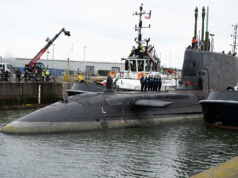
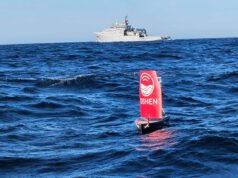
The second picture with HMS Defender amply demonstrates a concern I have had for awhile. Small ‘cheap’ drones with radars are going to have a much lower radar masts and hence a much shorter radar horizon than a large crewed destroyer and that will matter with high speed anti-ship missiles and drones coming into service. Even with fully autonomous systems, assuming they work without shooting at your own side, will still need some warning time to detect, classify and identify a potential threat. Nothing happens instantly. The situation will only get worse in heavy seas and we want to operate these things in the North Atlantic and Arctic Oceans, both of which can be a tad rough..!
I can see that case for arsenal ships adding mass to crewed ships, but I wonder if we are not being a tad hasty with these autonomous drone ships..?
Cheers CR
It’s definitely moving at a rapid pace and it will be easy to get ahead of what we can actually do. Too much unproven kit can be a hinderenc
Flat Earther’s would disagree CR. 😁
Cheers HW.
Do they actually need a good radar?
I can’t see them ever operating solo, currently they’ll always be paired with a proper escort. Why can’t we use a data share type system so the escort provides targeting information and “uses” the missile from the drone, similar to how aegis ships can target for another ships missiles. That way all it needs is a very cheap short ranged targeting radar for the 40mm gun, no more than 20km needed.
No radar like SeaGirraffe would knock off at least £10m from the design.
Hello Jacob,
Recent trials (reported on UKDJ recently) described RN trials where the drones were controlled or directed via satellite. Also, recent comments from 1SL and Defence Minister Luke Pollard suggest that there is a significant focus on drones that might even be going as far as replacing conventional escorts.
My thoughts are that the correct way forward at this point in time is more in line with what you have described i.e. escorts operating with a number of drone ships. These could be ‘simple’ arsenal ships, towed array / ASW ships or drone carriers either surface, subsurface or aerial drones. I would like to see the escorts big enough to carry a radar mast at least as high as the T45 mast. The resulting radar horizon will be vital in the era of high speed ant-ship weapons. Aerial drones with ISR senors could push the detection horizon further out but given the primary optional responsibility for the RN is the North Atlantic and Arctic which tend to get pretty rough small aerial drones that we are talking about (unless there is a carrier in the group) will not always be available – hence the need for big radar masts.
There is also the fact that Russia has demonstrated an anti-satellite weapons back in the 2022 just before they invaded Ukraine. Given that the military is increasingly using low earth orbit (LEO) for communications, particularly for near real time application such as controlling drones, relying on satellite directed drones systems would be a mistake as the Russians might well decide that they have less to loose through LEO denial than NATO / RN forces.
So for me the current technology maturity, high speed weapon threats and vulnerability of satcoms means that the RN should build up the number of escorts but networked with a number of drones to achieve the full mass that the RN needs. This would allow the RN to have a significant increase in the number of effective task groups that they can deploy but with a significantly reduced escort fleet compared to ‘traditional’ force structures. Nevertheless, I believe the the RN need a significant increase in escorts over the current apparently planned 13 frigates and 6 destroyers in order to have sufficient task forces to cover the likely workload they will face in the event of a conflict with the Russian Northern Fleet sub force.
We should not forget that the US may not be present in the numbers NATO has come to depend on given their destroyer force has declined to just 77 AB class and they are struggling to get production up. There are also some very real question political marks as well, especially if the USN finds itself challenged in the Pacific when Russia makes a move in the Euro / Atlantic area.
If all of this sounds negative we should remember that defence is a nation’s ultimate and final form of insurance and as such should be predicated on worst case strategic, operational and tactical scenarios. For the RN our most reliable maritime allies are likely to be the JEF nations and the UK is by far the largest of those nations with a significant maritime tradition, both of which are important. We have just about managed to maintain our corporate knowledge regarding maritime operations on a global scale which is a seriously important foundation to build a really important contribution to European / NATO security.
In short, we need a bigger navy even if the force structure is going to be significantly different to past fleets.
Cheer CR
Oh it’s all such a worry!
So that’s:
BAe resurrecting Triton
BMT MODUS variants
Babcock/HII ARMOR force
And now Navantia LASV75
A while back a senior naval officer (can’t remember if it was a 1SL and if so which) said we need to take risks with procurement so that we actually work out what works. Like the Russians and Ukrainians do with theirs, they go through enough variants until they hit upon a winner and then develop from there.
We seem to have the industrial base lining up one option after another. Build a prototype of each (so no full-programme costs), work out which ones fit the CONOPS and have the most acceptable* technical challenges, and then maybe we’ll get somewhere.
*Because lets face it, no solution will be perfect – crewed or uncrewed, large or small, massive fleet vs smaller force. Stop pursuing perfection.
“Better is the enemy of Good Enough.”
Gosh, a long time since I have seen so many comments on a single post.
I principle they same a great idea as “cheap ish” guardians and sentry’s, especially when it comes to shadowing “foreign ships” passing through territorial waters. Possibly cheaper than a River Class or Helicopter to keep an eye of Russian shadow fleet. Similarly good for sitting out in the middle of the ocean watching or listening for foreign vessels. Once detected, we could then send manned assets out to investigate further.
As other have said, they poo pooed “Landships” aka Tanks, but if we need to innovate and look at reducing manpower requirements where applicable.
Yeah a P2000 size crews would work for me and with similar accomodation galley facilities etc but with a much larger ship using automation and AI to fight the weapon systems but still.mIntaining man in the loop and not dependant on Comms back to the mother ship which could well be jammed. As I said before a crew of 12 would work for me , four watches of 3 . Enough to fight the ship and nav using AI but also to drive her safely in harbour and do all the messy stuff like tying up alongside. Be a great command for an up and coming RN junior officer too now all the mine sweepers , survey ships etc that used to. do that have now gone . . Good prep for Frigate command. Strongly believe that hybrid means hybrid and there is still place for the man in the loop and if so we need some way to train them up and this could be the ideal platform on which to cut their teeth.
Perhaps minimal crew would be a good stepping stone? A crew of 3 would make the possibility that enemy would simply board the vessel and take it over before the rules of engagement were changed to allow the ship to use deadly force much more unlikely.
It seems that for limited action in wartime scenarios over a short term for specific strikes or defense of strike packages, totally unmanned craft do bring a lot to the table, so to speak. Totally unmanned also works well if the craft is within sight of its command craft, i.e. a patrol vessel or an LCS.
But if it is for extended peacetime action or action in a time of conflict short of war, i.e. the Persian Gulf or the West Philippine Sea most of the time, then being totally unmanned gives the opposition/enemy too many options.
Like all Military Innovations, It’s just experimental In Peacetime. The real test Is when things get hot.
MQ9’s not that great It seems.
It’s the future like it or not UK we’ve helped Ukraine a lot with drones .