

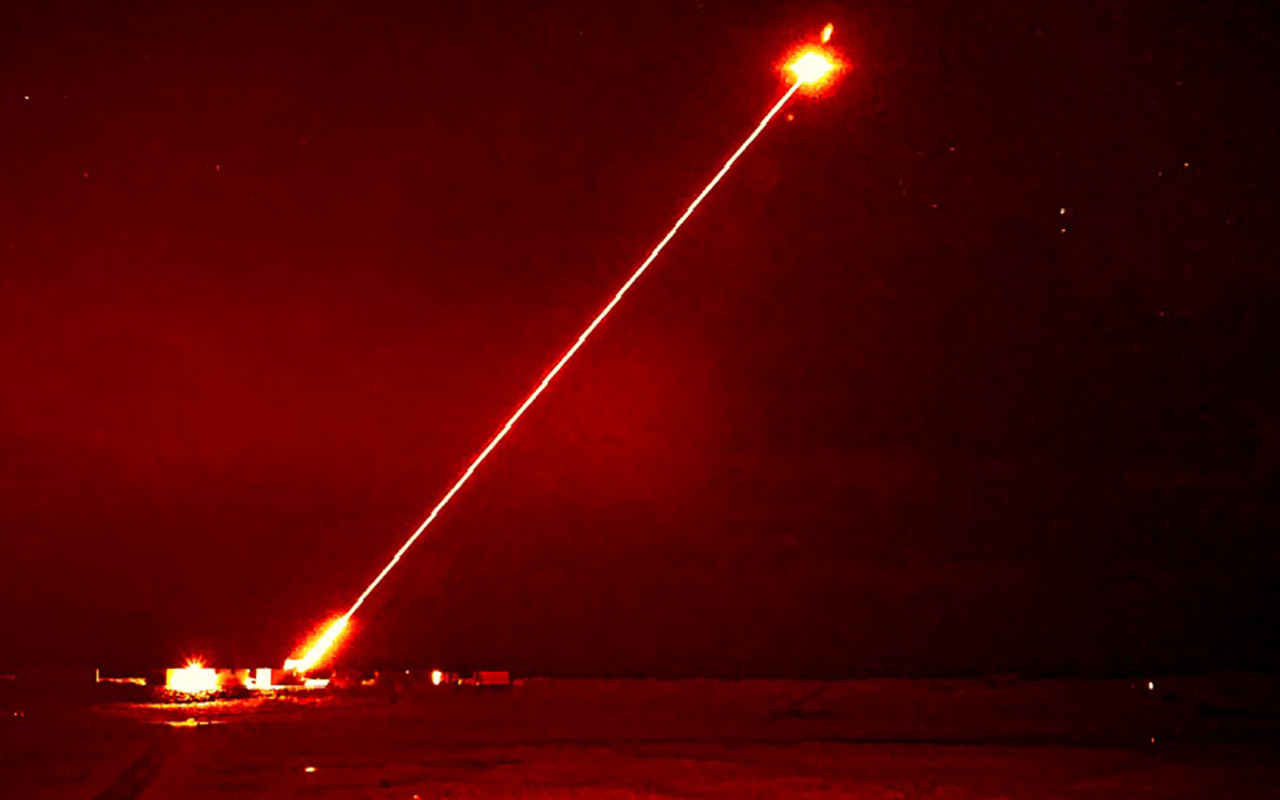
The Ministry of Defence will invest in laser weapons as part of a £790 million effort to protect the United Kingdom and its overseas bases from air, drone and missile attack, the government said as it set out the Defence Investment Plan.
Directed Energy Weapons, the formal term for the high-power lasers that can burn through a target at the speed of light, sit within a wider homeland and base air-defence package in the plan published on Tuesday that also covers new radars, sensors and command systems, and the appeal of the technology lies in its economics, since a laser engagement costs a tiny fraction of the price of a missile and is limited mainly by the power available to it rather than by a magazine that has to be reloaded.
Britain has been developing the technology through DragonFire, the laser directed energy weapon trialled by the Ministry of Defence and its industry partners, which was fired against aerial targets in testing and which the department has previously said it wants to bring into Royal Navy service earlier than first planned, and the new funding signals an intent to move such weapons from the demonstrator stage towards fielded systems that can defend ships, bases and fixed sites. The driver, as with so much of the plan, is the drone, since the prospect of being attacked by large numbers of cheap uncrewed aircraft has turned a cheap means of shooting them down from a curiosity into a priority.
Lasers form one strand of an integrated approach that the plan ties together with counter-drone systems, upgraded command and control and a new operations centre meant to draw the air picture into one place, and the government framed the whole package as a way of revolutionising how the country detects and defeats threats in the air.
The technology is not without its limits, since lasers can be degraded by poor weather, by dust and by the sheer range at which a target sits, and they tend to work best as one layer among several rather than as a single answer, so the value of the investment will rest in large part on how well the lasers are knitted into the radars, missiles and command systems around them. Sir Keir Starmer said the plan would give the forces “the funding and equipment they need to fight and defend our nation.”
A cheap, deep magazine for shooting down drones and other threats has become one of the most sought-after capabilities in modern air defence, and the money the plan puts behind Directed Energy Weapons marks a step towards Britain fielding one at scale, with the pace now set by how quickly the systems can be matured, hardened and installed on the platforms and bases they are meant to protect.





To be cost effective, there’ll need to be trust in the system so that targets that could be intercepted at range by expensive missiles are allowed to close range to a point where they can be hit by DEWs.
What a pathetic joke.
Clearly the impetus behind this is mostly due to the attack by Hezbollah on the Akrotiri Air Base in Cyprus. To be brutally honest, I was surprised an attack on the airbase took this long, with the Airbase being used against both ISIS operating in Syria and Iraq, as well being used against the Houthis in Yemen. Then being used to defend Israel against the first wave of Iranian drone and cruise missile attacks. Where each of the players has the means to return the favour. The Government of Cyprus were right to raise this as a major concern. However, it did highlight how dire our military is at the moment, where it took weeks to sort out a T45, that then could be sent to guard the island and our interests on it.
However, after the cack had hit the fan, and the MOD started to organise itself. We got to see the first layer of response from the UK, which was the ORCUS and Rapid Sentry systems. Quickly followed by a Merlin equipped with Crowsnest and some Wildcats armed with Martlet, then Stormer and eventually HMS Dragon. According to public information around 5 to 6 drones were launched at Cyprus over a couple of days. Where these were intercepted by Greek F16s, UK F35 and the Rapid Sentry system. But also, Hezbollah allegedly claimed that HMS Dragon was hit by an anti-ship missile. Where they stated it was misidentified as an Israeli ship. Hezbollah I would say had more pressing needs to counter Israeli attacks, than make a concentrated effort against us on Cyprus. Which by this stage had Greek, French, German and Dutch warships now protecting the island. But if Hezbollah had the opportunity, they do have alongside the drones, ballistic and cruise missiles that could easily be used to attack our bases on Cyprus.
There is definitely a portion of blame to put on the MOD. The airbase and other infrastructure on the island had been used for decades to support our interests in the middle east and the Levant. Up to the 1990’s the RAF employed Bloodhound for GBAD. Which was then pensioned off and not replaced. A lot of the blame should be on the military planners and intelligence community. Where they must have assessed the risk to Cyprus from an attack as low, when in reality it just needed a nudge from Iran. As they knew the UK militarily and politically are weak, hence no response! But a large portion should be placed on the Government and Foreign Office, who have used Cyprus as an instrument for pushing their policies in the middle east, but up to now have done nothing to properly protect those interests.
I would be interested to know what damage that drone did, we saw the hole yet no evidence of further damage thereafter which is surprising, one wonders if it were a dud. It’s rumoured that hanger contained US spy platforms, doubt we will know any of thus for sure till years down the line.
More pertinent, and take this as you wish, whatever the defences on and around Cyprus see what was done to US bases in the Middle East, and US embassies for that matter that has caused consternation in the US even if it has been massively suppressed. The US told its allies there it could defend their assets when in reality it couldn’t even defend its own. This shows the potential of Iranian and related drones, the relative impotence of US defensive efforts against mass attack, the new interest in Ukrainian expertise (and a number of related contracts) and perhaps how Cyprus was not targeted anywhere as much as it could have been pose questions. I am sure that latter question is being mulled over extensively at various levels, was it deliberate on the part of Iran ie do enough as a warning but not so much it could bring in greater hurt on itself by further widening the war, or due to the physical and/or strategic limitations of maintaining a sustained attack from Hezbollah, amongst other priorities. Keeping and extending that rift between the US and Europe was clearly a factor in that decision I would presume, as was expanding the anti Israel sentiments they have so successfully (along with Israel itself) expanded.
Either way deeply concerning for the future and will only further pressure for Europe not to get involved in any such conflicts. So major effect from minimal resourses perhaps and from the Iranian point of view thus job done.
The use of Patriots against Shaheds however showed the US, and allies in the region had incredibly stupidly ignored the drone risk.
Auto cannons exist, interceptor drones, cheap guided rockets, yet until the last few weeks none of these were use at all, only patriots and other expensive defences wasting them when they should have been focusing on high end missiles.
Beginning to feel rather than even an effort at presenting a new ambitious start with new realities the whole process has just been a way of delaying investment, covering removals and re presenting existing projects in a smoke and mirrors exercise, I mean what’s new or different to what was known 18 months ago, it’s just a time delaying mechanism for them going around the Depts with a hat asking for donations for what we already needed. That won’t have been a surprise to many here I guess, just pushes costs and any benefits down the line effectively as was predicted. If this was so difficult to carry off, imagine what anything actually new, decisive and/or innovative would entail.
Laser weapons absolutely DO NOT “burn through a target at the speed of light”. They hit a target at c, but there’s a world of difference between illumination and burn through. Even nice, dark cooperative targets as fragile as drones take several seconds for burn through and destruction. Lasers are not the panacea people tend top believe and won’t be fro the foreseeable future.