


The Prime Minister will launch the Defence Investment Plan with more than £5 billion over four years for drones and autonomous systems across the Royal Navy, Army and RAF, in what the government calls the largest such investment yet.
More than £5 billion will be spent over the next four years on drones and autonomous systems across the Royal Navy, the British Army and the Royal Air Force, in what the government has called the largest such investment in the history of the UK Armed Forces, the Ministry of Defence said.
The money forms the centrepiece of the Defence Investment Plan, which Prime Minister Sir Keir Starmer is due to launch on Tuesday in a speech at a British defence firm. The plan, being set out ahead of the NATO summit in Ankara next month, is the government’s blueprint for implementing last year’s Strategic Defence Review, and the drone package is the first major element to be trailed. Defence Secretary Dan Jarvis has spent the past fortnight refocusing the plan on getting equipment to frontline units.
The investment is framed around lessons from recent conflicts, with the department pointing to Ukraine, which it said uses roughly 200,000 drones a month against Russian forces, and to the war in Iran, where at the height of the fighting some 700 attack drones were being launched each day. Cheap systems are destroying high-value targets and innovation is now measured in weeks rather than years, according to the Ministry of Defence, which said the funding would build a flexible, integrated force spanning attack drones flying alongside Army helicopters, RAF jets shielded from enemy detection, and a Royal Navy mixing crewed and uncrewed vessels.
Starmer described the spending as transformative. “This game-changing investment will strengthen our Armed Forces on land, at sea and in the air,” he said in a statement, adding that the government was “backing British innovation, British industry and British jobs” and giving the defence industrial base the certainty to scale new technologies
Jarvis said the nature of conflict was shifting quickly. “The character of warfare is rapidly changing,” he said, describing uncrewed systems as “defining conflicts” in Ukraine and the Middle East and casting the money as the largest UK investment yet in the field. The plan funds the Uncrewed Systems Centre in Swindon, billed as Europe’s largest drone testing site and opened earlier this month, along with a new Uncrewed Systems Taskforce to develop and field capabilities with industry.
The capabilities range from autonomous mine-hunting drones to small quadcopters and low-cost one-way attack drones, with separate programmes for each service. The main efforts set out across the three services include:
Royal Navy
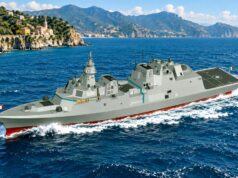
- At least six Common Combat Vessels, hybrid warships billed as the brain of a networked maritime air-defence system and the replacement for the cancelled Type 83 destroyer
- Type 91 uncrewed missile platforms to add firepower to the fleet
- Type 92 uncrewed sensing platforms to hunt submarines across the North Atlantic in support of the new frigates
- Type 93 extra-large uncrewed underwater vehicles to work alongside crewed hunter-killer submarines
- Type 94 uncrewed platforms to scan the skies for threats to the fleet or the homeland
- Project PANTHEON, a Hybrid Carrier Air Wing trialling jet-powered drones to fly with the F-35B force
- New high-speed boats and the latest drones for the Royal Marine Commandos
British Army
- Project NYX, up to 24 armed autonomous drones by 2030 flying alongside upgraded Apache helicopters and tasked with reconnaissance, precision strikes and electronic warfare
- Project Corvus, up to 24 surveillance drones to replace the Watchkeeper system
- A new uncrewed ground vehicles programme delivered through British industry
- A £50 million boost over the next year for the RAPSTONE programme, funding first-person-view and interceptor drones, as part of wider investment in expendable systems and loitering munitions
Royal Air Force
- A national Collaborative Combat Air programme developing autonomous fighter jets, with a demonstrator due to fly by at least 2030
- The Storm Shroud uncrewed electronic-warfare drone, entering service this year
The full Defence Investment Plan, and the efficiency savings needed to pay for it, will become clearer when Starmer sets it out on Tuesday.







“The plan funds the Uncrewed Systems Centre in Swindon, billed as Europe’s largest drone testing site and opened earlier this month”
They are funding a site which has already opened. What?
The rest seems moderately sensible though I don’t think the CCV-T94 pairing makes sense relative to just putting the radar on the central vessel.
I expect the CCV will have a similar radar to what the T26/T31 or maybe even the T45 has today.
But it’ll be supplemented by the radars on the T94s to give a ‘longer range’ picture.
Why is that better than simply having a larger radar on the CCV? These will be our main AAW combatants, it isn’t like we’d be adding extra capability to a GP ship.
We’ll find out today, I guess.
Exactly. 👌
Or not. Announcements, esp. by a PM are usually for the mainstream media to grab headlines. Details will likely take weeks to seep out.
Pushing 3 or 4 T94s in a perimiter, lets say 200km+ out, wiil greately extend the coverage area…perhaps 3 or 4 fold.
So they can provide an outer picket. No matter how big your radar it can’t see over the horizon.
• Single point of failure with no redundancy
• Need to behold ever larger ships to mount radars ever higher to be able to see further.
• The CCV won’t be the main AAW combatant. The CCV plus T94s plus T91s will be the main AAW combatant.
Yes, I was scanning through this shopping list and thought, CCV at the heart of it, with Type 91 and Type 94 in pairs as AD pickets on the outer edge of any deployable fleet. My only concerns, if this is a cost saving exercise, where are the savings to be made? Artisan on the CCV rather than an evolved Sampson-1850 pairing? For a high-end AAD ship we’re still going to need the latter or a system just as capable and future-proofed + an array of ABM, mid-range and close-in weapons systems, a heli-deck and hangar, and crew quarters and facilities, so where would the savings come from? Loose the hangar, will that save that much? Is it overly naive and too simplistic to say an evolved T26/T31? ….. unless of course the funding (which the DiP if supposed to address) is being kicked down the road?
The budget is going up, no cost saving is needed. What they are describing is a better system. The just don’t need a £3 billion Kier class cruiser in the middle. A big fat T31 or T26 with a bigger radar will be fine.
I don’t think it is a cost saving exercise per se: though remember the Type 83 was being projected to be a much larger and expensive vessel than our very capable Type 45s.
It’s an exercise in distributing your capabilities over multiple hulls to reduce the impact of any losses. Given the complexity of modern warships, no future war is going to last long enough to replace a Type 83 if it’s sunk (assuming you can afford to).
But replacing some drones, far more feasible.
Given the time spent alongside and the upgrades they are receiving, I think the first CCVs will be the Type 45s. The drones being developed first, and the RN learning how best to use them before actually building new dedicated CCVs.
Besides, all the yards are busy building frigates, FSS, etc, for years to come.
Paying for industry again? I don’t think it’s an MoD owned site.
Love the “efficiencies needed to pay for it” bit…..
Why are those needed with the “greatest uplift in defence spending since the Cold War” ?
Are there no conventional forces enhancements at all???
Yes, CH3 has an upgraded WBV.
Efficiencies are always needed when changing the force otherwise you would still have cavalry, galions and gliders.
Those efficiencies are being demanded of OTHER government departments to fund more money going to defence.
Good correction, thanks.
you could put aside twice that amount but it won’t change anything unless you can produce more and faster. more ships? more yards. more tanks? dedicated factories and ditto aircraft. places like pallion shipyard could be reopened instead of all the money going to the glacial yards on the Clyde.
“efficiency savings needed to pay for it” good luck with that part!!!
Not long to wait now, it seems. It’s tempting to comment, but they usually only trail the good stuff and frankly this still feels a little underwhelming. We’re expecting a cash injection of £6bn a year from Foreign Aid starting next year, so £5bn over 4 years doesn’t feel all that monumental for the “centrepiece of the DIP”.
Does anyone else wonder about the four year timescale for these numbers, when they’ll likely be out of office in three?
No, firstly seems very likely now they won’t be out of office in 3 years post Burnham and secondly government department settlements are always three years max, four years is considered very generous.
Given Burnhams “magic money tree” Corbyn approach to everything? Lots of question marks. We are dealing with Fabian communists who see welfarism and importing flotsam as the priorities.
When a Russian or other proxy attacks our infrastructure? Watch the socialist political scum scurry for the nearest rat hole.
Oh how very “far right” of me.
Generally I think referring to mainstream policians as socialist scum does indeed reveal quite an extreme world view. The fact you actually refer to the Fabians (presumably the fabian society, though god knows what its code for on the britain first type facebook sites you doubtless spend your time on) as communists, when they are famously about slow democratic regorm within the system smd an explicit rejection of extremity and revolution, suggests we arent dealing with someone confined by the bounds of reality. ‘Welfare’ is not to blame for the parlous condition of the forces, its nothing but a convenient buzz word for people like Badenoch to use to try and shift the blame for the state the tories left the country in.
Well said..
Well said, although I feel your educated and informed view may be wasted on him 😀
They do bite though eh?
💙
The more ambitious this is the more likely MOD will cock it up. They’ve shown themselves incapable of managing complex prijects efficiently and possibly even simple ones. First thing I’d do is review MOD procedures and lessons learned ( or not learned) from previous debacles.
Another review! Join the queue already in place. More time wasting.
The DIP will be a re hash of already released statments, smoke and mirrors and most of the kit will be years away, the problems of now will not be fixed just not talked about. Warrior will not be replaced by a tracked IFV, the small amount of 72 RCH 155 will be talked up, the replacement of the Light Gun will not even looked at, extra AWACs will not be ordered,
It will be all about drones and future aircraft things that are not here right now, but years away in made up numbers. Replacement of the light vehicle fleet? silence, GBAD silence, what do about Ajax, silence, Replacement of 432s, silence.
This is only a gues but lets see how far off I am. Most of it will kicked down the line hidden in clever accounting and cost savings with not much detail on how they save costs.
The DIP is a 10 year equipment plan so of course it’s going to be full of things that we won’t see for a few years. That’s the point.
i know but you are missing my point most of it will TBC
I’m not the missing the point. Whatever is in the DIP, you will moan about it.
No it can never fix every thing or be all things to all people careful about pre judging people. As long as GBAD and orders for proper IFVs and an answer on Ajax is in I am happy the devil will be in time gab the numbers.
I missed your point too 😀
A strategic defence review should be mostly a rehash of existing programmes, we can’t go around changing everything every five years and if you think 72 RCH 155 is a small number then your going to be very disappointed by the DIP. Realistically they could have announced 200 RCH 155 and you still be disappointed though.
This is a point getting missed.
Although we all want more kit ( I keep asking for the unglamerous CSS for the army for example ) it’s already ordered or arriving.
13 Frigates, plus 6 CCV.
12 SSN…..big if!
27 F35, 43 helicopters ( 23 AW, 6 Airbus, 14 Chinook )
1100 plus armoured vehicles in Boxer and Ajax, 148 Tanks 72 SPG, 70 odd MLRS.
Theyve long been announced.
Hopefully a 1k plus CAVS order as well, and I’d want a few more people, more P8, more Atlas, and such.
No 116 RCH was a good number 200 way too many we would never have enough logistics back for thsf many.
116 was enough for 4cRefts at war strength, a training pool and a reserve, 72 is too tight for that. It was the bare minimum we can get away with.
Make do abd mend is what guy mt the Arny is to its xrap state some somewhere has nit learned a lesson.
USVs, UUVs – great but not at the expense of manned capabilities. This is defence on the cheap by a govt who’s priorities are elsewhere. I can see why Healey and Carns resigned.
Carns actually said it didn’t go far enough on the autonomous and Drones front!
I cannot wait for the excuses when something happens that needed manned conventional assets and they weren’t available.
I was just reading on the BBC Tech site that Ford USA are re-hiring 300 Humans to replace AI as the Quality Control had slipped.
(I think I read one of your other comments asking about Humans, but couldn’t find it)
AI, bfbw, built for humans but without.
Seems AI is not great at quality control but pretty good at blowing shit up and killing people.
You can see why the MoD might be interested.
Let’s hope they don’t blow up prematurely due to Quality Control Issues then.
Ukraine and Iran to a degree how shown how devastating autonomous can be. If we order drones for the Navy but axe T26 and T31, then I’d be seriously pissed. But its to work with these assets, not replace. We all know the DIP isn’t going to include things like 10 additional escorts or 40 more Typhoons or 200 extra Challenger 3s. As much as we would like it to include things like that. At least Tempest seems safe, which is huge for the RAF.
I’d be on my knees for the most modest uplifts, mate, and I have no faith they’ll be there.
10 escorts? I give you 3 more RiverB2 and 3 more T31
40 Typhoon. No, 3 more P8 and 3 more Atlas.
200 Tanks? I’d take a 1,000 post uplift.
APS for all vehicles.
More people for the RAF to enable dispersal.
OTS buy of LRSM
The smaller things.
Lets see. The DIP will have the Drones as the headline grabber, designed to distract from most of the rest. The rest will be re announcing existing for effect.
Note again how the new lows are the benchmark to reach.
6 CCA seen as a win. T45 was meant to be 12.
8 T26+5T 31, 13. The other new low, Frigates numbered 20 before the cuts.
Smoke and mirrors mate. It’ll fool enough but it doesn’t fool me.
The forces are too small. Drones and autonomy cannot change that, they distract from it. They add mass, sure, but that mass needs assets behind it.
I’m not hopeful, sorry, seen it too many times.
I guess avoiding more cuts will be a win….! If.
Can’t change what happened in the past mate. T45 numbers decision was 18 years ago. Autonomy is the future that’s clear as day. But money is going to be tight, even with a significant uplift. And everything costs an arm and a leg. Ukraine caused Havoc to the Russian black sea fleet with drones. Iran caused major headaches for the US Navy in the Gulf.
Exactly, T45 trying to hold a strait open today or dominate a near littoral environment will last as long as an ice cream in the desert.
The threat is too dispersed and gucci warships are too expensive and too few. As soon as it switches its radar on Everyman and his dog knows where it is and they can target it from thousands of miles away.
A task force guarded by one of the command ships and a dozen T91 T94 for the price of 1 T83 cruiser. This also means we can send T91 and T94 along with the amphibious ships meaning we don’t need to stick ABM capability on an LPD and spend £1.5 billion on them.
Hi M8 Re RAF dispersal have you seen the bit about Brize Norton shutting so it. can have its runway renewed between June and November this year (that’s really quick). It seems the RAF may have an opportunity to practice dispersing their heavies. Transport are off to Boscombe and Bournemouth and Voyagers dispersing to Prestwick (SNP will go nuts), Stansted and East Mids (get my old Binocs out).
As for the “big” announcement all I can say is PMQs will be fun tomorrow and NATO next week will be brutal. Starmer has handed Burnham a real poisoned Chalice (and when he was asked if Burnham had been briefed he didn’t answer the question).
Hi mate.
Yep. Boscombe is an old haunt of mine.
Been quiet for a long time now, have already booked a visit with a spotter mate to see the transports!
Whats with 24?
24 Nyx.
24 Watchkeeper replacements ( pitiful, Watchkeeper was over double that number.)
And there are, I believe, 24 Stormshroud.
It’s not a like for like replacement as watch keeper had already been replaced with thousands of drones ASGARD works on an any sensor any shooter basis and the RA had already been using AR3 drone with VTOL capabilities for artillery spotting.
They showed this off last month in Estonia on exercises on forces news.
Sorry, Jim, incorrect for me.
The thousands of Drones are not MUAS types, the Tiquila Drones Kestral and Eagle are TUAS already in service alongside Watchkeeper.
Before them, it was Puma LE.
AR3 EVO supplements Kestral and Eagle.
Separate Regiments, slightly differing roles.
You might as well say that a FPV replaces a Protector! They are differing capabilities.
And yes, Asgard has feeds from several sources.
One capability area has just been halved.
“the efficiencies savings needed to pay for it” line is what is unnerving me. Are they just planning to cut existing capabilities that we still need in the hope that new technology will magically fill the gaps? What’s needed is an acknowledgement that new technology creates new threats to be addressed on top of the old ones, plus we urgently need to review our nuclear posture for a worsening threat environment, all of which translates into the need to meet the very ambitious spending commitments which Starmer made to NATO, yet keeps trying to wriggle out of.
Probably! Going by every SDSR that has ever been.
I can’t wait to see the actual details when It gets published today.
Then this place really will go Into Melt Down ! 😂😂😂😂
Gonna be a ‘lit’ day!
#🍿
The thing is, with these things the real detail is often pretty sparse. Media will trumpet the main items like an elephant on repeat, I want a comprehensive list of what’s what, what?
Yes, exactly D.
I’ll look forward to your list 👌
Of what’s missing!
Is….is that a claw? 😉 ( still cracks me up that one )
It’s the subtle things I notice and comment on that normally go un-noticed !
It was rather funny though.
With just 50% of the SDR predicted Financial package being funded, You got to ask how many MP’s will be driving brand new Motorhomes ?
Cunningly disguised drone control vehicles?
RCRV’s !
We must be on the verge of developing incredible technology! All these drone ships expected to operate autonomously in the world’s oceans with super duper secret stuff on board and we are developing the technology that doesn’t break down or need any maintenance for months on end? Truly amazing!
Now then even Ukraine’s drone BOATS have been seen washing up on the Black Sea shore because they have conked out and their sole purpose is to go out and ram something and go bang so I don’t think you can compare that with a ship that’s supposed to do multiple tasks!
Yes, one of my points. While of great use of course in the confined waters of the Blavk Sea, Ukraine doesn’t have a blue water navy nor need one.
The LUSVs, as others have said, might well have a skeleton crew for such things.
My other thought, how does RAS regards refuelling work with them? Assume they’re short legged compared to a larger Frigate. Crew get heli’d aboard for refuelling?
Worth remembering that today’s DIP is a statement of the current government’s priorities, not something set in stone.
It’s supposed to give the Armed Forces what they need, within a tight budget, and provide industry with greater certainty. In reality, neither will have true certainty until the transition of government has taken place.
When Burnham becomes Prime Minister, his government could amend or replace parts of it.Spending priorities, programme timelines and future procurement decisions can all be revisited by a new DS.
In other words, today’s announcement is important, but it shouldn’t be treated as the final word on UK defence for the next decade.
Stop that silly sensible stuff right this minute.
We don’t need sensible posts on here, they just spoil the chance of an epic Bitch Fest.
Roll on said Bitch Fest…… 😁
Quite right! Today is going to be a good one. Remember to add plenty of ⛽️ to the 🔥
I got in first today.
Lol.
So I noticed !!!
😇😇
Well there is the problem if a govt sets out a DIP for ten years and the next PM/govt decide to change it we are back to square one aren’t we!
Never mind we can spend £4/5b on accom costs for illegals and house them in brand new houses but can’t afford defence spending!
It was never going to be 100% set in stone for 10 years anyway, budgets change with spending reviews, threats evolve quickly, and major programmes routinely overrun or get delayed. It’s always adjusted for inflation, industrial capacity and political direction. That said, big existing contracts are much harder to unwind for obvious reasons and tend to survive, even if numbers or timelines get adjusted.
My point is that this isn’t just normal long term uncertainty from routine changes in government or even a PM change within a parliament. This is a PM and likely a new DS taking office in a matter of weeks. That timing inevitably adds another layer of uncertainty.
I wouldn’t expect massive changes, but ultimately nobody will know how much continuity there is until the next government actually reviews it.
“Never mind we can spend £4/5b on accom costs for illegals and house them in brand new houses but can’t afford defence spending!”
£5bn sounds likes a lot but it is only a fraction of what we waste as a country.
Wait until you find out how much the private sector fleece us for children’s homes and social car! The numbers are insane – a place in a children’s home costs more than Eton.
And I haven’t even mentioned how much we’re being fleeced by corporates in the water industry.
Politically well connected parts of the private sector (mainly in form of private equity) makes a very nice living indeed off us tax-payers.
So what you are saying is any Govt can actually finance defence then? We can all point to areas where there is mega waste and of course we can agree they should get a grip on it!
Some of those very high-value and stupefyingly lucrative contracts e.g. for children’s social care go to the politically well-connected and so they’re much less likely to be challenged by politicians or, for that matter, exposed by the Press.
The easy targets are asylum seekers and benefit claimants but any spend in these areas pales when compared to these other areas.
To be honest some all singing all dancing 10 year master plan was always a stupid idea.
Some individual things need to be developed using long term programme planning but others don’t and work better with a more organic decision making.
Spot on. How will this look I wonder after another 7 prime ministers. So much of this is pie in the sky.
Doesn’t bode well when they use as the core investment for convenient promotional purposes, a sector that can be claimed to be a massive percentage increase simply because it was starting from almost nought. Technology sounds cool too no doubt. Flood us initially with all this to disguise the rather less than substantial increases in more traditional sectors to follow, probably hoping no one will notice or think so relevant after the sexy drone stuff. The Department of Manipulation, Smoke and Mirrors is in full swing, all Keir and Rachel seem particularly good at, though with ever decreasing effect these days.
This has been the playbook even back to 2010.
Then we had charts showing the capability of a single Tornado vs the old Sqn of Lancaster Bombers.
Ironic that that review continued the cuts to the GR4 force.
They fool the public, not seasoned defence watchers who know the subject.
I’ll take this DIP as a win if there are no cuts to force levels and even the most modest of increases elsewhere.
Indeed, I still have to laugh at how the Warrior is at the heart of the forces advertising campaign presented with no sense of irony at all.
Ha, I spotted that anorl !
(Anorl Is a northern thing, Or so I was told once on a Biker’s site)
Right now I am very glad of the foul up over the T45 power generation turbine. It means they have low mileage hulls and should be able to continue well after their out of commission date, I have a feeling we are going to need them.. Right now the DIP reminds me of a certain 60’s government who declared the age of manned fighters was over, missiles could do everything and promptly scrapped the TSR2.