

Babcock has been recognised with two awards at the Enginuity Skills Awards 2026, taking Large Employer Skills Champion of the Year for its Emerging Talent Programme and New Talent Inspiration Programme of the Year for its Production Support Operative programme, the company has announced.
The awards, run by Enginuity, the charity dedicated to closing skills gaps in UK engineering and manufacturing, recognise organisations and initiatives helping to address critical skills challenges across the country’s industrial sectors and inspire the next generation of talent, and the double win reflects what the company described as its continued investment in creating new routes into engineering and manufacturing careers while developing the long-term capability required to strengthen sovereign defence and industrial capacity.
Jennifer McElhinney, Interim Chief People Officer at Babcock, said: “Winning these two awards is fantastic recognition of the innovative work taking place across Babcock to develop the skills we need for the future. From creating new routes into engineering through our PSO programme to building long-term capability through Emerging Talent, we’re committed to opening opportunities, developing people and strengthening the skills that underpin sovereign capability. These awards belong to the many colleagues, partners and communities who have helped make these programmes such a success.”
The Emerging Talent Programme supports the development of future engineers, technicians and business professionals through apprenticeships, graduate schemes and other early careers pathways, with the award recognising its role in building a highly skilled workforce equipped to support some of the UK’s most complex and critical operations. The Production Support Operative programme has created an alternative entry route into the engineering and manufacturing sectors, providing participants with skills, experience and opportunities to progress into long-term careers, an approach aimed at people who might not otherwise enter the industry through traditional apprenticeship or graduate routes.
Skills sit at the centre of the delivery challenge facing the rearmament now under way, with the workforce to build and maintain submarines, warships and their supporting infrastructure repeatedly identified as a constraint on the pace the Defence Investment Plan demands.
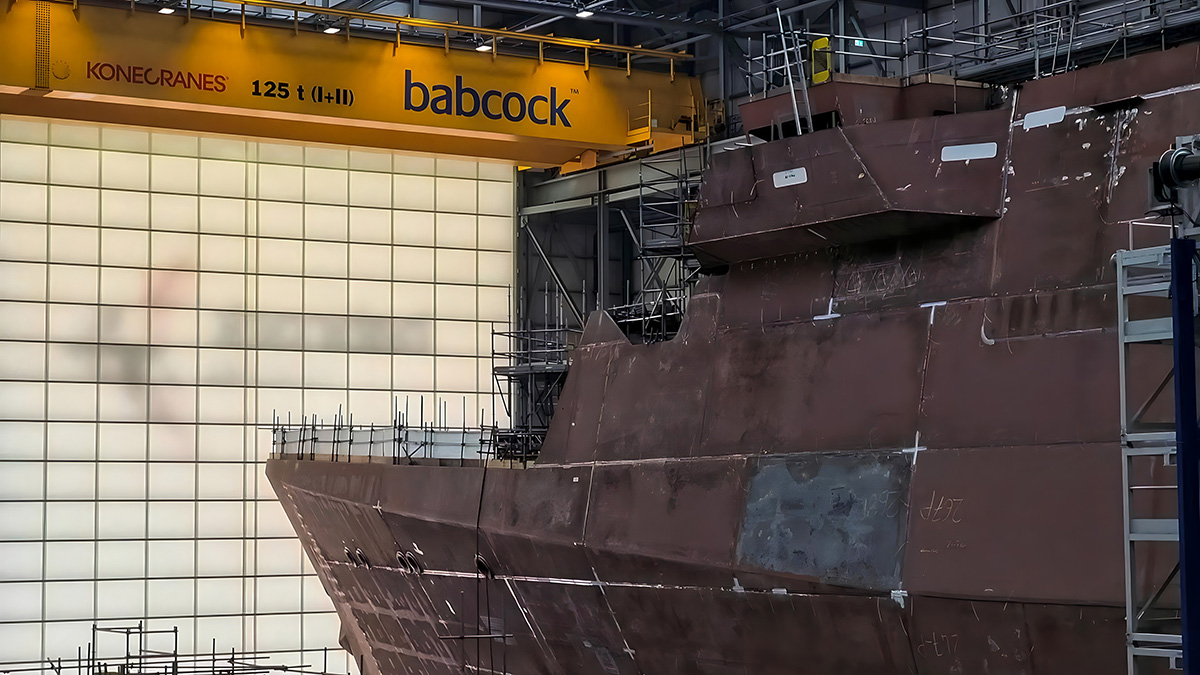
Babcock’s yards and facilities carry a substantial share of that load, from the Type 31 frigates in build at Rosyth to submarine support at Devonport and the Clyde, and the plan itself commits over £290 million to nuclear skills across the Defence Nuclear Enterprise, while the government is seeking to establish defence technical excellence colleges, including two planned for Scotland.
The FTSE 100 company, which operates in the UK, Australasia, Canada, France and South Africa, said it continues to invest in skills development across the UK, working with industry partners, education providers and local communities to help address national skills shortages and build capability for the future.












They should try and use those skills to get the Type 31’s delivered quicker.
🥇🏆
I think they have done well as far as the speed of fabricating the hulls.
Again, fit-out is the bottleneck, but given the glacial pace of the T-26, I’m wondering if Venturer will get to sea trials before Glasgow, if not, she won’t be far behind.
I guess the real metric is the time from first steel cut to commission.
In the 80s/90s, (re: Type 42/Type 22/Type 23) first in class build was about ~5 years, then 3.5 years average for the following ships
The “hulls” were built slowly too. Well behind schedule.
On a more serious note, who do you think will win the Clapton by-election Count Binface or the Count of Monte Crypto
Neither… there will need to be a re-Count. 😇