

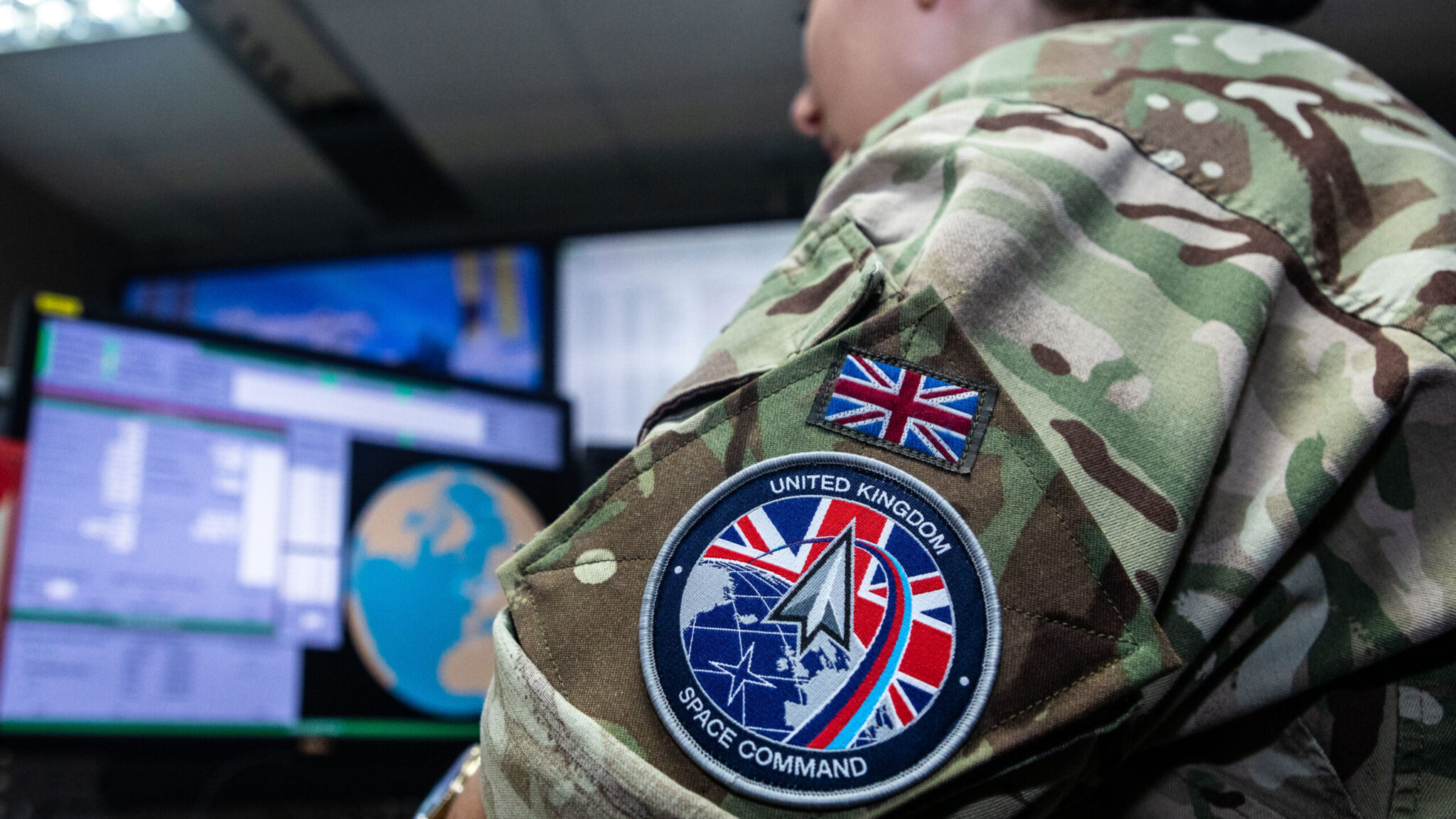
The United Kingdom will field offensive space capabilities for the first time, operated by six new specialist space squadrons trained at the Defence Space Academy alongside allies and international partners, Defence Minister Luke Pollard has announced.
Speaking on the second day of the Global Air and Space Chiefs’ Conference in London, the Minister for Defence Readiness and Industry said a new space systems group has been established under the National Armaments Director to deliver additional capabilities in the space domain, enabling activity across every other domain, and including “in a UK first, offensive space capabilities that will be operated by six new specialist space squadrons trained at the Defence Space Academy alongside allies and international partners,” as quoted in the transcript of the speech.
The announcement is a shift in a national space posture that has to date been characterised in largely defensive and supporting terms, and comes days after think tank the Council on Geostrategy published a paper urging the UK to embrace what it called orbital warfare and move beyond ground-based protections towards in-orbit combat capability. Pollard told delegates that space has become a domain of growing competition that is central to warfighting, and that the concept of all-domain warfare, once little used in the UK, is now embedded in every service and strategy, demanding a different approach to how capabilities are delivered, deployed and interconnected.
Sovereign space capability has been advancing on other fronts, with the Minister thanking CGI and the supporting small and medium-sized enterprises behind the Borealis space domain awareness system, which went operational this year six months ahead of schedule, a phrase he noted ministers rarely get to use. He also credited Space Flux for delivering the first images from Noctis One, the UK’s new military space telescope, saying the systems together have given the country “the sovereign eyes we need to monitor, protect and defend our critical space infrastructure.”
The Minister also confirmed that the organisation currently known as UK Strategic Command’s air counterpart will soon carry a new name, referring in his speech to the “soon to be renamed Air and Space Command,” a change reflecting the growing weight of the space portfolio within the service. The developments sit within the £298 billion Defence Investment Plan, which allocates £31 billion to air and space over the next four years and which Pollard described as delivering a transformation not seen in peacetime in the UK for a very long time, with a new integrated air, space and missile defence operations centre bringing two commands together to protect the homeland.
The offensive capabilities themselves were not detailed, in keeping with the sensitivity that surrounds counterspace systems.







Nice to see the RAF finally taking space seriously. Along with missile defence this can no longer be something we leave up to the Americans. As we have seen in Ukraine and Iran space is now a major domain of warfare and it’s about to become a contested one.
I would love to have more detail on the classified capabilities we already have access to as well as what is planned for these six squadrons to do but as with cyber I can only imagine such capabilities will stay classified until used.
“6 new specialist Space Squadrons.”
I’ll be interested to see if that’s valid.
Something like Skylon could have come in handy for this.
So, the article mentions Space Cadets, a “Space Force” (catchy name that) and a capability we don’t have. I’m sure the Americans will let us go and knock out satellites without their say so.
F.A.B. Kier, or should that by Andy?
What will they do?
Shake an angry fist at Ivan’s satellites as they pass over?
Just to get the old gears whirling. Whenever, the Dragonfire laser is used, a NOTAM is released, to all air operators, included in the NOTAM is a notice to satellite operators.
What happened to Christmas? April fools!!!!! Space cadets just about covers it.