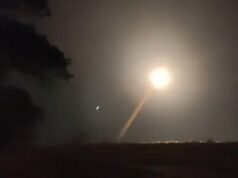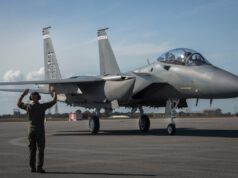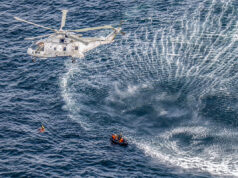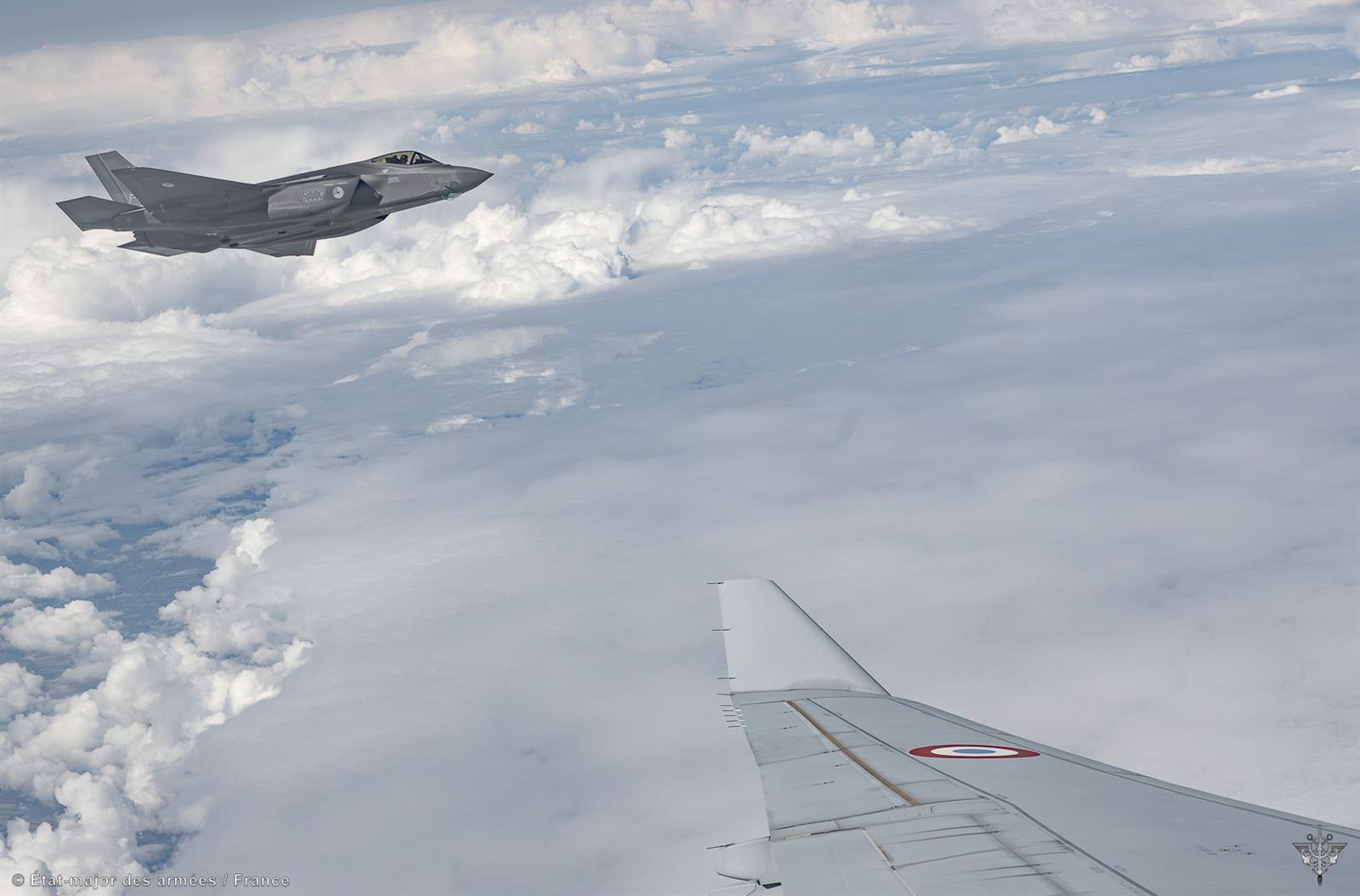
NATO forces have rehearsed the process of finding, tracking and destroying targets across air, land and maritime domains in a training activity over the alliance’s eastern flank, drawing fighters, tankers and surveillance aircraft from across the alliance, according to Allied Air Command.
The activity took place on 23 July under the framework of the enhanced vigilance activity Eastern Sentry, and was supported by Neptune Strike, the enhanced vigilance activity led by Naval Striking and Support Forces NATO. It brought together allied aircraft, land forces, naval capabilities and intelligence, surveillance and reconnaissance assets.
At its centre was the Find, Fix, Track and Target process, which Allied Air Command said allows commanders to identify potential threats, determine their location, monitor their movements and coordinate an appropriate response. Participants trained to connect sensors, decision-makers and operational units across the domains, testing their ability to counter and neutralise threats while maintaining coordination between forces from multiple nations.
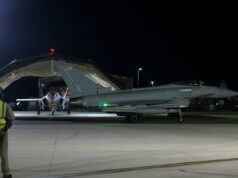
Danish and Dutch F-35s took part alongside French Rafale and Mirage aircraft, and F-35s flying from the British carrier HMS Prince of Wales. Tanker aircraft from France, Turkey and the Multinational Multi Role Tanker Transport Unit extended the reach and endurance of the participating aircraft.
A NATO RQ-4D from the alliance’s Intelligence, Surveillance and Reconnaissance Force provided additional support, which Allied Air Command said enabled participating forces to develop and maintain a shared understanding of the operating environment.
The RQ-4D Phoenix is the alliance-owned variant of the Global Hawk high-altitude long-endurance drone, operated from Sigonella in Sicily under the Alliance Ground Surveillance programme, which gives NATO a wide-area surveillance capability owned collectively rather than by individual member states.
Eastern Sentry was launched in September 2025 to reinforce NATO’s posture along the eastern flank, and has since become the framework under which a range of air, land and maritime activity in the region is conducted. Neptune Strike, run periodically since 2022, is designed to integrate high-end maritime strike capabilities, including carrier and amphibious groups, into NATO command structures.