Serco Defence Maritime Services is marking 30 years of supporting the Royal Navy, with more than 500 mariners and support staff now working across five UK sites and on vessels operating worldwide, according to the company.
The company said its teams currently operate nearly 100 vessels ranging from 12 to 3,600 gross tonnes on behalf of the Royal Navy. Since Serco took over in-port services from the Royal Maritime Auxiliary Service in August 1996, it estimates that around 400,000 individual tasks have been completed in support of naval operations.
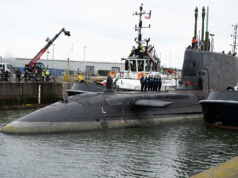
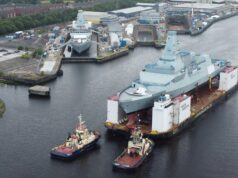
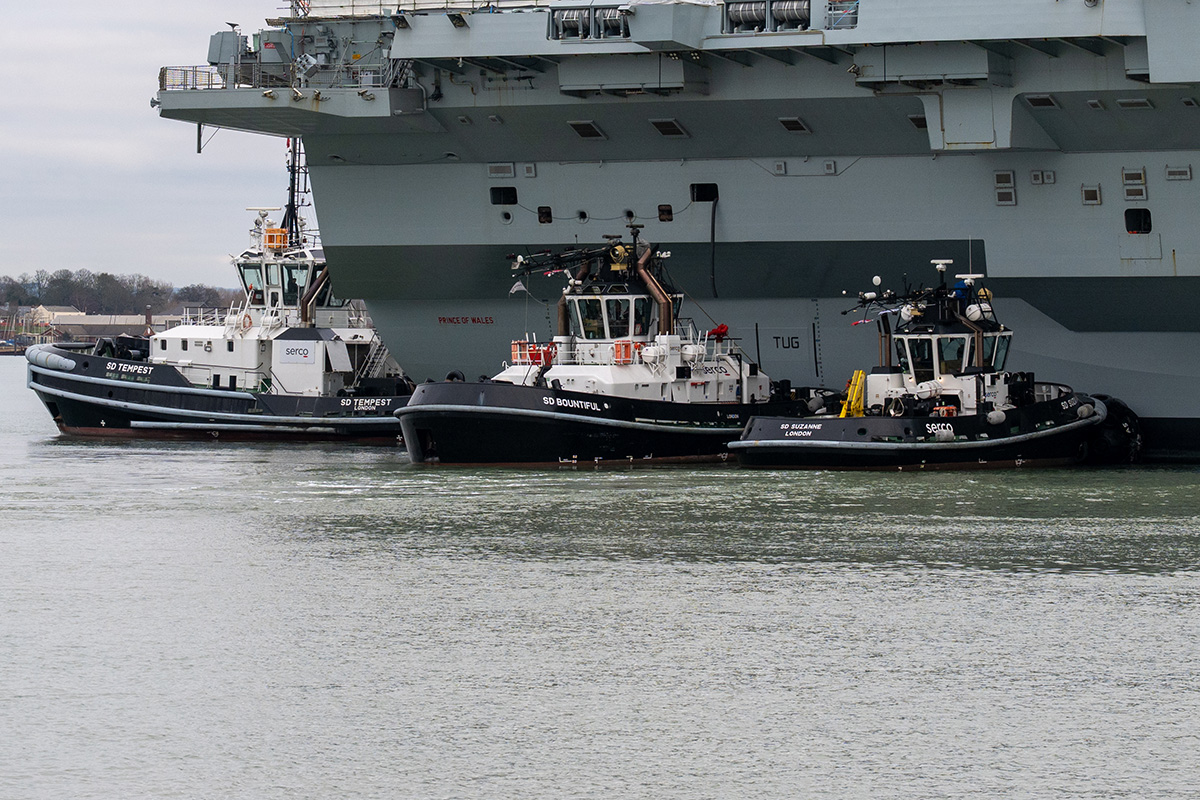
Harbour movements account for most of that activity, alongside the movement of fuel, stores, water and waste. Serco tugs are also used to move Royal Navy vessels including Queen Elizabeth-class aircraft carriers, submarines and frigates.
The company operates from HM Naval Base Portsmouth, Devonport, Faslane, Great Harbour Greenock and the BUTEC ranges in the Kyle of Lochalsh, with additional worldwide support provided by two large vessels.
Its work ranges from towing submarines and supporting the Continuous at Sea Deterrent to ferrying personnel, supporting military exercises and assisting with the introduction of new maritime technologies.
Craig Ramsay, Serco’s Defence Maritime Services-Next Generation contract director, said in the release: “Reaching 30 years serving the Royal Navy is a remarkable achievement and one we are immensely proud of. Behind this milestone are generations of dedicated colleagues whose homegrown expertise, commitment and teamwork have helped deliver essential maritime support, day in, day out.”
He added: “We are privileged to have played a mission-critical role in supporting the Royal Navy and we remain committed to delivering the exceptional service our customer relies on. As we look ahead, we will continue to build on our longevity and strong heritage in local communities the length and breadth of the UK, embracing new technologies, developing our people, investing in communities and strengthening our partnership to meet the evolving challenges.”
Serco’s relationship with the Royal Navy has developed through several generations of contracting arrangements. After assuming responsibility for in-port services in 1996, the company was awarded a 15-year Provision of Marine Services contract by the Ministry of Defence in 2007.
As part of that programme, Serco introduced 29 new vessels and upgraded elements of the existing fleet, alongside a retraining programme for Royal Navy and Serco personnel.
A further change followed in October 2025, when Serco began work under three Defence Maritime Services-Next Generation contracts covering in-port, inshore and offshore support. The company is due to procure 24 new vessels as part of those arrangements.
Among the vessels already introduced into service is SD Tempest, a tug procured to support the Royal Navy’s Queen Elizabeth-class aircraft carriers. Serco describes the vessel as the first Advanced Rotortug built for a UK customer.
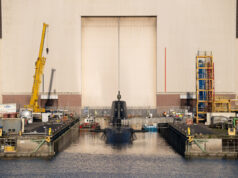
The company also continues to support submarine operations at Faslane, Devonport and the British Underwater Test and Evaluation Centre, as well as submarine departures from Barrow-in-Furness and Fleet Operational Sea Training activity based around Devonport.
Its offshore vessel SD Northern River supports the NATO Submarine Rescue System, while Serco also provided maritime support to the UK’s Carrier Strike Group deployments in 2021 and 2025.
The anniversary also covers Serco’s workforce and supply chain activity associated with the Royal Navy contracts. More than 400 employees have started apprenticeships across the company’s UK Defence business since 2017, with around 120 completing programmes linked to Royal Navy contracts. Those apprenticeships have covered subjects including maritime studies, engineering and operations management, at qualification levels ranging from GCSE equivalent through to master’s degree equivalent.
Serco said its UK Defence business worked with 518 small and medium-sized companies in the 12 months to July 2026, representing 61% of its supply chain. Defence employees also completed almost 4,000 hours of volunteering during 2025 across armed forces charities and other community organisations.