

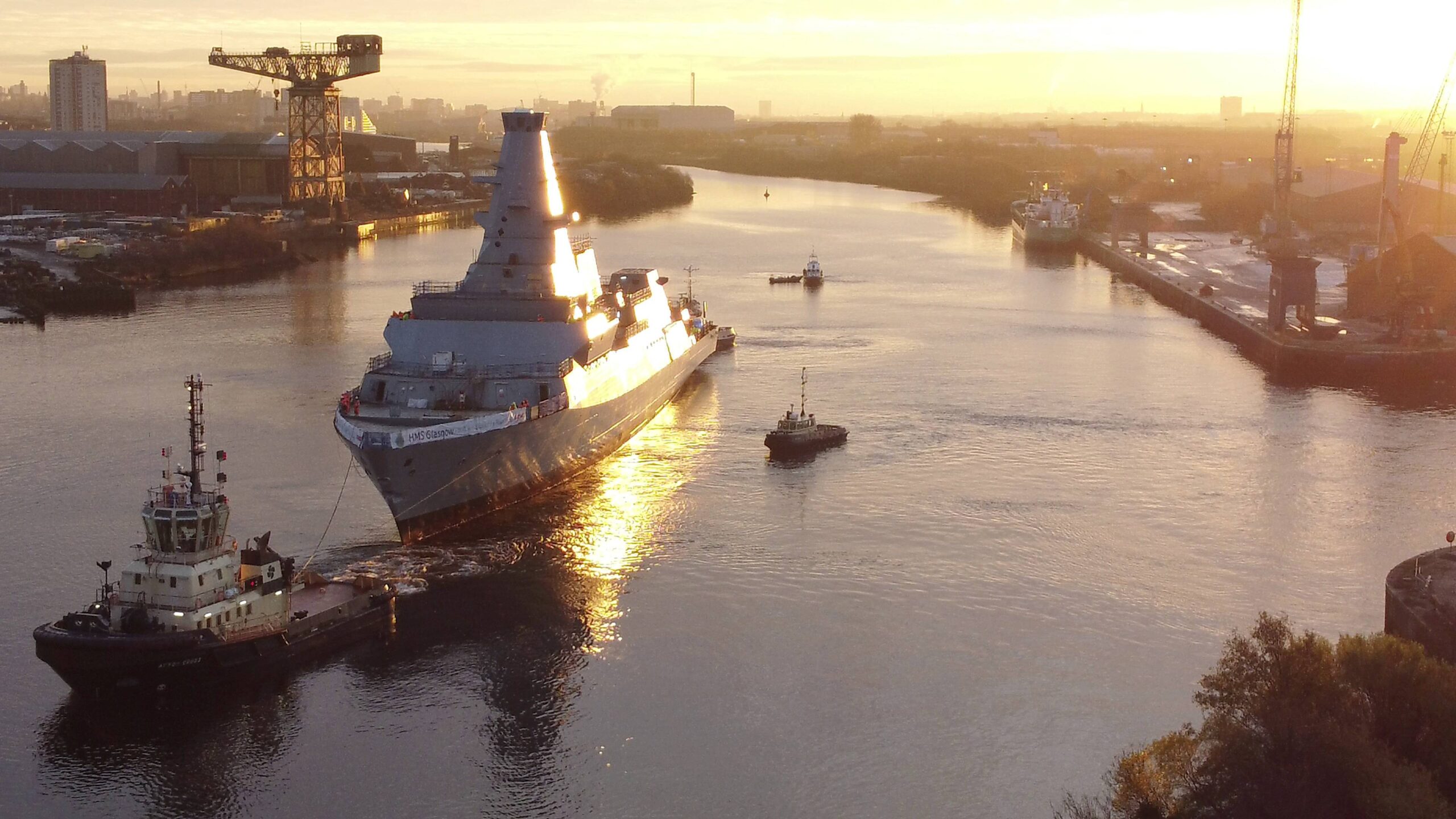
The Royal Navy will not meet its requirement for eight frigates fitted with the Sonar 2087 towed array until 2037 if two Type 26 frigates being built for Britain are sold to Norway, and the government appears to have taken a conscious decision to prioritise defence exports over sovereign capability, according to a report by the Defence Committee.
The committee, chaired by Tan Dhesi, the Labour member for Slough, published its findings following an inquiry that took evidence between March and July this year and included visits to Norway, Denmark and Greenland.
Dhesi said: “The UK needs to be willing to address a hard truth: it does not currently have all the capabilities to operate successfully in the High North. Russian submarine and sabotage forces in the High North pose direct risks to the North Atlantic and the UK, including the nuclear deterrent. Despite this, the Ministry of Defence has accepted a serious anti-submarine warfare gap. Publicly available evidence of low availability among destroyers, frigates and attack submarines calls into question whether the UK can meet its commitments in the High North.”
The report states: “Analysis suggests (Figure 4) Sonar 2087-towed array equipped frigate numbers could remain as low as five vessels for the next three years. This assumes two Type 26 frigates being built for the Royal Navy are sold to Norway, as the latter has ordered at least five Type 26s for £10 billion—which the government says will sustain 4,000 UK jobs. This reinforces the government’s goal to use defence exports to contribute to its Plan for Change, based around its three foundations of good government: economic stability, secure borders and national security.
However, Norway wants its first ship in service by 2029–30. Based on this scenario the Royal Navy will take until 2037 to meet its requirement for eight frigates to be equipped with the Sonar 2087 towed array sensor. In this case the government seems to have taken a conscious decision to prioritise defence exports over sovereign capability.”
A chart published with the report shows the combined Type 23 and Type 26 anti-submarine frigate line falling to two vessels in 2031 before recovering to eight by 2037.
Norway selected the Type 26 in 2025 to replace its Fridtjof Nansen class, in an agreement the Ministry of Defence valued at £10 billion and said would sustain four thousand British jobs. The ships are being built by BAE Systems at Govan and Scotstoun on the Clyde, and Britain’s own order is for eight.
The committee elsewhere records that the Royal Navy has a requirement for eight of its thirteen frigates to carry the Sonar 2087 towed array, that all five remaining Type 23 frigates are fitted with it, and that HMS Richmond and HMS Iron Duke were both decommissioned in mid-2026.
On the wider relationship with Norway, the report describes the 2025 Lunna House agreement and the Type 26 purchase as “therefore strategically more significant than a conventional defence export”, and says a joint class of British and Norwegian anti-submarine frigates “should improve NATO’s ability to detect and track Russian submarines moving from the High North into the North Atlantic”.
The committee’s recommendation asks the government to set out how major naval export programmes, including the Norway agreement and any future uncrewed maritime systems, will support High North deterrence while protecting Royal Navy capabilities, including an assessment of their effect on British delivery timelines, industrial capacity, shared training, sustainment, interoperability and the availability of critical anti-submarine warfare capabilities.
In written evidence to the inquiry the Ministry of Defence described anti-submarine warfare as a core strength of Britain’s armed forces. The government is expected to respond to the report within two months.







We all knew this would be the cost and in my view it was worth the delay.
As much as we all expected this situation it still means that the Royal Navy is still short of ASW frigates and escorts for the carriers. So maybe it is time to think about containerised CAPTAS 2 or 4 for the T31s. Yes I know they are not the all singing and dancing T26 hull but the Danes don’t seem to have a problem with the Absalon design in the ASW role, which after-all is the grandma of the T31.
If we pay them the same and Norway also give BAE money they should surly be able to build 10 by 2035
6th starting 2027
10th by 2030 ish if they can build every 9/10 months
10 in service for 2035
Are you actually serious 9/10 months, or did you mean years.
If the ships for Norway are identical and are used for the same job (as was promised) in the same NATO or JEF command, then the numbers will be there anyway whether British or Norwegian. Never enough for either of course but there all the same.