


Europe cannot count on the United States returning to the European Arctic as the security partner and ally that Britain and Europe previously relied on, and NATO’s Article 5 is functionally moribund in the American sense, according to evidence published by the Defence Committee.
The committee, chaired by Tan Dhesi, the Labour member for Slough, examined the implications of American policy for High North security as part of its inquiry.
Dhesi said: “Our report calls for the government to reassess the JEF’s role and consider whether it should focus more on countering threats in the High North, particularly if the UK has to plan for uncertainty over US support for NATO. The UK’s presence in the Baltics, particularly in Estonia, may need to be bolstered to offset the effects of any greater JEF focus on the High North.”
Professor David Blagden of the University of Exeter told the committee: “[w]e can talk about the formal aspects of withdrawal or not but, functionally, you would probably say Article 5 in the American sense is pretty much moribund at the moment now anyway. No one really believes that the Americans are riding to the rescue if there were some situation in the Baltic states.”
The report sets out that the American 2026 National Defense Strategy outlined four lines of effort to achieve its America First strategic approach, covering defence of the United States homeland, deterring China in the Indo-Pacific through strength, increasing burden-sharing with allies and partners, and supercharging the American defence industrial base. The committee states that none of these suggest a return to greater engagement in Europe’s defence over the medium term, including the High North, and that where the Arctic is mentioned in the strategy it is in relation to American homeland defence.
The committee was told that “[e]ven if the next US President was a dyed in the wool Atlanticist—Eisenhower 2.0 or something—the US would not have the capacity to pivot back to playing the role it did in Europe and the High North”, largely because the United States perceives the maximum likelihood of conflict in East Asia as between 2027 and 2035.
On troop numbers, the report records a reported plan to cut between 25,000 and 40,000 American troops from the roughly 80,000 currently stationed in Europe, despite congressional provisions in the FY2026 National Defense Authorization Act restricting reductions below 76,000 personnel, and notes that significant future reductions in fighter jets, strategic bombers, destroyers, submarines, tanker aircraft and armed drones could also follow.
The Kiel Institute calculated that replacing American military capabilities with European weapons would cost an extra €50 billion each year over the next decade.
Professor Blagden also told the committee: “[t]he caveat, though, to all that glass-half-full stuff is that the UK, for years and years, has been generating SDSR-type documents in which we talk about how far we lean on allies. It has ultimately reached the point where the greatest of those allies has suddenly become unreliable… [w]e cannot just say, ‘We lean on an ally for this. We lean on an ally for that.’ When it comes to the High North, the UK is the major power now. The American cavalry is not about to ride over the horizon and save our fecklessness.”
Ministry of Defence witnesses drew a distinction between American capabilities and American commitments. On capabilities, the department said the United States is making it known to the rest of NATO that “[h]ere are the capabilities we [America] intend not to offer in the future. That is what we think a more European NATO looks like…” On commitments, Brigadier Jeremy Lamb, Head of Euro-Atlantic Security at the department, told the committee that “[w]hat they are talking about, is basing; it is not necessarily what they will make available to the SACEUR (Supreme Allied Commander Europe) in a crisis.”

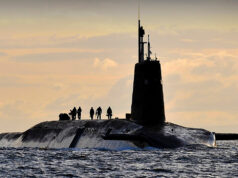

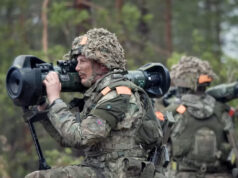
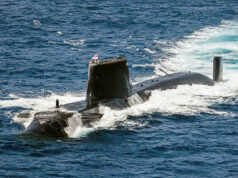







THE PRESENT AMERICAN GOVERMENTS ATTITUDE IS AMERICA FIRST AND THE REST OF THE WORLD CAN SWIM, THE USA ALTHOUGH AN ALLIE THE WEST CANNOT RELY ON AMERICA AND MUST LOOK AFTER ITSELF. FORMING A NEW AALIANCE WITHOUT THE USA.
‘…what they will make available to the SACEUR’
So what force can Britain make immediately available to SACEUR to retake any NATO member territory that may be seized by Russia?
One mechanised brigade for extended operations…and we would need assistance to get it into theatre…
with the US in heavy collusion with the Russian, it’s clear as day that they are not an ally anymore..
I am waiting to see how Trump reacts to loosing control of Congress in the midterms. That is a real possibility. There is a high possibility he will try to disrupt the vote in some way if he thinks he will loose.
In the unlikely event he accepts the vote which goes against him, we just might have to wait until his term is finished, but still trying to become more independent with the EU in lots of ways – not just defence.
It is not just the man, but the movement he heads, us Brits have to worry about.
If he does not except the vote, l think we need to consider BIG changes due to national security and economic security considerations.
It is a sad fact that the world and the American constitution was in a safer place when Richard Nixon was in power with all his problems over Watergate.
He has it under tight control apparently…