


The government should consider whether the Joint Expeditionary Force concentrates its finite resources on the High North instead of operating as often in the Baltic, and may need to build the British Army force in Estonia up to brigade strength to offset the change, according to a report by the Defence Committee.
The committee, chaired by Tan Dhesi, the Labour member for Slough, sets out that Britain permanently leads the ten-nation force, which brings together the United Kingdom, the Netherlands and the three Baltic and five Nordic countries, and that Britain has taken over command of NATO’s Joint Force Command Norfolk.
Dhesi said: “Our report calls for the government to reassess the JEF’s role and consider whether it should focus more on countering threats in the High North, particularly if the UK has to plan for uncertainty over US support for NATO. The UK’s presence in the Baltics, particularly in Estonia, may need to be bolstered to offset the effects of any greater JEF focus on the High North.”
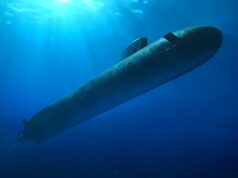
The report recommends: “The government should consider whether the JEF focuses on the High North, concentrating finite resources on maximising its ability to operate more frequently in the harsh climate there while undertaking the demanding anti-submarine mission, rather than operating as often in the Baltic as previously.”
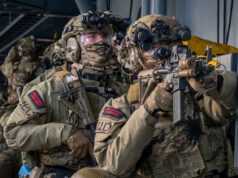
On Estonia it states: “To offset this greater focus on the High North the UK may need to reassure Baltic members of the JEF by reinforcing its commitment there in other ways; for example, by building up the current British Army force in Estonia to brigade-size, to match what Germany is already doing in Lithuania.”
A separate recommendation asks the government, within a year of assuming leadership of Joint Force Command Norfolk, to reassess the added value the force brings to European security, stating that either it provides distinct value alongside NATO and should be strengthened and aligned more closely with it, or it does not and Britain should focus its finite resources on NATO.
The committee sets out that the force was established in 2014 for rapid, scalable operations with northern European allies, and that its principal value lies below the Article 5 threshold where it can respond to hybrid threats, protect undersea infrastructure and act more quickly than NATO’s full consensus-based machinery. During an overseas committee visit, one commentator referred to the force as “a jack of all trades and therefore master of no military tasks.”
The report records that the force overlaps with NATO tasks and has not always proved faster than NATO in practice, that it lacks some major NATO powers including Canada, and that it neither specialises in the shallow waters of the Baltic nor in anti-submarine operations in the harshness of the High North.
Canada applied to join the force in September 2026, and the committee notes that it could add valuable experience and capabilities given its long experience of operating in harsh regional conditions and its membership of the Five Eyes intelligence group, but that adding the North American Arctic to the European High North would significantly increase the force’s area of responsibility.
With Sweden and Finland having joined NATO, the committee observes that eight of the nine countries around the Baltic Sea are now members of the alliance and offer significant capabilities of their own in that region.
The Ministry of Defence told the committee that “[o]nce we transition into crisis, the chances are that the JEF will, in some way, fold into the regional plan north-west anyway. There is not a competition between the two; they are entirely complementary and one supports the other.”






Am I missing something? I fail to understand the premise that Britain and the JEF should focus less on the Baltic and more on the High North and, to achieve this, Britain needs to position more forces in the Baltic.
It’s so we can justify more army spending while reducing naval and air commitments.
The army has been desperately seeking a role in our new high north defence strategy and now they think they have found it 😀