

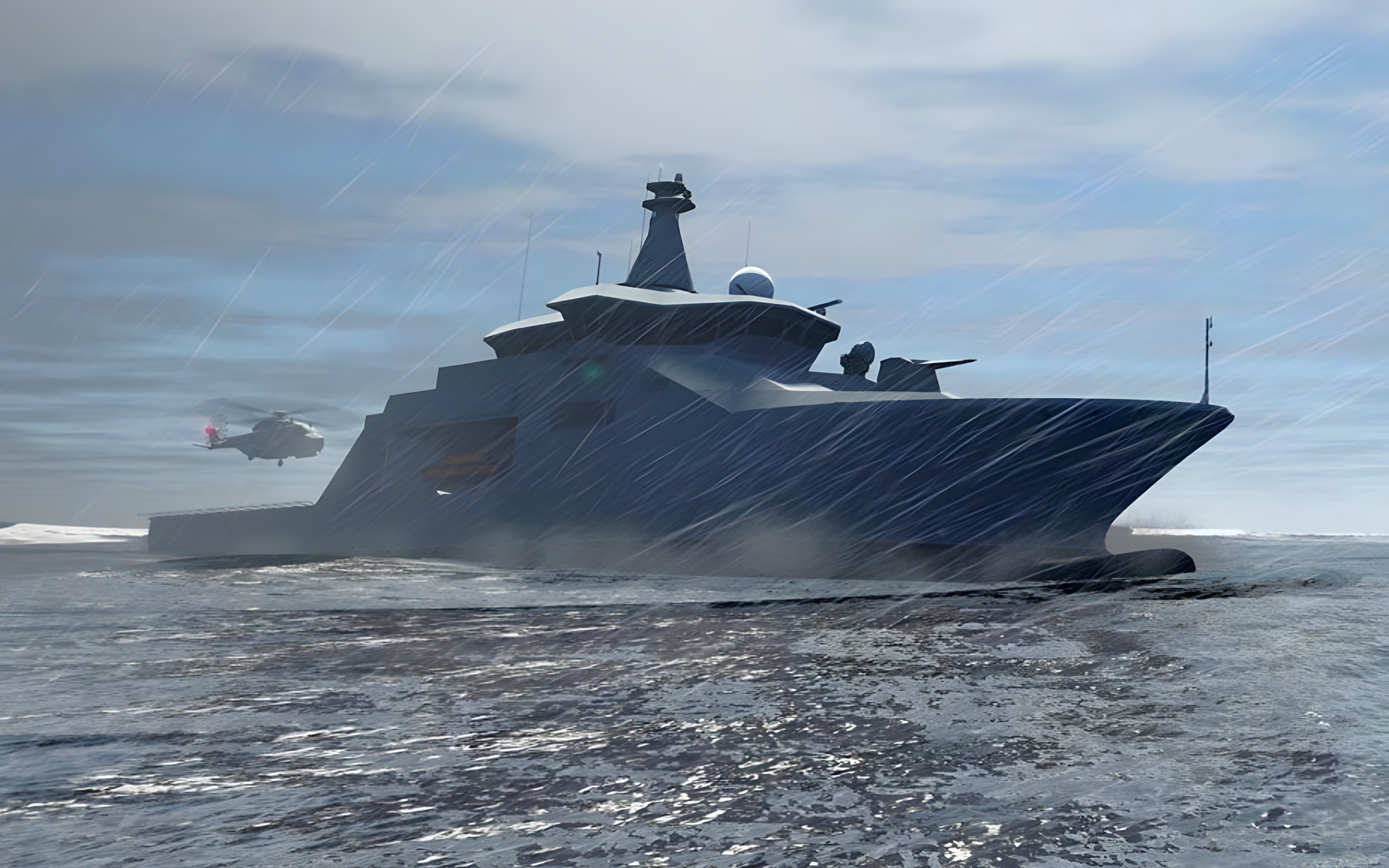
The Royal Navy is to acquire new offshore support vessels alongside Norway to serve as motherships for its growing fleet of autonomous minehunters, as part of a wider investment in mine warfare, the Defence Investment Plan said.
The plan set aside £90 million to procure, in its words, “offshore support vessels (OSVs) in conjunction with Norway,” part of a wider Mine Hunting Capability programme worth around £1.3 billion over the next four years, most of which, some £1.1 billion, is going on the next phase of the autonomous system that the UK is procuring jointly with France. It described the longer-term goal as “a transformed mine hunting capability based on uncrewed systems and AI.”
The money continues a shift the Royal Navy has been making for several years, away from sending crewed minehunters into a minefield and towards remotely operated and autonomous systems that do the dangerous work in their place. The service has been retiring its Hunt and Sandown-class minehunters and replacing them with uncrewed surface vessels and mine-disposal systems delivered under a programme run jointly with France.
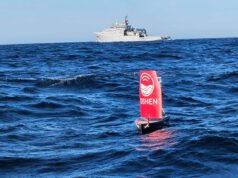
Those autonomous systems still need a ship to carry them to the minefield, store and maintain them and control them once they are in the water, and that is the job of a mothership. The Royal Navy’s first, HMS Stirling Castle, began life as the offshore oil-rig support vessel MV Island Crown before the Ministry of Defence bought her in 2023 for around £40 million and converted her at Devonport, and she commissioned as a warship last year after a period operating with the Royal Fleet Auxiliary. At 6,000 tonnes she can host the uncrewed boats and underwater vehicles, carry their portable command centres and launch and recover them at sea, working mainly in home waters.
Stirling Castle was always meant to be the first of a small class, with the Ministry of Defence having said it planned to acquire up to three more ships for the mine countermeasures command and support role.
The choice of Norway leans heavily on closer naval ties with Oslo under the Lunna House agreement that also underpins the planned combined fleet of Type 26 frigates, while the autonomous minehunting systems the new vessels will carry remain a joint effort with France.



Ah, good, this hasn’t vanished into the ether.
MROSS No2 seems to have, though?
No ‘it” singular hasn’t vanished into the ether it is called RNMB Ariadne and is onboard Lyme Bay and headed for the Gulf.
Part of me wonders if the money for that has been quietly used to keep Scott going into the next decade.
I wonder….she has certain capabilities that require a proper replacement, not excuses
Hi mate, not sure where to place this one but I spent the morning reading the DIP, some good stuff but not sure if you seen them but they confirm £190m to buy Precision Strike Missile and join joint program with with Australia and USA. Also specifically states they will double the number of sky Sabre systems spending £350 million and type 45 will have ABM capability deployed by 2028.
Also specifically states the procurement of
• Long range ground-based air and missile defence systems to protect the UK –
including against ballistic missile threats
But it doesn’t specify the system. CAMM MR?
Yes, all vague, by design, so one cannot judge.
Didn’t read the ABM thing? Did it give a costing? That’ll give it away.
No costing given, it’s marked under 2030 to 2035 time frame so I guess that’s why no firm figure
Exactly. So it’s an aspiration that does not exist, just words.
Like much of the DIP and SDR, and HMG for that matter.
There is some project with a funny name, Pros something, regards moving on from Rapid Sentry and also Skyhammer.
They’d be daft to go with anything other than SAMP/T in whatever the latest flavour is that Italy and France have prepared- possibly layered with CAMM-MR.
As far as I’m aware, it’s the only system other than Patriot that has actually shot down a ballistic missile, and I’m not sure that CAMM-MR is being developed to do that? I could be easily wrong on that point.
I’d agree on SAMP-T/Aster, but I’d add that perhaps this is all part of the logic of adding VLS & sensor barges – we can park them in the north sea. There are multiple UK wind farm locations with coms and serious ground power available; some even have welfare facilities for personnel.
I know, I used to work on some of them!
I’ll be honest, I struggle to see huge need for ABM defence across the whole of the UK; anything coming from Russia itself, an aircraft, or a surface vessel, has very particular routes to get to us if they aren’t going to overfly the whole of western Europe and get shot down by someone else instead. It’s going to come in through the GIUK gap, essentially. That can be dealt with by sensors and launchers in the north of Scotland and islands- or potentially the platforms offshore as you say. I’m not sure what a SAMP/T battery in the hills above Portsmouth is going to do…
The real threat/wildcard is sub-launched stuff, but there’s going to be so little warning of that- the missiles will have hit before we got the AD systems fired up. They can’t stay on all the time.
Hi Jim.
Yes, read it last night before my eyes dropped early, so need to go over again with a fine tooth comb and make a list! 🤪
PRSM, yes, read that, good, we’ve talked of that. Not so good, 190M. I don’t think that amount will buy many.
Related, no sign of the final 14 M270 as part of Deep Fires, which was to be 75. HMG have been dragging feet signing off on it.
On Sky Sabre, there is again confusion as to whether this is “new” or new. Are they re counting the previously announced Sky Sabre order? Maybe not, at 350M, recall previous was less??
The document is like the SDR for me, crap! In that it’s far too vague. They list upcoming project lines at x amount with no actual force level, and some of them are ongoing previously.
X on Boxer. Great? More orders or is this the 623 order?
I wonder if we will start actually seeing orders or if they’ll just find another “waiting on the DIP” excuse, although after how long it took them to get here with this document I’m not sure why it couldn’t have been there 9 months ago, you’d think something that took so long to do would be more detailed and deliver more….
If they’d done a 10 year plan like the SDR recommended there would be a lot more in it, would make it easier to hide the next 4 years being used to cover a few expensive programs and little else. Then again a 10 year plan would have exposed there would be no intention of meeting 3.5%
Most of that document is ongoing programmes with a sprinkling of Drones added and a list of cuts that weren’t meant to occur as the forces are hollowed out and defence is seeing the biggest sustained blag blah blah usual crap.
Fact is, the usual winners are industry, jobs, nuclear, GCAP, AUKUS. Last two, read “jobs.”
Who knows any more, I dont.
The DIP allocates £64 billion (a whopping c.23% of the defence budget) to the Defence Nuclear Enterprise over the next four years – EXCLUDING workforce costs. By comparison, all maritime equipment programmes will get just £18.0bn over the same period! DNE has become the MOD’s equivalent of the NHS – an endlessly hungry money monster whose feeding is devouring our conventional capabilities. My recollection is that until recently the norm was 10% – going back to the 1950’s.
By comparison, France’s now seems to spend far less (although I would take the oft stated norm of 13% of its defence budget with a large pinch of salt), but gets a lot more.
Hi RB,
May I suggest that after years of under investment in the defense maintenance infrastructure and industrial manufacturing base the costs of rebuilding those vital capabilities has come home roast.
Worse the costs for the nuclear industry will have a far higher cost multiplier than the rest of the defence business because of the safety implications inherent in nuclear. Then there is the loss of experienced people across the entire industrial base, including the non-defence related industries as they all add to the national technological and engineering know-how. Replacing the loss of experienced people will take time by definition and in the meantime cock ups are going to happen more frequently until experience is built up, it is simply an unavoidable part of the human experience. All of which significantly ramps up the costs across the industrial process and as such they have a habit of compounding to boot! E.g. make a mistake that requires significant rectification, including redesign work, partial disassembly and new build processes, all carried out by people who may have very limited experience in dealing with the issue and the inevitable time delays will have knock effects putting the entire process out kilter. Throw in ‘nuclear’ and you can just add a few naughts to the cost.
It is interesting to see how much we could have saved over the long term looking at the French costs (even allowing for under estimating their costs!). Short term cost savings usually have huge cost implications for the future as we well know, yet the Government / MoD/ Treasury refuse to take proper account of long term planning / impacts and seem to ignore those who know better, or should!
Rebuilding our industrial base is going to cost a fortune and that will be reflected in the costs of military capability I’m afraid. The armed forces have been similarly hollowed out and time and money required to rebuild is going to be massive – something the politicians simply have no stomach to deal with or to tell the British people about. The threat we face is increasing all the time if for no other reason that our own readiness and capability is still in steep decline making us an even more temping target for a vengeful, risk taking dictator in the geopolitical neighbourhood as witnessed by two more T23’s to go as recently reported and the behaviour of a certain Russian President Putin!
This DIP is good news as far as it goes, but it doesn’t go anywhere near far enough and doesn’t recognise the cost implications of rebuilding industrial and military capabilities simultaneously.
Starmer has bottled it and Burnham will be left with a huge pile of cans to deal with. He had better have significant leadership quality and the balls to tell the harsh truths or the country will face huge risks going forward. Burham needs to sort so much out to enable this country to move forward you have to wonder why he, or anyone else, would want the job!
Unless, they are kidding themselves.
Cheers CR
Agree it’s all confusing and a bit vague.
Hi DM – Batch 1 Rivers bow out- in come these new vessels. Keen to understand how many will be ordered .
3 I think mate.
But the Batch 1 Rivers are not related to these MCM mother vessels.
If they’re thinking these replace them as well……I’m speechless.
cheers Mate
Afternoon Klonkie, how’s it going in NZ? Any news on NZ frigate selection? Do you reckon they’ll go for 2 or 3 if price is good?
Just got a new job with GrainCorp doing bulk liquid exports to NZ so nice to reconnect but remaining family have now moved back to UK.
Hey Mate- all good thx & well done re, the new role! The govt recently allocated funds to upgrade the 2 ANZAC frigates. Reckon they’ll replace these about 2032 – ish, The smart money is on Mogami, tagged onto the AUS order.
Hey Mate- all good thx & well done re, the new role! The govt recently allocated funds to upgrade the 2 ANZAC frigates. Reckon they’ll replace these about 2032 – ish, The smart money is on Mogami, tagged onto the AUS order.
Thanks x 2 lol. Do you reckon they could go mixed if they wanted to replace the two Opvs? The Mogami’s seem to be a “slimmer” version of the T26s, we had on in Sydney harbour a couple of months ago. Not sure how modular or upgradable it’ll be but NZ like to get value for their NZD! I’m very biased and still hoping it’ll be AH140/T31 with high local content. Either way its good to see NZ getting extra capabilities. CAMM might lose out on the Mogami’s instead of SAM/ESSM and RAM.
The Extended Mogami is more a Type 31 equivalent than Type 26. Similar tonnage and weapons to the Type 31, currently a better radar, but Poland shows that it can have a better radar. The Mogami costs a little more, has better battlefield awareness, but worse DC, range and no mission bay, not that the Type 31 mission bay is particularly big. The Mogami can also be built faster and will have advantages of Australia also having them
There would be patrol variants of these vessels if RN seeking some commonality and saved costs.
Saw a nice 85m OPV design by ICE from the Isle of Man, looks B2 River like with/without hangar.
Getting rid of the Wildcat seems very radical. Why not have both at least as a fallback? Wonder if then the Merlin replacement might be something a bit more downsized?
*Thames Class OPV 85.5m, 2000tn
Calling it radical is doing HMG a favour.
It’s a cut as they won’t fund to the level needed as industry, jobs, and welfare, as always, takes priority.
You’ll find navies all over the world happily operating light helicopters, some with Drones as well.
Agreed, Wildcat has a lot of remaining utility for the RN. I would, personally, replace them in Army service with drones and hand them over to the RN instead.
I think the Wildcat is only being phased out for the Army, as drones are replacing its recce role. I didn’t see any mention of the RN getting rid of its Wildcats.
That would make sense to me- I hope that’s the case.
Hello Mate,
I wouldn’t have a problem with these ships undertaking patrol duties – if we ordered more then three! Many more than three if I am being honest, 12 as a minimum. Using the same basic design in greater numbers would allow better deployment flexibility across multiple tasks given variations in availability and unexpected additional tasking.
It could also safe build and maintenance costs over the class life time – provided enough spares are ordered!
Cheers CR
Hi mate.
Me neither.
My comment was on the basis that the 3 mothers would also replace the B1 Rivers!
Order 12, lets enjoy ourselves!
OK, I’ll up your bid with 4 T26 and 3 T31 with options on further T31… 🙂
You did say to enjoy ourselves 🙂
If only!
HMG won’t order a thing beyond the benchmark minimum, non Drone wise.
Chinook force about to collapse as well.
i suppose it will be called the type 83
The number of officers who will get a ship command is now vanishingly Small, so small, the reason we have an RM 1SL was their was literally no RN VSOs with sufficient, or any, ship driving experience.
The RN now has a situation where 50% of VSOs have never held a seagoing command of any description from a P2000 upwards.
The many dozens of Sweepers used to get many a Lt a ship drive.
This one I agree with. Very good solution
You dont buy anything relevant for 90M
Rent some North Sea offshore supply vessels. Big flat deck and crane …job done, while you wait for the Kongsberg Swiss army knife OPV/MCM mothership of your dreams.
The problem with replacing the original 25 hunt and sandown classes fully with autonomous systems, is that these 25 ocean going vessels served a wider purpose than their wartime mine warfare role ( as all naval vessels do) they would do presence, flag showing and constabulary and patrol functions….
This is one of the problems we are seeing the RN is essential paring itself down to pure wartime functions and that is not actually the majority time role of the navy, its major role most of the time is to service the maritime and naval needs of the British state and only sometimes is that actually winning a war… and drones don’t do “not war”.
So what’s going to do all the other none mine warfare jobs of the once 25 strong mine warfare fleet.. not 3 mother ships.
Shout it louder for the people at the back! I couldn’t agree with you more, you make some very good points!
I remember going on HMS Grimsby at a port visit when I was 10, it left a lasting impression!
For me we need to replace the RB1s and we need to add mass to the MCM fleet. It makes sense to create a class that can do both! A MCM mothership can do the same job that the RB1s do.
*lean crew (20 to 30)
*basic self defence 40MM gun same as Type 31
*ability to lauch USV
*cost effective highly automated ship
*hanger to store UAV/USV
Might cost a bit more than a civilian purchase vessel but has more use in a congested area. The reality is that sometimes you will be clearing mines in contested areas and although its not ideal and would be rare you need to be prepared for that scenario and the ships need to be built to a standard of survivability where they can operate safely in these areas.
They didn’t do it very well, most of them could barely deploy outside of UK waters due to small size and plastic hulls. Much better with something larger in smaller numbers.
Or something small and cheap you can forward deployed in Gibraltar or Bahrain.
The Sandowns did very well, and still are doing so for 5 different navies from Estonia to Saudi Arabia. I think “barely deploy outside of UK waters” is a not a characterisation I could go along with.
Yes, often required a ship to deploy on the back off to get anywhere though. Not exactly a River class OPV and also severely limited in operating in high sea states.
Very expensive and limited vessels to be doing offshore patrol tasks.
Bit of a silly question but wouldn’t maintenance on an uncrewed drone be more intensive than that of crewed craft?
A particular area that we are low on seems to be ice-hardened patrol vessels or even multi-role vessels, something Norway should be able to provide. I don’t think the Dutch amphibs have High North patrolling in mind. We still have HMS Protector, of course, but that mostly plies the Antarctic. To get ice-strengthening (not ice-breaking) will cost you maybe 10% extra in a country that is used to producing it.
I have in the past thought that we could get three Jan-Mayen class, but that was in the heady days when people were taking about 3.5% GDP. Also they are too heavily crewed. We need a larger numbers of cheap 70m patrol vessels for home waters, the Baltic and the High North. I don’t believe that’s compatible with MCM mothership work.
Not quite same as your points, but right at the end of the document I read they intend to replace Protector.
The Canadian Harry De Wolf Artic OPVs might fit the bill, one each north and south and comes with hangar.
Indeed so. In fact we had one moor up in London alongside HMS Belfast a few weeks back, they’re big bloody beasts for humble OPVs
Perun had a fairly devastating analysis of the Harry de Wolf’s value for money some time ago.
It was included in the video entitled “Canadian Defence Strategy and Issues – Procurement Disasters, the Arctic & Alliances”.
My suspicion is that this is a pilot order, with the intention that the River Class also ultimately gets replaced with these OSVs, hopefully in much larger numbers. By drawing on Norway’s considerable offshore & high north experience, we get relatively cheap, comfortable, high availability lean crewed vessels that can operate long term in all sea conditions.
They are using a mature COTS design concept with minimum military upgrades. So think of it like a modern Flower Class that’s rather more comfortable for the crew. They will be able do all the constabulary, fisheries, officer training, presence and flag waving stuff quite adequately, and likely with better armament than the Rivers.
We know that Norway is (very expensively) helping to sustain our T26 enterprise, both operationally and in the UK supply chain. Even subtracting NSM and other Norwegian content on T26, £10b will buy a hell of a lot of these OSVs.
I thought we only sourced warships from UK Yards.
Then it’s not a warship.
I think they decided a swappable moment was ok.
It’s all a Grey area.
Or in HMS Stirling Castle, a Blue area.
Again we blur the lines between Warships and Not War ships.
Great to hear that more UK Ships will be built abroad… maybe we could buy some AliExpress Assault Ships from China next ?
kick em out anyway. let hegseth suck on that.
Is this not part of the quid pro quo for Norway buying our destroyers?
Well I hope not, Type 45’s will be needed more than ever now. 😁
Yes. And I have no problem with it either.
My only problem is the budget. 90 million?
Will that buy 3 mother vessels?
Stirling Castle alone cost, reportedly, 40 million.
And she’s not a deployable vessel, but for home waters use.
These need to go into war zones.
It should just about cover the Paint and brushes costs.
What happened to British governments departments Prioritizing using British shipyards and steel, they will likely be built to commercial standards and vessels of them sizes will be ideal for Balaena (Cammell Laird /A&P Hebburn) and Ferguson marine to build maybe even Navantia Methil that would be Prioritizing British industry.
We are obligated to place orders with Norwegian industry by the industrial offsets agreed as part of the T26 deal.
question is : was it worth it to delay RN getting its much needed Type 26 in order to deliver Norway as a priority (ie they get hulls #2 and #3)?
meaanwhile the Type 23 are really struggling because the hulls are rinsed
I would say that a Type 26 in Norwegian service is almost as useful to UK security as one in RN Service. Also I doubt they will be getting hulls #2 and #3. Presumably #3 to meet their “first ship in service by 2029” requirement and then one of the batch 2 vessels, with the remaining 3+ being part of a batch 3 order which will also include the 2 RN replacements. Remember that the Norwegians are currently down one frigate and are therefore presumably keen to get the first ship delivered rapidly. After that I suspect they will be willing to wait for their second ship to be one of the later batch 2 vessels as I am sure they recognise the RN’s frigate issue, whereas the Fridtjof Nansen-class has a lot more life left in them than the Type 23’s and are really perfectly adequate warships.
Sorry but no. One critical norwegian requirement was 2 hulls delivered by 2030. Therfore Norway is getting hulls 2 and 3, this was part of the agreed deal and there is no way around it to honour that agreement.
You have a source for that? The only requirement I have seen is for the first ship by 2029, as reported by Navy Lookout – “Allocating at least one Type 26 frigate, likely ship 3 or 4 (HMS Belfast or Birmingham), was accepted when the agreement was made between the two governments, as the Norwegians had stipulated their first vessel should be in service by 2029.”
Navy Lookout, How will the Type 26 frigates be shared between the Norwegian Navy and Royal Navy?, February 8, 2026
you are correct. my mistake, i was confusing with Swedish requiremenfs of 2 ships by 2030.
As you said, Norway gets one by 2029 then dileveries alternate between RN and Norway
Ah yes, to be honest I don’t think it’s even as bad as that. The way I read it is that Norway will only get two of the Type 26’s already ordered for the RN. So that will be 2 for Norway, 6 for us with the alternating only starting after ~2035 for our final 2.
😂 bollocks
So……
How in this autonomous navy, do Officers get command experience?
not a problem the admiralty will be replaced by AI 😀
It’s an autonomy age so you kind of answered your own question 😀
Playstation.
On the 19 manned escorts planned to enter service in the next 14 years, I’d assume.
The number of officers who will get a ship command is now vanishingly Small, so small, the reason we have an RM 1SL was their was literally no RN VSOs with sufficient, or any, ship driving experience.
The RN now has a situation where 50% of VSOs have never held a seagoing command of any description from a P2000 upwards.
The many dozens of Sweepers used to get many a Lt a ship drive.
Just Me, if ship-driving experience is a pre-requisite for selection as 1SL, which seems to be your point, why does a RM VSO get the job?
I don’t think CDS was a pilot either.
Does it really matter, as long as the CDS, CAS, CGS or 1SL fights for their service, and plans and organises appropriately.
They are not battlefield commanders or in operational roles.
And CDS is an utter laughing stock – the ultimate Chairborne Ranger
It was primarily a lack of command experience – a 2* who’s never driven a ship has zero idea how to operate even a small task group
hours playing world of warships in a portakabin somere in pompey naval base.
More jobs leaving the UK, when we need more of these ships we will look round and see no more British ship builders, no one with the skills to do it, no idea how to do it and wondering what egits made the decision to base our defences on one of the first countries Russia will probably invade. Insanity but predictable.
add to that…
No more Crew.
No more Pilots.
🤡
🫂
Between SSN(A), Type 26/31, presumably MRSS successor, FSS, and the new autonomous ships (hold the laughter on that last point for now), I really do not think there is room in British yards to build these. Makes sense to just get them ordered and out the door from Norway who also have a lot of experience building these types of ships for offshore oil
I agree. We should anyway, we should buy Norwegian in return for them buying British.
Then rebuild some of the yards! We didnt have enough shipyards during the last war and we wont have for the next. Whatever the smart arsed politicians say the next war WILL still require us to move stuf around and protect it, which will mean ships and will mean repairing and replacing them.
from norway? why can’t we do it?
We can, but if we do we create jobs here in the UK, we provide people with the expertise that is obviously currently missing from the number of problems with the current ships, expertise that would be invaluable in a war situation where Norway is almost certainly already under Russias thumb (we dont have a gret track record at protecting Norway from invasion do we). But of course the civil service works for Putin and doesnt want us in any position to protect ourselves
OT.
Article in the Aviationist. 4.2 Billion $ investment in the USAFs 3 main bases in the UK.
So much for the US pulling out eh.
Yes, the US military and deep state seem to be very keen on keeping its UK bases despite the verbal diarrhoea spouted by the current occupant of the Oval Office.
I believe America also has a new found appreciation to the benefit of sovereign bases and how little use leased bases in less than friendly countries are or the shear limitations that aircraft carriers are faced with in power projection on land targets.
Probably a good idea to stay onside with a country that has sovereign island bases in two oceans and several seas.
If they pull out of NATO they need to leave.
They cannot have their cake and eat it.
NATO is not our only alliance/agreement with the US. Others, such as nuclear sharing and especially Five Eyes, needs to be taken into consideration.
Non of our other US defence agreements (UK USA) have a mutual defence clause in them. Only the NATO treaty does. Hosting a large amount of US defence infrastructure, especially the ballistic missile defence radar for their GMD system paints a massive target on us.
Why should the UK allow basing if it’s not part of a mutual Defence agreement? I agree with Daniele, if the USA wants to leave NATO (which I don’t believe they do) then their bases have to go with them and their lease of Diego Garcia needs to run out in 2036 as does their use of Ascension Island and Akritoni.
If the USA leaves NATO then the UK needs to double down on European defence to countries actually willing an able to help in any conflict against Russia.
I agree
They are pulling out of NATO, their UK bases are not just useful for the European stage. The US wants a global reach and so needs bases all around the world to transit aircraft and supplies. As was seen when they attacked Iran, they couldn’t have achieved it without NATO bases, or at least would have been far harder for them.
Exactly my point. You cannot have it both ways. If you’re not contributing to NATO, then off you go.
5 Eyes is a different matter but we can hobble them there at any time as well.
I would rather keep the card for future trade deals. You do a trump on us and we kick you out of the airfields. That is assuming we can, I wouldn’t be surprised if there is a long term contract in place for their usage.
It’s an interesting question, I do not know.
The USAF is here by “mutual invitation”. We retain legal ownership of the airbases and can ask them to leave, but the political and economic risks are huge.
The NATO Status of Forces Agreement (SOFA) 1951 establishes a framework for US presence in NATO countries but does not give them absolute right to be there. In the UK this is brought into law by the Visiting Forces Act, which sets out how all visiting forces operate under our jurisdiction. Again, there is no right for them to be here, they are merely invited. The agreement is open ended.
Thank you.
DM,
For 84 yrs. and counting, the largest and best, forward deployed US aircraft carrier. Virtually unsinkable, absent nuclear Armageddon. Despite current popular opinion, Uncle Sugar does not staff USAF w/ morons. Oh, and UK should anticipate a USN sub-lease (pun intended) of HMNB Clyde and Devonport as soon as project Euston is completed and No. 10 drydock is again operational. There is both an RN and USN SSN deep maintenance backlog requiring clearance in order to enable AUKUS longer-term viability. UK political class will be pleased due to the increased abundance/duration of well compensated maintenance positions. Problem sorted, time to address the next alligator in the swamp … 🤔😉
Quite agree mate. I value the UK USA alliance, even if others don’t.
But it needs to be in our interests, and too often we have to just fall in line with US policy.
A new Holy Loch, yes.
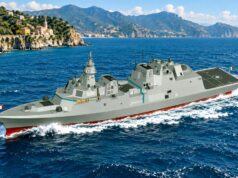
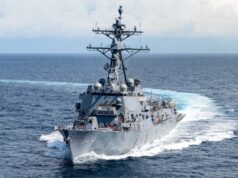
£90m isn’t going to buy much in military procurement. So i highly doubt it will be armed with a main gun like the title picture suggests.
Britain to do a lot, but no fixed dates, no orders, not enough money , but its ok because some guy says its going to happen after he looses power and we are bit short in cash but it will get worked out by savings in the MOD, ie vast early kit retirements, and the Budget later in the year. So the DIP job done.
Lot what we need, what we want, what we will get but no hard facts, may be i missed some thing or was it a farce? smoke and mirrors with some things that had already been said re said for content?
The same bloke that would have lost the Chagos. No apology just would have cost us millions just less security and operational ability. What a t..d and clueless too.
well lets hope that the Chagoes deal ends with him, one of the most useless wet, weak lying PM’s in 60 years.
At 90 million for three vanguard MCMs, a ship with lots of utility, small ship flight or rotor drones, surface and sub surface drone mother ship, as well as an OPV armament and a crew of just 16-20 I’m not really understanding why the RN is not going large with this and ordering 10+. That’s 10 ships for half the cost of a frigate and about the crew numbers of 1 frigate.
It would give massive grey warfare presence, give the RN the mass to be places, be able to secure the EEZ in time of war as well as provide command and engineering career paths.
To be honest I would go with 15 in total.. covering the whole Mine warfare and OPV role.. then do something more interesting with the River 2s as fully naval hulls with proper survivability.
I like the look of the through deck assault ship. That make a lot of sense in replacing the Bays. I hope we dont sell one off immediately or some nerd say, ‘look we’ve got carriers, now well the QE’s!!’.
This DIP says to me Defence should be set aside from the General Budget and Treasury micro management. It does need very strong controls otherwise it becomes a Goldmine for greedy contractors. This is what happend historically after Cromwell rebuilt the Navy only to have it spaffed by the Restoration and the Dutch attack on Chatham and the Thames. Learn from our mistakes.
So just why don’t they?
With sensible suggestions like that?
One more Labour/Conservative legislative term and the armed forces will be reduced to the bare minimum of disarmament. All drones and smokescreens, but no real increase in tanks, escorts, amphibious capability or fighter jets. France, Italy, and soon Spain will be ahead globally, except in submarine warfare, if the promises are kept.
The primary reason we cannot afford more combat aircraft, ships, tanks, GBAD etc is that the Defence Nuclear Establishment (DNE) is siphoning off the lion’s share of the defence budget. We will be spending almost as much on defence nuclear procurement as we do on army, navy and air force procurement budgets together.
Defence Nuclear includes the ‘up to’ 12 SSN AUKUS and the 12 .F-35A, but the vast majority goes on the independent deterrent and Dreadnought SSBN. We have a larger defence budget than France, Italy or Spain but we cannot afford the same level of conventional kit or the service numbers that they do, due to our massive spend on defence nuclear.. France manages to have larger armed forces, considerably more combat aircraft, a navy that matches the RN and both SSBNs and nuclear strike aircraft, all on a smaller budget.
Having an independent deterrent seems to be such a key element in Foreign Office, Civil Service and public minds, but you have to wonder why a medium-weight country like UK is carrying such a large financial burden. It gives the illusion of being a world power but we haven’t been that since the post-war loss of Empire . The price for this status symbol is that we cannot afford.the aircraft, ships, land equipment, weaponry or service numbers that we need.
It is high time that we look to defray the costs of DNE by spreading the load across other NATO members. Why should Germany, Italy, Spain etc enjoy the protection of the British nuclear deterrent, which we have declared to NATO defence, without making any financial contribution towards it? If we had just thought of having a nuclear deterrent today, it would inevitably be a joint European NATO programme, with Germany, UK, France and Italy having two boats, Spain one, costs shared, 3 at sea.at all times. The UK going it alone is not financially.feasible unless.we double the size of our economy, which is not going to happen.
Time for some fresh thinking on this hyper-expensive imperial legacy.