

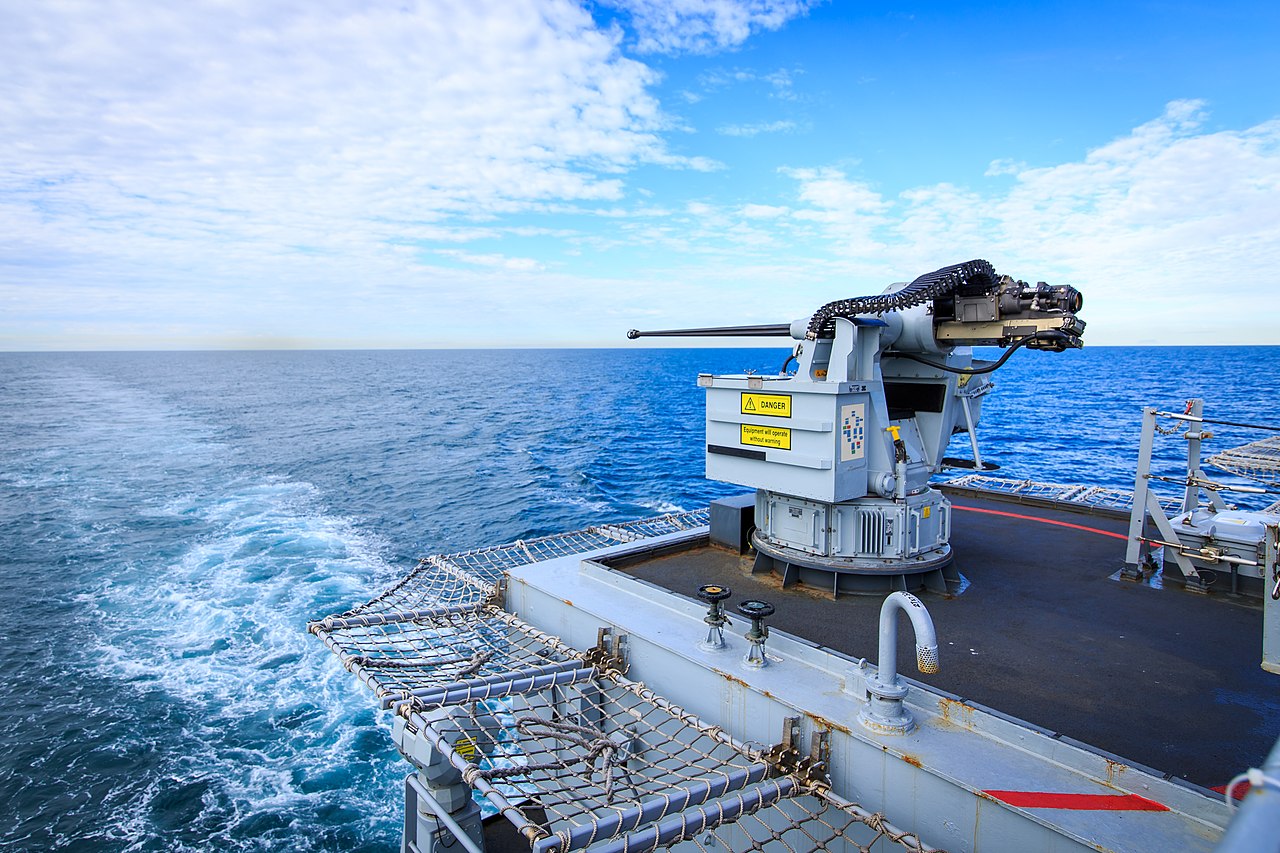
Naval guns made by a British company are fitted to almost all United States Navy and Coast Guard ships yet to hardly any Royal Navy vessels, the Treasury Committee has been told, the UK Defence Journal understands.
The claim was made at a Treasury Committee evidence session on defence spending and finance on 3 June 2026, which questioned three experts on how the UK funds its defence and on the relationship between the Whitehall departments that approve defence spending.
Andrew Kinniburgh, Director-General of Make UK Defence, gave evidence alongside Lucia Retter, Assistant Director for Defence and Security at RAND Europe, and Max Warner, a senior research economist at the Institute for Fiscal Studies.
Kinniburgh raised the example as he argued that there was British defence industrial capability the United Kingdom was not making use of. He pointed to MSI Defence Systems, based in Norfolk, which makes naval guns. “They’re on hardly any UK ships, they’re on US ships, US naval ships, and Coast Guard ships, almost all of them,” he said, noting that the Royal Navy instead chose the Bofors gun, made in Sweden, for its vessels.
The point formed part of a wider argument that the UK has untapped industrial capacity that could be drawn on as defence spending rises, rather than the country needing to build capability from scratch or import it. Kinniburgh said there was capability in British companies that was not being used domestically, citing the guns as one illustration.
Asked whether such a firm could quickly scale up to supply the Royal Navy if it won an order, having reached its manufacturing capacity making guns for others, Kinniburgh said it probably could do so without much difficulty. The volumes produced for the United States were so high, he said, that the additional quantity needed for the UK would be relatively small by comparison.
MSI Defence Systems, known for its naval gun mountings, makes small-calibre stabilised mounts of the kind used for close-in defence against small craft and other threats. Kinniburgh’s account placed its guns across large numbers of US Navy and Coast Guard vessels.



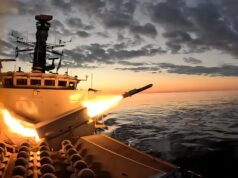
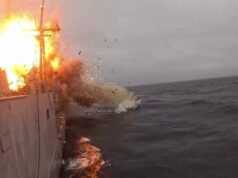




I think I read somewhere that they’ve stored a load of 30 mm guns away and, for some reason, they’re not fitting them. An example is the QEcand PoW that are designed to take 4 each of these guns but, they’ve never been fitted. Why buy new if we’ve already got a stockpile of the things?
I do recall that ‘close range’ was quite a labour intensive WE department and have wondered if the reason for not fitting them is a lack of people (with knowledge and experience) to maintain them? If so, a detachment of RMs could do the job with a bit of direction from a PO. Again from dim and distant memory, the Royals were good in this role.
I wonder if they will be putting them on the type 26.
I’ve gained $17,240 only within four weeks by comfortably working part-time from home. Immediately when I had lost my last business, I was very troubled and thankfully I’ve located this project now in this way I’m in a position to receive thousand USD directly from home. Each individual certainly can do this easy work & make more greenbacks online by visiting
following website—.,.,.,.,.,.,.,.—>>> PayAtHome1.COM
So the msi mount, not what the MK44 bushmaster II? Both are not exclusive to naval platforms. The Terrahawk Paladin is the land variant. Slightly misleading.
Fitted for, but not with, is the stupid expression used. QE and POW very poorly protected
Apart from the human cost of losing the crew how much national treasure would be lost not only if a carrier is sunk, but is lost with all F35s and Helicopters. Did we learn nothing from the Falklands about arial threat and how fallible missile systems on air defence can be.
This is reckless almost criminal negligence and can only end badly.
If not a pair of 40mm they could easily put these four 30mm where they were designed to go. The three Phalanx’s and 4x30mm is exactly same armament as on HMS Ocean so why is it so hard to replicate? A pair of marinised RapidSentry LMM launchers might be useful too. And why not upgrade the T45s with these latest 30mm if also going on the T26s and FSS’s? Why no Paladin or Tridon for the UK land shorad? Are people asleep to all this?
Yes
They should fit the fourth Phalanx as originally planned and add some CAMMs tubes to give organic missile defence to stop leakers. The QE class is the weakest defended major carrier in the world. Every other carrier has a combination of CIWS guns and SAMs.
If not a pair of 40mm they could easily put these four 30mm where they were designed to go. The three Phalanx’s and 4x30mm is exactly same armament as on HMS Ocean so why is it so hard to replicate? A pair of marinised RapidSentry LMM launchers might be useful too. And why not upgrade the T45s with these latest 30mm if also going on the T26s and FSS’s? Why no Paladin or Tridon for the UK land shorad? Are people asleep to all this?
*sorry for the duplication. Bloody irritating.
Say again ?
Again
and Again
Halfwit makes me less annoyed
👍😀
I’ve gained $17,240 only within four weeks by comfortably working part-time from home. Immediately when I had lost my last business, I was very troubled and thankfully I’ve located this project now in this way I’m in a position to receive thousand USD directly from home. Each individual certainly can do this easy work & make more greenbacks online by visiting
following website—.,.,.,.,.—>>> JobatHome1.Com
Don’t want to repeat myself.
Don’t want to repeat myself.
😆
Agreed
It is extremly vexing
The Govt / Treasury / MOD are trying to spread the butter too thinly and exposing our increasingly stretched forces to danger and us
I would like the people to march on Whitehall to show them they are letting us down and also one of the last industrial sectors which provide £££ to the UK (exports and revenue)
So shortsighted Wake up and also cull the increasingly large MOD
From what I understand, even though the LMM mount on the bustmaster RWS was successful on the Type 23, it was concluded that the back blast plume was to blame damaging the area. I imagine it would be the same on the rapid ranger. I would like to know if Thale would have considered an ejection launch or a small booster module like on Starstreak in it. I guess that would ho against the cheap factor.
And looking at the QEC, the mounts are located near doors or are in confined areas. They might need to either use their engineering skills to thinks of a solutions like a deflector. Or create better mountings that are have more space.
If efflux is an issue as it probably is with the RAM type launcher would angled exhaust pipes on the LMM mount work? Could they adapt the Ancilia decoy launcher for LMM-Starstreak? And there’s always CAMM. I think TJ here a while back even suggested a “half-CAMM” for out to 10-15km. Spoilt for choice a bit.
Could say about angled pipes or the Ancilia launcher. However, I do recall Chemring Centurion had a video of a previous product that suggested that a Javelin launcher could be installed. Multipurpose Modular Launcher System (MPLS) would be a better option to be honest.
Was the back blast issue was ever formally acknowledged as it seems to have been based on a photo either on here or Navy Lookout?
Arrows point to the UK Ministry of Defence’s annual report on major projects for the financial year 2022/23-Q4 with the information bust couldn’t find a link. The amount of articles that say “a 2023 report has said that it not been deemed successful due to efflux management issues on the Type 23”. It’s helpful that they link the report instead of going down a rabbit hole. I’m on my phone at the moment, so it is a pain to do research on.
And looking at the QEC, the mounts are located near doors or are in confined areas. They might need to either use their engineering skills to think of a solution like a deflector. Or create better mountings that are have more space.
I remember a video of the launch (on this site or maybe Nsny Lookout) off a type 23 on a 30mm gun
It was near the forward superstructure below the Bridge at a humans height with only a few feet from metal
Like your comments but surely there are spaces on T26/T31’s and the carriers etc open spces for blast without modification
Am I completely wrong? Maybe mountings midships near funnels on escorts with blast plates or deflectos behind if no space
Found my glasses Navy Lookout
TBH, I think we can talk to blue in the face, I don’t think the government will fork out on another mount.
MSI defence makes weapons mounts. Most of the guns used are US made Bushmaster cannon.
AEI Systems, ,now Turkish owned, holds the design rights to Rarden cannon and makes actual guns in different calibres, typically with low recoil forces like the 30 mm Venom.
So none of this answers the question, why?
Are the RN gold plating again where good enough would suffice?
What are the reasons?
My question would be if MSI are so good at making mounts why don’t they try to move into larger calibres? As the gentleman says there’s no particular reason why we need Sweden to design naval guns for us, but unless we give them an order there is no reason for MSI to try to break into the medium gun market. We produce our own barrels and shells so we would have complete flexibility in the calibre chosen and MSI’s reputation could win them exports over the expensive Bofors.
Their expertise seems to lie in making mounts that are fairly easy to retro fit without major alterations to the vessel itself. Large calibre guns will be deck penetrating with complex ammunition storage and feed.
I would like to know which senior naval officers thought it would be a good idea to have 3 different calibre main guns on our 3 surface escort types.
Sovraponte is an example of a medium calibre gun which is deck-mounted, but I can see that they might not have specialists in ammunition feeds etc.
I don’t see the MoD or MSI having the idea of developing a UK series of medium guns but a collaborative effort between BAE and MSI would do us quite well.
AB Bofors is owned by BAE Systems, so technically a UK company
Yes, but …it’s a classic definition of ‘postcode washing’ right there. Legally, yes, BAE Systems plc is a UK company, but the economic reality of the Bofors buy (like the 40mm and 57mm for the Type 31s) is completely different. The high-value money flies straight out of the UK economy and over to Sweden.
Look at where the money actually goes on a BAE/Bofors contract …
The design & IP is Swedish, BAE Systems Bofors AB is based in Karlskoga, Sweden. All the intellectual property, patents, and high-end engineering jobs stay there. When the MoD pays BAE in London, a massive chunk is instantly routed to Sweden to pay for that IP and specialised components.
The Heavy Manufacturing is Swedish, the actual forging of the gun barrels and the assembly of the complex automated ammunition-handling mechanisms happen in Swedish factories, not British ones. We are effectively buying a completed foreign weapon system.
What stays in the UK? (Not much) we get the corporate middleman cut for BAE London managing the paperwork, the shipyard wages to physically bolt the Swedish-built mount onto the deck, and the long-term support/maintenance contracts for local techs over the next 20 years.
Compare that to a company like MSI Defence Systems in Norfolk. When they sell a naval mount, which integrates an American Bushmaster chain gun with British-designed stabilisation tech, sensors, and fire-control software, the high-value IP, software engineering, and profits stay entirely in the UK.
The US Navy and US Coast Guard buy heavily from MSI in Norfolk because the tech is world-class. Yet our own MoD bypassed them for a foreign-designed Bofors system, all while hiding behind BAE’s London postcode to pretend they are supporting ‘British industry.’ It’s a paper exercise that starves genuine UK innovators of domestic contracts.
However, the Bofors’ fits the need.
Daniele, I looked into why.
… for the new Type 31 frigates, the Royal Navy did the exact opposite of gold-plating, they designed a budget-conscious, “good enough” general-purpose escort.
The decision to buy Bofors instead of expanding the use of MSI mounts comes down to raw physics, the nature of modern threats, and a game-changing type of ammunition. To understand why the MoD chose Bofors for the new fleet, you have to look at the massive physical and tactical difference between what an MSI mount does and what a Bofors system does.
MSI makes fantastic, light, non-deck-penetrating mounts. They sit neatly on the deck without needing massive holes cut into the ship’s structure. However, because they are light, they are physically limited in the size of the gun they can carry. The standard MSI Seahawk mount handles a 30mm Bushmaster. While you can theoretically fit a slightly larger 40mm Bushmaster “SuperForty” barrel to an MSI mount, that is a drastically different weapon from a Bofors 40mm. The Bofors cartridge case is twice the length (365 mm vs 180 mm) and packs a massive amount of propellant. An MSI mount simply cannot absorb the colossal, violent recoil of a true Bofors 40mm or 57mm gun.
A 30mm Bushmaster on an MSI mount is a fantastic point-defence weapon against asymmetric threats as in pirates, fast attack speedboats, and slow reconnaissance drones. It fires a solid piece of metal or a basic explosive round directly at a target. It is essentially a high-tech sniper rifle. But the Royal Navy looked at the future of warfare, specifically swarm attacks from loitering munitions, anti-ship missiles, and kamikaze aerial/surface drones, and realised a 30mm bullet that has to physically hit a tiny flying drone is incredibly hard to time perfectly. They needed an area-denial weapon … they needed flak.
The single biggest technical reason the MoD bought Bofors systems for the Type 31 is a specific, proprietary technology owned by Sweden: Bofors 3P – Pre-fragmented, Programmable, Proximity-fused ammunition. When a Bofors 40mm or 57mm gun fires, the ship’s radar and fire-control computer instantly calculate exactly where the enemy drone or missile will be. As the 3P shell passes through the gun barrel, the computer electronically programs a tiny digital fuse inside the bullet.
The shell flies out and can be told to do six different things, but its favourite trick against drones is ‘Airburst Proximity Mode’ The shell doesn’t need to hit the drone. It just needs to fly near it. When it gets within a few meters, the fuse triggers, exploding the shell into a cloud of over 2,500 tungsten pellets and high-velocity shrapnel. It turns the sky into a literal wall of flying metal, shredding swarms of drones instantly.
A standard 30mm Bushmaster on an MSI mount cannot do this effectively at range; it doesn’t carry the physical payload size in the shell to create a massive fragmentation cloud, nor does it have the integrated 3P style heavy mount programming architecture.
Ironically, picking the Bofors 40mm over an MSI 30mm + a Phalanx CIWS was a cost-saving measure … the exact opposite of gold-plating (for once). The Type 31 frigates are being built to a very strict budget; roughly £250-300 million per ship, which is cheap for a modern frigate. To save money, the Royal Navy decided not to fit the incredibly expensive, heavy 20mm Phalanx Radar CIWS to the Type 31.
Instead, they realised that by placing a Bofors 57mm on the bow and two Bofors 40mm guns on the sides, they could use that programmable 3P ammunition to make the guns pull double duty. They act as the main medium artillery against surface ships and land targets, and they act as the CIWS air-defence shield against incoming missiles and drone swarms.
The MoD didn’t reject MSI because they were chasing overly complex, gold-plated tech. They rejected them for the new frigates because a 30mm chain gun on a light mount is fundamentally the wrong tool to fight a modern, coordinated swarm of kamikaze drones. They needed the heavy, hard-hitting, deck-penetrating power of the Bofors systems because Sweden holds the monopoly on the smart, exploding shrapnel ammunition required to keep a cheap frigate alive in a modern war zone.
So, The Bofors 40mm and 57mm systems sit right in the goldilocks zone for a general-purpose frigate. They are light enough to fit easily onto the ship’s superstructure without massive structural reinforcement, yet large enough to carry Sweden’s proprietary 3P smart-fused shrapnel payload.
Other nations build smart exploding shells, but for the specific naval chessboard the UK is playing on right now, the Swedish portfolio offered the exact balance of weight, cost, and drone-shredding capability the Royal Navy was looking for.
Also Daniele,
The Bofors 57mm Mk3 sits right on the front of the ship in the “A” position. While it’s built in Sweden by BAE Systems Bofors, it is famous globally because the US Navy and US Coast Guard use it extensively on their Littoral Combat Ships and National Security Cutters, calling it the MK110 Naval Gun System. It acts as the Type 31’s main artillery piece. It can pivot seamlessly from blasting shore targets or surface craft to acting as a high-velocity anti-aircraft shield.
It is a monster compared to light 30mm systems, spitting out heavy 57mm shells at a rate of 220 rounds per minute up to a range of 17,000 meters.
The Type 31 carries two other Bofors 40mm Mk4 of these smaller, incredibly compact mounts. One is placed on an elevated step just behind the main 57mm gun facing forward, and the second is placed toward the back of the ship on top of the helicopter hangar to protect the rear – to be clear, the two Bofors 40mm Mk4 guns on the Type 31 are physically mounted on elevated platforms on the port and starboard sides of the superstructure, but they are staggered in a “fore and aft” arrangement to give the ship 360 defensive coverage.
These two are the dedicated Close-In Weapon Systems (CIWS) and swarm defence barriers. The 40mm Mk4 is explicitly designed to be ultra-lightweight and highly agile. Because it has a tiny footprint on the ship’s structure, it can throw massive 40mm shells at 300 rounds per minute directly into the path of an incoming kamikaze drone or fast attack craft.
The major reason Babcock and the MoD selected this specific pairing is that both the 57mm Mk3 and the 40mm Mk4 use the exact same tactical philosophy: Bofors 3P programmable ammunition. The ship’s central Thales TACTICOS combat software talks to both gun systems simultaneously. If a swarm of low-flying aerial drones attacks from the front and a remote-controlled explosive speedboat attacks from the side … the 57mm main gun can load 3P airburst shells to blow apart the aerial drone cluster at long range.
The 40mm secondary guns can simultaneously switch their 3P ammunition profiles to “armour piercing / proximity” to shred the surface boat before it gets near the hull. The Type 31 drops the traditional heavy, solid-metal shells of the past and opts for a localised, Swedish-designed ecosystem built around rapid-fire shrapnel walls.
Hi Magenta.
Thank you for these two great posts. So, HMG being economical with the truth, but, also a non story, as the best weapons for the need have been chosen.
I wonder why they’re not buying more in lieu of more CIWS types for the T26, given the capability of the guided munitions.
Not needed anymore.
All UK Killer Tomato’s were exterminated years ago.
And if they do come back, we can just get George Clooney.
Aaah, The Return of the Killer Tomatoes.. Classic !
DM,
Although never officially acknowledged by MoD/RN, one could presume that some form of imputed cost accounting factored into the decision process. Real decision will occur when HMS QE or HMS PWLS is next deployed to the ME theater. Personal speculation: Some leadership misjudgments/shortfalls are apparently tolerated during peacetime, but are virtually guaranteed to be closely examined and judged after the fact, should preventable damage or loss befall a RN capital vessel during foreseeable combat operations. Unfortunately, the results of a naval Board of Inquiry and/or Court Martial may be only cold comfort to the survivors.
I live two miles away from them and drive past regularly on my way into the city. So naturally I think it’s an awesome idea to give them masses of work
Please accept my commiserations on the first two.
Lord knows how tough It must be.
Living on the east side of Norwich and on the edge of the Norfolk broads is a tough job, but someone has to do it
Strictly speaking, although not made in the UK, Bofors guns are owned by a British company as well – BAe Systems.
I’ve gained $17,240 only within four weeks by comfortably working part-time from home. Immediately when I had lost my last business, I was very troubled and thankfully I’ve located this project now in this way I’m in a position to receive thousand USD directly from home. Each individual certainly can do this easy work & make more greenbacks online by visiting
following website—.,.,.,.,.—>>> JobatHome1.Com
US clearly considers the MSI Sustem Compliments its RAM System/ Phalanx Combo..
While the British seem to Prefer the Heavier Hitting Bofors Systems With LASERS for the Future…!
Why the MSI Is Not fitted to Rather lightly Defended QEC IS Puzzling..!
At the Same Time Why only 3 Phalanx On QEC..?
Costings Again..?? ££££
We should standardise on Bofors 40mm as on the Type 31. Load them with 3P ammunition. That way we could standardise logistics.
Kinniburgh told MPs that MSI guns are on ‘hardly any UK ships’…”
He stated exactly this – “They’re on hardly any UK ships, they’re on US ships… almost all of them.”
This is flatly incorrect. The MSI Seahawk DS30M Mk2 is standard, ubiquitous kit across the Royal Navy’s surface combatants.
The DS30M Mk2 is the literal backbone of the Royal Navy’s localised automatic defence. It isn’t an obscure system; it is one of the most visible weapons in the fleet. It is actively bolted to every Type 23 frigate, every Type 45 destroyer, and is the locked-in design for the upcoming multi-billion-pound Type 26 frigate fleet.
Every active Type 23 frigate has two of them.
Every active Type 45 destroyer has two of them.
The design is finalised and the MSI Seahawk DS30M Mk2 is being integrated into every Type -26 hull right now on the Clyde.
Saying MSI is ‘hardly on any UK ships’ is an outright fiction. The Royal Navy is one of MSI’s most important, longest-standing customers. The Royal Navy has been buying, upgrading, and relying on MSI mounts for decades, going back to the older manual DS30B mounts from the 1980s and 90s. MSI’s global reputation was largely built on the back of the Royal Navy stamp of approval.
Kinniburgh wanted to criticise the MoD for choosing Sweden’s Bofors for the Type 31 frigate, but instead of making a nuanced argument about future R&D, he chose to tell a room of MPs that the Royal Navy doesn’t use MSI at all.
“Every active Type 23 frigate has two of them”. We have what, one Type 23 currently active/deployed?
“Every active Type 45 destroyer has two of them”. Again, we have what, one Type 45 currently active/deployed?
In that context, “hardly on any UK ships” looks correct to me, as we “hardly have any UK ships” 🙂
So, Kinniburgh is right.
Sure I read somewhere too that the UK doesn’t have a full fit-out of Phalanx CIWS on each of the Type 45s. Instead, there’s a smaller pool of Phalanxes, which are fitted to ships when they go on deployment, and removed when they come back. The carriers draw on the same pool. So even assuming all Type 45s and both carriers were ready to go at the same time, we couldn’t actually deploy them all with 2x Phalanxes each (3x each for the carriers) as we don’t have enough.
“Fitted for but not with”.
I wonder if it’s the same with the DS30… ?