

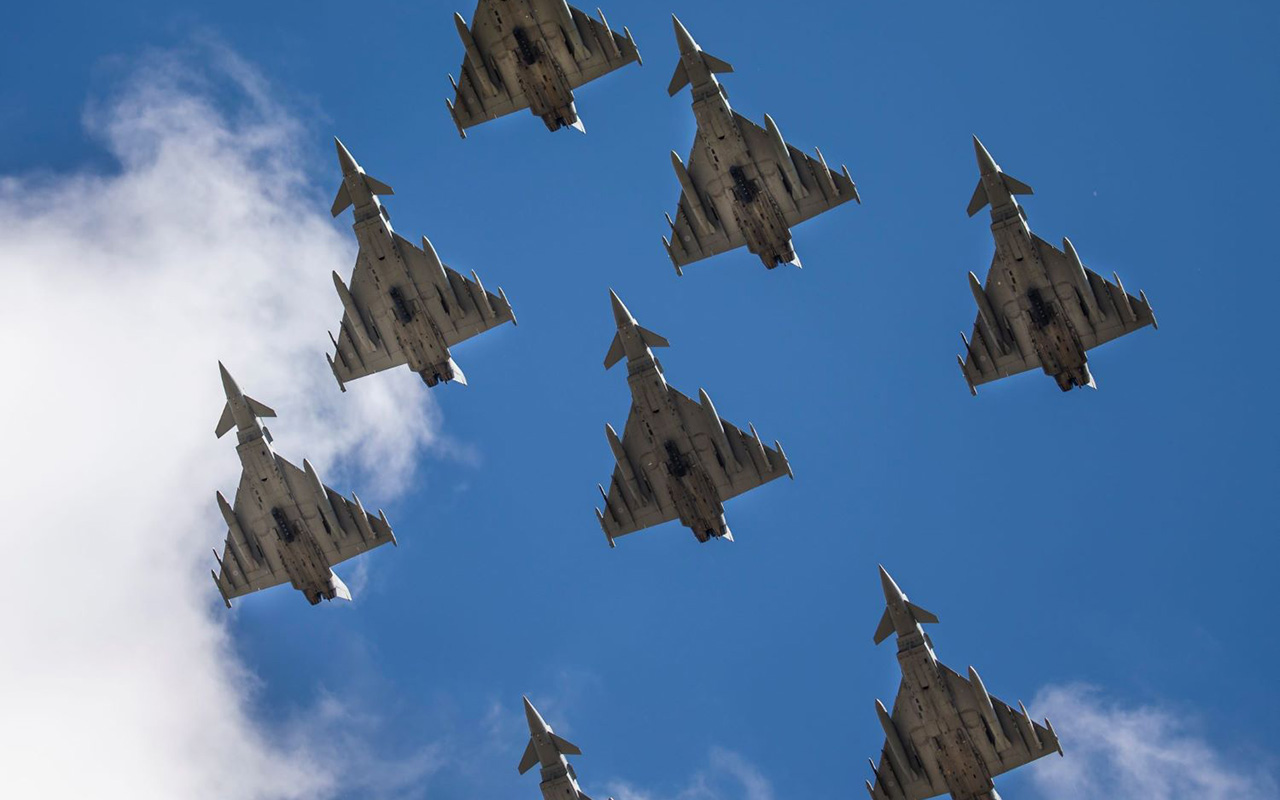
Britain’s defence industry is holding back investment, recruitment and planning decisions while it waits for the long-delayed Defence Investment Plan, senior figures from BAE Systems, Babcock, QinetiQ and Leonardo told the Scottish Affairs Committee on Wednesday, with all four companies describing a sector that knows money is coming but cannot act at full pace until it knows where that money will go.
Babcock’s John Howie described the current moment as one of three overlapping inflection points, the first being the changed geopolitical landscape, the second being the rapid emergence of low-cost autonomous technology from Ukraine that was forcing the industry to ask fundamental questions about what product development should look like, and the third being the financial consequence of both, saying the UK was waiting “with bated breath” for the Defence Investment Plan and that the large primes were already reorienting around AI, autonomy and uncrewed platforms but that this “will not gather full speed until we understand what the scale of the investment from Government will be and where their buying patterns will shift.”
Leonardo’s Mark Stead was equally direct, saying that most significant defence industry sites in the UK “are, or should be, becoming building sites in order to grow more capability” but that to do so they needed “clearer commitments through the defence investment plan, which will give us guidance, directional planning assumptions, access to investment, and those major programmes of record that feed us and our supply chain.”
He said Leonardo’s Edinburgh business benefited from existing programmes of record including the ECRS Mk2 radar for Typhoon and the Global Combat Air Programme which had maintained funding through the DIP hiatus, but said the plan “cannot come soon enough” so the company could plan, co-invest and build the skills and capacity needed for national resilience.
QinetiQ’s Cathy Kane confirmed that delays in domestic orders caused by the Strategic Defence Review and Defence Industrial Strategy had already slowed the company’s growth in the first half of 2025, declining to provide specific figures when asked by the committee but saying that “the opportunity to have a long-term strategic vision so that we can adapt our business to ensure that we are delivering what you need is most helpful to us.”
BAE’s Neil Holm said the company had invested over £300 million in the last two years and was looking forward to the Norway Type 26 deal sustaining Clyde shipbuilding well into the next decade, but that the alignment between industrial strategy and defence procurement was “deeply important” and that “a close link between the industrial strategy for the UK and defence procurement will give a huge benefit.”
Howie also highlighted a fundamental challenge posed by the convergence of geopolitical urgency and technological uncertainty, asking whether “a billion-dollar missile and a £200 drone carry the same effect” and suggesting the answer to that question was shaping how the whole industry was thinking about where to invest, with companies reluctant to commit fully until the government had clarified its own position on the future force mix through the Defence Investment Plan.
The committee heard that the DIP’s absence was having knock-on effects beyond investment decisions, directly constraining the number of apprentices companies felt able to take on, the pace at which they could grow their workforces, and their ability to give early career workers the long-term certainty needed to make defence an attractive career, with Howie saying the problem came down to “the need for long-term contracts” and that without them the industry could not responsibly take on workers it might not be able to keep.









Is DIP a synonym for Pink Flying Pig or Rocking Hose Poop or Hen’s Teeth? I only enquire for information….
The brutal truth, this Labour government can not face the huge cost of restoring the UK’s defences. The Tories made a pig’s ear of the future procurement costings, to such an extent that it may be impossible to resolve. To add salt to the wounds, the deterrent appears to be out of control and programmes such as Ajax is compounding the problems. Thankfully, Tempest is now becoming an international project and, as such, is less likely to be axed. Starmer has made the DPI a priority but the Treasury is holding back as outside factors are rapidly exercising the number crunchers to the point of despair. The mantra ‘Welfare Before War’ is not just privi to the UK as many European countries are scratching their heads too, as the Iranian situation grinds down global growth by the day. That said, a modified DPI is no doubt being prepared, placing only critical needs and basically striking a pen through the wont to buys. Recent initiatives between the MOD and Treasury to encourage industry to co-fund programmes is an indication just how bloody the situation is.
Sorry DIP.
I’m not sure if it’s just the labour government that doesn’t want to face up to the cost of rebuilding defence or the country at large.
Survey show that 70% of voters want to increase defence spending but only 30% want to see cuts elsewhere to pay for it.
That being said starmer is the PM and he should have the balls to put his foot down and raise taxes to cover an increase in defence. The country would understand and in the long term it might make his legacy.
This year the Bank of England are taking £70bm out of the economy in QT. That’s as much as the entirety of defence and defence-related spending, borrowed back from the markets to just write off. Last year it was £100bn. Where’s the money coming from for Defence, they ask. Well it doesn’t have to come from cuts anywhere, does it? Not as long as the Bank of England chooses to burn it for ideological reasons. How about actually spending some of that instead?
Off course you understand that money isn’t real right?
Jon,
Have always confidently predicted that all spending constraints on MoD will immediately disappear after the first salvos of CM and BM have landed upon Whitehall. May be a tad bit late by that point, but presumably better late than never. 🤔😉
Imagine the further delays if we get a new PM
Might be a positive! Imagine if the new PM actually actions the DIP! Could even have bi-tri-partisan support. Even if in part. If its a rolling 10 year plan why does it need to be 100% finished now? There should be some tolerances for changes? Stuff thats too hard at the moment park it in an appendix!
That’s the classic problem. Also ask those 30% if they are willing to personally pay more tax to pay for it and you will get a much lower number.
Unfortunately defence has to be paid over many years with decent planning to ensure things are replaced when needed and money isn’t thrown away. Instead we have had constant cuts in budget since the conservatives got in (still not back to the % of GDP we were under the last labour government) and almost zero long term planning instead putting things off and off so costs rise, combined with some terrible projects wasting billions like the fres project / warrior sustainment etc etc.
This can’t be fixed in a single government term in government, it will take decades. The hope is the ship is at least nudged in the right direction. Which is extremely hard in this era of cheap drones effectively nullifying most of the investments.
indeed, like cutting welfare, it OK as long as it doesn’t effect me
That’s the attitude of the British public with everything not just defence. They want it all, as long as they don’t have to pay for it, or accept some responsibility for it.
Yep, pretty much
What makes you think that’s unique to Britain?
I agree
No 1) Starmer is still the prime minister not reeves and he needs to grow a pair and get it done. Somebody needs to bite the bullet over Ajax and makes decision . From what I know ( very little) it needs to be scrapped and an off the shelf alternative found .
2) Reeves needs to be reminded that defence of the realm is government first priority and nothing else matters unless we can.
3) a strong defence is a lot cheaper than a war.
4) the DIP is the latest in a long line of shields for the government to hide can kicking.
@ Michael Hannah: the only issue Starmer ever grew a pair over was prosecuting social media users for offensive posts.
The American notion of saying what you like with consequences or out right lying, can be claimed as free speech, unless you are critising the thin skinned Trump is in my opinion not free speech. Inciting people to violence is not free speech. And the individuals responsible should be prosecuted.
Jim & MH, it’s a thorny issue alright; however, Mandelson occupies parliament at the moment, and vital hours have been lost on this issue where defence matters could have been addressed. As an aside, have you noticed how sparsely attended defence business issues are in the Commons? It highlights my belief that defence is the elephant in the room 90% of the time in Westminster. However, back to the issue of DIP and how it is strangling growth in the defence industry and, as you say, the defence of the realm appears to be sidelined by Starmer trying to stay in post and drawing all the air out of the room for other business. I fear only significant events will alert the government to do something, and believe it or not, Ukraine and Iran are not deemed serious enough to change the compass of complacency. That said, the Falklands issue may just spark some urgency and thereby create the fulcrum by which the DIP gets accelerated?
From what I hear about AJAX …
Latest drop is sound.
Meaning?
Why don’t they just release their “late homework/late assignment” as it is so we know they’ve actually done something? DIP v1.0 unfinished. To be completed later.
The Times has published an article ( not read as it is behind a paywall) regarding the U.K. not paying for their part of Tempest development. I assume we are back to the treasury up to their tricks and Starmer not doing his job. I thought we were past this utter stupidity ??
Interesting article in today’s, 27th, FT about GCAP. Although it is optimistic in tone it is actually a thinly veiled threat to the government that if they don’t get off the pot with DIP and this programme in particular BAE will start to move people off it to other areas. The headline is “programme under threat” which rather sums it up. The worry is that when or if Starmer is made to fall on his sword we may get someone a lot worse.
Both possible candidates are a concern, as both will embrace ‘Welfare Before Warfare’. The fact that the US will most certainly threaten a drawdown of NATO commitment means the process will take considerably longer than the time Trump has left in power. So any arguments that Britain and European partners need to backfill will not hold much sway with the likely candidates. If Starmer can hold on beyond the May elections, he may be the best person to get defence sorted, as he definitely speaks the right words on the subject. However, no DIP before the end of May, I fear.
Interestingly, the article about the threat to GCAP is no longer on the FT website. There at 0900. Gone by 1400. I wonder why?
Of the current runners and rider I agree.
As much as I respect Raynor she is way to left wing and will prioritise welfare over defense. While I agree welfare is important it means nothing if we can defend the country.
Wes Streeting is a non entity, I really have no clue what he stands for, I don’t think he knows himself.
Milland, less said the better , if we had got his brother ( a far more capable politician) the country would be in a better place. However the unions preferred Ed over David because they could control him. However right they were.
My hope and prayer is that the centre and right of the party back Al Cairns .
However if it goes to an election by the Labour Party members , all hope is lost. They kept on voting for Corbyn everytime the parliamentary party tried to ditch him .
This is going to trigger some people because it’s really weird and involves AI, I asked Copilot AI and unusual question:
“Transpose the UK defence situation to a Gran Turismo 7 player entering an online, worldwide, Japanese GT500 tournament, where ANY car is allowed to enter. What car would the UK-proxy use and what would it do?”
Copilot’s answer, paraphrased: “Enter a road-spec, mildly-tuned Supra. Not remotely competitive with the competition, but still physically capable of racing, blocking other drivers, improving lap times. Argue with the pit crew over who’s paying for the tyres. Manage problems while declining to meaningfully upgrade the car, saying the upgrades are under review and the car will become competitive in a few months; point out improving lap times as evidence the situation is getting better.”
Are you 9 ?
(It’s OK, you still don’t have to reply If It upsets you).
I feel sorry for AI having to answer questions like that
😀
Does make you wonder just what mental age this person has.
Fancy a game of Space Invaders ?
The things you see on here, seriously !!!! 🤦♂️
Here we go, the usual moaning minnies including Halfwit, who is like that weird ex who won’t leave you alone.
Haha.
You reap what you sow my little obnoxious friend.
😂😂😂😂
You constantly spam my posts, you post rubbish in response to others, and I’m the obnoxious one. Can you please find someone else to stalk as your horrible attitude and half-baked attempts at humour are, frankly, creepy.
Hmmm.
How utterly childlike.
I think maybe you should get over yourself a bit, chill out, take up knitting. Social media sites don’t seem to suit you.
Have you considered Poetry ? 🤔😂🤦♂️
Social media site XD XD XD
Well, you do you I guess
Yup, there are people like you on all these places, no humour, like to have a go, hurl the childish Insults and then go crying off In a huff when someone responds.
Oh dear, never mind.
You really have no concept of irony, do you? I don’t come here for a chortle, it’s a defence website, it’s not some kiddies playground and I’m not 12. You appear to constantly be the one starting shit with me for some reason and don’t like it if I bruise your fragile ego when I tell you YOU’RE NOT FUNNY AND I DON’T CARE.
It’s fine if you don’t like me or agree with me, who actually even cares, but I’ve been through a rather unpleasant phase of being hassled by an ex and don’t need another little follower.
Well,
You started it 😂😂😂😂🤦♂️
Only a fool picks on a halfwit 😎😎😎
I quite like that, it’s different.
“Not remotely competitive with the competition”
Oh dear.
I took that to mean things like “we’re shadowing Russian warships with auxiliary tankers”, unless you’re prepared to say our tankers are competitive against warships? Or do you mean that qualitatively, our stuff is better than Russia’s? That’s clearly true but for every one aircraft or ship we can send out, they have many, so that is not a plus for us.
Or perhaps you’re referring to something I’m not aware of? If so then please tell me, as I need a bit of cheering up on this subject.
I won’t be able to help cheer you up I’m afraid, I’ve been in the depths about UK defence for years.
I’m sorry to hear that, but understand entirely. There are too many people offering toxic (or just plain delusional) positivity on the subject of UK defence, and they’re too ready to jump on anyone with a more realistic view.
Still, we have to take comfort that what we do have in terms of hardware and personnel are generally excellent, and at some point it will get better. It has to.
I quite agree.
We have well trained people, and I still think we are considered a reference military in many areas.
Much of our kit is top end as well, I’ve often listed it here for the detractors. We have top notch intell and certain c3 infrastructure as well.
Our issue, as always, is sheer lack of numbers, which is slowly breaking the military as HMG still grandstand on the world stage and get involved left, right and centre, a byproduct of our major power P5 status.
That should be backed up by the assets to match, but the reality doesn’t match the rhetoric.
This is where I’m depthed, our sheer lack of depth and literally endless defence cuts from 1995 onwards, it’s gone beyond ridiculous years ago, and I agree with the cynicism you referenced, I have it too.
I don’t want to, but HMG always manage to disappoint.
I was preparing to be very snarky about this question but that answer is rather disarmingly convincing. Disarmingly probably being the operative word here. If nothing else Copilot is picking up on the cynical attitude of web commentators of whatever technological and political knowledge.
I think snarkiness is unfortunately endemic in the UKDJ comments. And while I suspect you’re right about it picking up on cynicism, the reality is there is a lot to be cynical about, and the “shoots of recovery” seem largely to be theoretical, eg “The UK plans to do x and y”.
However a few people stray into toxic positivity. It’s not too common in matters of British defence these days but it can be glimpsed sometimes.
If Carns had integrity he’d resign over the shambles of a govt in building up our armed forces. Each of the services have never been weaker.
There is only one reason for the delay in publishing the D.I.P. Fear of losing even more votes on 7th May.
Sure theres truth in that and in traditional British fashion lets save money now and make it all progressively more expensive a problem we leave to the next poor so an sos to sort out. Sad to say a one party system starts to look more efficient in these short sighted circumstances and worrying what stuff does finally get the go ahead is often not fit for the World we are then entering, which didnt traditionally worry politicians when we luved in peace because effectiveness is little tested in conflicts. Always playing catch up.
Realistically, this is the plan. Or we have a government who can not be honest with the electorate.
We are inevitably becoming a third rate player.
… and their only interest is decieving us from recogniding that truth. Seems to be a miny me version of Trump boasting about the US having the best of everything when much is actually not but at least they have plenty that actually is.
My reading. We are watching a poker game. Reeves originally proposed cutting benefits but was defied by the labour left. Now the pressure is increasingly on the far left. A majority of the electorate would be happy to see the benefits bill cut to fund an increase in defence spending. Starmer is caught in the middle between Reeves and the left, like the rabbit in the headlights. Reeves is not bluffing. She will not budge; she has already forced the MOD into current year cuts. We are in election purdah so the DIP is held, which creates time and opportunity for the parties to clarify their stance on defence vs benefits. The biggest threat to labour is the Greens, who believe in ‘security through sustainability’ rather than defence ( you work it out). I see all the other parties moving more or less in favour of benefits cuts to fund defence – constituency jobs – while Reeves is making noises about a European Defence Bank, which I think is just a distraction. She is just waiting for the election results to force the labour left into doing what she wanted to do all along.
The majority of the public is in favour of cutting the welfare bill as long as the welfare payments are not
The basic state pension
The NHS
Winter fuel payments
Child benefit
Tax credits
Housing benefits
Personal Independence payments
Universal credit for genuinely disabled people
Universal credit for genuinely unemployed people looking for work.
Etc etc
Indeed, it is politically very challenging, but that’s what the govt is paid to do. Send your ideas on a post card ( or a brown envelope?). Wild suggestions…
-Replace the triple lock with a ‘pensioner rpi basket’.
-Levy NI on occupational pensions
-Means test the winter fuel allowance
-Apply an insurance policy ‘excess’ of £1000 on elective surgery procedures
-free bus passes at 67 not 60
– £50 to see a GP if you are not on benefits
I think I read that Rachel Reeves spent her youth helping her grand parents at a Salvation Arny soup kitchen. I believe she genuinely cares for those who are in difficulty; but I also suspect she has thought things through and has a good idea how it might be possible to achieve better outcomes for less money.
Is the PM in charge of the Labour party?
He is the good shepherd….the leader of his flock 🙂
If he goes who are the alternatives to replace him – Streeting, Rayner, Farage, Badenoch, Polanski, Davies. Are any of these officer material?
PP,
Excellent presentation of a possible political strategy, w/ a soupcon of Machievellian intent. Thanks from across the Pond.
The established parties have made a mess of defence.
So argue amongst yourselves all you like, I’m not voting for any of them again until defence is treated properly.
Simple.
Don’t join the Greens Daniele 😂
No, he’s going to move to Wales and vote for Plaid Cymru
The DIP can not and will not fix the mess, it simply can not be big enough to repaire 20 or 30 years of cost cutting and bluffing defence budgets to fool NATO, would take 5 or 10 years to right the car crash that is defence. I do not think any government can fix it and as Donald has buggered things up with his Iran war there will be less money about. So the sarga rolls on in the long grass for another parliment to look at and do not alot about.
We as a nation simply can not afford all we should have in defence and the cost the Nuclear subs etc is draining so much away year after year. Defence will get better but never be fixed its not possible with the money the nation has.
“British” culture don’t want to pay for defence, it prefers to pay for other things.
From Google AI
Key Sectors: Social protection remains the highest expense at over £400bn, followed by £294bn for health and £145bn for education.
Defence is £90bn.
And there you go, that is why as a nation we can not have it all, every one knows Welfare needs to be cut but no one will do it, until then defence will just fester as it is with warm words and empty statements and if or may be.
With 20 million immigrants, social spending has skyrocketed, but that’s what the British and their politicians wanted. Enjoy it. There’s no going back now.
No it’s what was pushed on us by leftie lovies and the diverse obsessed. We never had a say in it, no matter who we voted for. So let’s not blame the British people we were never asked.
Western countries always put welfare first they have no choice no party will undo that it’s political suicide. Victims of our own want more society’s.
I find it very strange that you are supposedly based in Portugal and know so much about “British ” culture
MOD is addicted to champagne on a beer money budget.
Nothing OTS is never good enough – ‘unique operational requirements’ are like a sacred cult.
It’s easy to buy stuff without runaway cost inflation.
What do you what?
A tank.
OK, which are the three most popular current production tanks with NATO Allie’s
M1, Leo 2, LeClerc
Choose one.
But no, we let General FarquarFarquarFarquarson hits the UOR button and away we go with 3x, 4x, 5x the cost and a decades delay
That would negate the primary reason for the MoD budget, feeding the UK MIC.
Very true.
My then 2* vetoed a US direct FMS rapid sale of 60 UK-60’s to the UK during the Afghan war.
No, buying Wildcat was so much betterer that’s the 30 Wildcats still over a decade on armed with just a door mounted GPMG and no plans to get anything more violent aboard.
Anyone seem UH-60 with Fulcrum Claw?!?! Bleeding edge battlefield air support.
Unsurprisingly, a year later he was appointed a non executive Director for the clown show building Wildcat
This government simply doesn’t want to spend anything on defense. There’s no need to overthink it.
I’ve just realised what DIP stands for
Defence
Industrial
Paralysis
The last word can’t plausibly be plan as STARMITE hasn’t got any plans for anything?
I’ve got one too. Don’t Inform People.
The present liblabconsnlaidgreen party is not good for Britain! Just stop speaking about New ships etc. Get the rid of this muck! The British are being fucked over!
It is obvious that his government doesn’t know what to do, about anything. But realistically,what difference does DIP make?
The last 10 year plan in late 2023 showed a manageable shortfall that had arisen largely because the RN had included costs for programmes not even at final design stage- MRSS, T83/FADS, T32 etc.
The number of committed and funded programmes is substantial
Dreadnought
AUKUS
GCAP
T26
T31
FSS
Challenger 3
Boxer
Ajax
Medium lift helicopter…
These will account for almost all of the equipment budget beyond 2030.
What urgently needs to be added to the list?
Completing the transition from manned to unmanned mine warfare
Enhancing GBAD
Uparming our surface warships.)
Integrating Meteor and Spear 3 on F35
RCH SPG in sensible numbers
What cannot be done is increase force size to any significant extent. Even without financial constraints, recruiting and retaining enough personnel to man existing and contracted platforms will be difficult.
It is quite astonishing that with so much already in hand, this government cannot publish its promised DIP.
IN 12 months time there will be a revised new plan anyway.
The NAO would sign off on the last ten yer equipment plan because of the massive financial hole in it.
Jim don’t. you mean that the NAO would NOT sign off the last ten yeat plan…??
I think Maurice10 puts his finger on the root of the problem..
‘The brutal truth is that the government.cannot face the huge cost of restoring the UK’s defences. The Tories made such a pig’s ear of future procurement.to such an extent that it may be impossible to resolve.’
(I would add that Labour 1997-2010 also reduced equipment numbers considerably).
Problem is that we have a mass of ageing, elderly and downright ancient equipment due for replacement that we would need to more than double the budget just to cover.replacement, the raft of new unmanned equipments envisaged, the absence of GBAD and the out-of-control costs of the Nuclear Enterprise, which is again requiring several billion.pounds more.
I was optimistic that HMG’s plan to bump-up the defence budget by £14 bn, a 22% increase, would over the next ten years, start to remedy some of the worst gaps and maybe allow some increase in personnel numbers. But I now doubt that HMG will be able.to fund that increase. It depended in part on reducing welfare costs, but Labour backbenchers did not support that. Now HMG also has to fund the generous pay rises for the doctors, the increase in child benefit to three-children families and the incoming costs of the Isaeli/US upheaval to global prices from the Iran attack. The Chancellor won’t compromise her spending limits by borrowing for defence via defence bonds and nor will HMG put a penny in the pound on tax as a hypothecated defence contribution. With a stagnant economy, I can’t see where the extra money needed can come from.
We will be hard-pressed just to fund the new equipment that has already been announced. For the RN, that means the 4 Dreadnoughts, last two Astutes, the 13 frigates, 2 or 3 Castle MCMVs, the 3 FSSS and the second Proteus. Even then, I doubt we will have more than two of the Dreadnoughts.and six of the T26s in the fleet by 2035.
The new unmanned/optionally-manned.equipments will come at the price of the minor warships, not replacing the 3 River 1s, decommissioning the 7 Hunts and Sandown MCMVs and not replacing HMS Scott in the deep sea survey role. (Latter will apparently be taken on by one of the two Proteus MROS).
So the fleet will reduce from 63 ships and boats in 2024 to 51 or 52 by 2035. But there will be lots of unmanned equipments to supposedly fill the void.
All the other.new acquisitions talked about will have to be pushed to the right. No doubt with lots of planning meetings, press releases and snail-pace progress to anything tangible. The projects that will need to be pushed back to post-2035 will very probably include the MRSS 2 – the big replacement for the Albions and Argus, the T83 DD and the MRSS 1, the Bay replacement. We obviously need to get on with the SSN-A and no doubt money will be found somewhere, at the expense of other vital equipment. and staff recruited at Barrow.
The RAF is worse off, due to the financial demands of GCAP funding. The Army, yet again, is likely to be at the cow’s tail for funding and the next Government will start to get a political and public backlash for it.
A team of Oxbridge fast streamers are probably still working on the best font for the cover and then they will move on to page 1. Worry thee not when Anglela or Ed or even Andy take over it will all get better. Better still Zack can take over and then there will be no armed forces anyhow so job done comrades. Face it we are led by drongos and we are doomed…..do you hear what I say…we’re doomed.