

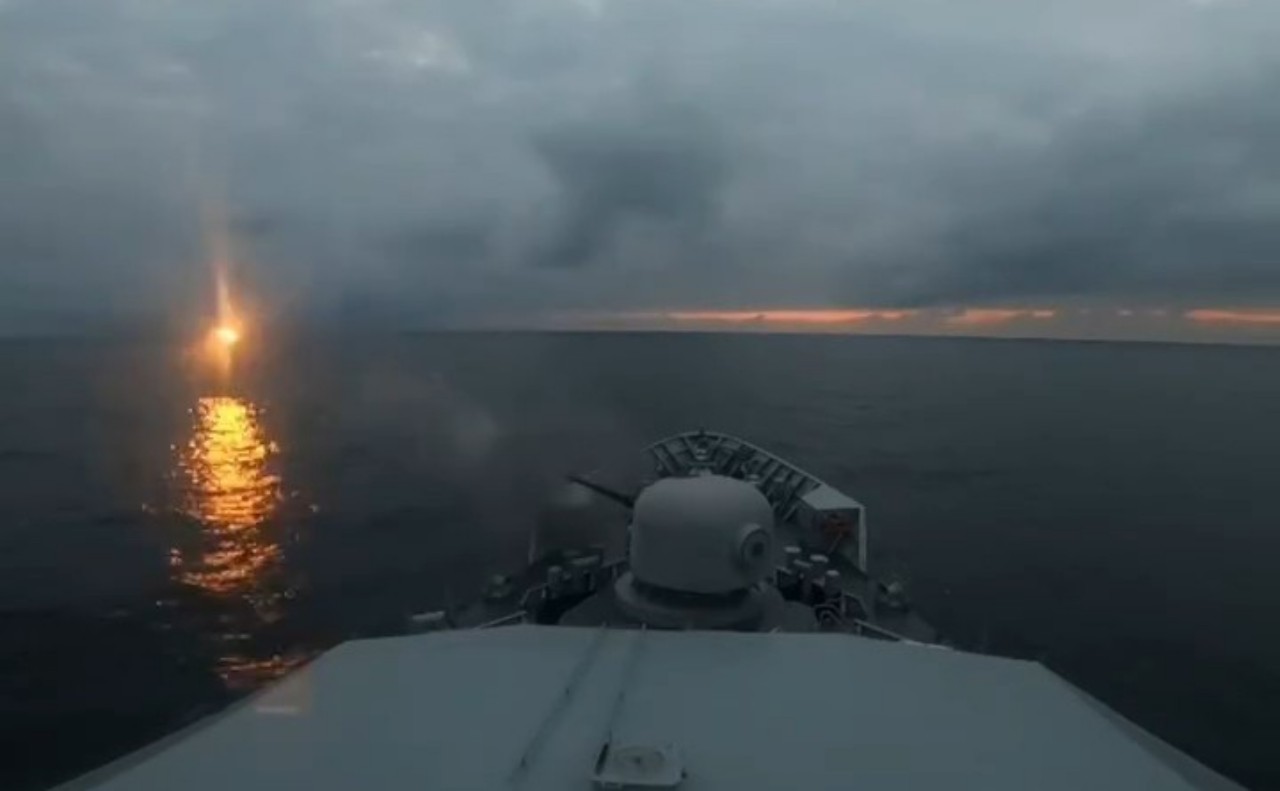
Irish Naval Service patrol ships LÉ Samuel Beckett and LÉ George Bernard Shaw have taken part in a Ship Training Period involving live-fire gunnery, manoeuvring, maritime interdiction and replenishment-at-sea training, according to the Irish Naval Service.
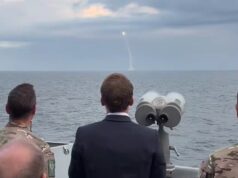
Footage released by the service shows one of the vessels conducting a gun exercise at sea, with its main naval gun firing during the training period. The Naval Service described the activity as a demanding package intended to exercise several of the core skills required during operations.
The training included Gun Exercises, known as GUNEX, alongside manoeuvring exercises, Maritime Interdiction Operations and Replenishment at Sea training. Together, those activities cover weapons employment, ship handling, interception procedures and the ability of vessels to operate in close coordination while underway.
The Naval Service said: “This week the Naval Service conducted a Ship Training Period (STP). This was a demanding period of training which involved Gun Exercises (GUNEX), Manoeuvring Exercises, Maritime Interdiction (MIO) and Replenishment at Sea training (RAS).”
LÉ Samuel Beckett and LÉ George Bernard Shaw are both Samuel Beckett-class offshore patrol vessels.
The class is fitted with a 76mm main gun mounted forward, providing a substantially heavier weapon than the smaller-calibre systems carried elsewhere on the ships. Gunnery training allows crews to practise the procedures surrounding weapon operation, fire control and safe engagement while maintaining proficiency with the ship’s principal armament. Maritime Interdiction Operations exercise a different part of a ship’s crew. Such training can involve identifying and approaching vessels of interest, establishing communications, controlling their movement and preparing boarding teams for inspection or enforcement activity.
For a navy whose routine work includes monitoring maritime activity across Ireland’s extensive area of responsibility, those procedures form part of the practical skills required for patrol and security operations. Replenishment at Sea training is intended to develop the close-quarters ship handling and coordination required when vessels transfer stores or other supplies while remaining underway. Even when no material is physically transferred, crews can practise the approach, station keeping, communications and safety procedures involved.
Manoeuvring exercises similarly allow bridge teams to work through coordinated changes of course, formation movements and close navigation with other vessels. Such activity is particularly important when several ships are operating together or when conducting interception and boarding tasks.
LÉ Samuel Beckett was the first ship of the class to enter Irish service, while LÉ George Bernard Shaw is the fourth and final vessel of the design. The ships were built as larger and more capable replacements for older Irish patrol vessels, with an emphasis on endurance and operations in the North Atlantic environment.



But did they practice AD?🤔
Proper OPVs
Did thry have to remove the spiders and cobwebs first???
Just a joke before anyone gets irrate
Ship is a tad optimistic a description for them.
Why, they are in the same tonnage bracket as the River class OPVs?
Our guns actually work? I say that as someone who lives in Ireland and read we don’t even have enough engineers to maintain the main guns.
That was a shortage in the Ordnance section, but yes they have dealt with it.
Shocker. We still haven’t done AD practice, and those main guns are meant for close-range. Not exactly ideal.
The 60 upgrades only start next year, until then they simply don’t have AD capability and won’t until refitted.
Perhaps they can protect the the EU conference instead of a billion pound air defence destroyer from the UK!
At least one of them will be there as well, probably is already but until they get their refits starting next year they are limited.
And given there’s a Merlin operating with the 139’s its likely Portland, not one of the 45’s.
They seem to be vessels that could be modestly upgraded with a more powerful 3d radar, optical fire directors and MSI type mounts for the 20mm ( not sure what they have at the moment) along with perhaps some sort of sonar for looking at cables ( and possible submersibles).
5? Vessels…a reasonable capability already fitted with a fairly powerful main gun, and if better radar was fitted a valuable upgrade to the currently poor radar coverage …as long a one of them is at sea.
Question. How powerful a sonar..or of what type..would be the minimum to identify illegal unmanned drone type activity, or provide at deterrence? Powerful trawler type fish finder…or a comercial side scan mapping setup??
AA
You mean the P60 refit that is planned to start next year?
The CAPTAS 1 systems are already being built by Thales, think the first one is meant to be delivered by end of year, Thales also has the Radar buy, but nothing has leaked about that yet. The Secondaries are currently 20mm, long planned to be replaced with RWS units, likely common to the Army’s new 30mm RWS. The 76mm is to be replaced with a newer variant, along with reports of soft kill CUAS capabilities and a new Ops room is to be added.
Wowser. I am behind the times. Cheers.AA
That’s the entire defence budget for 2026 spent!
Sarcasm aside, they can only spend what the public will pay in taxes.
The last time they faced a realistic threat was back in the 1920’s.
A whole century ago!
(To keep the British out)
No, the last time the state faced a threat was the Troubles, which was why the better part of 2% was spent on defence, the problem was the Irish economy was so small that still only got you a budget of hundreds of millions.
Not true. They were under Soviet threat until the end of Cold War. They just pretend(ed) they weren’t and let others make the moral, ethical and financial expenses of military for them.
Sounds encouraging knowing that the Irish Republic has been hiding behind the skirts of the UK for God-knows how long. Perhaps it’s time to splash some cash on your own defence, Paddies.
Rubbish. Ireland was never part of the Cold War theatricals caused by the inevitable fallout of the 3 main powers carving Europe up between themselves post WW2
There was also a potential threat from Germany in WW2 (Dublin was bombed) and The Irish government demanded weapons from the US but offered nothing in return; unsurprisingly they were turned down.
What? The only US sourced weapons were rifles bought and paid for with the same terms as any other nation, nothing was “demanded”, but the U-Irish relationship as bad throughout the war, in no small part due to FDR’s uncle in law. Throughout the war the main arms supplier was the UK from AAA batteries to fighters, to shore batteries and vehicles, course that was “as able”.
There were a number of meetings held to request heavier weapons, nothing came of them, as you say, the main supplier was the UK.
Toys for big boys you are all the same Meta fraud largest spendature in military and public taxes in history hitting trillions in euro dollars petrol. Sad and ridiculous all ye have to show are evil nazi murderous pscopath nurses too whatever makes you feel relevant you all need to go back to Antiquity If you all exploit and want war waiting for one politician to fix the infinity damage is just more frauds. TV shows of idiots like you never Roman’s for a unified legit army building bunkers for us to aair strike at us! How endearing how true you just psychologically abuse people even the blind with all your “camouflage” Now go free an Internet or something like your all paid to do
Putting a gun on a big boat does not a ‘warship’ make.
We have absolutely zero warships, tank, fighters, bombers etc. We are the poorest army on the entire planet.
If invaded by the Girl Guide troupe based in, say Cheltenham, we would last about 40 minutes before surrendering.
Our defence forces are an international joke, and deservedly so.
Absolutely a disgrace with all the refugees coming into our land taken over everything rapeing victims killing harmless ppl attack on the school how many attempts has there being already about all of this people that’s why Ireland is out shooting for training as they know war is gonna hit us very very soon the government of Ireland and everyone behind them wanna cop on bringing them into our country we wouldn’t be welcome over there stop these coming in before we head into war as its already to late and that’s why Ireland won’t say it cos 1 bomb and we’re gone simply as that Absolutely disgrace of a country we should be ashamed