

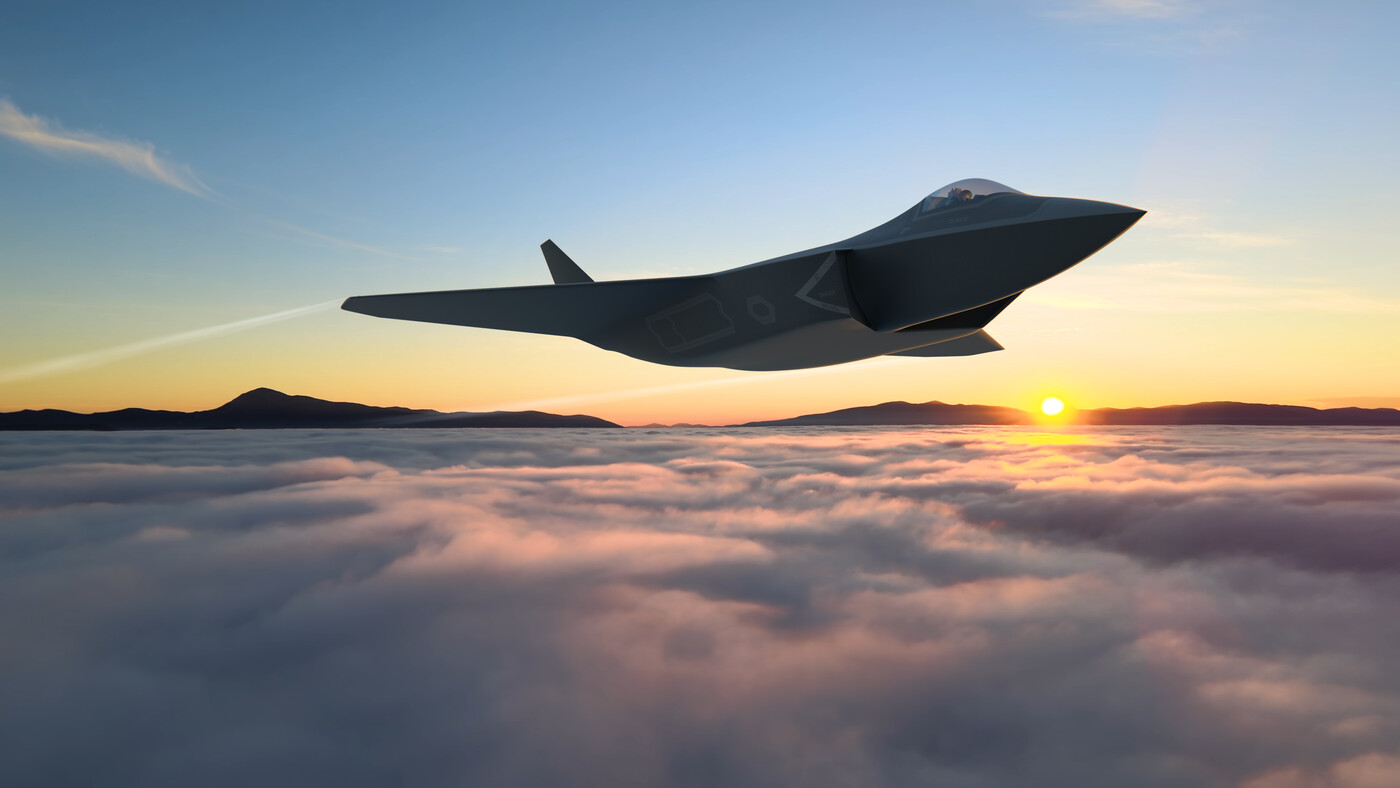
A crewed platform remains necessary for Britain’s sixth-generation combat air system, Luke Pollard has said, after the head of the RAF wrote that fighter jets won’t need pilots for much longer, according to an answer given in Parliament.
Conservative MP Ben Obese-Jecty cited the article by the Chief of the Air Staff entitled “RAF fighter jets won’t need pilots for much longer”, published on 21 November, and asked for what reasons the Global Combat Air Programme will be a manned aircraft and what assessment the department has made of the feasibility of making it unmanned.
Pollard, Minister for Defence Readiness and Industry, said: “Operational requirements indicate that a sixth-generation combat air system should combine crewed and uncrewed platforms, leveraging the strengths of both. While uncrewed capabilities will play a central role, a crewed platform remains necessary to deliver the full range of required operational effects. The platform is being designed with the flexibility to adapt rapidly to future technological developments and evolving threats.”
Air Chief Marshal Sir Harv Smyth has made the balance between crewed and uncrewed aircraft a theme of his time as Chief of the Air Staff. In his Trenchard lecture at RUSI in October, he told the audience: “For me, the question is not about either/or, it’s about the balance between the crewed and uncrewed,” Forces News reported. He argued that the old doctrine of “steel, not flesh” should give way to “autonomy, not flesh”. He expects human roles to shift towards supervising artificial intelligence.
GCAP is being developed by Britain, Italy and Japan, which merged their combat aircraft projects into a single programme. The government has confirmed funding for the new sixth-generation fighter, and a major development contract has been placed for the aircraft.
The Defence Committee has warned that the programme carries real delivery risk. Its report on GCAP called the 2035 in-service target ambitious, urged transparency over the budget and multi-year funding, and said retaining the Typhoon workforce was critical as that production line shrinks. It also called for the aircraft to be flexible enough to support artificial intelligence and autonomous systems, and concluded: “GCAP will have to break the mould if it is to achieve its ambitious target date,” the committee said.
Ministers have repeatedly said there is no change to the jet’s in-service date, and work on a crewed demonstrator is well advanced, with half of the demonstrator assembled.
The government has also stressed the part artificial intelligence will play aboard the aircraft, setting out the role of AI in supporting the pilot and controlling uncrewed systems. In Italy, jets have already flown alongside drones in the K-SWARM live trial.


In ten years, the concept of dule controlled aircraft will be commonplace. I can see Tempest and F-35 operating on a 70% / 30% manned and unmanned basis.