

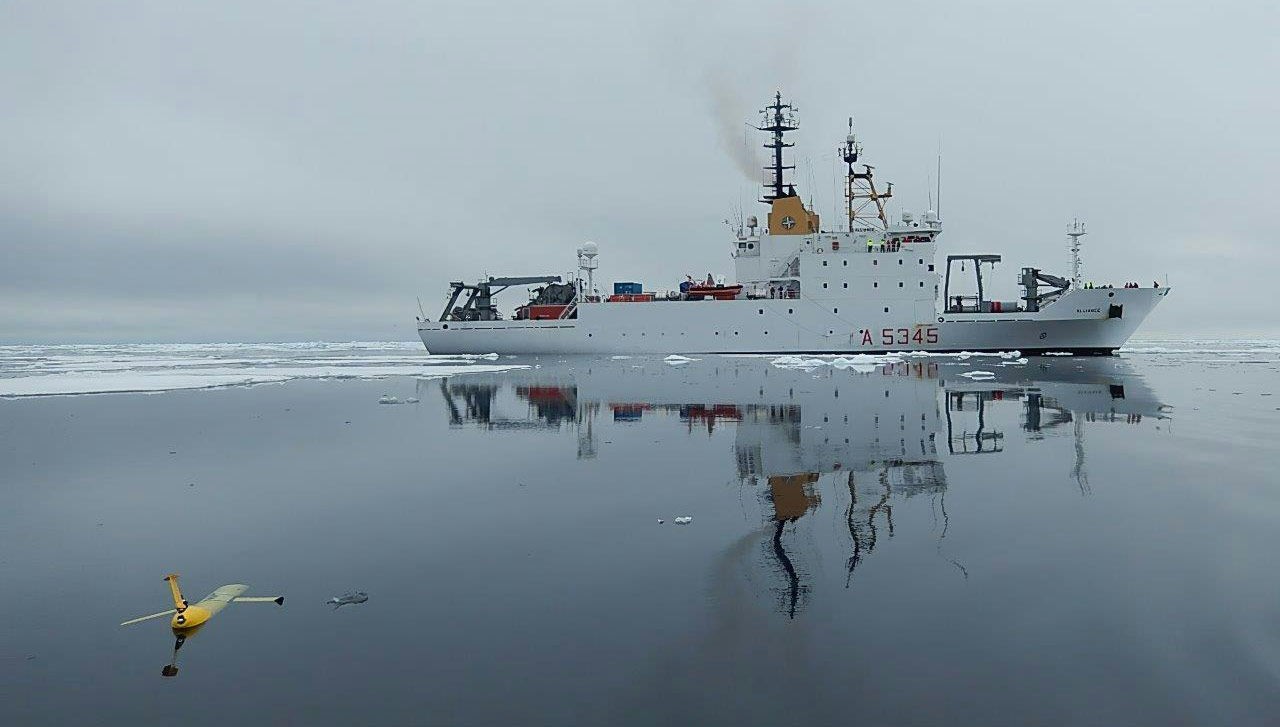
NATO has launched a new task force designed to test fleets of uncrewed and autonomous systems in the harshest stretches of the North Atlantic and the Arctic, with the alliance’s research vessel Alliance setting out from La Spezia in Italy bound for the waters off Iceland to kick off an eighteen-month run of experimentation, the alliance said in a release.
The new effort, called Task Force X-Arctic, is led by Allied Command Transformation in Norfolk, Virginia, and is the second iteration of the wider Task Force X concept, following a first edition focused on protecting critical undersea infrastructure in the Baltic Sea that NATO stood up in early 2025.
According to NATO, the Arctic version is intended to show how networked uncrewed systems, kept under ultimate human control, can stitch together a persistent picture across the maritime, surface and undersea domains in a part of the world that has become one of the alliance’s hardest operating environments and one of its most strategically contested.
The Supreme Allied Commander Transformation, Admiral Pierre Vandier, said the task force was about testing and integrating new technology in “one of the most demanding operational environments on the planet”, adding that the effort would help allies set the standards of future operations and keep the kind of fighting edge needed to work and prevail in the High North.
The Alliance, a research ship operated and crewed by the Italian Navy, is to spend an initial three weeks off the coast of Iceland as a floating test platform, putting through their paces technologies drawn from innovative companies selected under NATO’s Defence Innovation Accelerator for the North Atlantic, known as DIANA, the alliance’s flagship effort to pull in commercial defence start-ups and shorten the journey from prototype to fielded capability.
Technical delivery rests with the Centre for Maritime Research and Experimentation, the maritime arm of NATO’s Science and Technology Organisation based in La Spezia. Its director, Dr Eric Pouliquen, said his centre had long been at the forefront of developing autonomous systems for the most challenging maritime environments, and that Task Force X-Arctic would put that experience to work for the alliance by “delivering real capability in real Arctic conditions”.
Trials and the work of integrating the various systems and their data-sharing arrangements are due to continue through the remainder of this year and into the next, building towards a full-scale demonstration planned for the summer of 2027, with Allied Maritime Command overseeing how the kit is folded into routine maritime operations. The task force will sit alongside, and feed into, Arctic Sentry, the alliance’s recently launched vigilance activity in the Arctic and the High North run from Joint Force Command Norfolk in the United States, a sister command established specifically to focus on the North Atlantic and the approaches to the Arctic.
Task Force X falls under what NATO has dubbed its Rapid Adoption Action Plan, an initiative approved at last year’s summit in The Hague aimed at speeding up the alliance’s intake of new technology, and it slots into a wider rebalancing of allied attention towards a region where receding sea ice is steadily opening new shipping routes, where Russian submarine activity has been climbing for years and where China has been pushing its own scientific and commercial presence ever further north.






I’ve gained $17,240 only within four weeks by comfortably working part-time from home. Immediately when I had lost my last business, I was very troubled and thankfully I’ve located this project now in this way I’m in a position to receive thousand USD directly from home. Each individual certainly can do this easy work & make more greenbacks online by visiting
following website—.,.,.,.,.—>>> JobatHome1.Com
I’ve gained $17,240 only within four weeks by comfortably working part-time from home. Immediately when I had lost my last business, I was very troubled and thankfully I’ve located this project now in this way I’m in a position to receive thousand USD directly from home. Each individual certainly can do this easy work & make more greenbacks online by visiting
following website—.,.,.,.,.,.,.,.,.,—>>> PayAtHome1.Com