

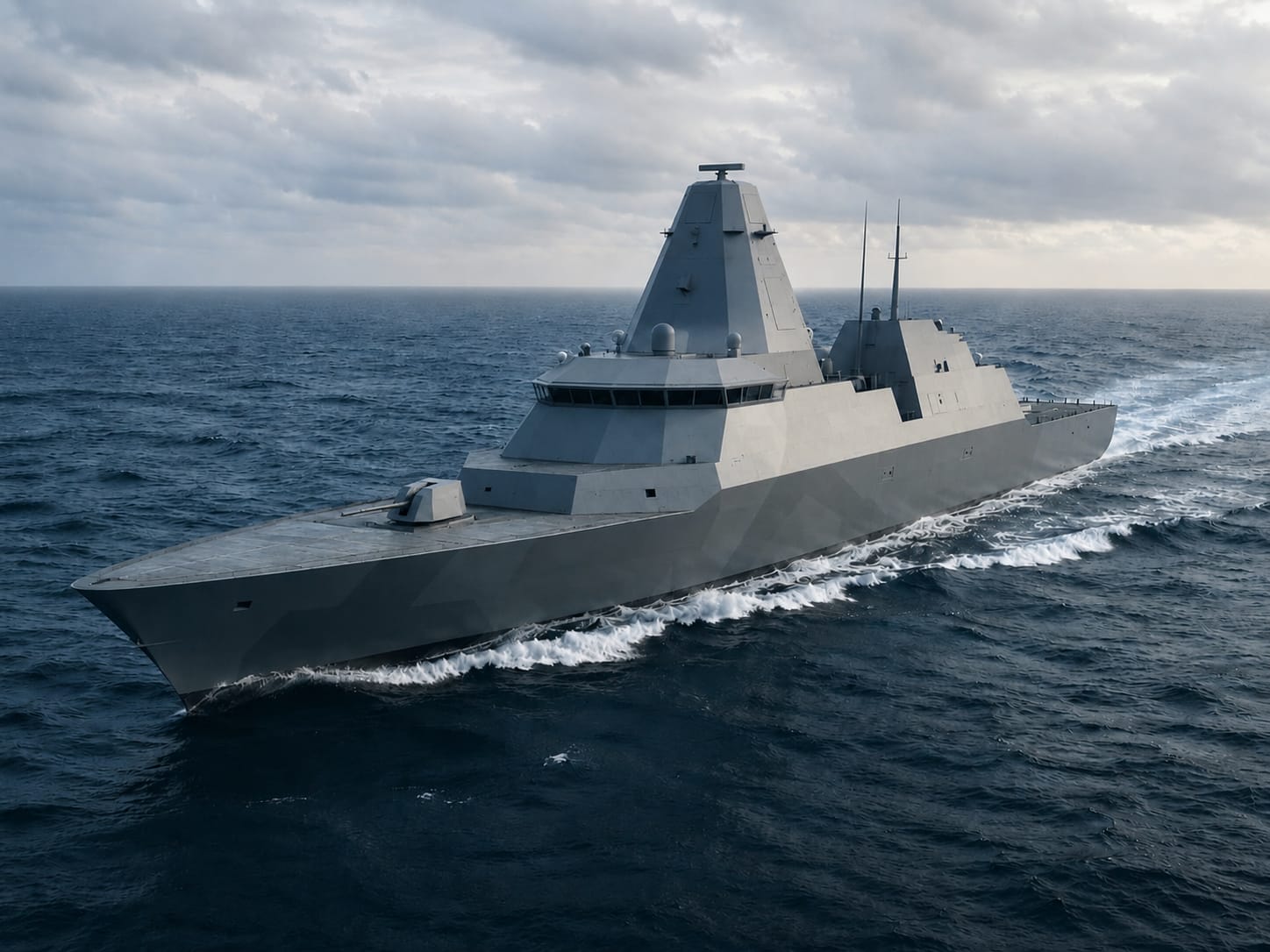
The Royal Navy’s planned Common Combat Vessel could be built in the same type of production facility as the Type 31 frigate, Minister for Defence Readiness and Industry Luke Pollard has told MPs, in the strongest hint yet about where the new hybrid warship might be constructed.
Giving evidence to a joint session of the Treasury and Defence Committees on 8 July, Pollard set out how the government has approached sequencing work across the shipbuilding sector after settling on what he called the steady drumbeat option.
“When we look at Type 31s, due to the faster rate of production of the 31 compared to a 26, we’re now looking at what follows on from that order, and although we’re not yet precisely in a position to determine the whole shape for the Common Combat Vessel, the Common Combat Vessel could broadly perhaps be in a similar type of production facility as the one we see with 31s,” the minister said, adding: “What we are keen to do is keep ship production in Rosyth and in the Clyde going.”
‘What follows on’ from the Type 31 order
The Type 31s are built by Babcock at Rosyth, and the structure of Pollard’s answer points the follow-on question squarely at the Fife yard, since the contrast given by his remarks at the session was his own: the Norwegian order means Clyde production on the Type 26 is now projected fifteen years ahead, while it is the faster-producing Type 31 line, on the other side of Scotland, for which the government is looking at what comes next, with the Common Combat Vessel raised in precisely that context.
Babcock has promoted concepts derived from its Arrowhead 140 design for future ‘command vesselx requirements, and the comments sharpen the written answer Pollard gave the same week, in which he said options for the vessel’s hull form are being explored. They bear directly on the industrial timing question, since the five-ship Type 31 order completes in the coming years and the yard’s follow-on steelwork demand depends heavily on Denmark’s pending frigate decision, a dependency the Scottish Labour MSP Paul Sweeney highlighted to the UK Defence Journal this week in warning that core surface shipbuilding sites need a sustained drumbeat to avoid a return to boom and bust.
The Defence Investment Plan commits to six Common Combat Vessels as the Royal Navy’s first hybrid warships, coordinating uncrewed systems in the air, on the surface and under water, with their arrival intended to align with the retirement of the Type 45 destroyers from the mid-2030s.
On the Clyde, Pollard said the Norwegian Type 26 export win means the government can now project shipbuilding on the class “for an extra fifteen years” and that, it’s safe to say, sharpens the Rosyth reading, because with the Clyde’s production line secured into the 2040s by the frigates being built for the Royal Navy and Norway, the minister’s stated aim of keeping both yards going leaves the Common Combat Vessel as the programme most naturally positioned to sustain Rosyth once the faster Type 31 line completes.
The continuation of the Fleet Solid Support ships for the Royal Fleet Auxiliary and the agreement with the Netherlands on new Amphibious Transport Ships, which he described as “effectively an export campaign win” since the UK will build them for the Dutch as well, will sustain other yards, and further work could spread wider still, with the minister saying the government “will continue to support shipbuilding in a number of other yards as well, and, to a certain extent I can’t say which yards yet because that hasn’t been procured, but that could be across a number of our new shipbuilding projects, that could be block builds.”
Do note though readers that no procurement decision on the Common Combat Vessel has been announced, and the minister’s evidence stopped short of committing the ship to any yard, with the same session also hearing that certain vessel classes in the plan will be bought jointly with Norway under the offset arrangements attached to the Type 26 export deal.




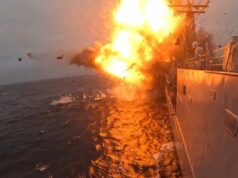




The Common Combat Vessels will be called the Fantasy Class
HMS Fantasy
HMS Wishful Thinking
HMS Impossible Dream
HMS Pipe Dream
Four ? …… now that Is Wishful Thinking !
What follows on from the Order?? another bloody one. Hybrids by 2030? The navy will still be waiting for Glasgow and venturer
I heard Nigel wants to call then the Crypto class
HMS BitCoin
HMS Ether
HMS Lite
HMS Solana
Each will come with £5 million sponsorship
HMS Doge
HMS Dodgy more like.
I like HMS Sleaze. Gets to the point I think of a Reform Govt.
Right Labour and Conservatives have never been involved in such things…
Oh loosen up there ship matey.
Tell you what how about HMS Labour & Tories are Sleazebags too, does that ease your sensibilities. Doesn’t really slip off the tongue mind.🤪
I certainly don’t rember any one in labour getting a £5 million bung from a guy in Thailand. Even Mandelson could not dream of numbers like that 😀
Ah the Labour bootlicker seems to have forgotten the “Cash for Honours” scandal that the party was plagued with back in the 2000s, where the Labour party received millions in secret donations from wealthy individuals who would then be up for peerages later on.
But of course, only Reform can do wrong in your warped reality. Besides the fact that leaders like Farage receive gifts all the time e.g. Starmer receiving hundreds of thousands in cash and gifts from wealthy labour donors during the time he was leader.
Keep trying clown 😘
😆
All true.
But not THE AGENDA at the moment.
Operation take Reform and Farage down at all costs fully underway.
And I’m sure they’ll succeed as well.
So the uniparty can sleep soundly and nothing will change.
Even dear old Anne Widecombe who passed today had sonething to say about constantly rewarding failure with another 5 years.
That’ll get a few throthy replies I’m sure. I care not.
I’ll bite.
Is it not a little weird that whilst those on the political right will state that the uniparty is bent on removing Farage and supporting the far left, whilst those on the left will claim that the establishment does nothing but support Farage, and instead targets the far left (like the Greens)?
A few HM prisons will confirm that in the past and current…!
You’ll get rotten eggs in 650 Politicians and a few hundred Lords its Inevitable…! Chances of Ruling party Politicians being turned are obviously a little higher.. one very prominent Nationalist Politician lately…
Well Jim, let’s not forget the oldest student in town, the obnoxious, big mouth and green energy multi millionaire Dale Vince, who ‘donated’ 5 million to Labour and got 123 mlion in contracts from his mate, Ed Milliband…
Is that any different ??
Mate. That is not THE AGENDA on here.
There are rules, then there are rules.
How many ministers have resigned since 2020?
true….
Still being a twat.
I have heard the Trump class are so big because they will be 80% Casino… though makes sense as it will be as big a failure as the originals.
What follows on from the Order?? another bloody one. Hybrids by 2030? The navy will still be waiting for Glasgow and venturer
The Sponsor class
HMS Aldi
HMS Babcock
HMS B&Q
HMS UKDefensejournal
This is all making BoatyMcBoatface look rather bland 🤡
The Spotify class sponsored by coca cola 2030? My arse we’ll still be waiting for Glasgow. FFS.
HMS Trump? maybe you can get an 1% GDP discount for defence,,,
I am go hiding in Stonehenge and ask for a druid potion…
Good, they need the work. AH140 is suitable to carry anything at least up to the size of APAR, but you’ll struggle to add a massive radar system.
How easy would it be to scale up Arrowhead 140 to something like the T45 hull. And if you did, could you still build it at Rosyth?
I’m not sure. You could definitely do it though.
This looks like the T32 has been replaced with a drone command ship and the T83 dropped, given that the new command ship will likely be based on the AH140 if Babcock do build it.
In other words it hasn’t taken long for the ‘hidden’ cuts to the RN escort fleet to show themselves a dedicated AAW ship will no longer exist in the RN.
The dash to drones had better work or we are going to be in a lot of trouble come the next war.
CR
Just watched an Aviation Week video, they were far from convinced about the concept simply on the basis that virtually none of it is clearly defined and is far from technically proven. As you say this had better work or the Govt of the time is going to look back on Ajax as the good old days.
Indeed.
My big concern with regards to maritime drones and AAW is that they appear to be depending on radar drones, a sort of modern day radar picket ship. The trouble is they seem tot think that increasing the radar horizon relative to the command ship or whatever High Value Asset (HVA) is being protected by pushing a radar picket up threat will make up for the loss of a big destroyer with a big radar mast.
Unfortunately, the radar horizon relative to the much small drone ship is going to be very short so if I was the attacking commander I would attack the picket with high speed low level drones and missiles, punch a hole in the radar coverage and go for the HVA before the gap in coverage can be closed.
Then there is the worry about heavy weather that SB walks about. The weather is only going to get more extreme with global warming and the fleet we are talking about could well serve into 2060’s and ’70’s… Big ships can cope with big seas better than smaller ones and an inverted picket ship ain’t going to cut really.
Cheers CR
Exactly the tactic the Japanese used when the USN deployed a ring of destroyers around the fleet as radar pickets to detect kamikaze raids early.
And the Japanese solution?
Target the pickets to punch a hole in the radar screen
And the American response?
Put a combat air patrol over the radar pickets to stop the Japanese taking them out and putting a hole in the radar screen
Which reduced the CAP over the fleet and let more Kamikazes reach the carriers.
Eventually, they put bigger Destroyers with formidable AA defences out on picket so they could defend themselves.
Hmm, ignore history at your peril…
The usual answer is that the pickets are far more effective and capable these days, conveniently forgetting that the threat has also moved on. Modern sea skimming systems can be small, stealthy, fast and fly very, very close to the surface.
The best persistent guard is a big ship with a big mast and powerful radar. Aerial drones will be even more vulnerable to the weather than surface drones.
Hopefully, things will improve.
To be fair there is a considerable amount of good news just at the moment, but the gaps continue develop and grow, and it will only take one of those gaps to be successfully exploited to give someone a really bad day at the office.
Cheers CR
These USV wunderwaffe will not have enough ‘hight of eye’ – radar horizon, to defeat fast moving anti ship missiles. The laws of physics are fixed and a small ship will will have a radar horizon measured in single digits.
T45 has such a tall mast to get out over the visual horizon to defeat M3 ASMs with detection to impact times measured in seconds
Agreed.
T46 might yet become a thing. I hope so for the RN’s sake.
Cheers CR
Exactly this they combined fads with t32 renamed it, added a t94 and dropped the t83. It will be a money pit and not workable to make the lusv system work. Fingers crossed 2yrs of studies on the t94 they will extend t45s, drop t94, ccv renamed back to t32 and then the RN pivots back to t83 or maybe a more direct t45 successor a t46. So we might end up with a bigger fleet especially when a new 1sl arrived and if we meet our nato funding commitment as they have all said they will….
I’ve had a T46 in my mind for awhile as well.
I am not entirely against a command ship of some sort, I think they will be needed if the drone concept is to work, but the command ship needs to carry a big radar mast and if it is based on the AH140 it won’t be big enough. There is a reason the USN likes have a T45 around, it has a very good radar on top of a pretty big radar mast.
I do think something like a carrier or large amphib could provide it’s own radar cover and if fitted with the ability to direct arsenal drones could do a pretty good job of defending itself. However, a ASW group based around a T26 for example, might find itself at a disadvantage in a high air threat environment if it relied on vessel of the size envisaged above. Given is looks as if we are not going to get any more T26, they are going to the High Value Assets and as such high up on the air attack list for any adversary. OK the T26 isn’t a sitting duck, but it isn’t unsinkable either, and given the drop in costs for suitable attack systems…
Cheers CR
T46….Nice thinking. Can we stretch Arrowhead 140?
My understanding is that Babcock consider the Arrowhead as a family as witnessed by the AH120 proposal for the Swedish frigate program so a reworked AH150, for example, should be possible. However, I would think it would be more a full evolution of the basic design rather than just a ‘stretched’ version, i.e. a proportional increase in beam and draft and new superstructure layout combine increased C2 demands and cargo handling for drones as well as the biggest radar mast they can fit.
I have also wondered about a multi hull design. The main constraint for mast height is beam while maintaining a length to beam ratio of about 7:1 for hull speed and range performance. A multi hull solves by having a very fine main hull and out riggers such as in the case of experimental Triton. However, they reportedly have quite nasty motion in certain sea states but BMT came up with a Pentamaran hull form for autonomous vessels. I have read that it has much lower motion acceleration rates in trials, so could it be scaled up to produce say a vessel of 4,000tons with the stability potential of a much larger mono hull? In other words a small ship capable of carrying a blinking tall radar mast. It might not be able to carry dozens of missiles but the drones can provide the arsenal..! Politically it will align with current thinking as well.
Cheers CR
If it’s common then surely they should employ names like:
HMS Barbara Windsor.
HMS Danny/Dani Dyer
HMS Adele (a cert if Binface becomes PM)
HMS White Van Man
HMS Twiggy (one for the youngsters)
HMS bloody David Beckham (I fear this one might happen sadly)
HMS Joey Essex
HMS Vicky Pollard
HMS Frank/Noel/Liam Gallagher
Geez we could have a fleet of hundreds there’s so many choices, we could ‘drone’ on for hours.
HMS Kevin & Perry – perhaps showing my age
Damn knew I had missed a few obvious ones.
Iver Huitfeldt, from which T31 is derived, is an AAW platform using SM missiles . We have already committed to mk 41 launcher on T31, which MBDA confirm can be adapted to launch Aster.
So an Arrowhead based design looks feasible. If the T91/94 drone ships don’t work, we would still have 6 AAW ships with reliable propulsion systems.
Considering the limited availability of T45( Daring has not been operational for >8 years), this alone would be an improvement.
The radar aside, an AAW ship ought to have a deeper quiver than just 32 VLS cells. The Type 45 can carry 48 Asters and an additional 24 CAMMs once the upgrades are completed.
But, with 32 VLS cells, the options are limited.
The IH has separate ESSM launchers so there is quite a lot of space for more MK41 cells. Might have to loose one of the boat bays though.
Exactly my thoughts, it just needs a decent radar and it’s a decent AAW platform. The Bofors guns are also a big upgrade vs T45’s Phalanx for anti-drone (UAV & USV) both now very pertinent threats.
Pollard isn’t fooling anyone with this nonsense. These ships will be a Type 31 derivative built in Rosyth by Babcock’s.
Makes sense to focus Govan and Rosyth on destroyers, frigates, Patrol vessels and “drone ships” plus carrier work when needed. And to leave the bigger ships, stores/support, tankers, amphibs and the like to H&W/Navantia with the Baleana group (Cammel Laird etc) supporting.
Google says the Babcock build hall is 148m long, albeit they could leave the doors open.
There was a brief A160 proposal for FADS, but not much detail so potentially there is room for a large radar fit and all the Comms equipment that would be required.
Hinting they will get it doesn’t bode well for any tender process, they know to pitch it cheap enough to look a bargain Vs FADS , but pricey enough to make a hefty profit.
The reason I’m pretty frosty about this to be be honest is the fact 6 new 6000 ton + major surface combatants is a win whatever name you call them and in reality a T31 based common combat vessel that’s got an AWW focus is no a bad vessel… in reality look at france, at present has zero plans for a new AAW destroyer.. it’s building all purpose combatants.
The truth is there is zero reason why the T45s cannot be run well into the mid 40s if needed… so the RN has 20 years grace to get it right if needed. Infact I suspect the RN has simply decided to park the AAW destroyer conversion as nobody really knows which way it’s all heading.. so they can see how the dice tumble over the next decade ( threat wise, tec wise and geopolitics wise) . this DIP is essentially covering till 2035.. so in the early mid 2030s the RN will be looking at its recapitalisation programmes after 2035…. And from a surface vessel point of view it’s not going to have that many asks… and I bet they WILL have shown a need for a core of very high end AAW ships to at least protect the GBG and show a need for some of the T45s to stay on as a high end AAW capability ( running into the mid late 2040s) and ask number one will then end up being a very small class of very high end AAW cruiser size ships ( probably 2-3 to staple to the carrier battle group) for the mid to late 2040s to replace the final T45s as carrier group escorts…. Probably a BAE ship taking the production line after the T26 production finishes in about 2039/40.
So for me chill about the 45s they have the hull platting and keels to last into the mid 2045s without major work ( the thing that killed the T23s), they are all having a mid life power upgrade that’s not finishing till 2030 and a mid life systems and weapons upgrade that does not end till 2032.. so the whole we will be retiring these ships from 2035 onwards is more of an option if it’s proven we don’t want AAW destroyers anymore and not a had wall fact.
The Common combat vessels are great.. that’s six new major combatants being laid down from 2030.. win for the Team RN.. the type 9x have almost 1.5 billion of funding between now and 2030 so the UK is getting a good fleet of these..build ASAP its getting 3 new patrol and mine warfare motherships.. as well as more autonomous mine warfare vessels.. it’s getting 4 good amphibious warships ordered from 2030… it’s getting its new SSN laid down next year while they are still building the old SSN is massive and does give a clear signal that they actually want to try and get 12 if they can fit them between SSBN programmes.
The RN recapitalisation programme is in truth really big stuff for a nation of our size.. and I suspect the RN is going to try and sneak in a couple of focused large AAW vessels.. If the evidence over the next decade shows it’s required.. ( to be honest I have alway said they should build 6 average AAW vessels and a couple of really decent ones stapled to the carriers and I hope that’s what happens next decade).
Thing is, our government have no issue with capability gaps, no issue with binning youngish kit.
The list is a long one.
So saying relax, T45 will be around for ages doesn’t reassure, unfortunately, no matter how sensible it seems.
Ooh yes the politicians may fuck it… but there is plenty of opportunities to make the correct decisions…and that’s all that matters, until the opportunities are gone.
British Goverments in the last 125 yrs have found it difficult to have or Justify a large standing Military..!
Problem is in any future conflict we will Rely on a non- Existent Industrial base with little Skilled workforce to boot…And very little time…
Perhaps wishing the problem goes away is our main hope..!
I disagree because i think large rocket missile industry is “exploding” all over the world. Look at space industry where most space rockets are a potential ICBM, large numbers of engineers are going in the field right now. This knowledge will expand in every direction and every country.
An reusable adapted SpaceX rocket can just drop several hypersonic MIRVs and return to base to be reused again.
Current T45 do not cut it already. Note that today UK do not have antidote to several ballistics missiles of a country like Iran even on land.
Things will only get more complicated.
Yes at least the type 45 should be able to serve well into the 2040s gives time and wriggle room to see if the Highbrid navy works with the benefits of 6 additional large warships.
I think you are correct the navy will still want high end warships to defend the arrears at some point.
Carrier’s
I keep hearing people say drones and a Hybrid Navy are the future as if that somehow means we no longer need the Type 83 I completely disagree
I am all for drones and autonomous systems but they should add capability not replace it
The more I read about the Common Combat Vessel the more it sounds like the Type 32 by another name A flexible ship designed to operate drones and uncrewed systems which is exactly what many of us thought the Type 32 would become Somewhere along the way it now seems to be replacing the Type 83 instead That should worry everyone
This feels less like innovation and more like another Treasury driven cut dressed up with modern buzzwords
Before anyone says the Type 83 will just be a bigger and more expensive Type 45 that misses the point The threats have changed The next generation destroyer is expected to deal with ballistic missiles hypersonic weapons mass drone attacks and ever more capable anti ship missiles while acting as the shield for the whole fleet That is not simply a bigger Type 45 It is a different level of capability
History is full of people claiming the latest technology makes everything else obsolete It never works like that Good navies evolve They build on what they have They do not throw away the very ships that protect the fleet
Look at Ukraine Drones have changed warfare beyond doubt but they are also jammed hacked intercepted and destroyed every single day That is exactly why they should complement manned warships not replace them
Dr Alex Clarke has made this point time and time again Every major change in naval warfare has added another layer of capability not removed the foundations Battleships gave way to carriers Carriers still needed escorts Missiles did not remove destroyers Nuclear submarines did not replace surface fleets Everything works together
A real Hybrid Navy should mean expanding the fleet not replacing one part of it
Build six Type 83 destroyers to provide the shield for the fleet
Build six Common Combat Vessels to control drones extend our reach and add affordable mass
That gives the Royal Navy twelve modern frontline warships working together instead of expecting six ships to do everything on their own
In many ways twelve complementary ships are better value than six because each is designed for its own role while supporting the other The result is a more capable more resilient and more credible fleet
The Royal Navy has already paid the price of previous defence cuts We went from plans for more destroyers to just six Type 45s during an era of wider defence reductions We should not repeat the mistake by cutting capability again just as the threat is becoming more serious
Replacing six world class destroyers with drone command ships is not transformation It is a reduction in capability however anyone tries to spin it
Build the Common Combat Vessel because it has a valuable role
Build the Type 83 because the fleet will still need a shield
Build both and give the Royal Navy the balanced fleet it actually needs