

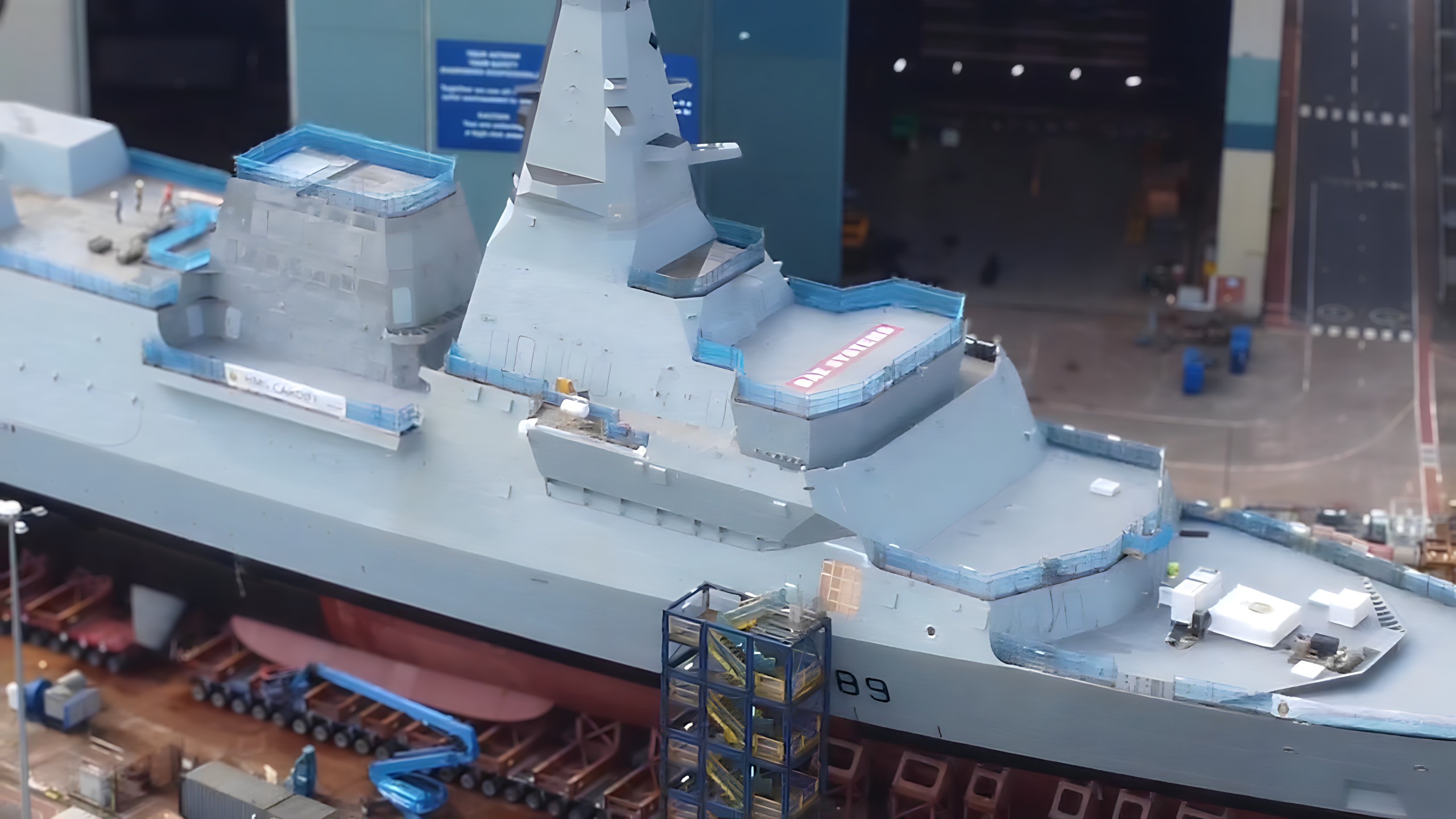
BAE Systems has reported a rise in sales, profit and orders for the first half of 2026 and upgraded its full-year guidance across all key financial measures, according to the company.
Sales rose 9% on a constant currency basis to £15,772 million, while underlying earnings before interest and tax were up 11% to £1,701 million, lifting the group’s return on sales to 10.8%. Underlying earnings per share increased 13% to 38.9p. The company recorded a free cash inflow of £1,791 million, which it attributed to a high level of customer advances, against an outflow of £368 million in the same period last year.
Order intake reached £16.4 billion, and BAE Systems closed the period with what it described as a record order backlog of £84.0 billion. The board declared an interim dividend of 15.0p, up 11%, to be paid on 2 December 2026.
Chief Executive Charles Woodburn said:
“Across the business, our outstanding teams have delivered another strong period of operational and financial performance, which gives us the confidence to upgrade our full year guidance.”
“Alongside our focus on meeting our customers’ needs today, we continue to invest in our business to accelerate innovation, drive efficiencies and boost capacity, so we can get mission-critical capabilities into the hands of those who need them, faster.”
“The global threat picture remains highly volatile and governments are responding with sustained increases in their defence budgets. The combination of our proven execution, diverse geographic footprint and continued investment in our technology and facilities, alongside our healthy order backlog and growing opportunities across our markets, positions us to keep delivering long-term growth.”
The company pointed to a series of contract wins in the period. These included a new £5.9 billion contract to progress the UK’s Dreadnought Class nuclear deterrent submarines, to be announced at Barrow-in-Furness, and a contract from the UK government to provide Turkey with training, support equipment and services for its 20 Typhoon aircraft ordered in October 2025, with first delivery scheduled for 2030.
In the combat air sector, BAE Systems unveiled Brontanax at the Farnborough International Airshow in July, which it says will be the UK’s first uncrewed autonomous Collaborative Combat Aircraft, designed and built at its Warton site to provide electronic warfare and precision strike capabilities. Edgewing, the Global Combat Air Programme joint venture, secured its first international contracts with a combined value in excess of £5 billion, enabling completion of the advanced concept and assessment phase.
The company also reported a successful APKWS precision weapon test firing from a Eurofighter Typhoon as a counter-drone solution, which it says was moved from testing to operational deployment in the Middle East in under two months in collaboration with the RAF.
In the United States, BAE Systems signed a seven-year framework agreement with the US Department of War to quadruple production of the infrared seeker for the THAAD interceptor missile. It secured an additional award for M109A7 Paladin Self-Propelled Howitzer sets valued at $535 million (£398 million), building on multi-year US Army contracts awarded in 2025. Its Bofors business in Sweden received a contract valued at over $200 million (£149 million) for ARCHER artillery systems and a $180 million (£134 million) contract for TRIDON Mk2 anti-aircraft and counter-UAS systems.
The company completed the Preliminary Design Review for the $1.2 billion (£0.9 billion) Epoch 2 missile warning and tracking satellite programme less than nine months from contract award, and supported the A$2.5 billion (£1.3 billion) export of Australia’s High Frequency Surveillance capability to establish an Arctic Over the Horizon Radar in Canada, which it says will be Australia’s largest ever defence export.
BAE Systems said it continued to invest in capacity, including a further $135 million (£100 million) for facility enhancements in Austin, Texas, and Hudson, New Hampshire, to boost precision-guided munitions production, a new facility in Utah supporting Intercontinental Ballistic Missile sustainment, and continued investment at its Hägglunds combat vehicle facility in Sweden. It also completed the acquisition of Swedish structures firm Aston Harald Mekaniska Verkstad AB and launched a technology incubator programme, Launchpad.
In the first six months of the year, the company returned £933 million to shareholders through dividends and its share buyback programme, a 10% increase on the £849 million returned in the first half of 2025.
For the full year, BAE Systems now expects sales to increase in the range of 8% to 10% and underlying earnings per share to increase in the range of 11% to 13%, both above previous guidance, with a free cash flow target of more than £2.0 billion.







BAE need to build a New larger building Hall at Barrow..
The building Cycle looks very iffy Already..
Doubtless the Excuses are already locked and ready by the Management.as to why targets have slipped..
I think Healey,Streeting and Burnham could be more Forceful…!
Lack of space. The ship yard is hemmed in by the surrounding town
There’s a lot of brownfield land in Cavendish Dock, just down from the Hall. Could easily build a hall twice the size with land leftover if redeveloped.
The Scottish Herald reports BAE ‘commissioning of Glasgow key systems’ in preparation for sea trials.
Sea trials for HMS Glasgow are currently estimated to take place in December this year.