

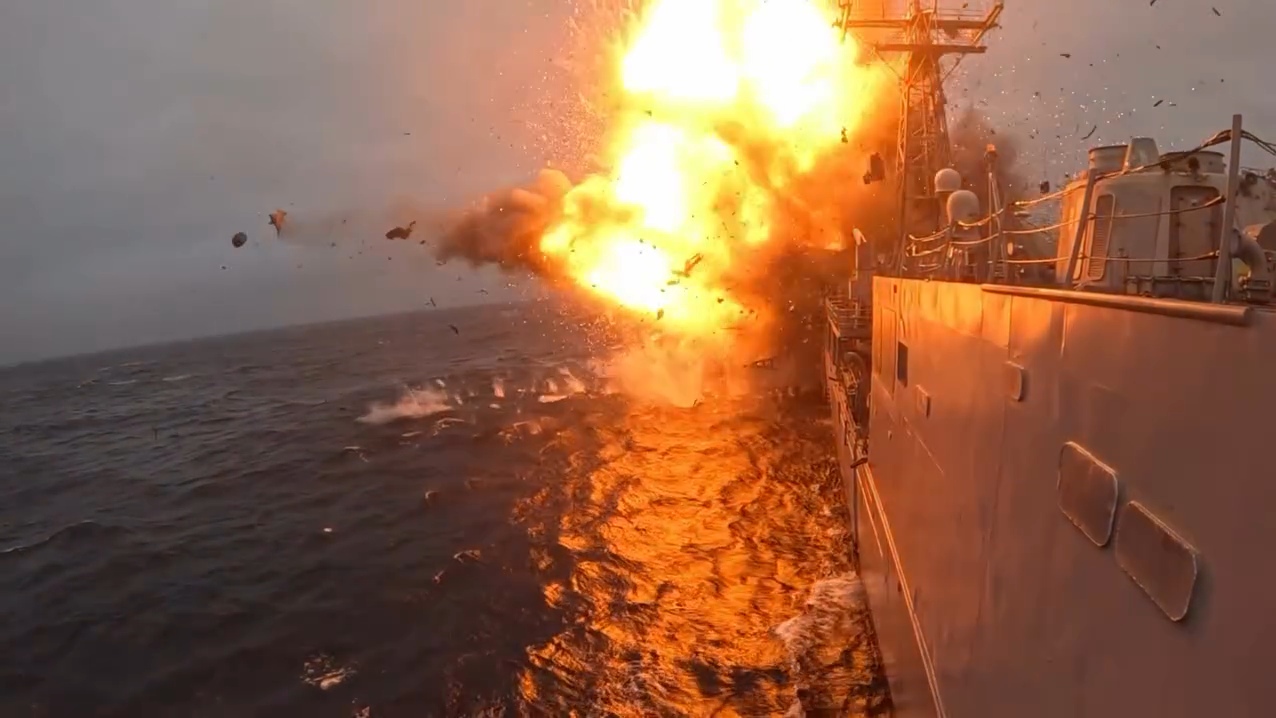
The destruction of a decommissioned frigate off the Hebrides was intended to show potential adversaries what the United States and the United Kingdom can do together at long range, the American officer who commanded the exercise has told the UK Defence Journal.
Captain Kelechi Ndukwe, commander of Task Force 65 and Destroyer Squadron 60 at Naval Station Rota in Spain, was asked by the UK Defence Journal what the objectives behind the joint targeting had been, whether they were met, and what activity of this kind signals to those who might be watching.
“We used national technical means to be able to put this together, and I think what it really highlights is the strong bond between the U.S. and the U.K.,” he said. “Our ability to trust each other, to share information, and to show that we are a joint and strong and united force. Peace through strength is really what it shows. Our ability to reach out and touch at the longest distance possible is what we displayed, and you know I think it just shows our ability to be able to work together and interact and really push the limits here.”
The messaging was written into the exercise from the outset, and a Request for Information issued by the Ministry of Defence in August 2025, inviting industry to take part, described Atlantic Thunder 26 as “a US-UK multi-domain exercise designed to validate SUW kill chains, build resilient kill webs and deliver strategic messaging through kinetic demonstration.”
What was under test, according to the captain, was multi-domain, multi-axis, long-range maritime strike, with joint targeting the element the two navies most wanted to prove. He described the exercise as testing their ability to talk to one another and share a common tactical picture and situational awareness throughout, to conduct mission planning and engagement coordination, and to work through force level pre-planned responses.
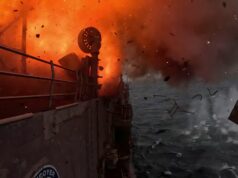
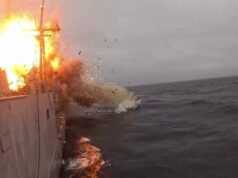
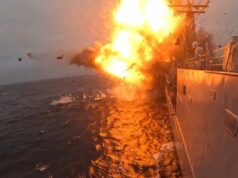
USS Paul Ignatius, the submarine USS Massachusetts and the Type 23 frigate HMS Portland took part alongside the Royal Air Force and the United States Air Force, engaging and sinking USS Klakring on 21 September some 150 nautical miles offshore of the Hebrides range during an exercise that ran from 14 to 25 September, as we reported.
Asked by this publication how much had changed since the previous Atlantic Thunder, held off the same range in 2022, and what the two navies were now trying to get out of an exercise of this kind, Ndukwe identified reach as the difference. “In past iterations of Atlantic Thunder, we weren’t able to test at the longest range, and I think that’s the biggest change from previous exercises,” he said. “This one, we really were able to test the multi-domain, multi-axis, incorporating the Air Force into it, and really test the boundaries of range for this one, and the new technologies over the past four years that we’re able to bring into play here.”
Four years of preparation went into the event, involving active duty personnel alongside civilian counterparts. On the American side the captain named the portfolio acquisition executive organisation, the Navy Information Warfare Command and the Naval Surface Warfare Center as having worked jointly on it, “ensuring that sensors were properly installed on the frigate to be able to take that data back, inform future capabilities, and really push the envelope on what we’re able to do with future weapons designs.”
Asked by the UK Defence Journal whether work had begun on a follow-on, Ndukwe confirmed that it had. “Planning has started with the goal of execution in 2028,” he said.
He returned to the alliance theme when asked what he would take from the event, describing the whole thing as a team effort across two navies, two air forces and the civilian technical community, “and it really pushes critical to maritime security and influencing peace through strength across the globe.” Communications were the part he was proudest of, and he said the two fleets worked through a link architecture built by the United States Sixth Fleet and shared with HMS Portland without difficulty.
The technical results are still being worked through, and Ndukwe said he could not get into the detail yet because the data was not firmly in hand, though he expected it to shape how both navies develop their warfighting tactics, techniques and procedures. Weather in the North Atlantic presented obstacles during the serial, he said, but all the primary objectives were met and nothing the team had wanted to test failed.



It would have been a message if they had sunk three ships at the same time which were using CWIS, guns and decoys to protect themselves. This is just an old boat being sunk
Yep, sinking a rotting hulk isn’t impressive in itself. But one does get to test live weaponry. Besides, the Moskva was fully operational and she took to a watery grave with relative ease.
I agree it was about processes I’d still like to see a multi ship sink-ex with those ships using automated defences to create noise and distractions. It would be interesting to see the results
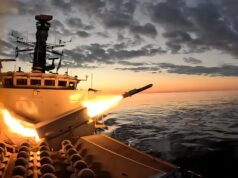
Portland has NSM, so that will give useful data. Navy Lookout says that Sea Venom was also tested. It amazes me just how many different things can get tested on a single SINKEX.
Takes a lot to sink western warships even inactive ones. Don’t ask the Russians though