

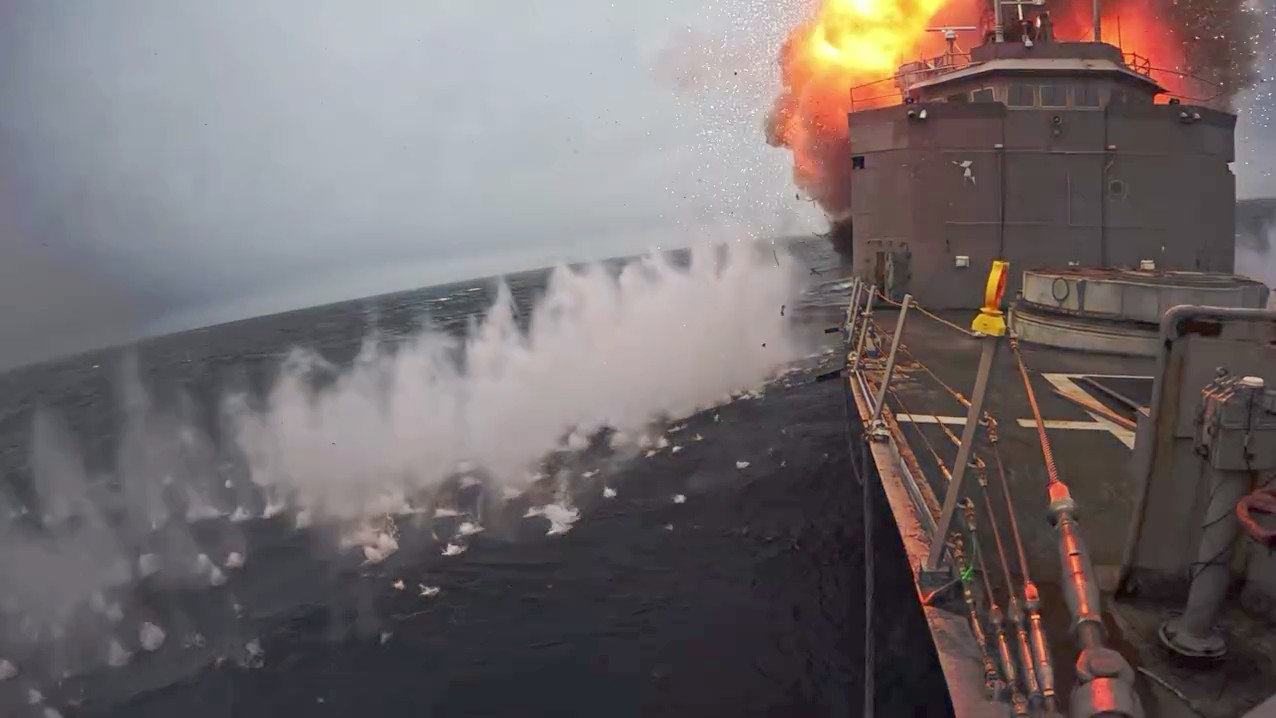
The decommissioned frigate USS Klakring, sunk by British and American forces off the Hebrides this month, will become a natural reef on the seabed, and the environmental approvals were obtained before the exercise took place, the officer who commanded it has said.
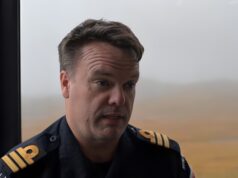
Captain Kelechi Ndukwe, commander of Task Force 65 at Naval Station Rota in Spain, was asked at a media roundtable what happens to the wreck and who carries responsibility for it. “For the environmental side, it was all done during the course of the planning. It was approved by the EPA in advance, and it’ll become a natural reef. It’s sunk in a deep, deep valley there, right off the Hebrides,” he said.
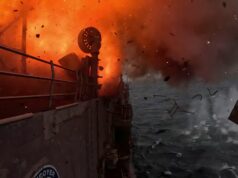
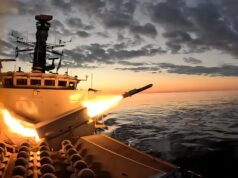
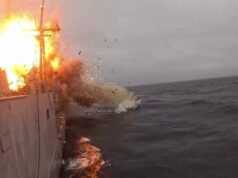
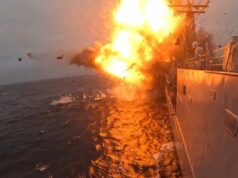
The ship went down on 21 September, some 150 nautical miles offshore of the Hebrides range, during an exercise that ran from 14 to 25 September, as we reported. The hull was engaged with the SM-6, the Mark 48 Advanced Capability Torpedo, the Naval Strike Missile and Sea Venom, fired by USS Paul Ignatius, the submarine USS Massachusetts, the Type 23 frigate HMS Portland and aircraft of both air forces.
The choice of an American hull drew attention when the tow was first reported, given that the Royal Navy has been disposing of Type 23 frigates at a steady rate and sending them abroad for scrapping. Asked why a ship had been towed across the Atlantic rather than a British vessel used, Ndukwe described a cost-sharing arrangement agreed between the two governments. “Speaking specifically to towing the ship, that was part of the agreement between the two navies and the departments of defense, was that we would pay for the tow of the ship across, and then the Royal Navy or the UK would pay for the range, so that was planned into the whole exercise,” he said.
Klakring was an Oliver Hazard Perry-class frigate, decommissioned in 2013 and laid up at the Philadelphia Naval Inactive Ship Maintenance Facility until she was towed down the Delaware River on 12 August for the Atlantic crossing, making first for Campbeltown.
Sinking exercises are the standard means of disposing of a hull that has no further sale, museum or training value, and the practice is regulated. Vessels used as targets are stripped of fuel, oils and hazardous materials beforehand under a general permit issued by the United States Environmental Protection Agency, which also sets a minimum water depth and a minimum distance from land for the sinking. Wrecks sunk in this way have in some cases been surveyed years later and found to support marine growth, which is where the natural reef description comes from.
Sensors fitted to the frigate before the exercise recorded the effects of each weapon as it struck, and the captain said that data would be analysed over the coming months alongside battle damage assessment shared between the two navies. He described the North Atlantic weather as having presented obstacles during the serial, while saying that all primary objectives were met and the ship sank without difficulty.
Planning has already started on a further iteration of Atlantic Thunder, which Ndukwe said the two navies aim to run in 2028.




Damn….. maybe i should have sworn and hurled abuse Instead ! 😁👀
Will you stop this?
Has there been a SINKEX on a former USN frigate recently?
Hard to tell, there’s been very little reports on it…..
You’re free to publish whichever content you like on your own website.
When I said in an earlier article it’s a shame it couldn’t be a scuba tourist site, now we know why they aren’t. For scuba you want your wreck maybe 15-30m deep and reasonably close to land so you aren’t spending too long on a dive boat to get there. The US EPA mandates SINKEX targets must be sunk at a minimum distance of 50 nautical miles from land and in a minimum water depth of 6,000 feet. I suppose there could be unexploded missiles and whatnot, but those could be cleaned up and diving old wrecks is a fun pastime that brings in cash for the locals. They can still form artificial reefs.
I suppose there’s the secrecy reason too for naval ships, and the OHPs are still in use in other countries. Could you learn anything useful from diving a stripped ship?
I found my answer.
Solid toxins remain baked into the ship’s construction. In warships built during the Cold War, PCBs were heavily used as chemical plasticisers to make materials fire-retardant. They are physically embedded inside:
– Miles of deep insulation wrapping on electrical cabling
– Structural bulkhead insulation
– Heavy rubber gaskets and felt seals compressed under multi-ton machinery
So there’s stripped and there’s stripped.
None of this Sinkex ships have weapons or fuel in them.
Ships will very much degrade over time whilst on the bottom, however may not be too wise to provide a hazardous ripped up by blast effect playground for divers on the bottom courtesy of Gov action.
The actual reef ships i have seen prepared usually have excessive measure done to clean them up and also to prevent possible entrapment areas. The excessive measures also allow for a fairly controlled sink of the vessel.
Wonder how much punishment she took before the final dive?
Klakring was one of the USN ships in Larry Bond’s 1993 techno-thriller “Cauldron.”