

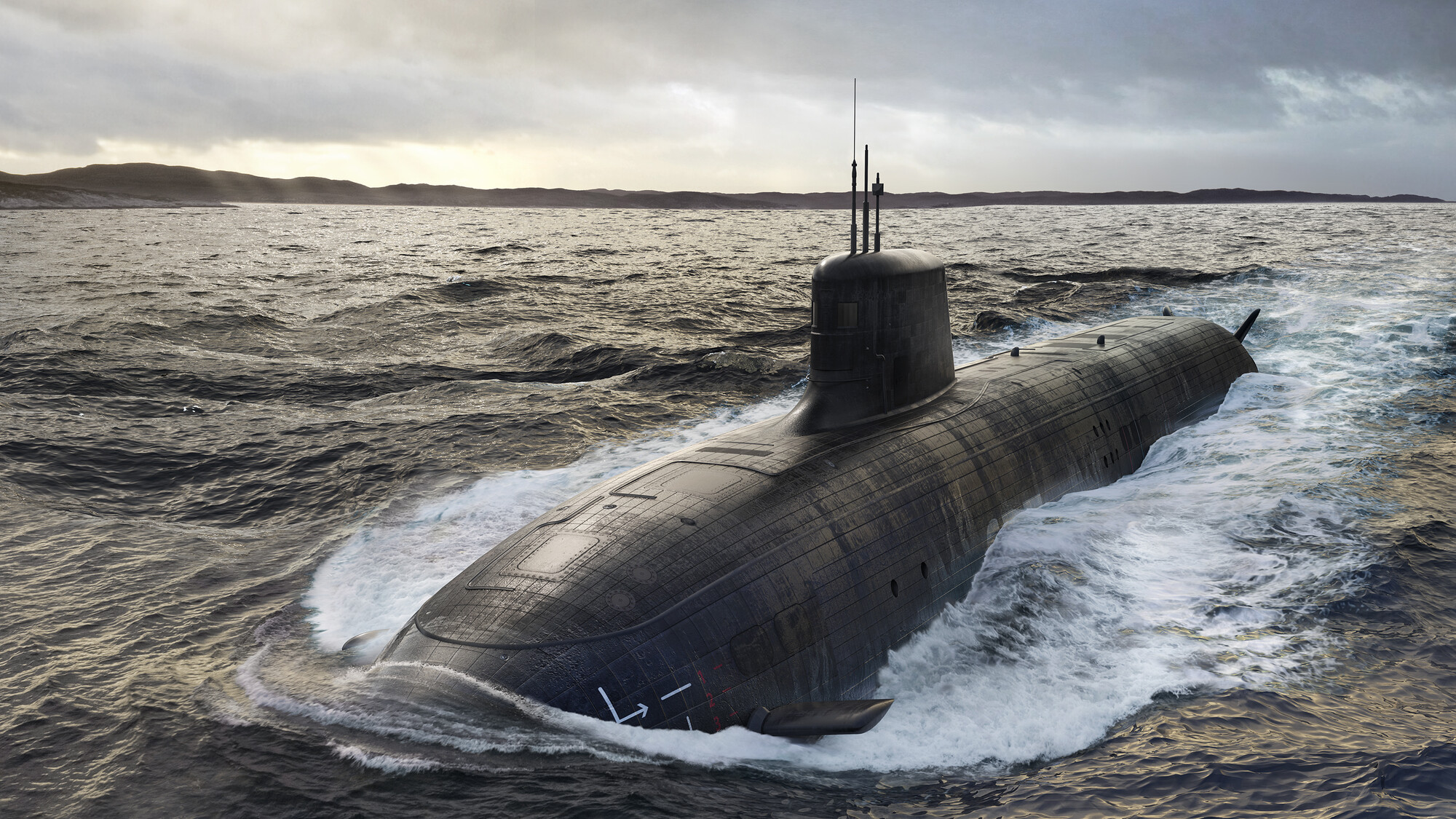
Rolls-Royce Submarines is progressing reactor design, workforce expansion and major infrastructure growth to meet the demands of the AUKUS programme, as the UK moves towards a higher tempo of submarine production.
Speaking to the UK Defence Journal at UDT in London, James Lowe, Director of Future Programmes at Rolls-Royce Submarines, said the company has passed a key milestone on its next-generation reactor.
“At the end of last year, we took the PWR3+ reactor through its critical design review, so we now have a design baseline that we’re going to optimise into the future to meet the needs of the UK and Australian Navy,” he said.
This design work underpins the UK’s role in delivering nuclear propulsion for the trilateral AUKUS programme, which will see the UK, United States and Australia field a new generation of attack submarines.
The programme follows a phased pathway, beginning with increased US and UK submarine presence in Australia and progressing towards the delivery of a new SSN-AUKUS design later in the 2030s.
Lowe indicated that manufacturing activity is already underway in support of current and future boats.
“We’re actually at various stages of manufacture with seven boats,” he said, pointing to long-lead work and production already aligned with programme requirements.
A central challenge is workforce growth, with AUKUS significantly increasing demand for skilled personnel across both the UK and Australia.
“The AUKUS programme is a generational opportunity… what that’s driven… is we need a lot more skills to support that, both in the UK and in Australia,” he said.
To address this, Rolls-Royce is expanding its internal training pipeline while working with government and industry partners.
“We have our UK Skills Academy… developing critical engineering and programme management skills,” Lowe said, adding that the company is also supporting Australian workforce development alongside the UK Ministry of Defence and partners including BAE Systems and Babcock.
Infrastructure expansion is also underway to support increased production rates, with the Derby site at the centre of these efforts.
“The rate we need to produce them, and the scale of the demand, has meant a lot of infrastructure that we need to develop and build,” he said. “We’re effectively doubling the site… to deliver those reactor plants into the programme.”
Work on new facilities is expected to begin shortly, with additional satellite sites already in place to support engineering demand. Lowe added that delivery depends on close coordination across government and industry, describing strong alignment across key partners.
“It’s driving a lot of really good collaboration across the industry… helping our people connect with the mission in terms of what we need to do for both the UK and the Australian navies.”
The wider AUKUS effort is intended to increase the number of available submarines across allied fleets, improve interoperability with US Virginia-class boats and deliver a new class of UK-designed submarines for both the Royal Navy and Royal Australian Navy.
Within that framework, Rolls-Royce’s role in reactor design and production remains a central enabling element.
“Overall, it’s looking quite positive for the UK.”




I don’t understand the purpose of interoperability with US submarines (other than to inflate costs and direct cash to US companies).
Because it gives us access to US submarine tech. They in turn gain access to our tech, but given that they spend about ten times what we do that rather works in our favour.
To be fair, the Astute class is generally agreed to be among the best in the world, so we’re hardly lagging behind.
Yes so positive.🤨
Not all news has to be bad! We have to be prepared to celebrate success in order to properly criticise failure.
Good morning 🌞. We must criticise to find the problem and then take action. We know the problem with are armed forces it’s just the taking action. No point pretending everything is going to be ok with no real evidence or political will. I am glad rolls Royce have more business as especially they are world leaders on engine stuff and we must play to are strengths so investing in this seams the right way to go.
Thank you, have a lovely day 😊.
Hmmm … some questions that perhaps could be addressed in a general manner by ABCRodney. Delta between PWR3 and PWR3+, will all the “ilities” be improved? Financially/
technically feasible to retrofit Columbia, Dreadnought, Virginia classes? Would assume incorporation in USN SSN(X) class?