

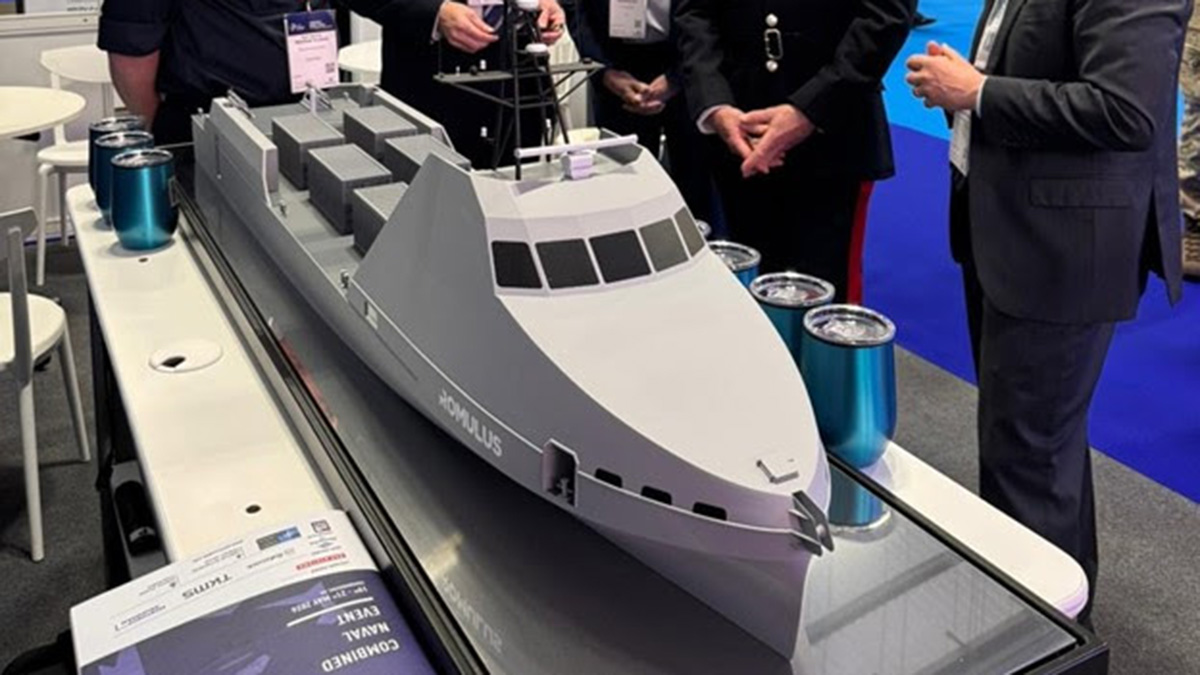
HII, America’s largest military shipbuilder, showcased its autonomous unmanned maritime portfolio at the Combined Naval Event in Farnborough, with exhibits and presentations covering the REMUS family of unmanned underwater vehicles, the ROMULUS family of AI-enabled unmanned surface vessels, and the Odyssey Autonomous Control System software suite, the company stated.
Duane Fotheringham, president of the Unmanned Systems group in HII’s Mission Technologies division, said the company’s systems were already operating in demanding environments. “Our autonomous maritime systems are operating today in some of the world’s most demanding environments, and we continue to advance capabilities that extend mission reach, improve fleet survivability, and strengthen allied interoperability across the maritime domain.”
CNE 2026 coincides with the 25th anniversary of the REMUS UUV family. HII has delivered more than 750 REMUS vehicles to over 30 countries, including 14 NATO members, with more than 90% of systems remaining operational after more than two decades of service. Recent milestones being highlighted at the event include a US Defense Innovation Unit contract to develop a submarine Torpedo Tube Launch and Recovery system for deploying and recovering REMUS UUVs from US Navy submarines, and the successful forward-deployed torpedo tube launch and recovery of a REMUS 600 from USS Delaware during operational missions.
HII is also highlighting the expansion of its Portchester facility in the UK, which serves as a regional hub for allied naval customers, sustainment operations, and training, alongside continued progress toward scaled production of the ROMULUS 151 unmanned surface vessel. The ROMULUS family forms part of Babcock’s ARMOR Force initiative, developed to support the Royal Navy’s hybrid fleet vision, with HII’s AI-enabled USVs forming a central element of that architecture.
The Odyssey Autonomous Control System, which has been demonstrated across US Navy, Marine Corps, Coast Guard, and allied programmes, provides simplified control of unmanned swarms across domains. HII describes it as capable of generating mission behaviours for increased lethality and survivability through an intuitive, customisable interface.
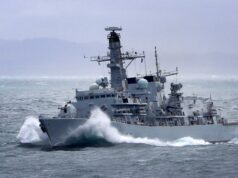
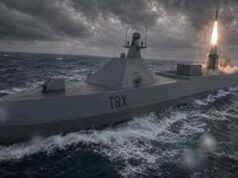
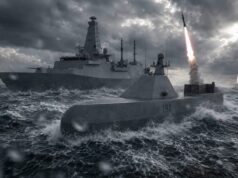


Assumedly they are unmanned apart from the Window cleaner ?
I’ve gained $17,240 only within four weeks by comfortably working part-time from home. Immediately when I had lost my last business, I was very troubled and thankfully I’ve located this project now in this way I’m in a position to receive thousand USD directly from home. Each individual certainly can do this easy work & make more greenbacks online by visiting
following website—.,.,.,.,.—>>> JobatHome1.Com
Apart from a pilot coming into port.
Feck me that’s worrying If It needs a Pilot in port.
Someone told the AI to always pass the port to the left and now it can’t work the satnav.
Nor the Corkscrew I guess then ?
😁👍😄
Στην Ελλάδα θα μπορούσαμε Να Φέρουμε Αυτά τά Διαμάντια…!!!???
So is it possible for an adversary to board the craft and do damage .or take control of it//or sink it.
just asking.
Yes. And since no one is there to scuttle it, it need some distant scuttling control.
Well at least this variant seems to offer the option of at least SOME crew?? Integer back to Star Trek and Enterprise – ‘ what is the function of the carbon units’ – I would suggest a lot. Minimal manning yes – total AI ? No.
I REFER ! Case in point – bl*ody AI 😁👎