

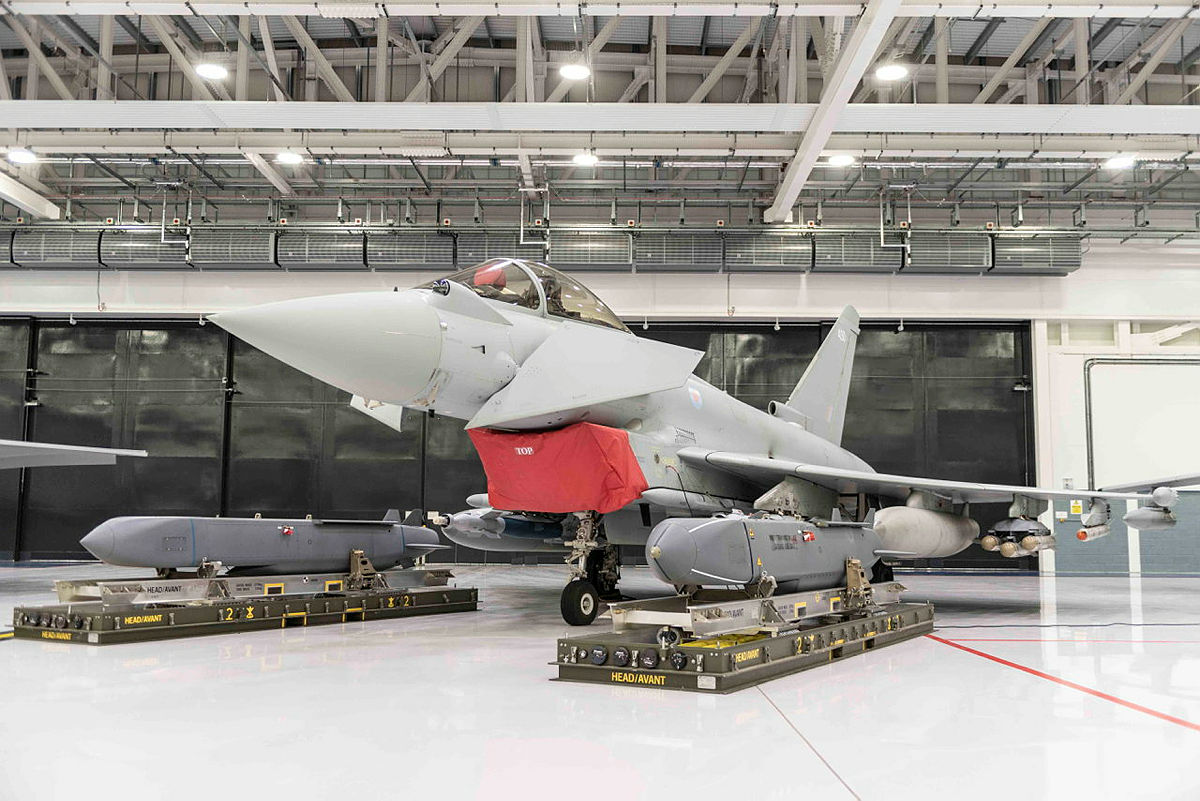
Britain is to move away from the Storm Shadow cruise missile that has armed its jets for a quarter of a century, pivoting to a new generation of cheaper cruise missiles so that the Armed Forces can field many more strike weapons at a lower overall cost, the Defence Investment Plan said.
The plan paid tribute to the missiles, whose building “started in the 1990s and they have proved highly effective for conducting operations,” before saying that, learning the lessons of Ukraine, the country was now pivoting to the next generation of low-cost cruise missiles, a change it said would deliver significantly more missiles at a reduced overall cost.
Storm Shadow, developed with France from the 1990s and built by MBDA, is an air-launched cruise missile designed to destroy hardened and buried targets at a range of around two hundred and fifty kilometres, letting an aircraft strike from beyond the reach of many air defences, and it has been among the most heavily used British weapons of the past two decades, fired in Iraq, over Libya, against a chemical-weapons site in Syria and, most consequentially, by Ukraine, where missiles supplied by Britain have struck command posts and logistics deep behind Russian lines and helped sink or damage ships of the Black Sea Fleet.
So valuable has it proved that MBDA restarted production of the weapon in 2025, fifteen years after the last order, in part to keep Ukraine supplied. The shift the plan describes reflects a hard lesson from that war, where expensive, exquisite missiles held in small numbers have been consumed at a rate no peacetime stockpile anticipated, and where the side able to keep firing has often held the advantage, which has pushed the Ministry of Defence towards a better balance between a small number of high-end weapons and a larger stock of cheaper ones that can be made quickly and in volume.
The low-cost cruise missiles are intended to provide that mass, sitting alongside the more sophisticated Stratus missile, named in the same plan as the future of British complex weapons for the hardest targets, so that the country has both the few weapons able to defeat the most demanding defences and the many it would need to sustain a long fight.
Officials have already hinted to the kind of weapon the pivot has in mind, a Ministry of Defence official said a low-cost strike weapon project known as Brakestop “very well could be in our inventory very soon,” calling it a good example of the low-cost mass effectors the country wants more of across the air, land and sea domains, and the same official tied the shift to a wider effort to draw small and medium-sized firms, many of them barely known a year ago, into a market long dominated by a handful of large primes, with weapons that can be built in the United Kingdom and exported into Europe.





High low mix seems reasonable
Agreed. But again I don’t see the what. Is this something else we are going to “explore” or do we have something specific in the pipeline?
Brakestop is mentioned.
Yes I think it’s in hand in this particular case.
another disguised cut.
I think to be fair the article should be headlined as StormShadow is on the way in favour of a mix of Stratus and lower cost missiles.
(Great finally discovered what happened to my avatar)
False economy. To actually get the same effect you have to fire a higher monetary value of weapons. Yet another PR move that’s actually a down grade of capability
The headline is a little misleading. What we are getting is a mix of drones and Stratus FC/ASW. As long as we get them in numbers it seems like good news.
Stratus won’t be in service until the mid 2030s.
the headline isn’t misleading, though?
Sorry George I should have been precise and said the article gives the whole story, don’t just read the headline.
Probably looking for a reason to give them to Ukraine?
They’ll work fine there.
I noticed no mention of Land Precision Strike in the DIP, even though MBDA seem to have a design ready to go. PrSM has been funded instead, which is a mistake as we,will have both Nightfall and Brakestop to do the same job on similar timescales.
At 190 million, or whatever the figure was, that’ll buy less than 100 I think.
So imagine supplemented then replaced in due course.
It is totally simple, same with planes, ships, subs, and other equipment, we do t have enough equipment so stop throwing it away and just add to it instead.
Storm shadow was always over rated and compromised as far as Ukraine is concerned.
You cannot.make anything cheaper when you are stuck with profiteering arms companies
The new one will not be any cheaper and it will not be any better or capable.
Six weeks is the surprise lifespan on weapons in Ukraine before Russia counteracts them. Which is why they need to send dozens of missiles to achieve any success.