

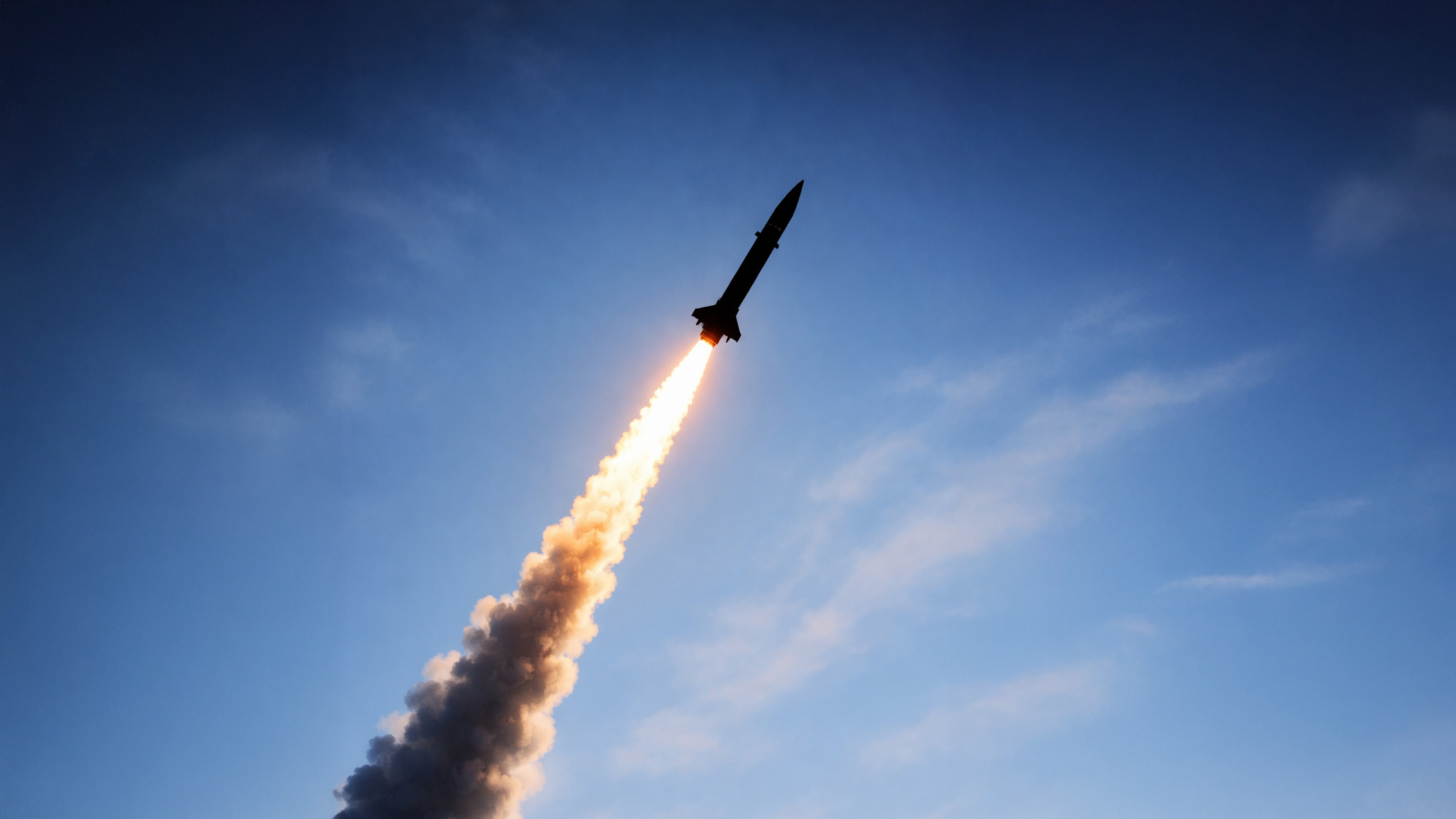
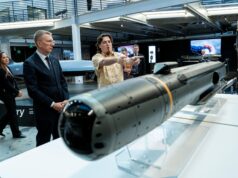
France has entered the final phase of negotiations with MBDA and Safran Electronics & Defense to field THUNDART, a new precision rocket designed to give the French Army deep-strike reach of up to 150 kilometres, the companies said.
The agreement concerns the successor to the Lance-Roquettes Unitaire, the French Army’s existing rocket launcher, and follows the selection of the MBDA-Safran solution under the Direction Générale de l’Armement’s Frappe Longue Portée Terrestre programme. France currently operates nine LRU systems, modernised variants of the American M270 launcher whose guided rockets reach around 70 kilometres and which are nearing the end of their service lives. THUNDART roughly doubles that reach. The 227mm guided rocket is designed to perform in contested conditions, including against jamming or the loss of satellite navigation, drawing its guidance and navigation from Safran, whose package is derived from the AASM Hammer precision kit, and its propulsion from Roxel, a wholly owned MBDA subsidiary.
Stéphane Reb, executive vice-president for programmes and managing director of MBDA France, framed the win as a sovereign capability. “THUNDART represents far more than a new strike capability: it is a sovereign, robust, and adaptable response to the operational challenges of the French Army,” he said in a statement, adding that the two firms were offering the French armed forces “a strategic capacity designed to last.”
Alexandre Ziegler, director of the defence global business unit at Safran Electronics & Defense, said the selection rewarded “several years of innovation, commitment, and collective work,” and pointed to interest from allied countries that could open the system to export.
Designed, developed and produced in France, THUNDART is built around a launcher developed by Safran with partners including Scania France, CMAR and Essonne, and is intended to plug into the French Army’s ATLAS fire management system. Its modular design, the companies said, would allow integration with other command systems and platforms for export customers, and the ammunition pod has been built to fit other launchers as well, aimed at the wider long-range artillery market. The system is free of United States ITAR export controls, leaving France in control of its own sales abroad.






Over the weekend a great deal of blatant pro-Russian propaganda has appeared in Western media, especially Reuters. Apparently, the war criminal Putin has undertaken a staged TV interview, in which he denied that the current Ukraine counter-offensive is causing problems for Russian forces
Putin’s state television interview with Pavel Zarubin was an exercise in geopolitical gaslighting, weaponising revisionism and outright deception (dezinformatsiya) to mask Russia’s compounding operational military failures along the line of contact and particularly Crimea
Putin claimed that intensive Ukrainian drone strikes on domestic refineries – which have forced emergency fuel rationing inside Russia – have “absolutely no effect” on the front lines. This is pure nonsense; degrading logistics chains directly cripples mechanized manoeuvres, a logistical reality his own emergency cabinet meetings implicitly contradict.
Furthermore, Putin’s framing of Ukraine’s alleged proposal to limit combat as a desperate sign of “catastrophic personnel shortages” flips reality upside down. This narrative hides his own relentless, high-casualty frontal assaults designed to capture the four “annexed” regions that Putin covets, but Russia still fails to fully control. Putin made no mention of the recent Ukrainian military isolation of Crimea at all, which speaks volumes.
Finally, his assertions of sovereign stability and looming diplomatic triumphs with yet another jolly to Moscow by Trump’s US real estate “negotiators” Witkopf and Kushner (their 9th) are deliberately misleading. These claims are carefully timed to shape the information ecosystem ahead of September’s stage-managed State Duma elections. Ultimately, Putin’s interview relies entirely on a distorted, fabricated reality constructed to disguise severe domestic infrastructure vulnerabilities and an increasingly unsustainable war of attrition
Thunderfarts are Go!
Interestingly the France Army artillery isn’t is great shape from what I can see, there not many MLRS nad they have 109 Caesar on order. They do have 120mm mortars which we lack
Well, Caesar do the due for 155mm. No 105mm, even if it could be interesting. 120mm in infantry squad and in Griphon Mepac. A new pickup set like a Caesar with a 120mm Mortar is being considered.
For the new capabilities, the Rocket launcher is badly needed. Since the Rocket’s warhead will use the AASM Hammer, it may help reduce further production costs, with series effect.
The new Lora is one of the biggest breakthrough, aiming to have a 60 to 100km gun in 155mm, we will see if it can be done, though fire tests have been conducted with success in Portugal this year.
150km is ~100 miles hardly deep strike. Closer to GMLRS than ATACMS. After the recent US defeat in the Gulf, I would have thought ballistic missiles with ~500-800 mile ranges would be true deep strike. Especially if coupled with tandem warheads for hard traget capability.
The 150km rocket is for the 2028 deadline. We must have 1 operational division in 2029 and it cannot be declared so without it. The 500km rocket is expected a bit later in 2032. Meanwhile 2500km missiles are in conception, with strong priority but no knows timeline, except MDCT that will be available in 2029. This one is an evolution of the MDCN, which had a 1000km known range. That range is said inadequat, so the MDCT will go « further than the Tomahawk ».
A lot of plans…
Plans don’t mean anything. It’s all noise.
Yup, we’ll see what comes out of the wash
You’re confusing rockets and ballistic missiles. Thundart and GMLRS are 150km-class rockets. ATACMS and PrSM are short range (250-500km) ballistic missiles. ArianeGroup is developing the B-Strike ballistic family for MLRS launchers that ranges from 1000km to 2500km.
Their priority is to replace the aging M270 launchers. If you try to get everything at once, you’ll get nothing. Once the orders are underway, they can focus on longer ranged missiles like B-Strike.
So far, only the countries that border Russia use the ATACMS, it’s less critical for the countries which are far away from Russia like the UK or France.
The B-Strike 2500 could hit Moscow from Eastern France though.